 18th BRICS Summit






















- New software-driven platform connects sensors, decision-making, and effectors into one unified battlefield ecosystem
- ILA Berlin, 10-14 June, 2026, Hall D Booth #225
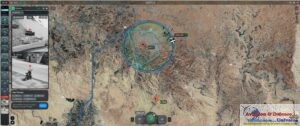 Israel, June 1, 2026 – Uvision, a global leader in smart integrated systems and loitering munitions, today announced the launch of CORTEX, a new active Battle Intelligence and Mission Management system designed to support next-generation multi-domain operations. Building on the company’s previously unveiled Common Operating System concept, CORTEX delivers a unified software-driven framework that connects sensors, decision-making processes, and multiple effectors into one integrated battlefield ecosystem.
Developed in response to the increasing complexity and speed of modern warfare, CORTEX is designed to shorten the sensor-to-shooter cycle, increase operational flexibility, reduce operator cognitive load, and enable coordinated management across air, land, and maritime domains.
CORTEX enables dynamic mission coordination, asset allocation, simultaneous control of sensors and effectors, and synchronized execution across complex operational scenarios including urban warfare, border protection, and distributed tactical operations.
CORTEX is based on a layered modular architecture composed of sensing and detection, fusion and decision-making, and response and mission execution layers. This structure enables seamless integration between multiple sensors, external command-and-control systems, unmanned platforms, and precision effectors under one unified framework.
The sensing layer supports data collection and processing from multiple sources, including EO/IR payloads, UAVs, radar systems, RF detectors, airborne platforms, and external intelligence sources. The fusion and decision layer performs multi-source data fusion, threat verification, classification, behavioral analysis, anomaly detection, and AI-driven decision support to generate a unified situational picture in real time.
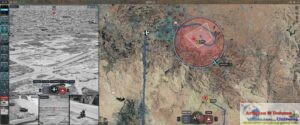 The system continuously analyzes the broader battlespace, identifies and prioritizes threats beyond the immediate mission scope, and recommends the most suitable response according to target characteristics and engagement priorities, enabling operators to focus on mission-level supervision rather than individual platform management.
The response layer manages coordinated deployment and dynamic allocation of HERO, VIPER, and PEREGRINE systems according to target type, mission priority, and engagement conditions, while maintaining human oversight throughout the engagement process. By connecting sensing, detection, decision-making, and loitering munition deployment into one continuous operational chain, CORTEX enables faster and more precise engagement against emerging threats.
Its open architecture enables rapid integration with external C2 systems, battlefield management platforms, and third-party sensors, allowing military forces to establish a shared operational picture across multiple units, systems, and domains.
By shifting operators from frontline platform control to stand-off mission-level supervision, CORTEX enhances survivability while improving mission continuity, coordination, and responsiveness in highly dynamic combat environments.
“The future battlefield will be defined by speed, scale, and connectivity across multiple domains,” said Dr. Ran Gozali, CEO of Uvision Air. “As military forces deploy increasing numbers of autonomous systems, sensors, and effectors, the ability to unify and standardize command, control, and mission execution across complex operational environments becomes mission-critical. CORTEX is designed to connect these layers, integrating operational intelligence, command systems, and multiple effectors into one scalable, software-driven ecosystem that enables faster decisions, greater interoperability, and more effective mission outcomes.”


















































































-A4-Size-(2)_page-0001.jpg)