












- Kuala Lumpur to Host International Search and Rescue Community
- Malaysia Strengthens Its Position as a Regional Leader in Search and Rescue Capability Building
- From Maritime Rescue to AI-Driven Operations: ISAR 2026 Sets the Agenda for Global SAR
By Sangeeta Saxena
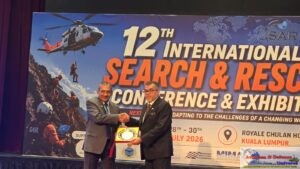
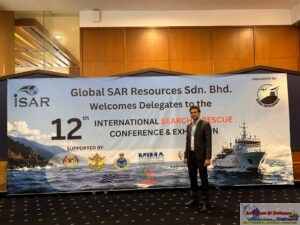
New Delhi. 07 June 2026. As natural disasters, maritime emergencies, aviation incidents and humanitarian crises grow in complexity, Malaysia is increasingly positioning itself at the forefront of global Search and Rescue (SAR) preparedness. Through the hosting of the 12th International Search and Rescue Conference & Exhibition (ISAR 2026) in Kuala Lumpur, the country is bringing together leading SAR practitioners, aviation specialists, maritime authorities, disaster response experts and technology innovators from around the world. The event reflects Malaysia’s growing role as a regional hub for knowledge exchange, operational cooperation and capability development, while helping prepare both the region and the international community to meet the evolving challenges of modern search and rescue operations.
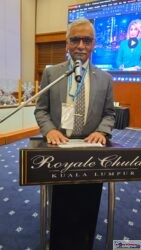
From 28–30 July 2026. Organised by Global SAR Resources, the conference will focus on the theme “Next-Gen SAR: Adapting to the Challenges of a Changing World,” highlighting the evolving demands placed on rescue organisations and the technologies, partnerships and leadership required to meet them.To be held at the Royale Chulan Hotel, Kuala Lumpur, ISAR 2026 will provide a unique platform for international collaboration across the maritime, aviation, offshore energy, disaster management and emergency response communities. The conference aims to strengthen professional networks, share operational lessons and examine emerging technologies that are transforming SAR operations worldwide.The event will feature a distinguished line-up of global experts representing leading SAR organisations, maritime rescue agencies, aviation authorities, offshore emergency response operators and technology innovators.
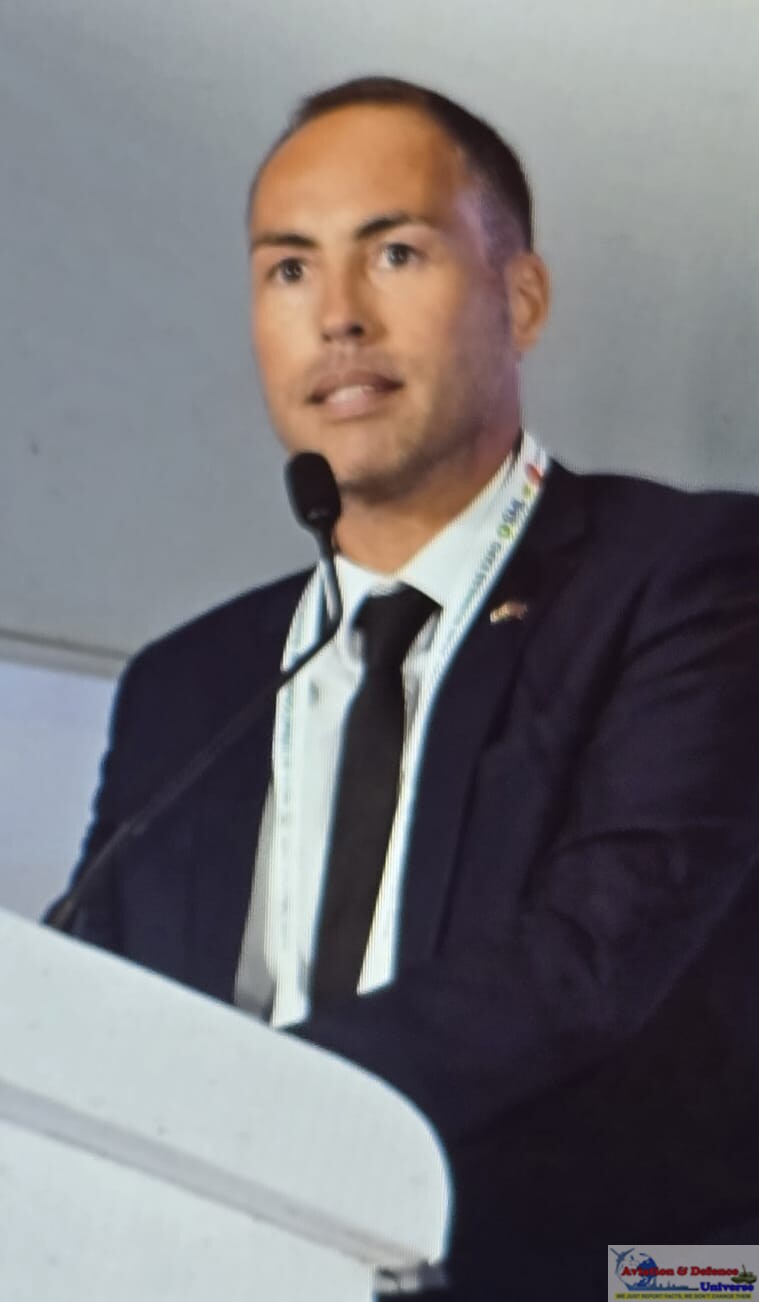
One of the headline sessions will be delivered by Commander (Retd.) Matthew J. Mitchell, Founder and CEO of the International Association of Search and Rescue Coordinators (IASARC), USA, who will present on “Professionalizing Search and Rescue Coordination.” His session will explore efforts to establish professional standards and certification frameworks aimed at enhancing the effectiveness and consistency of SAR coordination worldwide.
India’s contribution to the maritime SAR discussion will come from Commodore Anil Jai Singh (Retd.), Vice President of the Indian Maritime Foundation, who will examine the complexities and operational challenges associated with submarine rescue operations.
The conference will also spotlight diversity and leadership through a presentation by Caroline Jupe, Chief Executive Officer of the International Maritime Rescue Federation (IMRF), United Kingdom, titled “Women in SAR: Leadership, Challenges, and the Future of SAR.” The session will examine the growing role of women in operational leadership, decision-making and emergency response while addressing challenges and opportunities in building a more inclusive SAR community.
Maritime rescue remains a central theme of ISAR 2026. Captain Mathew Schanck, Chairman of the Maritime Search and Rescue Council, UK, will discuss “Maritime Mass Rescue Operations – A Search and Rescue Surface Asset Suitability Framework for 21st Century Challenges.” The presentation will address how rescue organisations can prepare for increasingly complex large-scale incidents at sea.
Meanwhile, Captain Wei Shuo of China Rescue Salvage will explore advances in night-time maritime rescue operations through his presentation, “Lifeline in the Dark: Exploration and Future Prospects of Nighttime Maritime Search and Rescue.”
Aviation SAR experts will bring valuable operational insights from around the world. Representatives from the Hong Kong Government Flying Service, Captain Raymond Yu Sheung-Hung and Heidi Ho Yuen-Tung, will present a case study on cross-regional and inter-agency maritime rescue operations, highlighting the importance of coordinated responses across jurisdictions.
From Indonesia, Captain Esther Gayatri Saleh, an experimental test pilot and certified flight instructor, will discuss how advanced simulation technologies are enhancing the training and preparedness of SAR pilots operating in high-risk environments.
The offshore oil and gas sector will also feature prominently in the programme. Captain Diilesh Chander of Sarawak Shell will provide a Malaysian upstream oil and gas perspective on offshore SAR operations, while Captain Mohd Drissi, National SAR Coordinator and MRCC Director from Morocco, will examine cooperation frameworks between SAR organisations and the energy sector. Recognising the increasing frequency of natural disasters and humanitarian crises, ISAR 2026 will include sessions on disaster management and large-scale emergency response.
Major General (Retd.) Koji Hiratsuka, CEO of Navicom Aviation Corporation, Japan, will share lessons from three decades of large-scale disaster response operations in Japan, one of the world’s most disaster-prone nations.
Other speakers include Orlando Max Avis from SOS Mediterranee, who will discuss innovations in humanitarian maritime rescue operations, and Jamie Stirling, President of SAR-1 Inc., Canada, who will present on the science underpinning effective search and rescue operations.
Technology and digital transformation will form a major pillar of the conference. Discussions will focus on artificial intelligence, digital coordination tools and new approaches to operational decision-making. Captain Jerzy Kiszczak, Deputy Director of the Polish Maritime Search and Rescue Service, will present on the application of artificial intelligence in maritime SAR, while Arthur Barbier and Tanguy Le Coq, co-founders of Global SAR Hub, will showcase a digital coordination platform designed by SAR operators for SAR operators. Additionally, Nazery Khalid, Adjunct Professor at Universiti Malaysia Terengganu, will examine emerging trends shaping the future of maritime search and rescue.
As the operational environment becomes increasingly complex, search and rescue organisations worldwide are being challenged to adapt through innovation, cooperation and professional development. ISAR 2026 aims to address these challenges by bringing together some of the world’s leading SAR practitioners, policymakers and technology experts under one roof. From maritime rescue and aviation SAR to disaster management, offshore emergency response and AI-enabled operations, the conference promises to provide valuable insights into the future of global search and rescue. By fostering collaboration across borders and disciplines, ISAR 2026 will reinforce the critical role SAR professionals play in saving lives and enhancing resilience in an increasingly interconnected world.
By convening some of the world’s foremost SAR professionals and organisations, Malaysia is not only strengthening regional resilience but also helping shape the future of global search and rescue, reinforcing its position as a leader in fostering international cooperation, operational excellence and lifesaving innovation.






























-A4-Size-(2)_page-0001.jpg)