










- Eight gold medals put Moldova first in FIRST Global’s all-time ranking, backed by a national educational robotics programme that has grown from a small pilot into more than 270 robotics clubs across the country.
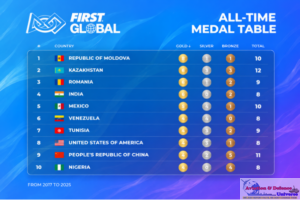 CHIȘINĂU, Moldova — October 2, 2026 — FIRST Global Team Moldova is preparing to represent the Republic of Moldova at the FIRST Global Challenge 2026, taking place October 7–10 in Incheon, Republic of Korea, after FIRST Global published its all-time medal ranking placing Moldova first worldwide with eight gold medals. The national team will join students from more than 190 countries at the Olympics-style international robotics competition. FIRST Global confirms that the 2026 edition will focus on the theme “Igniting Innovation,” challenging teams to apply robotics and engineering to wildfire prevention, mitigation and recovery.
Moldova is heading to Incheon with a significant achievement already secured. Its Innovation Project, “Ember Mesh: Sensors for Early Wildfire Detection Beneath Canopies,” has advanced to the third and final phase of the competition’s New Technology Experience. Of the more than 190 national teams participating in FIRST Global Challenge 2026, 81 entered the Innovation Project competition. Only 15 projects progressed to the second phase, and just five were selected for the final phase, including Moldova’s project. The team is now intensively refining its solution and preparing for the final presentation in Incheon.
Moldova’s position at the top of the ranking reflects a record built over several generations of students. The country has accumulated eight FIRST Global gold medals since joining the competition, including three gold medals in 2019, one in 2022, one in 2023, two in 2024 and another in 2025. Last year’s result also marked the fifth consecutive in-person edition in which Moldova won gold for Innovation in Engineering, with the international jury recognizing the creativity and technical ingenuity of the team’s robot design.
“Eight gold medals are not the achievement of one exceptional team or one exceptional year. They are the cumulative result of years of building a system — giving students access to robotics, investing in teachers and mentors, creating national competitions and then giving the strongest teams the opportunity to test themselves against the best in the world. Moldova is a small country, but robotics has shown repeatedly that size does not limit what our young people can achieve when talent is given the right environment to grow. And our ambition is bigger than medals. The students building and programming robots today are the engineers, product developers, researchers and founders Moldova’s economy will need tomorrow. They are learning to experiment, fail, redesign, collaborate and solve difficult problems under pressure — exactly the capabilities that drive an innovation economy.”,
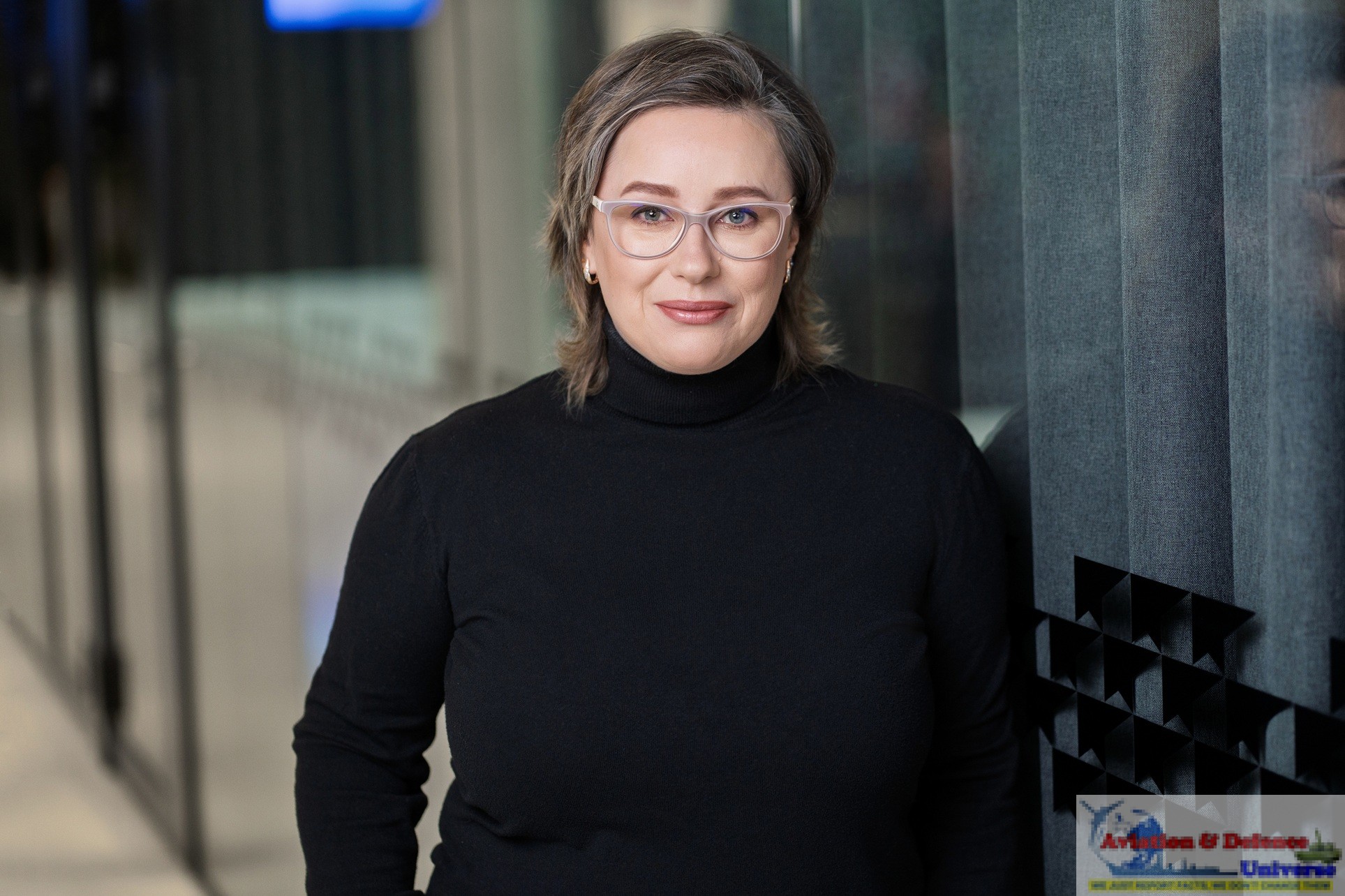
said Veronica Eșanu, Coordinator of the National Educational Robotics Program and Mentor of FIRST Global Team Moldova
Moldova’s National Educational Robotics Program began in 2014 initially bringing hands-on robotics education into a small number of schools. The programme expanded rapidly from an extracurricular initiative into a nationwide platform for applied science, technology, engineering and mathematics education. The programme grew from only a handful of participating institutions in its first years to approximately 270 educational institutions nationwide, over 700 trained teachers and more than 60,000 students who have participated in robotics activities, around 40% of them girls. More than 60,000 hours of robotics activities have been delivered, with schools and clubs extending the programme beyond Chișinău into communities throughout the country.
Robotics has also moved beyond extracurricular education. As the programme expanded, the Ministry of Education and Research of the Republic of Moldova incorporated Robotics as a module within the national Technological Education curriculum, beginning from grade four, providing schools with a formal framework for integrating practical engineering, programming and problem-solving into classroom learning.
The 2026 FIRST Global Challenge will give a new generation of Moldovan students the opportunity to build on that record. This year, teams will design and program robots using a standardized kit of parts to respond to a simulated environment inspired by wildfire prevention and recovery, combining engineering performance with teamwork and international collaboration.
Moldova’s participation in Incheon is being supported through cooperation between the Ministry of Education and Research, through National Agency for Curriculum and Evaluation, Innovate Moldova Programme funded by Sweden and United Kingdom and Premier Energy Distribution, with the Technical University of Moldova and FabLab Chișinău contributing technical infrastructure and expertise. This partnership continues a model that has supported successive generations of Moldova’s national robotics teams and helped translate a school-level educational initiative into sustained international performance.









































-A4-Size-(2)_page-0001.jpg)