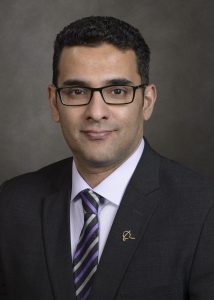







Kolkata, August 31, 2026 – Union Minister of State for Education and Development of North Eastern Region (DoNER) Sukanta Majumdar on Monday described India-Russia relations as a “time-tested partnership” founded on decades of mutual trust, shared experiences and strategic cooperation, while calling for a renewed focus on emerging areas such as technology, innovation, manufacturing, education, business, energy and people-to-people exchanges.
Addressing the SAMPARK – India-Russia Bilateral Conclave 2026 in Kolkata, Majumdar said the changing global geopolitical and economic landscape had created both challenges and new opportunities for the two countries to deepen their engagement and prepare the partnership for the future.
“India and Russia are often described as time-tested partners. But our relationship must also evolve with the changing times. The strength of our partnership lies in the trust that has been built over decades, but our responsibility is to expand that relationship into new areas and make it more relevant to the opportunities and challenges of the 21st century,” he said.
The Minister said the India-Russia relationship had evolved over several decades through sustained cooperation between the governments and institutions of the two countries. He noted that the partnership had extended well beyond traditional diplomatic engagement and had contributed to the development of important sectors of the Indian economy and strategic establishment.
“India and Russia have shared a remarkable journey. From the early years of industrialisation to cooperation in science, technology, space and defence, Russia and the former Soviet Union have been important partners in India’s development. This history gives us a strong foundation on which we can build the next phase of our relationship,” Majumdar said.
He stressed that the historical depth of the relationship should not become a reason for complacency, but rather a foundation for greater ambition. According to him, the two countries must identify new areas of cooperation while continuing to strengthen the sectors where longstanding partnerships already exist.
“Our partnership has stood the test of time because it has been based on mutual respect, trust and an understanding of each other’s interests. But a time-tested relationship cannot remain static. It must continuously adapt, innovate and create new opportunities,” he said.
Majumdar underlined the importance of strengthening economic engagement and broadening the participation of businesses and industries in the bilateral relationship. He said there was considerable scope for India and Russia to work together in areas including manufacturing, railways, aerospace, mining, technology, research and innovation.
“Manufacturing, railways, aerospace, mining, technology and innovation offer enormous possibilities for India and Russia to work together. We need to encourage greater participation of businesses and industry so that our strategic partnership is matched by a strong and dynamic economic relationship,” the Minister said.
He also emphasised the growing importance of energy cooperation, describing it as one of the important pillars of India-Russia engagement. Referring to cooperation in the civil nuclear sector, Majumdar said the two countries should build upon existing projects while exploring new technological possibilities.
“Energy cooperation remains an important pillar of our partnership. Our cooperation in civil nuclear energy demonstrates what India and Russia can achieve when our expertise and capabilities come together. Going forward, we should also look at emerging technologies and new areas of cooperation, including possibilities in advanced and small modular nuclear reactors,” he said.
The Minister said science, research and innovation would be critical to determining the future trajectory of India-Russia relations. He called for stronger institutional linkages between universities, research organisations, scientists and young innovators in the two countries.
“The future of India-Russia cooperation cannot be built only through government-to-government engagement. Universities, researchers, scientists, students, entrepreneurs and young people must become active participants in this relationship. Academic and research partnerships can become powerful catalysts for innovation and mutual understanding,” Majumdar said.
He also highlighted the importance of cultural and educational exchanges in strengthening people-to-people relations. Referring to Kolkata’s long-standing intellectual and cultural engagement with Russia, he said the city could play an important role in creating new bridges between the two countries.
“Kolkata has historically been an important centre of intellectual and cultural exchange. It has a special place in the people-to-people relationship between India and Russia. The city’s universities, scholars, cultural institutions and wider intellectual community can contribute significantly to taking this relationship forward,” he said.
Majumdar said greater cooperation in education, languages, literature and cultural studies could help the younger generation understand the depth of India-Russia relations and create new avenues for engagement.
“Our relationship is not merely about strategic interests. It is also about people, culture, knowledge and shared experiences. Greater interaction among students, scholars and cultural institutions can strengthen the foundation of friendship between our two societies,” he said.
Against the backdrop of a rapidly changing international order, the Minister said India and Russia had an opportunity to work together towards a more stable, connected and prosperous global environment.
“We are living through a period of profound global transformation. Geopolitical equations are changing, new economic models are emerging and technology is reshaping societies at an unprecedented pace. In such a world, India and Russia have an opportunity to work together for a more connected, stable and prosperous future,” Majumdar said.
He emphasised that India’s engagement with Russia must continue to be guided by strategic autonomy, mutual respect and the shared objective of promoting peace, stability and development.
“India and Russia have demonstrated over the years that countries can maintain a relationship based on mutual trust and mutual respect while pursuing their respective national interests. This understanding remains important in today’s complex international environment,” he said.
Majumdar further called for greater connectivity between businesses, academic institutions, research organisations and civil society in both countries, saying that wider participation would help translate the goodwill between India and Russia into concrete outcomes.
“Governments can create an enabling environment, but the real strength of the relationship will come from people, institutions, businesses and young innovators. We must create platforms where they can interact, exchange ideas and develop partnerships,” he said.
He described initiatives such as SAMPARK as important platforms for bringing together policymakers, diplomats, academics, business leaders, researchers and other stakeholders to discuss the future of India-Russia cooperation.
“Platforms such as SAMPARK can become catalysts for cooperation. They bring together ideas, institutions and individuals and provide an opportunity to identify new areas of collaboration. Our task is not merely to preserve the legacy of our partnership, but to prepare it for the future,” Majumdar said.
The Minister said the next phase of India-Russia relations should be driven by innovation, economic opportunity, knowledge exchange and stronger people-to-people connections while retaining the strategic trust that has characterised the partnership for decades.
“India and Russia have travelled a long journey together. The next chapter of this time-tested friendship must be defined by greater connectivity, innovation, shared prosperity and opportunities for future generations. We must preserve the trust that has brought us this far while creating new possibilities for the generations ahead,” Majumdar said.































































-A4-Size-(2)_page-0001.jpg)