




































- Culloden to the Colonies: Scotland’s Remarkable Journey to the New World
- From Highland Clans to the American Frontier: The Scottish Legacy in the Birth of the United States
- Beyond Braveheart: Scotland’s Forgotten Role in the Making of the United States
- Empire, Exile and Independence: The Scottish Story Behind America’s Revolution
By Sangeeta Saxena
New Delhi. 04 July 2026. History often remembers the American Revolution as a struggle between Britain’s thirteen colonies and the British Crown. Yet beneath that familiar narrative lies another compelling story—one of a people who were both conquerors and conquered, subjects of the British Empire yet fiercely protective of their own identity. The eighteenth-century Scottish experience was shaped by political union, rebellion, economic transformation and mass migration, creating one of history’s most remarkable paradoxes. From the battlefields of Culloden to the frontiers of North Carolina and Virginia, Scots carried with them a legacy of resilience, enterprise and Enlightenment thought that would profoundly influence the development of colonial America. Their journey was not merely one of migration but of transformation, as a nation once at odds with England became an indispensable partner in the British Empire while simultaneously helping to lay the intellectual, economic and military foundations of the United States.
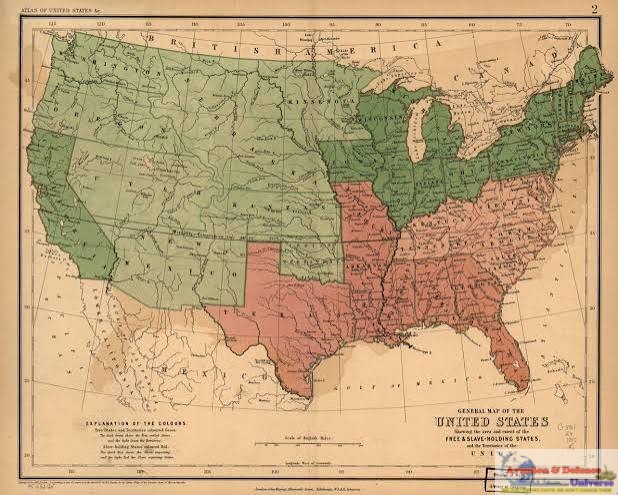 The political landscape changed dramatically with the Acts of Union of 1707, which formally merged the Kingdoms of England and Scotland into the Kingdom of Great Britain. The Union established a single Parliament at Westminster, created a unified British government, brought foreign and colonial policy under one authority, and integrated the economies of the two kingdoms into a much larger commercial market. At the same time, Scotland retained important institutions that preserved its distinct identity, including its independent legal system, the Presbyterian Church of Scotland and its renowned educational system. Many Scots accepted the Union because it promised unprecedented economic opportunities, particularly unrestricted access to England’s rapidly expanding overseas empire and colonial markets. Others, however, viewed the agreement as the loss of Scotland’s sovereignty and believed their nation had surrendered its political independence.
Opposition to the Union stemmed from several sources. Politically, many Scots believed that real power would rest in London and that English politicians would dominate the new Parliament, reducing Scotland’s influence over its own affairs. Economically, critics argued that Scotland’s political elite had effectively been persuaded to support the Union following the disastrous failure of the Darien Scheme, Scotland’s ambitious but unsuccessful attempt to establish a trading colony on the Isthmus of Panama during the 1690s. The collapse of the venture devastated the Scottish economy, making union with England appear financially attractive to many influential landowners and merchants. Culturally, there were widespread fears that Scotland would gradually lose its language, traditions and distinctive national identity under English influence.
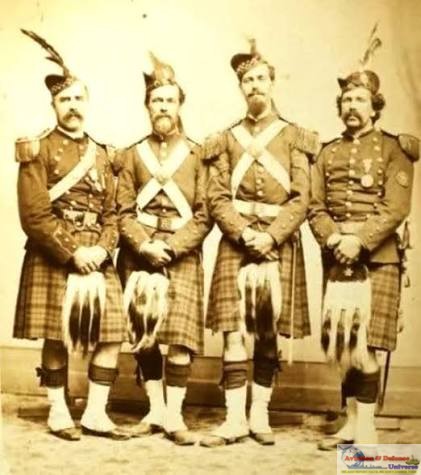 The strongest resistance to the Union came from supporters of the exiled House of Stuart, known as the Jacobites. Their objective was to restore the Stuart monarchy, which had been displaced during the Glorious Revolution of 1688. Major Jacobite uprisings occurred in 1715 and again in 1745, the latter led by Charles Edward Stuart, better known as Bonnie Prince Charlie. Initially, the Jacobite army achieved remarkable success, advancing deep into England before being forced to retreat. The rebellion ended decisively at the Battle of Culloden in 1746, where government forces commanded by the Duke of Cumberland crushed the Jacobite army in what proved to be the last pitched battle fought on British soil.
The aftermath of Culloden transformed Highland Scotland. Determined to prevent future rebellions, the British government dismantled the traditional clan system. Clan chiefs lost much of their authority, weapons were confiscated, Highland dress, including tartan, was temporarily prohibited, and many traditional aspects of Highland society were systematically suppressed. These measures fundamentally altered the social, political and economic structure of the Scottish Highlands and accelerated the decline of the centuries-old clan system.
Ironically, it was this very Union that opened the doors of the British Empire to Scotland. Prior to 1707, Scottish merchants had been largely excluded from England’s colonial trading networks. Following the Union, Scots gained unrestricted access to the expanding imperial economy and seized the opportunities it presented. They became successful merchants, soldiers, plantation owners, colonial governors, physicians, teachers, engineers and missionaries, rising to positions of considerable influence throughout Britain’s overseas possessions. Scottish participation became a defining feature of British imperial expansion across North America, the Caribbean, India and Africa.
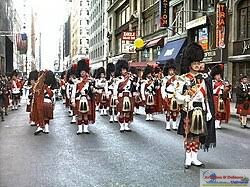 Large-scale Scottish migration to North America gathered pace throughout the eighteenth century. The migrants broadly fell into two groups. Lowland Scots emigrated voluntarily, seeking commercial opportunities, business ventures, land ownership and professional careers. Many settled in prosperous colonial cities such as Philadelphia, New York and Charleston, where they became active in trade, finance and education. Highland Scots, by contrast, often left their homeland out of necessity. Following the defeat at Culloden and later during the Highland Clearances, many families lost their ancestral lands as traditional agriculture declined, clan society collapsed and economic opportunities diminished. These emigrants established communities in North Carolina, South Carolina, Georgia, Virginia and Nova Scotia, where they sought to rebuild their lives.
By the middle of the eighteenth century, Scots had become disproportionately influential within Britain’s American colonies. They emerged as leading traders, lawyers, Presbyterian ministers, educators, surveyors and military officers. Scotland’s universities, regarded among the finest in Europe, produced highly educated graduates whose ideas profoundly shaped colonial intellectual life. Many colonial colleges appointed Scottish-trained scholars, helping to spread Enlightenment thought throughout British North America.
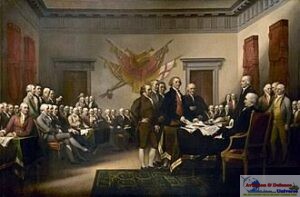
When the American Revolution broke out in 1775, the Scottish community found itself divided. Many Highland Scots, particularly those who had benefited from British patronage after 1746 or who had received land grants from the Crown, remained loyal to Britain. Others embraced the Patriot cause, having come to identify more closely with their new American homeland than with Britain. Moreover, the political philosophy of the Scottish Enlightenment exerted a significant influence on the revolutionary generation. Thinkers such as David Hume, Adam Smith and Francis Hutcheson advanced ideas concerning liberty, constitutional government, moral philosophy and natural rights that helped shape the intellectual foundations of the American Revolution. Several leading figures in the revolutionary movement were either Scottish-born or of Scottish ancestry and drew inspiration from these Enlightenment principles.
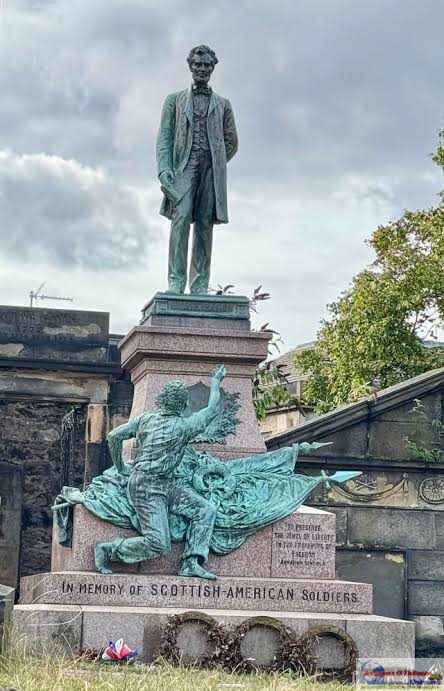
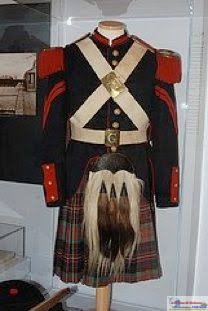 Scottish immigrants and their descendants made enduring contributions to the emerging United States. They played a major role in settling the Appalachian frontier and the American South, contributed significantly to commerce and banking, strengthened educational institutions, served with distinction in military leadership, influenced American political thought and established Presbyterian religious traditions that became integral to many colonial communities. Particularly influential were the Scots-Irish, or Ulster Scots, whose ancestors had first settled in Ulster, Ireland, before migrating to North America. Their experience of frontier life and strong tradition of self-reliance made them among the most significant pioneers of westward expansion and participants in the Revolutionary War.
The history of Scotland during the eighteenth century illustrates a remarkable historical paradox. Although many Scots initially resisted political union with England and fought to preserve their independence during the Jacobite uprisings, the Union of 1707 ultimately provided Scotland with access to one of the world’s largest colonial empires. Scots consequently became active participants in British imperial expansion, playing influential roles in North America, India, the Caribbean, Africa and many other parts of the Empire. In America, they were far more than ordinary settlers; they became merchants, soldiers, educators, political thinkers and nation-builders who helped shape the colonies’ economic development, intellectual culture and, ultimately, the creation of the United States itself. Their story demonstrates how former rivals within the British Isles evolved into partners in empire while continuing to preserve a distinct Scottish identity that remains evident to this day.
The Scottish experience in the eighteenth century defies simple historical labels. The Union of 1707 transformed Scotland from an independent kingdom into a partner within Great Britain, opening unprecedented opportunities across an expanding global empire even as many Scots mourned the loss of political sovereignty. Through migration, commerce, military service and intellectual leadership, Scots became architects of both the British Empire and the emerging American nation. Divided during the American Revolution yet united by a legacy of resilience and innovation, they left an enduring imprint on the political philosophy, frontier expansion and institutional development of the United States. Their story is a powerful reminder that the making of America was not solely an English enterprise, but the product of diverse peoples whose identities, loyalties and aspirations reshaped the course of modern history.
 The relationship between the Scots and the English during the eighteenth century is a crucial yet often misunderstood aspect of the history of American colonisation. It is inaccurate to describe it simply as a conflict between “Scots and Brits” because, following the Acts of Union in 1707, the Scots themselves became British subjects. Nevertheless, many Scots retained a strong sense of national identity and continued to resent what they perceived as English political dominance. This complex relationship helps explain why so many Scots emigrated to North America and eventually became among the most influential settlers in Britain’s American colonies. Before the political union of 1707, Scotland and England were two entirely separate kingdoms. Although they had shared the same monarch since the Union of the Crowns in 1603, when James VI of Scotland inherited the English throne as James I of England, each kingdom maintained its own Parliament, legal system, established church, educational institutions and distinct national identity. For centuries before this dynastic union, Scotland and England had frequently been rivals, fighting numerous wars, most famously the Wars of Scottish Independence led by William Wallace and later Robert the Bruce during the late thirteenth and early fourteenth centuries. These conflicts became central to Scottish national consciousness and reinforced a tradition of independence that endured well into the eighteenth century.














































































-A4-Size-(2)_page-0001.jpg)