




































- From 1776 to 2026: USA Commemorates By Honouring the Past, Shaping the Future
- America’s Semiquincentennial : North-South Divide to Nationhood
- Take a Peep into the American History : Colonies to Union & Confederation
By Sangeeta Saxena
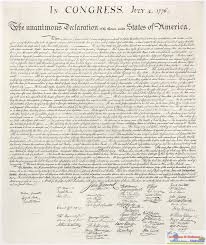
New Delhi. 04 July 2026. The United States of America commemorated the 250th anniversary of the Declaration of Independence, marking a historic milestone in the nation’s journey from thirteen British colonies to one of the world’s leading democracies and economic, military and technological powers. The Semiquincentennial celebrations honour the enduring ideals of liberty, democracy, equality and self-governance that were enshrined in the Declaration of Independence on July 4, 1776, and continue to shape the nation’s identity.
The year-long commemoration reflects on America’s remarkable transformation over two and a half centuries. From the struggle for independence against British colonial rule to the drafting of the Constitution, the expansion of democratic institutions, the abolition of slavery, the civil rights movement, and leadership in scientific innovation, the United States has continually evolved while confronting complex social and political challenges.
Across the country and globally commemorative events are celebrating the nation’s rich history through exhibitions, cultural programmes, educational initiatives, military displays, historical reenactments and community outreach activities. Museums, national parks and historic landmarks are highlighting the people and events that shaped the American republic while encouraging younger generations to appreciate the nation’s constitutional values and democratic traditions.
The anniversary also provides an opportunity to recognise America’s contributions to global peace, security, scientific advancement and economic development. As a founding member of the United Nations and a leading partner in international alliances, the United States continues to play a significant role in addressing global challenges ranging from security and humanitarian assistance to technological innovation and space exploration.
 The celebrations acknowledge that the American story has been one of both extraordinary achievements and difficult chapters. Historical milestones such as the Civil War, the fight against slavery, the civil rights movement and successive waves of social reform have strengthened the nation’s commitment to creating a more inclusive and representative democracy.
The Semiquincentennial is not only a celebration of the nation’s past but also a reflection on its future. It encourages citizens to reaffirm the principles of freedom, opportunity, civic responsibility and national unity that have guided the United States for 250 years while inspiring future generations to contribute to the country’s continued progress.
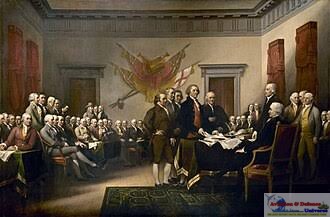
The 250th anniversary of American Independence is more than a historic celebration—it is an opportunity to reflect on the ideals that founded the United States and the resilience that has sustained it through war, reform and innovation. As America commemorates this landmark milestone, the Semiquincentennial serves as both a tribute to its past and a renewed commitment to the democratic values that continue to influence the nation and the world. It is also day to remember Benjamin Franklin who remains the only Founding Father to sign all four key documents that helped create the United States: the Declaration of Independence (which he helped write); the Franco-American Treaty of 1778 (securing the alliance with France); the Treaty of Paris of 1783 (officially ending the war); and the Constitution. Fellow Founding Father Roger Sherman has a different but competing claim. He was the only man to sign the four great revolutionary documents: the Articles of Association; the Declaration of Independence; the Articles of Confederation; and the Constitution too. Despite the fact that Americans celebrate independence on July 4, the Continental Congress – made up of delegates of the colonies – voted to be ‘free and independent states’ on July 2, 1776. It was two days later that the Declaration of Independence was approved. As soon as this was done, the hallowed document was sent to a printer named John Dunlap, who made around 200 copies in total.These Dunlap Broadsides were widely distributed, but were unsigned. The official copy of the Declaration – the one now seen in the National Archives in Washington DC – was written up by Timothy Matlack later in July and signed on August 2.
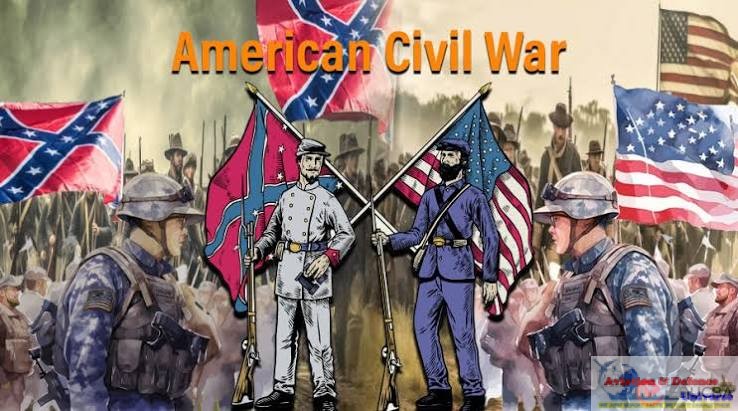
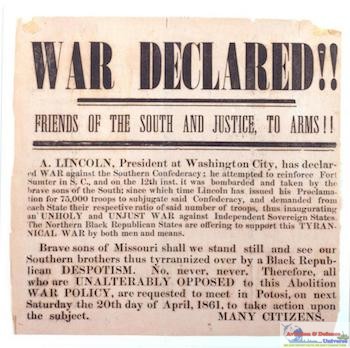
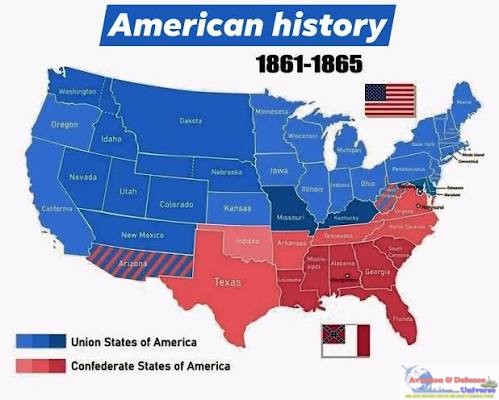 But no story on American Independence Day celebrations can be complete without the story of the American Revolution and the American Civil War, separated by nearly a century but both play an important role in understanding the worlds designated Big Brother United States of America. The American Civil War (April 12, 1861 – May 26, 1865; also known by other names) was a civil war in the United States between the Union (“the North”) and the Confederacy (“the South”), which was formed in 1861 by states that had seceded from the Union to preserve slavery in the United States.
The American Civil War was the culmination of the struggle between the advocates and opponents of slavery that dated from the founding of the United States. This sectional conflict between Northern states and slaveholding Southern states had been tempered by a series of political compromises, but by the late 1850s the issue of the extension of slavery to the western states had reached a boiling point. The election of Abraham Lincoln, a member of the antislavery Republican Party, as president in 1860 precipitated the secession of 11 Southern states, leading to a civil war. The Union won the American Civil War. The war effectively ended in April 1865 when Confederate General Robert E. Lee surrendered his troops to Union General Ulysses S. Grant at Appomattox Court House in Virginia. The final surrender of Confederate troops on the western periphery came in Galveston, Texas, on June 2.
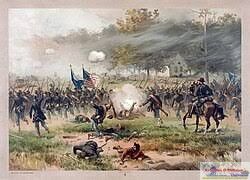
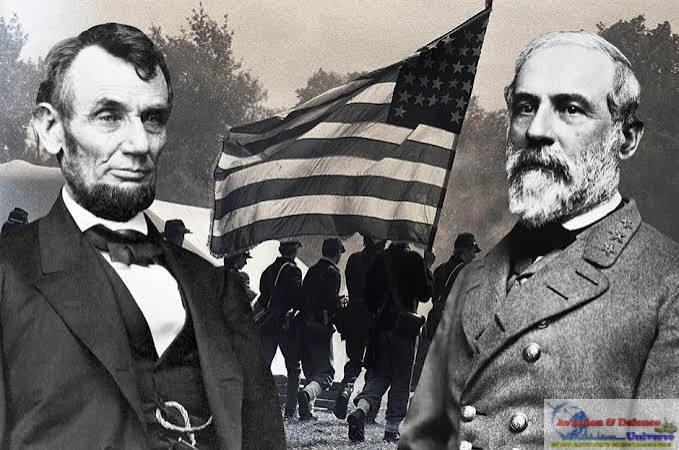
It is estimated that from 752,000 to 851,000 soldiers died during the American Civil War. This figure represents approximately 2 percent of the American population in 1860. The Battle of Gettysburg, one of the bloodiest engagements during the Civil War, resulted in about 7,000 deaths and 51,000 total casualties. Important people during the American Civil War included Abraham Lincoln, the 16th president of the United States, whose election prompted the secession of Southern states; Jefferson Davis, the president of the Confederacy; Ulysses S. Grant, the most successful and prominent general of the Union; and Robert E. Lee, Grant’s counterpart in the Confederacy. American Civil War, four-year war (1861–65) between the United States and 11 Southern states that seceded from the Union and formed the Confederate States of America.
 The secession of the Southern states (in chronological order, South Carolina, Mississippi, Florida, Alabama, Georgia, Louisiana, Texas, Virginia, Arkansas, Tennessee, and North Carolina) in 1860–61 and the ensuing outbreak of armed hostilities were the culmination of decades of growing sectional friction over slavery. Between 1815 and 1861 the economy of the Northern states was rapidly modernizing and diversifying. Although agriculture—mostly smaller farms that relied on free labour—remained the dominant sector in the North, industrialization had taken root there. Moreover, Northerners had invested heavily in an expansive and varied transportation system that included canals, roads, steamboats, and railroads; in financial industries such as banking and insurance; and in a large communications network that featured inexpensive, widely available newspapers, magazines, and books, along with the telegraph.
By contrast, the Southern economy was based principally on large farms (plantations) that produced commercial crops such as cotton and that relied on slaves as the main labour force. Rather than invest in factories or railroads as Northerners had done, Southerners invested their money in slaves—even more than in land; by 1860, 84 percent of the capital invested in manufacturing was invested in the free (nonslaveholding) states. Yet, to Southerners, as late as 1860, this appeared to be a sound business decision. The price of cotton, the South’s defining crop, had skyrocketed in the 1850s, and the value of slaves—who were, after all, property—rose commensurately. By 1860 the per capita wealth of Southern whites was twice that of Northerners, and three-fifths of the wealthiest individuals in the country were Southerners.
The extension of slavery into new territories and states had been an issue as far back as the Northwest Ordinance of 1784. When the slave territory of Missouri sought statehood in 1818, Congress debated for two years before arriving upon the Missouri Compromise of 1820. This was the first of a series of political deals that resulted from arguments between pro-slavery and antislavery forces over the expansion of the “peculiar institution,” as it was known, into the West. The end of the Mexican-American War in 1848 and the roughly 500,000 square miles (1.3 million square km) of new territory that the United States gained as a result of it added a new sense of urgency to the dispute.
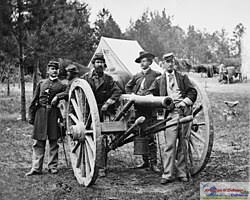 More and more Northerners, driven by a sense of morality or an interest in protecting free labour, came to believe, in the 1850s, that bondage needed to be eradicated. White Southerners feared that limiting the expansion of slavery would consign the institution to certain death. Over the course of the decade, the two sides became increasingly polarized and politicians less able to contain the dispute through compromise. When Abraham Lincoln, the candidate of the explicitly antislavery Republican Party, won the 1860 presidential election, seven Southern states (South Carolina, Mississippi, Florida, Alabama, Georgia, Louisiana, and Texas) carried out their threat and seceded, organizing as the Confederate States of America.
In the early morning hours of April 12, 1861, rebels opened fire on Fort Sumter, at the entrance to the harbour of Charleston, South Carolina. Curiously, this first encounter of what would be the bloodiest war in the history of the United States claimed no victims. After a 34-hour bombardment, Maj. Robert Anderson surrendered his command of about 85 soldiers to some 5,500 besieging Confederate troops under P.G.T. Beauregard. Within weeks, four more Southern states (Virginia, Arkansas, Tennessee, and North Carolina) left the Union to join the Confederacy.
With war upon the land, President Lincoln called for 75,000 militiamen to serve for three months. He proclaimed a naval blockade of the Confederate states, although he insisted that they did not legally constitute a sovereign country but were instead states in rebellion. He also directed the secretary of the treasury to advance $2 million to assist in the raising of troops, and he suspended the writ of habeas corpus, first along the East Coast and ultimately throughout the country. The Confederate government had previously authorized a call for 100,000 soldiers for at least six months’ service, and this figure was soon increased to 400,000.
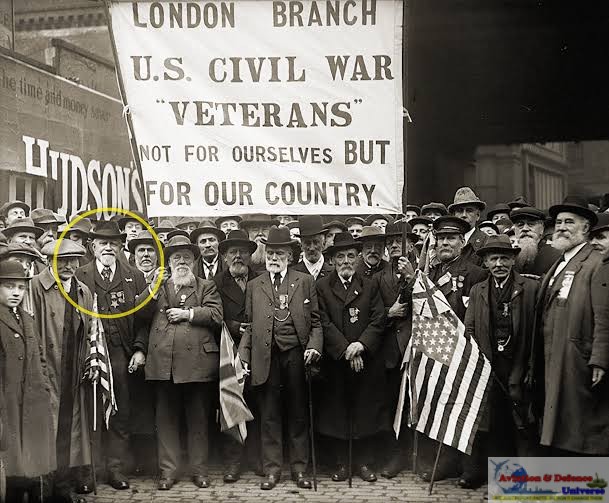 The Confederate States of America consisted of 11 states: 7 original members and 4 states that seceded from the United States after the fall of Fort Sumter. Four border states held enslaved people but remained in the Union. West Virginia became the 24th loyal U.S. state in 1863. At first glance it seemed that the 23 states that remained in the Union after secession were more than a match for the 11 Southern states. Approximately 21 million people lived in the North, compared with some nine million in the South of whom about four million were slaves. In addition, the North was the site of more than 100,000 manufacturing plants, against 18,000 south of the Potomac River, and more than 70 percent of the railroads were in the Union. Furthermore, the Federals had at their command a 30-to-1 superiority in arms production, a 2-to-1 edge in available manpower, and a great preponderance of commercial and financial resources. The Union also had a functioning government and a small but efficient regular army and navy.
The Confederacy was not predestined to defeat, however. The Southern armies had the advantage of fighting on interior lines, and their military tradition had bulked large in the history of the United States before 1860. Moreover, the long Confederate coastline of 3,500 miles (5,600 km) seemed to defy blockade, and the Confederate president, Jefferson Davis, hoped to receive decisive foreign aid and intervention. Confederate soldiers were fighting to achieve a separate and independent country based on what they called “Southern institutions,” the chief of which was the institution of slavery. So the Southern cause was not a lost one; indeed, other countries—most notably the United States itself in the American Revolution against Britain—had won independence against equally heavy odds.Command problems plagued both sides. Of the two rival commanders in chief, most people in 1861 thought Davis to be abler than Lincoln. Davis was a graduate of the U.S. Military Academy, a hero of the Mexican-American War, a capable secretary of war under Pres. Franklin Pierce, and a U.S. representative and senator from Mississippi. Lincoln—who had served in the Illinois state legislature and as an undistinguished one-term member of the U.S. House of Representatives—could boast of only a brief period of military service in the Black Hawk War, in which he saw no action.
 Jefferson Davis, president of the Confederate States of America (1861–65) during the American Civil War. As president and commander in chief of the Confederate forces, Davis revealed many fine qualities, including dignity, firmness, determination, and honesty, but he was flawed by his excessive pride, hypersensitivity to criticism, poor political skills, and tendency to micromanage. He engaged in extended petty quarrels with generals and cabinet members. He also suffered from ill health throughout the conflict. Davis’s effectiveness was further hampered by a political system that limited him to a single six-year term—thereby making him a lame duck immediately upon his election—and that frowned on organized political parties, which Southerners accused of having been at least partly responsible for the coming of the Civil War. The lack of political parties meant that Davis could command no loyalty from a broad group of people such as governors or political appointees when he came under heavy criticism. To a large extent and by his own preference, Davis was his own secretary of war, although five different men served in that post during the lifetime of the Confederacy. Davis himself also filled the position of general in chief of the Confederate armies until he named Robert E. Lee to that position on February 6, 1865, when the Confederacy was near collapse. In naval affairs—an area about which he knew little—the Confederate president seldom intervened directly, allowing the competent secretary of the navy, Stephen Mallory, to handle the Southern naval buildup and operations on the water.
Did it feel like a history class? Well it is a class I hope you will all love. Will be interesting to understand how United States of America came into being.
 The struggle for North America during the 18th century was not a single conflict but a succession of interconnected wars and political confrontations involving Britain, France, Spain, numerous Native American nations, and eventually the American colonists themselves. These rivalries reshaped the political map of the continent, altered the balance of power among European empires, and ultimately culminated in the birth of the United States. By the beginning of the 18th century, North America was divided among three major European colonial powers. Britain controlled thirteen prosperous colonies stretching along the Atlantic coast from present-day Maine to Georgia. These colonies had grown rapidly, with a population exceeding two million by the 1770s. Their thriving agriculture, expanding commerce, flourishing shipbuilding industry, and locally elected colonial assemblies gave the settlers a considerable degree of economic prosperity and political confidence. As their population increased, British colonists steadily expanded westward in search of fertile land and new opportunities.
In contrast, France controlled an enormous but sparsely populated territory known as New France, encompassing Canada, the Great Lakes region, the Mississippi River basin, and the vast Louisiana Territory. French influence rested less on large-scale settlement and more on an extensive fur trade network, a chain of strategically located military forts, and close alliances with numerous Native American nations. Despite claiming immense stretches of territory, fewer than 80,000 Europeans lived in New France, making it difficult to defend against Britain’s growing colonial population.
Spain maintained control over Florida, Texas, New Mexico, California, most of present-day Mexico, and several Caribbean possessions. Spanish colonial policy centred on Catholic missionary activity, mining, military outposts, and trade within the Spanish Empire. Unlike the densely settled British colonies, Spanish settlements remained concentrated in the southern and southwestern regions of North America.
 Long before European colonisation, North America was inhabited by hundreds of Indigenous nations, each possessing its own political structures, cultures and territorial claims. Among the most influential were the Iroquois Confederacy, Cherokee, Creek, Shawnee, Delaware, Huron, Algonquin and Ojibwe. Rather than maintaining permanent loyalties to any European power, these nations formed alliances according to their own strategic interests, often shifting sides as circumstances changed in order to protect their lands and preserve their independence.
Throughout the first half of the eighteenth century, Europe witnessed a series of major wars whose consequences extended far beyond the continent. North America became an important theatre of these imperial struggles. Queen Anne’s War (1702–1713), the North American phase of the War of the Spanish Succession, pitted Britain against France and Spain. During the conflict, Britain captured Acadia, present-day Nova Scotia, while competition over lucrative fishing grounds intensified and Native American alliances shifted in response to changing military fortunes.
Another major conflict, King George’s War (1744–1748), formed the North American theatre of the War of the Austrian Succession. During this war, British colonial forces captured the strategically important French fortress of Louisbourg on Cape Breton Island. However, when the fortress was returned to France under the terms of the peace treaty negotiated in Europe, many colonists became frustrated that their battlefield victories had been sacrificed through diplomatic compromise over which they had little influence.
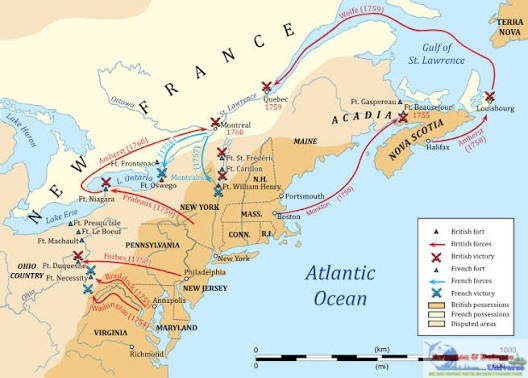 The decisive contest for North America came with the French and Indian War (1754–1763), which formed the North American theatre of the wider Seven Years’ War—often regarded as the world’s first global conflict. The immediate cause of the war lay in competing British and French claims over the Ohio River Valley, a region of immense strategic importance because of its fertile farmland, lucrative fur trade and military significance. Both powers sought to establish forts throughout the area, bringing them into direct confrontation. In 1754, a young Virginia militia officer named George Washington led an expedition against French forces, igniting a conflict that quickly spread across North America, Europe, the Caribbean, Africa and Asia.
Britain fought alongside colonial militias and several Native American allies, while France relied heavily on alliances with the Huron, Algonquin, Ottawa and numerous other Indigenous nations. The conflict reached its turning point with the Battle of Quebec in 1759, where British General James Wolfe defeated French General Louis-Joseph de Montcalm outside the city. Both commanders died during the battle, but the British victory paved the way for the capture of Montreal in 1760 and effectively ended French resistance in Canada.
The Treaty of Paris, signed in 1763, transformed the political landscape of North America. Britain emerged as the continent’s dominant imperial power after France ceded Canada and nearly all its territory east of the Mississippi River. Spain surrendered Florida to Britain but received the vast Louisiana Territory from France as compensation for its losses. French colonial ambitions in mainland North America largely came to an end, while Britain’s territorial empire reached its greatest extent.
 Victory, however, came at a tremendous financial cost. Britain’s national debt had nearly doubled during the war, prompting the government in London to seek new sources of revenue. Believing that the American colonies should contribute to the expenses of their own defence, Parliament imposed a series of taxes while tightening imperial control and stationing British troops permanently in North America. These measures provoked growing resentment among the colonists. The Sugar Act of 1764 imposed duties on sugar and molasses, followed by the Stamp Act of 1765, which required tax stamps on newspapers, legal documents, licences and even playing cards. The colonists fiercely opposed these measures, arguing that they were being taxed without representation in Parliament, giving rise to the famous slogan, “No taxation without representation.” Further tensions emerged with the Townshend Acts of 1767, which taxed imports such as glass, tea, paint, lead and paper. The Tea Act of 1773, designed to assist the financially struggling East India Company while retaining the tax on tea, convinced many colonists that Britain intended to establish a dangerous precedent for parliamentary authority over colonial affairs.
Colonial resistance reached a dramatic climax in December 1773, when protestors disguised as Mohawk Indians boarded British ships in Boston Harbor and dumped 342 chests of tea into the water during what became known as the Boston Tea Party. Britain responded by imposing the Coercive Acts—called the Intolerable Acts by the colonists—which further inflamed public opinion and united many colonies in opposition to British rule.
Open conflict finally erupted in April 1775 with the Battles of Lexington and Concord in Massachusetts. The Continental Congress appointed George Washington as Commander-in-Chief of the Continental Army, transforming scattered colonial resistance into an organised struggle for independence. On 4 July 1776, the Continental Congress adopted the Declaration of Independence, drafted primarily by Thomas Jefferson. The document proclaimed that all men were created equal, possessed natural rights, derived government from the consent of the governed, and retained the right to overthrow governments that became tyrannical.
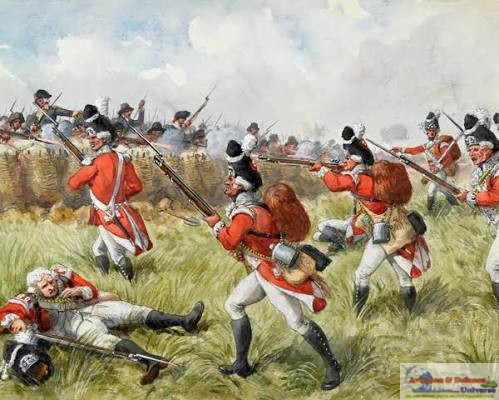 Initially, the colonies fought Britain alone, but the conflict changed dramatically after the American victory at Saratoga in 1777 convinced France that the rebellion had a realistic chance of success. France formally recognised the United States and entered the war, providing crucial financial assistance, military supplies, troops and naval power. Spain followed in 1779, not as a direct ally of the United States but as an ally of France against Britain. Under Governor Bernardo de Gálvez, Spanish forces captured Baton Rouge, Mobile and Pensacola, forcing Britain to divert valuable military resources to the Gulf Coast and Caribbean theatres.
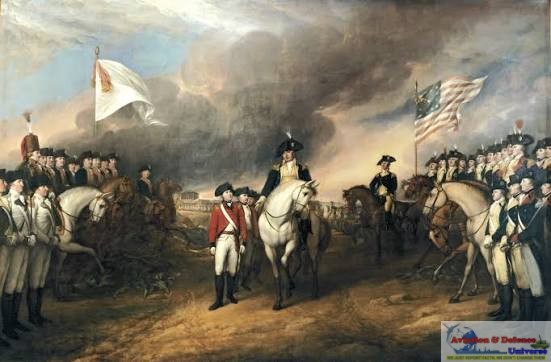
The decisive moment of the war came in 1781 at the Siege of Yorktown in Virginia. A combined American and French force under George Washington and the Comte de Rochambeau, supported by the French fleet commanded by Admiral de Grasse, trapped British General Lord Cornwallis. His surrender effectively ended major military operations in North America.
The Treaty of Paris of 1783 formally recognised the independence of the United States. Britain ceded territory extending from the Atlantic Ocean to the Mississippi River, bounded by Canada to the north and Spanish Florida to the south, creating one of the largest new republics in the modern world.
 The struggles that transformed North America during the eighteenth century had profound global consequences. Britain emerged from the Seven Years’ War as the dominant colonial power, yet its attempts to recover wartime expenses through taxation alienated its own American colonies and ultimately led to their rebellion. The American Revolution created the first large modern republic founded upon enlightenment principles of liberty, constitutional government and representative democracy. France’s support for the Revolution contributed significantly to the financial crisis that helped trigger the French Revolution of 1789. Spain regained Florida and consolidated its position along the Gulf Coast before eventually ceding Florida to the United States in 1821. Meanwhile, Native American nations, despite serving as allies to both European empires and the new United States at different stages of these conflicts, suffered extensive territorial losses as American settlement expanded westward. Thus, what began as a contest among the British, French and Spanish empires ultimately evolved into a revolutionary movement that permanently reshaped North America and influenced the course of modern world history.
Pics : Courtesy Wikipedia, Facebook & Instagram
















































































-A4-Size-(2)_page-0001.jpg)