









- An Engine for India’s Rotorcraft Future: Aravalli on the Development Track
- From Artouste to Shakti to Aravalli: Indo-French Defence Partnership Enters a New Power League
By Sangeeta Saxena
New Delhi. 26 August 2026. India’s quest for greater self-reliance in one of aerospace’s most complex technological domains—aero-engines—has taken a decisive step forward. Hindustan Aeronautics Limited (HAL) and Safran Helicopter Engines have signed the final contract with their joint venture, SAFHAL Helicopter Engines Pvt. Ltd., setting in motion the design, development, manufacture, supply and lifecycle support of the Aravalli, a new-generation 3,500–4,000 shp turboshaft engine that will power India’s future 13-tonne Indian Multi-Role Helicopter (IMRH) and its naval variant, the Deck-Based Multi-Role Helicopter (DBMRH).
More than another engine programme, Aravalli represents an attempt to build within India the technological and industrial foundations needed to develop and sustain powerful helicopter propulsion systems. Significantly, Safran says this is the first time Safran Helicopter Engines has undertaken co-development of an engine in this power class, adding strategic weight to a programme that brings together decades of Indo-French helicopter engine cooperation.
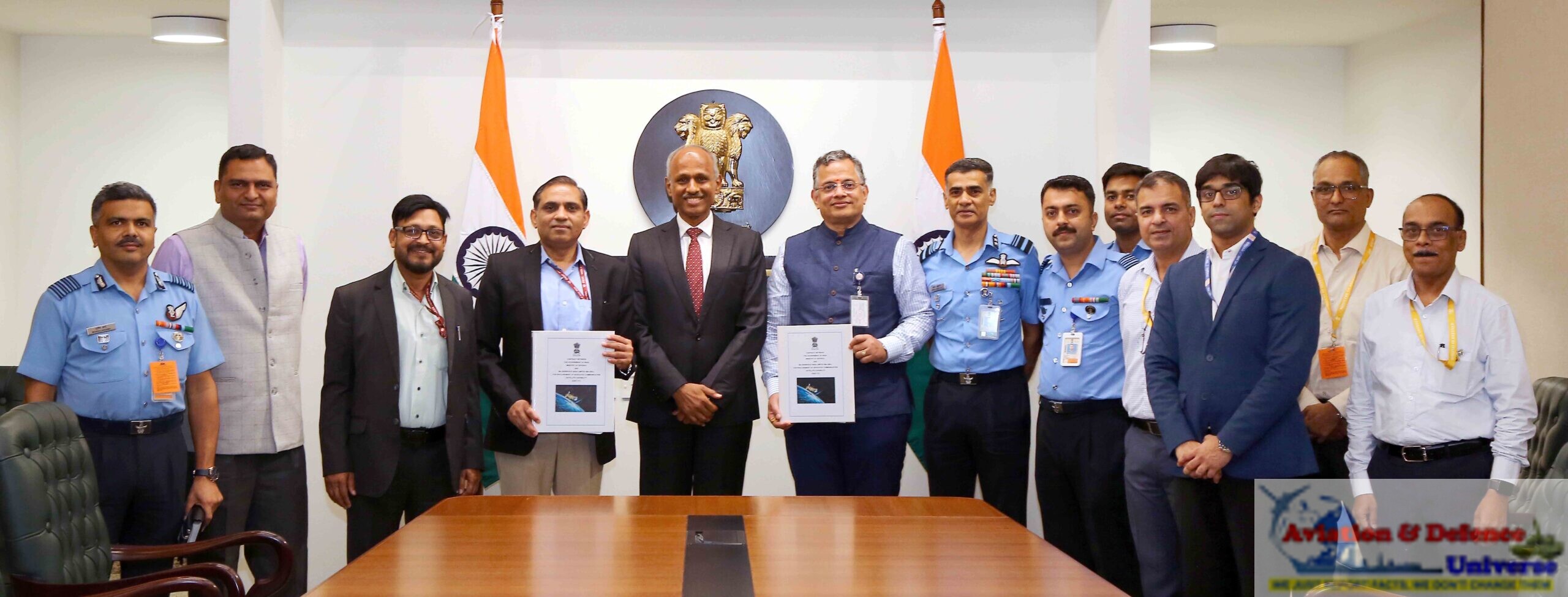
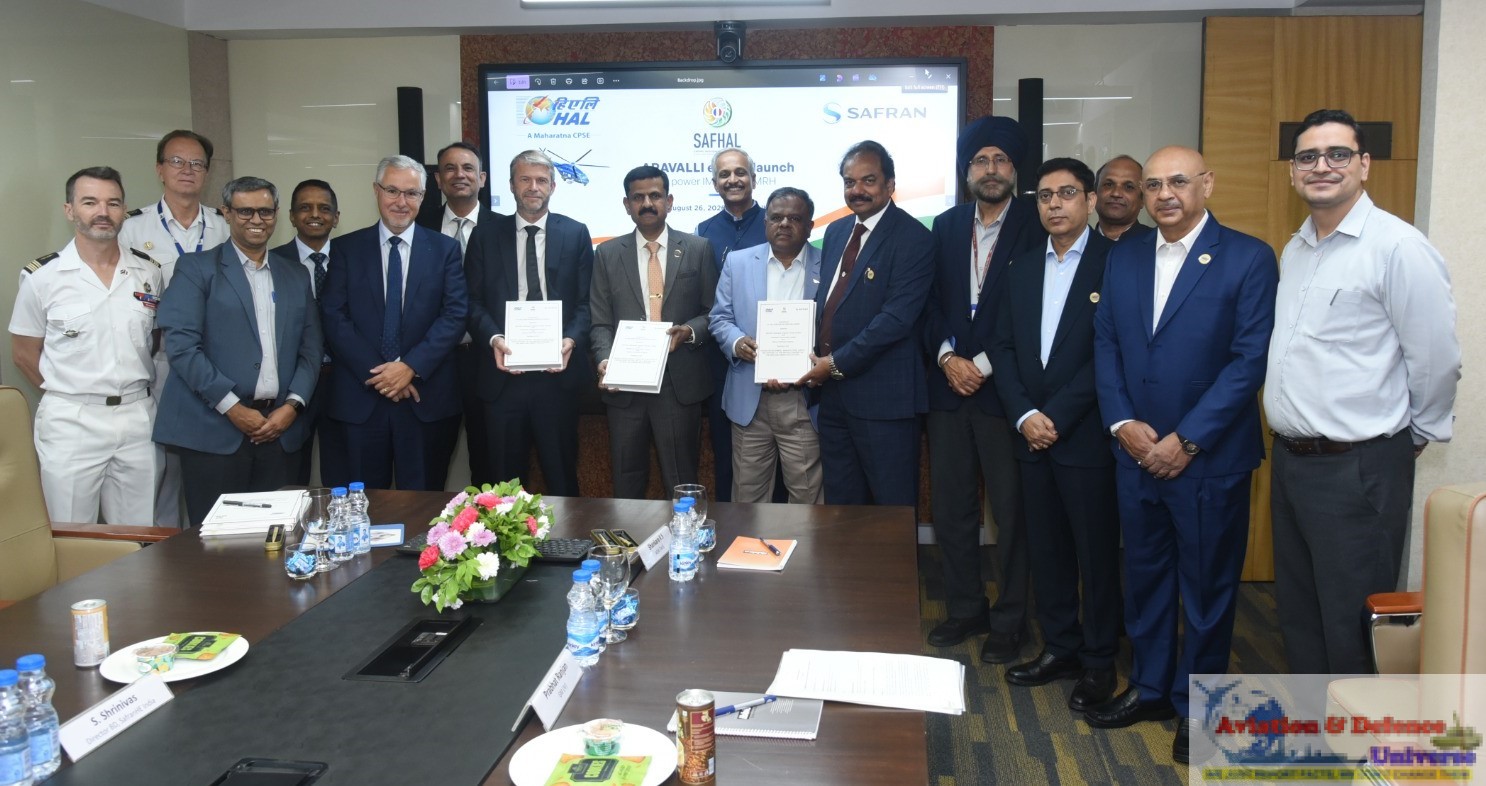
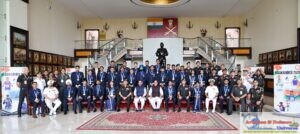
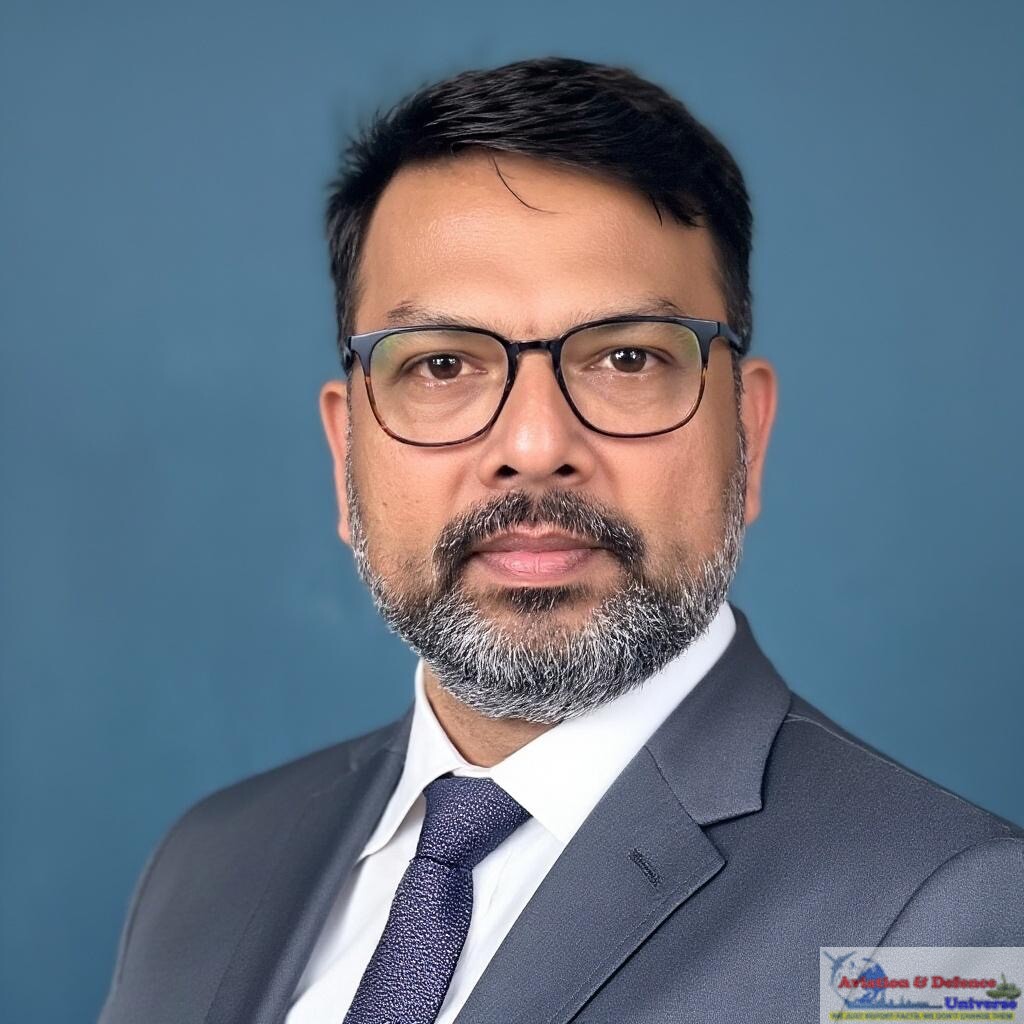
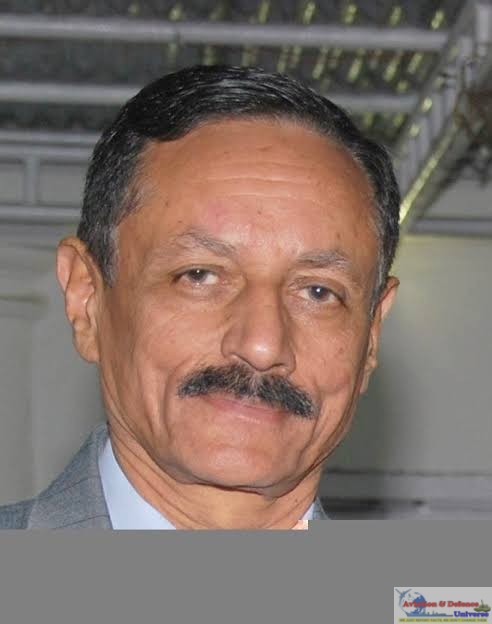
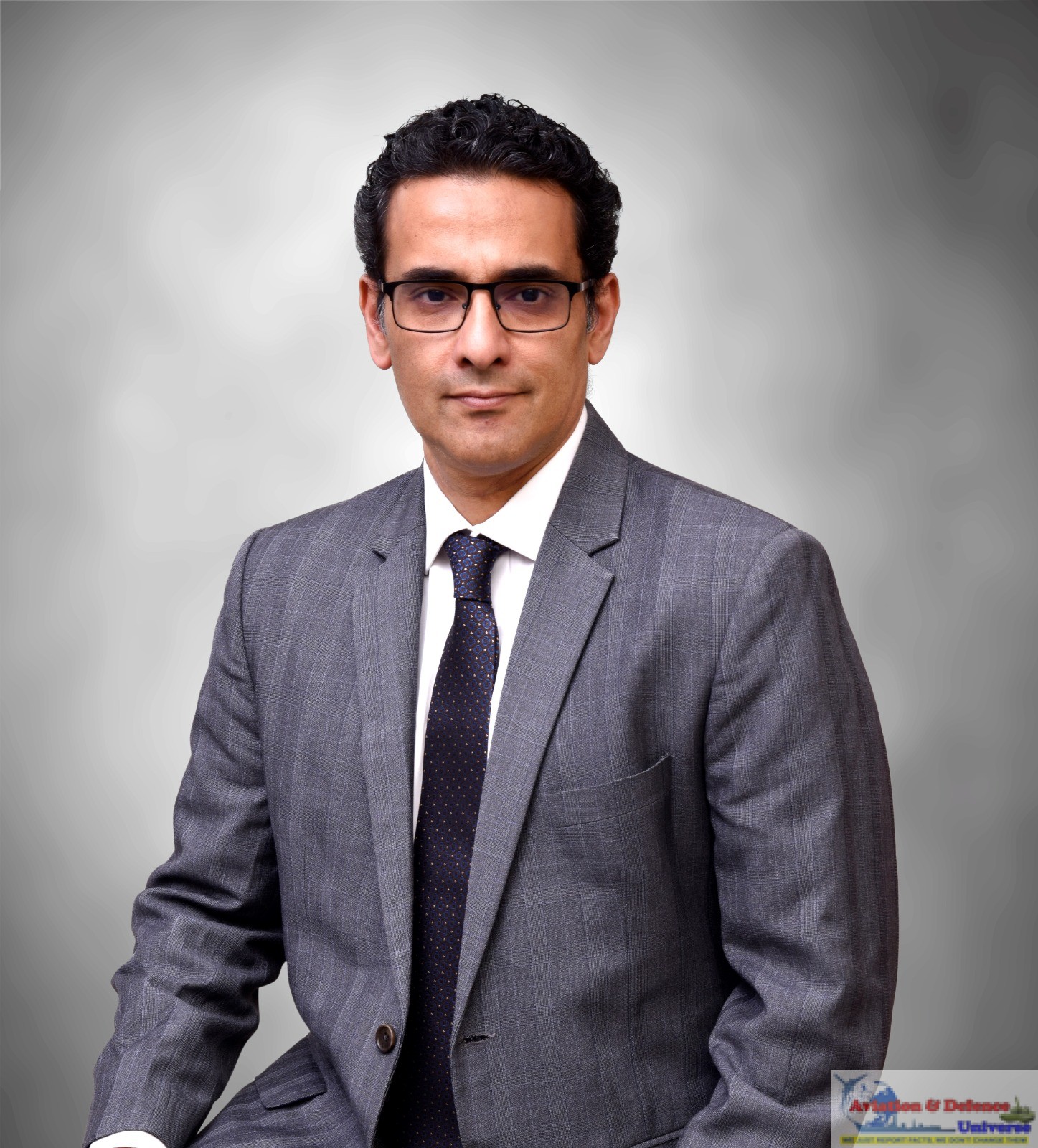
The contract was signed by Ajay Kumar Shrivastava, Director, Engineering, Research & Development, HAL, and Olivier Savin, Director, SAFHAL Helicopter Engines and Executive Vice President, Sales & Marketing, Safran Helicopter Engines. The ceremony was presided over by Ravi K, Chairman and Managing Director, HAL, and Cédric Goubet, Chief Executive Officer, Safran Helicopter Engines.
Named after one of the world’s oldest mountain ranges, the Aravalli has been conceived as much for symbolism as for performance. The name reflects India’s ambition to develop greater self-reliance in critical aerospace propulsion technologies while establishing an indigenous capability capable of supporting future generations of rotorcraft.
For HAL, the programme is closely linked to its ambition of developing a new class of heavier indigenous helicopters. The IMRH is planned as a 13-tonne multi-role platform, while the DBMRH will address demanding shipborne and maritime operational requirements. Developing a powerplant specifically around the requirements of these platforms creates an opportunity to integrate the helicopter and engine programmes from an early stage rather than depend entirely upon an off-the-shelf foreign propulsion solution.
Highlighting the importance of the agreement for India’s aero-engine ambitions, HAL CMD Ravi K said, “The signing of this contract marks a significant step forward in India’s pursuit of self-reliance in aero-engine technologies. Through this collaborative programme with SAFHAL and Safran Helicopter Engines, we are creating a strong foundation for powering next-generation Indian helicopter platforms. The Aravalli engine programme will not only support the operational requirements of the IMRH and DBMRH but will also contribute meaningfully to the development of a robust domestic aerospace industrial ecosystem.”
India changes it’s status from an engine buyer to a development partner. The strategic significance of Aravalli extends beyond the immediate requirement for an IMRH powerplant. Aero-engines remain among the most technologically demanding components of an aircraft, requiring expertise in materials, high-temperature technologies, aerodynamics, manufacturing, testing, certification and lifecycle management.
The SAFHAL model therefore seeks to move the relationship towards joint development. The joint venture will draw upon the complementary capabilities of HAL and Safran Helicopter Engines to develop propulsion technology designed around performance, reliability, maintainability and operational effectiveness. SAFHAL’s work will encompass advanced design methodologies, state-of-the-art manufacturing, extensive testing and long-term product support in accordance with international aerospace standards.
For Safran Helicopter Engines, Aravalli also represents a new stage in a relationship with HAL extending across generations of Indian military helicopters. Calling the programme a landmark in Indo-French aerospace cooperation, Cédric Goubet said, “We are delighted to deepen our long-standing partnership with HAL through this landmark programme. Building on decades of successful cooperation, this initiative reflects our shared commitment to innovation, technology development, and industrial excellence. The Aravalli engine programme represents a new chapter in the strategic relationship between France and India, combining the expertise of our teams to develop world-class propulsion systems for future Indian rotorcraft. This is the first time; Safran HE has taken up such a class of Engine as Co-development. Together, we remain fully committed to supporting our customers and contributing to the growth of India’s aerospace and defence capabilities.”
That reference to co-development is particularly important. Aravalli is not simply about securing engines for two forthcoming helicopter platforms; it is about creating experience, infrastructure and human capital around the complete development and support cycle of a new high-power turboshaft. The new programme is also the latest chapter in a HAL-Safran relationship stretching back decades. Safran Helicopter Engines’ association with HAL began with the Artouste engines powering the Cheetah and Chetak helicopters. Cooperation subsequently advanced to the Shakti engine family, which powers HAL’s Advanced Light Helicopter (ALH), Light Combat Helicopter (LCH) and Light Utility Helicopter (LUH). Aravalli takes that relationship into a substantially higher power category. The progression from Artouste to Shakti and now Aravalli also mirrors the evolution of India’s indigenous helicopter ambitions—from lighter platforms to sophisticated attack and utility helicopters and, eventually, a new generation of medium-lift rotorcraft.
For the Indian Armed Forces, this could become particularly significant as HAL seeks to create indigenous alternatives for missions requiring larger helicopters, greater payloads, longer reach and demanding land- and sea-based operations. IMRH and DBMRH are at the heart of the programme. Aravalli is being developed specifically to meet the propulsion requirements of HAL’s IMRH and DBMRH. The IMRH is envisaged as a versatile medium-lift helicopter capable of undertaking a broad spectrum of military missions. Its naval derivative, the DBMRH, will have to operate in the considerably more demanding maritime environment, where shipboard operations, corrosion, confined deck spaces and sustained deployments impose their own requirements on aircraft and propulsion systems.
Reliability, maintainability and lifecycle support will therefore be as critical as raw engine power. The inclusion of lifecycle support within the SAFHAL contract indicates that the programme is being structured around the complete operational life of the engine rather than development and production alone. It is beyond defence and civil opportunities also beckon. Aravalli could eventually fly beyond military cockpits. HAL and Safran see potential civil applications for the engine in areas including offshore transportation, utility operations and VVIP transport. If developed into a propulsion family capable of serving military as well as civil platforms, the programme could acquire a market far larger than the initial IMRH and DBMRH requirements.
It also creates opportunities for an indigenous support ecosystem. As fleets powered by the engine grow, India could develop greater domestic capability in Maintenance, Repair and Overhaul (MRO), component manufacturing, testing, engineering support and lifecycle management. This industrial dimension is central to the programme. An indigenous aerospace ecosystem cannot be measured merely by the location of a final assembly line. Sustained capability comes from engineering knowledge, manufacturing depth, suppliers, skilled manpower, testing infrastructure and the ability to maintain and upgrade systems throughout their operational lives.
Safran deepens its India footprint with this agreement which also fits into Safran Group’s broader strategic expansion in India. The French aerospace major has been increasing its footprint across manufacturing, engineering, research and development and MRO, positioning India not only as a major market but increasingly as an important part of its industrial ecosystem. Through SAFHAL, that engagement now extends further into joint propulsion development. For India, the long-term importance will depend upon how successfully the programme builds domestic engineering competence, manufacturing capacity and an Indian supplier ecosystem around a technology that remains difficult for relatively few countries and companies to master.
The choice of Aravalli as the engine’s name is therefore particularly apt. The programme represents both continuity and a new technological climb. HAL and Safran have travelled together from the Artouste-powered Cheetah and Chetak to the Shakti-powered ALH, LCH and LUH. Their next destination is considerably more ambitious—a jointly developed high-power engine intended to propel an entirely new class of Indian helicopter.
The signing of the final contract moves Aravalli from ambition towards execution. Its success will ultimately be measured not simply by whether it powers the IMRH and DBMRH, but by how much propulsion design knowledge, manufacturing depth, testing capability, MRO capacity and industrial expertise the programme establishes in India. If those objectives are realised, Aravalli could become much more than the engine inside India’s next-generation helicopters—it could become an important building block in India’s long pursuit of aerospace propulsion self-reliance.
The Aravalli engine contract represents a significant step forward in Indo-French strategic and defence relations, taking the partnership beyond the traditional buyer-seller framework towards joint design, development, manufacturing and long-term technological collaboration. India and France already share deep defence ties across combat aviation, submarines, space, maritime security and advanced technologies, but the SAFHAL programme adds an important new dimension by bringing the two countries together in the particularly complex field of aero-engine development. Safran Helicopter Engines’ decision to undertake co-development of an engine in the 3,500–4,000 shp class with HAL signals both confidence in India’s growing aerospace capabilities and the maturity of the bilateral industrial relationship. By combining French propulsion expertise with HAL’s design, manufacturing and rotorcraft experience, Aravalli reinforces the broader India-France objective of building sovereign and resilient defence capabilities through co-development and co-production. It therefore represents more than an engine for the IMRH and DBMRH—it is another building block in a strategic partnership increasingly centred on technology, industrial cooperation, self-reliance and jointly creating capabilities for the future.




































-A4-Size-(2)_page-0001.jpg)