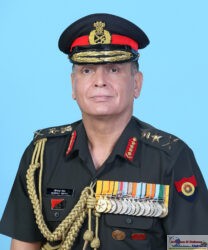









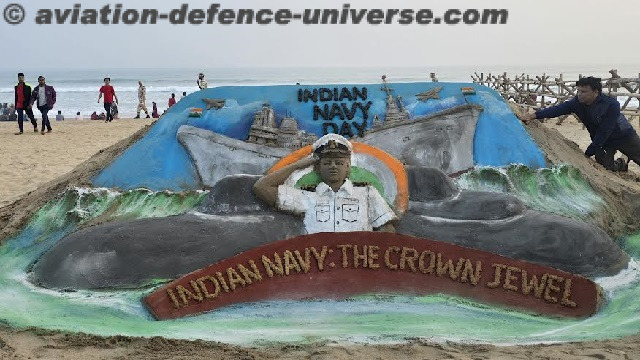
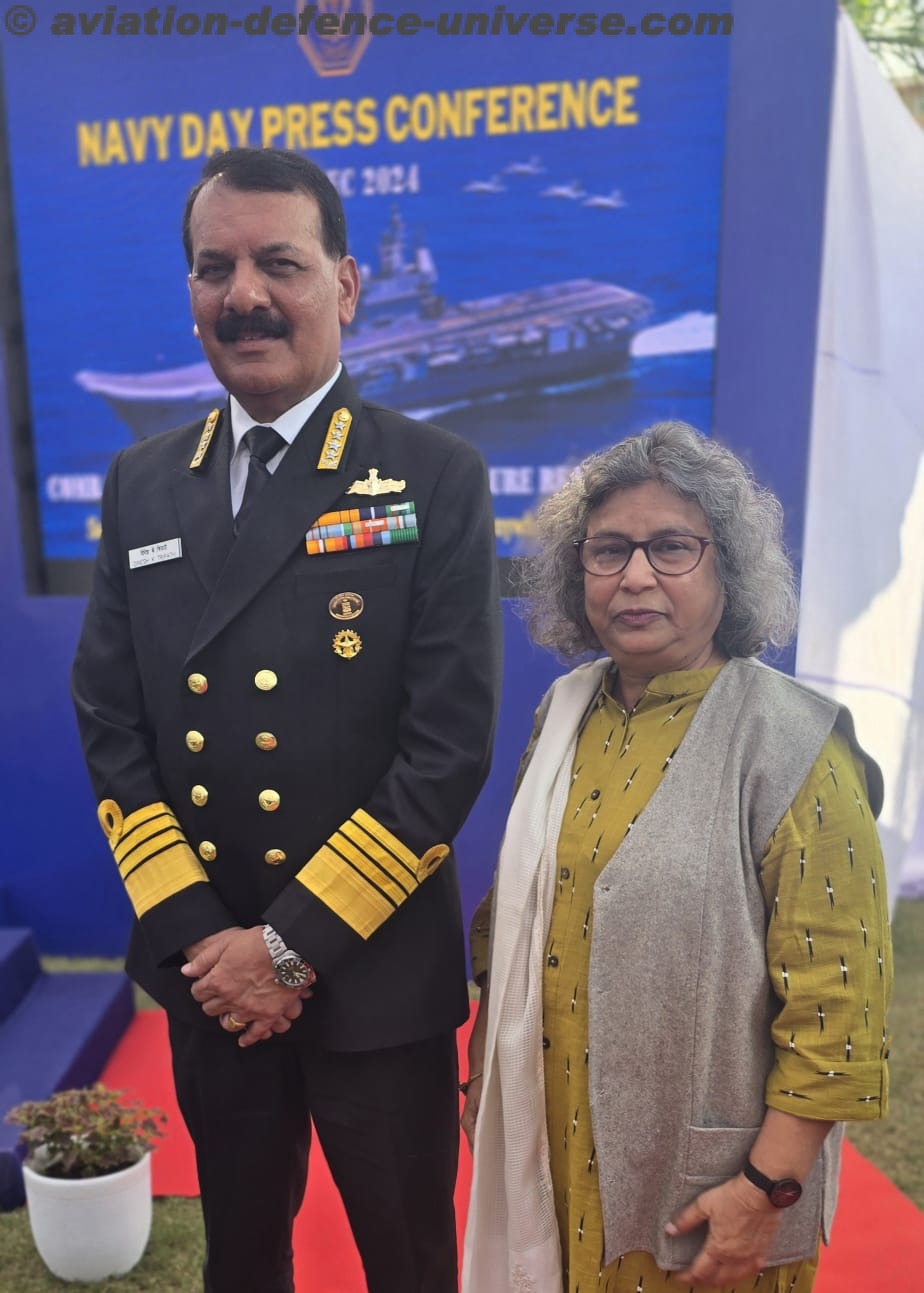
New Delhi. 20 December 2024. “As the Navy of the only nation in the world to have an ocean named after her, the Indian Navy aims to be the ‘Preferred Security Partner’ and the ‘First Responder’ in the Indian Ocean Region and beyond, maintaining our standing, not only amongst our countrymen but also in the eyes of the IOR littorals. Our credibility is determined by the demonstrated capability to ‘walk the talk’ at sea and ashore, and hence our modus operandi is positive commitment backed by prompt action,” stated Chief of Naval Staff, Indian Navy, Admiral Dinesh Kumar Tripathi, PVSM, AVSM, NM, ADC while speaking exclusively with Aviation & Defence Universe (ADU) in an interview on Navy Day 2024.
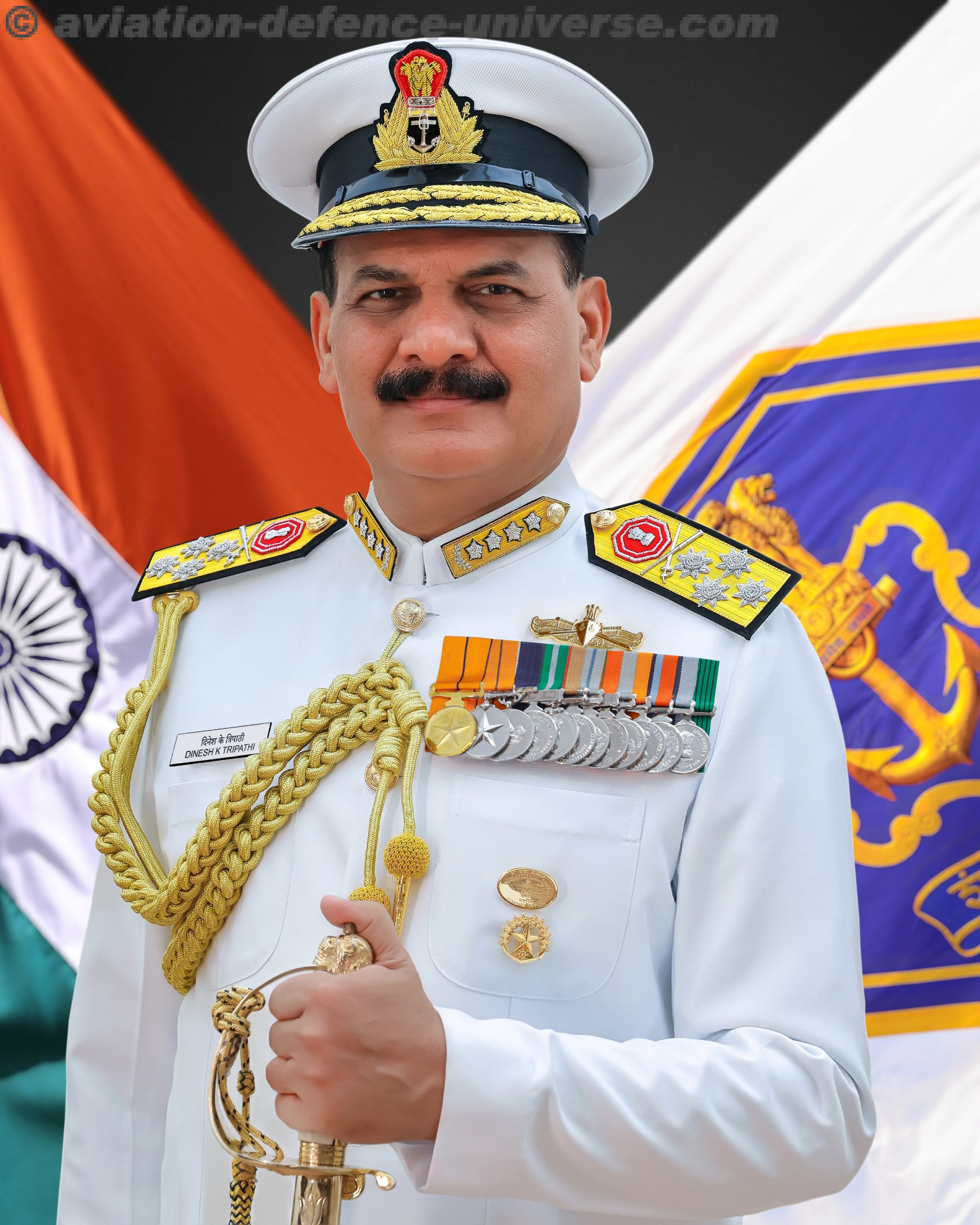 ADU. As we look ahead to 2030, what is your vision for the Indian Navy, and what milestones do you hope to achieve during your tenure as CNS?
CNS. I am grateful to my predecessors who have set the Navy on the right track to evolve as one of the most professional and potent forces, respected in the region and beyond. I intend to continue ensuring that the Indian Navy remains a Combat Ready, Credible, Cohesive, and Future Ready Force. After completing 100 days in office, I conveyed my guidance to the Navy in the form of Course to Steer-2024, that highlights my key priorities for the Navy. As India steadfastly sails on its voyage to become a Viksit Bharat by 2047, for the Indian Navy, I have also articulated ‘Vision 2047’ – a long term over-the-horizon look into the future. Combat Readiness is the core reason for our existence and war-fighting is our raison d’etre. For this, we need a ‘Whole of Navy’ approach towards human resource management, maintenance, op logistics and infrastructure ultimately resulting in precision and effective delivery of ordnance on target.
Knowing that a well-knit and motivated force is crucial to fulfilling our mandate, we aim to foster an environment that supports the holistic professional and personal development of our workforce, strengthening organisational excellence and enhancing individual skills. We are emphasizing high-quality professional training conducted under realistic combat conditions to enhance competence and capability. Through personnel-centric policies coupled with administrative reforms, we aim to retain our well-trained and motivated human capital and inspire continued service in the Indian Navy. As a Future Ready force, we adapt to future warfighting paradigms by keeping a weather eye on the changing character of warfare and emerging threats. Our efforts are focussed on imbibing best practices and pole-vaulting the technology curve so that we are ready for tomorrow’s fight, while at the same time, steadfastly striving to fulfill our pledge of becoming an Aatmanirbhar Force by 2047.
ADU. With the increasing presence of China in the Indian Ocean and other critical sea lanes, how is the Indian Navy preparing to counteract potential challenges posed by this development?
CNS. The Indian Navy, along with other stakeholders is fully prepared to safeguard the maritime interests of the nation. We have credible capability and are continuously evolving to meet the new challenges. We are constantly fine-tuning our concept of operations and formulate our capability perspective plans to cater for developing threats. Our efforts are not aimed at any specific nation but rather at ensuring the security of India’s maritime interests and contributing to a stable and prosperous Indo-Pacific. We maintain Comprehensive Maritime Domain Awareness – good understanding of ‘who is where’ and ‘doing what’.
 In the last 10 years China has modernised its Navy at an intense pace and has inducted more warships than the size of the Indian Navy (IN). Consequently, China has maintained a permanent presence in the IOR under the pretext of an Anti-Piracy Escort Force (APEF) since 2008. In addition, Chinese Research Vessels, Satellite Tracking Ships and Deep-Sea Fishing Boats are also being increasingly deployed in the IOR. The Chinese are also investing in port and maritime infrastructure development projects worldwide, with about 20 of them being undertaken in the IOR itself, reflecting their desire to stay in the Region. Augmentation of existing Naval facilities, construction of a new naval base, besides full-fledged naval facilities and submarine bases in our immediate neighbourhood could facilitate the enhanced presence and sustenance of Chinese warships in the Region.
Since security challenges are only bound to increase in the times to come, the IN’s capability development plan has also been tailored to meet this requirement. The IN aims to build a well-balanced multi-dimensional networked force that is capable of delivering ordnance on target and effects across the spectrum of conflict. Towards this we aim to induct capabilities across all the five domains that the Navy seamlessly operates in, i.e. Air, Surface, Sub-surface, Space and Cyber.
Our focus is on building credible deterrence by modernising our Fleet with capable multi-dimensional platforms while also integrating emerging technologies including long-range surveillance and space-based sensors as well as autonomous vessels, to monitor and secure critical sea-lanes of communication and choke points. We are also enhancing our operational reach and MDA through increased deployments, joint exercises and collaborations with likeminded navies across the world. Partnerships through bilateral and multilateral exercises like RIMPAC, MALABAR, MILAN and initiatives like IONS help strengthen collective maritime security and ensure an enabling environment for maritime trade and commerce. The Indian Navy remains as a Combat Ready, Credible, Cohesive and Future Ready Force committed towards ensuring safe seas and secure maritime environment in consonance with Hon’ble Prime Minister’s Vision of Security And Growth for All in the Region.
ADU. Could you provide an update on the Navy’s modernization roadmap, and indigenous defence technologies?
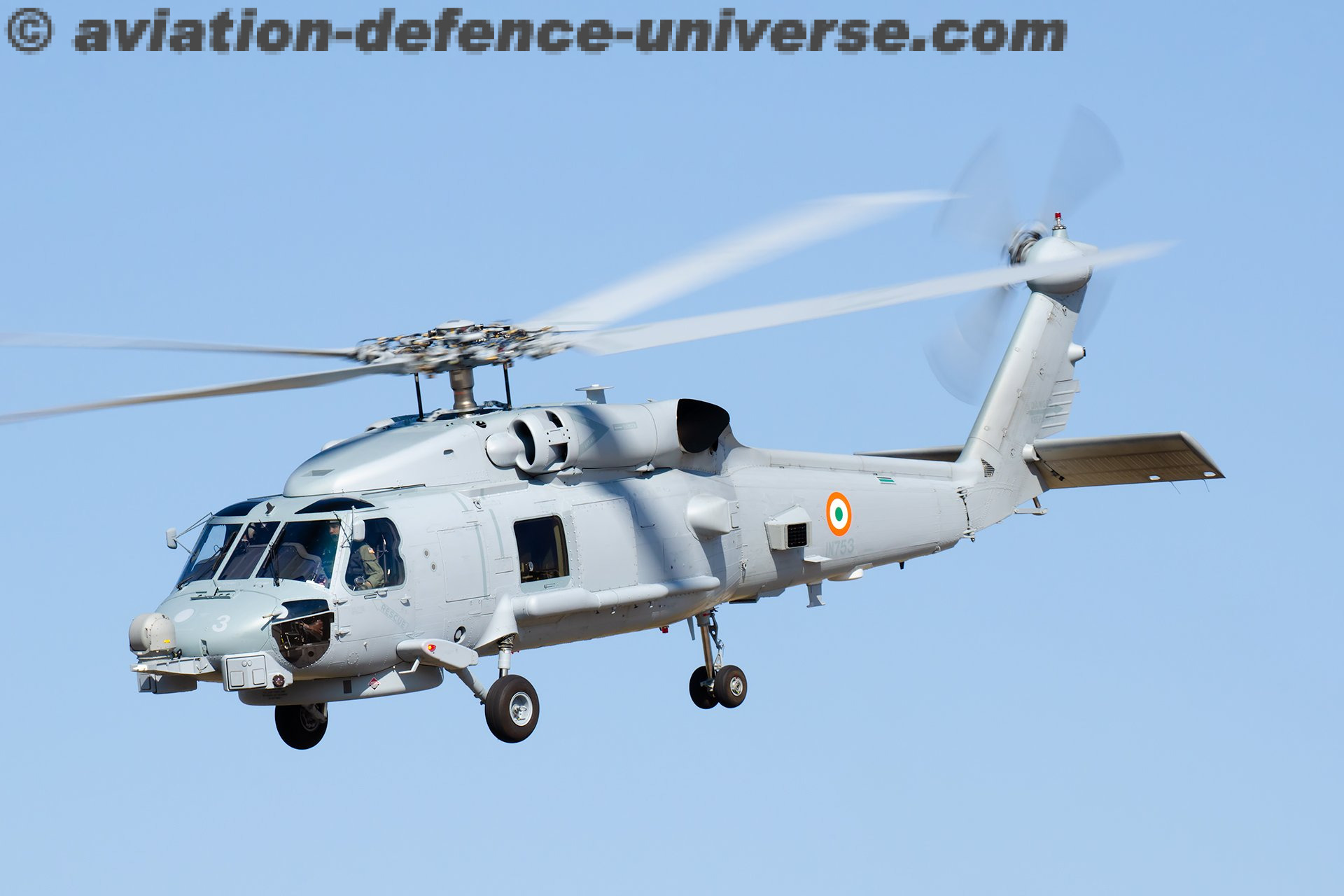
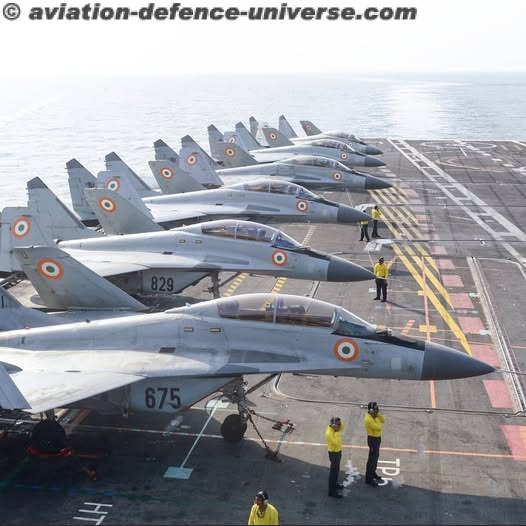
CNS. Indian Navy is modernising its capabilities in accordance with well-conceived perspective plans to realise a suitable force mix to meet all envisaged missions in our Areas of Interest. The expansion plan of IN includes induction of state-of-the-art Next Generation warships, nuclear powered and conventional submarines, revitalisation of aviation and sub-surface assets, augmentation of autonomous solutions to enhance combat capabilities, and induction of niche technology and equipment to address emergent threats and future challenges.
Indian Navy endeavours to be a Future-Ready Force through consolidation of existing capabilities and adoption of futuristic technologies. In this regard, some of the key deliverables identified are: –
- Increase in average displacement of Fleet ships to 6000 Tons by 2037.
- Continued rise in percentage of newer ships, with only 20% of Fleet ships being more than 15 years old (as compared to current 55%) by 2037.
- Augmentation of Fleet capabilities with autonomous solutions, in all domains of warfare.
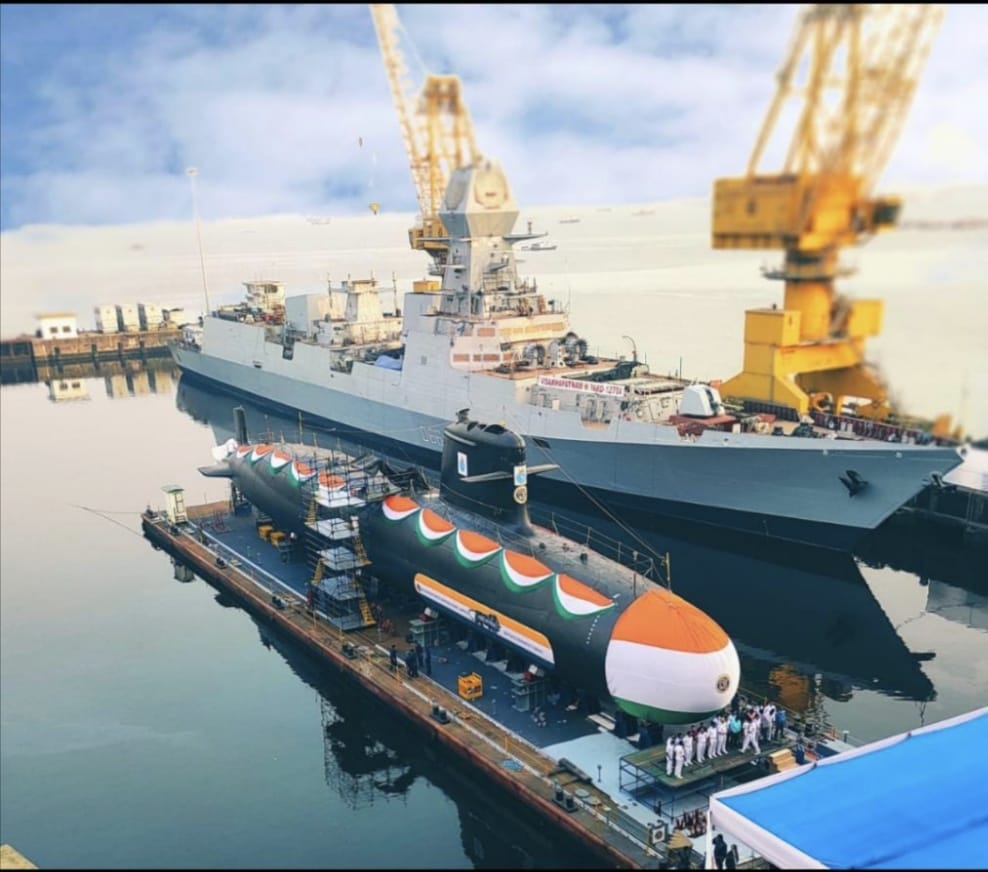 Our modernisation programme is centred on achieving Aatmanirbharta. Towards expeditious capacity and capability building of the Navy, 64 ships and submarines are already under construction, of which 62 are being built in Indian shipyards. In addition, AoN has been accorded for construction of another 31 ships and submarines, to be built in Indian shipyards. Further, indigenous development of Indian Navy’s carrier–borne fighter, the Twin Engine Deck-Based Fighter (TEDBF) aircraft, is being pursued in collaboration with the Aeronautical Development Agency (ADA) and Hindustan Aeronautics Limited (HAL) and are envisaged as the mainstay of navy’s Aircraft Carriers’ Air Wing. Similarly, the indigenous Deck-Based Multi-Role Helicopters (DBMRH) and the Utility Helicopter – Maritime (UH-M) are planned as part of our future IN helicopter fleets. While the DBMRH proposal is being actively pursued along with other Services, the UH-M has already been accorded AoN in March last year.
All these platforms will feature progressively increasing indigenous content, and will be equipped with state-of-the-art systems and advanced weapons and sensors, to pack high lethality. While our latest P15B and P17A combatants have achieved 68% and 72% indigenisation respectively, we envisage an indigenous component of over 76% in our future P17B frigates.
As far as combat capability is concerned, Indian Navy has vigorously pursued development of weapons, sensors and equipment in close coordination with DRDO and DPSUs. Primary radars and critical AD missiles for our future frigates (P17B) are earmarked to be developed by DRDO. Other smaller weapon systems are also being procured through our domestic defence industry, including Start-Ups and MSMEs. In fact, Indian Navy was the first Service to conclude a contract for a 12.7 mm Stabilised Remote-Control Gun in ‘Buy and Make’ category as well as for Fire Fighting Bot, under the iDEX scheme. We issued Project Sanction Order under Make-II category for Deep Sea Side Scan Towing Winch, thereby recognising efforts by industry to promote indigenous development.
The Government of India has taken considerable steps to promote self-reliance in recent years, and the Indian Navy has actively embraced various Make-in-India initiatives. These include schemes such as Make, Technology Development Fund (TDF), and Innovation for Defence Excellence (iDEX), all of which have played a pivotal role in transforming the Indian Navy into a technologically advanced and self-reliant force. Indian Navy’s Naval Innovation and Indigenisation Organisation (NIIO) has also rapidly consolidated its efforts resulting in indigenisation of 30,747 items for the Indian Navy. During the annual Swavlamban seminar of NIIO, the maiden edition of which was held in Jul 22, 75 Challenge Statements for Indian industry as part of the ambitious endeavour titled SPRINT (Supporting Pole-Vaulting in R&D through iDEX, NIIO and TDAC), were unveiled by the Hon’ble Prime Minister.
 With expanded scale and scope, the recently concluded Swavlamban-2024 had a footfall of approximately 5000 personnel. The successful demonstration of 1,500 km voyage by the autonomous vessel ‘Matangi’ from Mumbai to Tuticorin as part of Sagarmala Parikrama was the key highlight of this edition. Over the years, 22 products, worth about Rs 2143 Cr, have already been accorded AoN under iDEX. More than 100 new start-ups and MSMEs are now engaged with the navy towards indigenous development of novel technologies and products, many of them potential ‘global firsts.’
ADU. How is the Indian Navy incorporating new technologies such as unmanned aerial vehicles (UAVs), unmanned underwater vehicles (UUVs), and artificial intelligence (AI) into its naval operations?
CNS. IN continue to remain at the forefront of integrating innovative technologies to enhance our operational effectiveness and maintain maritime superiority in an evolving security landscape. Uncrewed systems are a critical component of our surveillance and reconnaissance capabilities. These systems operating in the air, on the surface, under sea and ashore with a rapidly adaptable and interconnected network will provide access to areas denied to crewed platforms to gather real-time intelligence and enable faster decision making. Through increased persistence and improved deployability, these platforms help us in enhancing MDA across vast swathes of the Indian Ocean Region and beyond. The ongoing conflicts in Europe and West Asia have amply demonstrated the capabilities and advantages of such systems. They have also highlighted the increasing availability and affordability of low-cost lethal uncrewed systems, and their disproportionate impacts. Therefore, I firmly believe that, autonomous and uncrewed vessels will form an integral part of any future ready force, including the Indian Navy.
 Realising the role of autonomous and uncrewed systems in strengthening our combat potential, the Indian Navy released its Vision Document for Unmanned Systems (2022-30) in July 2022. The roadmap charts the progression envisaged by the Indian Navy towards induction and integration of autonomous and uncrewed vessels for undertaking various IN specific missions.
As a Future Ready Force, the Indian Navy meanwhile is committed to leverage advancements in the field of Artificial Intelligence (AI) and has taken multiple steps for expeditious induction of AI in various domains. We are working towards creating an ecosystem of MSMEs and Private partners who understand the Naval requirements, so as to generate tailor-made AI solutions. We are progressing 50 AI projects in the field of Situational Awareness, Natural Language Processing, Autonomous Systems, Logistic Modernization and Predictive Maintenance, of these 14 projects are through the IDEX route. We have also set up a Centre of Excellence at INS Valsura to build professional competence of our personnel in the fields of AI and Big Data. Most importantly, an Incubation Centre has been set up at Bengaluru to work exclusively in the field of AI and create an ecosystem of partners. Some of the futuristic AI solutions being developed include LLM based applications, offline language translators, autonomous vessel, and smart ship solutions.
ADU. In today’s cyber warfare era, how is the Indian Navy protecting its assets and operations from potential cyber threats?
CNS. The Indian Navy has constantly endeavoured to keep pace with the new generation technology. The Indian Navy recognises the critical importance of safeguarding our assets from potential cyber threats. As IN continues to modernise and adopt cutting edge technologies like AI/ ML, nano-tech etc, the complexities of Indian Navy’s cyber landscape have increased manifold. Therefore, IN has adopted a proactive approach by integrating Cyber resilience as a core concept of Naval operational readiness. Further, through rigorous cyber security measures/ protocols specialised training and collaboration with industry experts and national agencies such as NCIIPC, DCyA etc, the IN aims to stay ahead of enemy cyber threats and secure its digital assets.
 ADU. How does Indian Navy plan to project a formidable global presence?
CNS. IN’s focus is on being credible naval power in consonance with our expanding interests in the maritime domain. We are sanguine that no single nation or navy has the capacity to thwart the myriad threats that exist. Cooperation and collaboration between like-minded partners are the way forward. Guided by the Government’s vision of SAGAR, we are focusing our efforts to fulfil our role as the Preferred Security Partner and First Responder in the IOR. Our approach is driven not by aspirations of global power projection, but by our commitment to safeguarding India’s maritime interests and promoting peace and stability in the Region.
By working closely with the regional navies and other partners, we aim to build a cooperative security framework that addresses shared challenges like piracy, terrorism, IUU fishing, etc. Initiatives such as the Indian Ocean Naval Symposium (IONS), setting up of Information Fusion Centre –Indian Ocean Region (IFC-IOR), and conduct of MILAN further reflect our intent to work collaboratively for greater good of the region. Indian Navy will continue to remain a Combat Ready Credible Cohesive and Future Ready Force to ensure safety, security and stability across the seas fostering the economic development of our country and safeguarding the well-being of our citizens.



































































-A4-Size-(2)_page-0001.jpg)