


 18th BRICS Summit





















- From Belly Cargo to Widebodies: IndiGo CarGo Expands its Global Ambitions
- Tier-II and Tier-III India Will Drive the Next Wave of Air Cargo Growth
- Cargo Must Move as Fast on the Ground as it Does in the Air
By Sangeeta Saxena
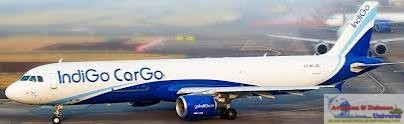
New Delhi. 15 July 2026. India’s aviation growth story is no longer only about carrying more passengers—it is increasingly about moving the country’s products, pharmaceuticals, electronics, perishables and e-commerce shipments faster and farther across the world: As manufacturing expands beyond established industrial centres and India’s businesses integrate more deeply with global supply chains, air cargo is emerging as an increasingly important enabler of the country’s economic ambitions: Few airlines are better positioned to tap this opportunity than IndiGo, whose vast domestic network is now being complemented by dedicated freighters, growing international connectivity and long-haul operations:
 In an exclusive interview with Aviation & Defence Universe (ADU), Mark Sutch, Chief Commercial Officer – CarGo & Head, International Development, IndiGo, discusses the transformation of IndiGo CarGo from a predominantly domestic belly-cargo operation into a diversified business spanning dedicated A321 freighters and long-haul connectivity: He speaks about the enormous potential of Tier-II and Tier-III India, infrastructure bottlenecks, digitalisation, artificial intelligence, geopolitical disruptions and the importance of reducing cargo dwell times: With more than 4:5 lakh tonnes of cargo carried in FY26, a growing international footprint and future Airbus A350 operations on the horizon, Sutch explains why the growth of IndiGo CarGo is increasingly intertwined with India’s emergence as a global manufacturing and trading powerhouse:
Cargo operations form an indispensable pillar of the aviation ecosystem, adding an economic dimension to airline networks that extends far beyond passenger transportation: Belly-hold cargo improves aircraft utilisation and route economics, while dedicated freighters provide the flexibility required to move larger volumes and specialised shipments: More importantly, air cargo connects manufacturers, exporters, farmers, pharmaceutical companies, e-commerce businesses and high-value industries with markets where speed is critical: For an emerging manufacturing and export economy such as India, efficient air freight can shorten supply chains, open international markets to businesses in smaller cities and strengthen the country’s position within global production networks: The development of a robust cargo ecosystem therefore requires more than aircraft—it depends equally on airports, customs, warehouses, cold chains, digital platforms, multimodal connectivity and seamless coordination among every stakeholder.
ADU. IndiGo has built a formidable passenger network across India and internationally. How has the cargo division evolved over the past few years, and what role does it play in the airline’s overall business strategy?
Mark Sutch. The past five years have marked a defining phase in the evolution of IndiGo CarGo. What 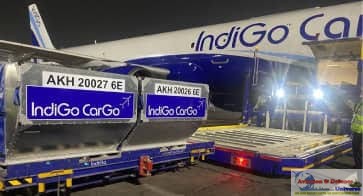 began primarily as a domestic belly-cargo operation has grown into a diversified cargo business supported by belly capacity, three dedicated A321 freighters and, more recently, long-haul widebody operations connecting India with the UK and Europe. In FY26, IndiGo CarGo carried over 4.5 lakh tonnes of cargo, up more than 26% from FY24, supported by a domestic network of 97 destinations, 69 of which are cargo-enabled, alongside a growing international footprint spanning more than 40 destinations.
ADU. How much has cargo contributed to IndiGo’s diversification and revenue strategy, particularly during periods of market volatility?
Mark Sutch. The scale of our domestic network, combined with an increasingly diversified commodity mix and growing international reach, has helped build a resilient business capable of adapting to changing market conditions.
ADU. What have been the major milestones for IndiGo Cargo in the last five years, and what achievements are you most proud of?
Mark Sutch. Cargo today plays an increasingly important role in IndiGo’s broader growth journey. Beyond providing an additional source of revenue, it enhances fleet utilisation and network economics while enabling us to play a larger role in India’s expanding trade, manufacturing and supply-chain ecosystem.  India’s cargo infrastructure and network coverage have developed significantly, however, there is still a way to go. There is opportunity to improve end-to-end efficiency by strengthening coordination between airports, customs authorities, airlines and logistics providers, while continuing to invest in digital processes, automation and multimodal connectivity. Initiatives such as single-window customs processing, real-time visibility platforms, faster handling for time-sensitive shipments and stronger transshipment capabilities can help reduce dwell times and improve supply-chain reliability. As airline networks expand, airport infrastructure matures, and regulatory reforms continue to support trade facilitation, these collaborative efforts will work towards enhancing India’s competitiveness and supporting its long-term cargo growth ambitions.
ADU. During your session at the India International Cargo Show, you highlighted the enormous potential of India’s Tier-II and Tier-III cities. How do you see these markets shaping the future of air cargo growth?
Mark Sutch. Tier-II and Tier-III cities are playing a critical role in the next phase of India’s cargo growth story. Around 35% of India’s air cargo exports originate from manufacturing centres in these markets, highlighting their growing role in production and trade. While network connectivity has developed significantly, the opportunity now lies in stimulating consistent commercial cargo flows through closer engagement with local shippers, expanding cargo volumes across commodity segments, and continued 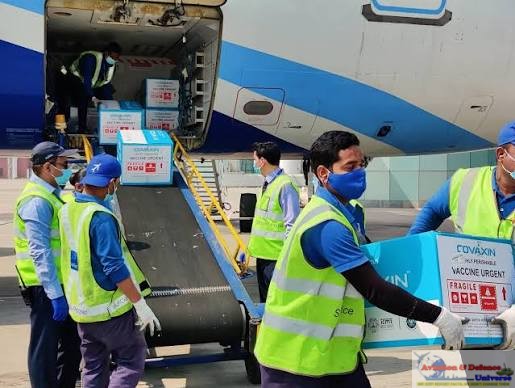 government focus on strengthening cold-chain and multimodal linkages. As these enablers mature, Tier-II and Tier-III cities will play an increasing role in India’s transition to a globally integrated air cargo ecosystem. We see strong growth opportunities across international markets that are benefiting from expanding trade flows, supply-chain diversification and increasing connectivity with India. Leveraging our growing international network and dedicated freighter operations, we are well positioned to connect Indian exporters and importers with key global markets. As IndiGo has strengthened its presence in Southeast Asia and launched long-haul services to Europe, we have been able to support a broader range of cargo flows and customer segments. The resumption of services to Guangzhou, one of the world’s leading manufacturing and export hubs, has further strengthened our position in Asia. Looking ahead, the planned induction of Airbus A350 aircraft will further strengthen our ability to serve long-haul trade lanes and support India’s growing role in global trade.
ADU. You remarked that cargo should not spend more time leaving an airport than it takes to fly internationally. What are the biggest infrastructure bottlenecks currently affecting India’s cargo ecosystem?
Mark Sutch. IndiGo’s extensive domestic network and growing global footprint, operated with high focus on maintaining on-time performance (OTP), ensure that time-sensitive shipments move efficiently across the country and beyond. We continue to tailor our cargo solutions to evolving customer requirements, including e-commerce and express shipments, while focusing on operational reliability, network coverage, and technology-enabled processes that improve visibility and efficiency across the supply chain.
ADU. How can airports, customs authorities, airlines and logistics providers work together to reduce dwell times and improve cargo efficiency?
Mark Sutch. Initiatives such as single-window customs processing, real-time visibility platforms, faster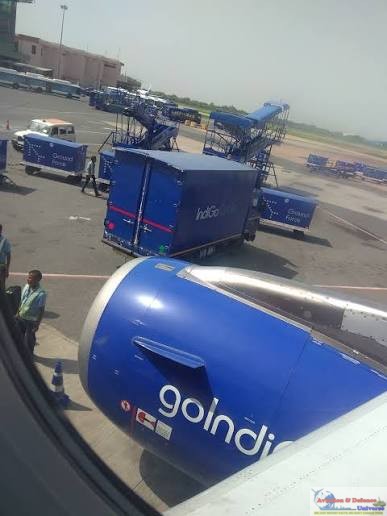 handling for time-sensitive shipments and stronger transshipment capabilities can help reduce dwell times and improve supply-chain reliability. As airline networks expand, airport infrastructure matures, and regulatory reforms continue to support trade facilitation, these collaborative efforts will work towards enhancing India’s competitiveness and supporting its long-term cargo growth ambitions.
ADU. Which international markets currently offer the strongest growth opportunities for IndiGo Cargo?
Mark Sutch. In recent years, we have seen trade lanes evolving, sourcing patterns diversifying, and customers increasingly looking for reliable alternatives to maintain supply-chain continuity. This has resulted in cargo operators maintaining flexibility in capacity deployment, networks network management and response to changing demand patterns. For IndiGo CarGo, the response has been to build flexibility through a diversified operating model comprising belly cargo and dedicated freighters. The strength of our domestic network, which remains the backbone of the business, combined with growing international reach, also allows us to adapt capacity deployment as market conditions evolve.
ADU. E-commerce and quick-commerce companies have transformed customer expectations around speed and reliability. How is IndiGo Cargo adapting to these changing requirements?
Mark Sutch. IndiGo’s extensive domestic network and growing global footprint, operated with high focus on maintaining on-time performance (OTP), ensure that time-sensitive shipments move efficiently across the country and beyond. We continue to tailor our cargo solutions to evolving customer requirements, including e-commerce and express shipments, while focusing on operational reliability, network coverage, and technology-enabled processes that improve visibility and efficiency across the supply chain.
ADU. Digital visibility has become a key requirement for shippers. How is IndiGo Cargo leveraging technology to improve shipment tracking and customer experience? What role do artificial intelligence, predictive analytics and automation play in your cargo operations?
Mark Sutch. Technology is at the core of our strategy to deliver greater visibility, reliability, and efficiency to customers. We are strengthening integration across cargo terminal operators, digital booking platforms, 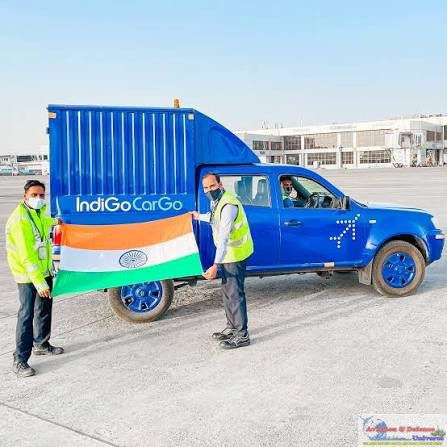 customs interfaces, logistics partners, and our internal systems to enable faster information exchange and near real-time shipment tracking. This gives customers greater visibility across the cargo journey while improving coordination between stakeholders. A key enabler is our in-house warehouse management application, which digitizes processes spanning acceptance, screening, storage, build-up, arrival, and delivery. By capturing operational events in real time, the platform improves shipment visibility, significantly reducing manual interventions, improving turnaround times, and supporting faster, more accurate customer updates.
ADU. How important is data integration across airlines, airports, customs and logistics providers in building a seamless cargo ecosystem?
Mark Sutch. Automation is also helping streamline routine processes such as shipment validation, document verification, inventory management, and status messaging, improving both efficiency and service consistency. Looking ahead, artificial intelligence and predictive analytics will play an increasingly significant role. By leveraging operational data, these technologies can help forecast shipment flows, identify bottlenecks, optimize warehouse and capacity planning, and enable proactive disruption management. Our objective is to create a digitally connected cargo ecosystem where information flows as efficiently as cargo itself.
ADU. How have geopolitical disruptions, supply chain uncertainties and changing trade patterns impacted cargo planning and capacity management?
Mark Sutch. In recent years, we have seen trade lanes evolving, sourcing patterns diversifying, and customers increasingly looking for reliable alternatives to maintain supply-chain continuity. This has resulted 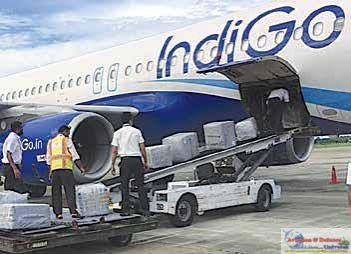 in cargo operators maintaining flexibility in capacity deployment, networks network management and response to changing demand patterns. For IndiGo CarGo, the response has been to build flexibility through a diversified operating model comprising belly cargo and dedicated freighters. The strength of our domestic network, which remains the backbone of the business, combined with growing international reach, also allows us to adapt capacity deployment as market conditions evolve.
ADU. How can India lower logistics costs while simultaneously improving service quality and reliability?
Mark Sutch. India’s logistics sector has made remarkable progress in recent years, achieving a significant milestone with logistics costs now reduced to 7.97 per cent of GDP. It brings India closer to global benchmarks and reflects the impact of sustained reforms and integrated planning. Continued momentum will depend on demand development, ecosystem coordination and infrastructure maturity working together. New airport infrastructure will play a defining role in this transition. Noida International Airport providing factory-to-flight movement within 30 minutes and Navi Mumbai International Airport having India’s first fully automated cargo terminal will add to industry’s efficiency. Along with infrastructure, a wider adoption of single-window customs and interoperable digital platforms, and greater ecosystem coordination will be essential. Together, these initiatives will enable the Indian industry to sustain progress on cost competitiveness while raising service quality standards.
ADU. As India moves towards becoming a USD 5 trillion economy and eventually a developed nation by 2047, what role do you believe air cargo will play in enabling that journey?
Mark Sutch. As India advances towards becoming a developed economy, air cargo will play an increasingly important role in enabling trade and strengthening the country’s integration with global supply chains. The scale of the opportunity is significant. India’s air cargo volumes are projected to grow substantially over the coming years, supported by rising exports, increasing manufacturing activity, expanding consumption, and policy initiatives such as Make in India. Efficient air logistics are critical for high-value, time-sensitive 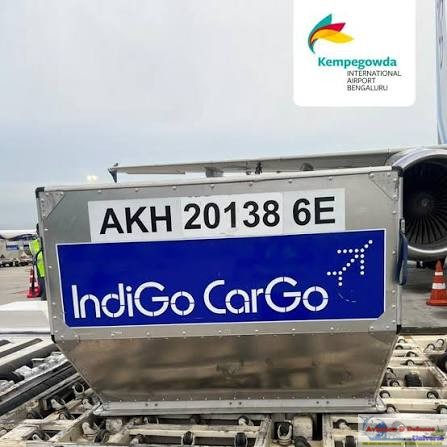 sectors such as electronics, pharmaceuticals, perishables and e-commerce, all of which are expected to be key drivers of India’s economic growth in the coming decades. Meanwhile, beyond building airports, India is developing new integrated cargo cities to enhance supply-chain efficiency and support trade growth. As cargo volumes rise, India also has a significant opportunity to strengthen its position as a regional transshipment hub, leveraging its strategic location and expanding air cargo network. For IndiGo CarGo, this represents a defining opportunity. Through continued network expansion and the future induction of Airbus A350 aircraft, we are strengthening our ability to support India’s trade and manufacturing ambitions while connecting businesses to markets across the region and around the world. Ultimately, we see our growth as closely linked to India’s broader economic and trade trajectory.
IndiGo CarGo’s evolution mirrors the transformation underway across India’s wider air cargo ecosystem: From leveraging one of the country’s largest domestic aviation networks to deploying dedicated freighters and opening long-haul cargo capacity, the airline is positioning itself at the intersection of India’s manufacturing, export and global connectivity ambitions: For Mark Sutch, however, the next phase of growth will require the entire ecosystem to move together—airlines expanding networks, airports modernising infrastructure, customs processes becoming faster, technology delivering real-time visibility and Tier-II and Tier-III manufacturing centres gaining better access to global markets: As IndiGo prepares for the arrival of its long haul cargo aircraft and India seeks a larger role in international trade, air cargo is set to become not merely an adjunct to passenger aviation but an increasingly important engine of the country’s economic growth and global integration.











































































-A4-Size-(2)_page-0001.jpg)