

























- “UGVs Are Here to Enhance Soldiers, Not Replace Them” – Milrem’s CSO Patrick E. Shepherd reiterates
- Milrem Robotics at DSEI 2025: Redefining Unmanned Ground Vehicles for Modern Warfare
By Sangeeta Saxena
Excel Centre, London. 10 September 2025. The Baltic region, often perceived as a geopolitical frontline in Europe, has transformed into a hub of defence innovation. Estonia, Latvia, and Lithuania, bound by their shared history and their proximity to Russia, have prioritised building resilient and agile defence industries. While their scale may be modest compared to global primes, their contributions—especially in robotics, cyber defence, and autonomous systems—are shaping NATO’s deterrence posture and redefining how small nations can punch above their weight.
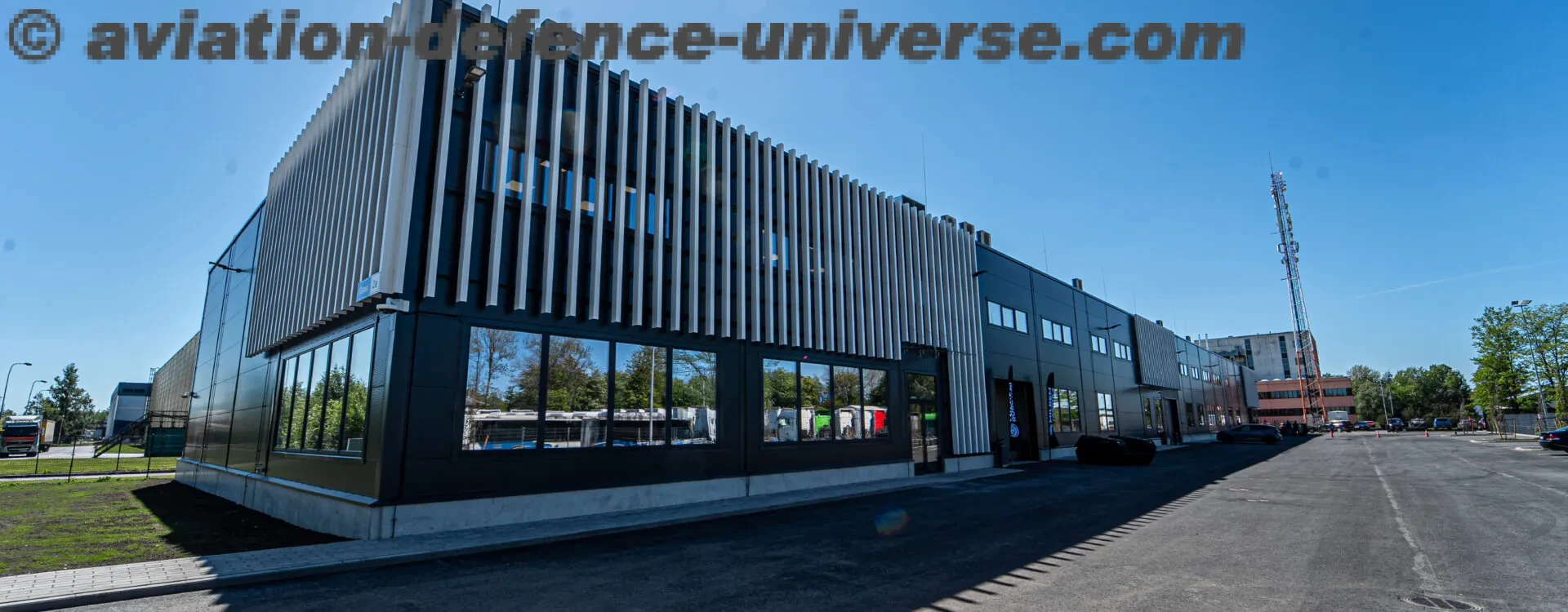 At the heart of Estonia’s defence industry is Milrem Robotics, a pioneer in unmanned ground vehicles (UGVs) and robotics-based defence solutions. Its flagship product, the THeMIS UGV, has been combat-tested in Ukraine, where it has provided invaluable support in casualty evacuation, logistics, and reconnaissance roles. The company’s ambitious Havoc 8×8 platform marks its expansion into heavier, modular unmanned systems, demonstrating Estonia’s technological sophistication. Now under the umbrella of the UAE’s EDGE Group, Milrem continues to expand globally, forging partnerships across Europe, Asia, and North America. Its focus on autonomy, modularity, and hybrid-electric propulsion keeps it at the forefront of future battlefield innovation.
At DSEI, ADU caught up with Patrick E. Shepherd, Chief Sales Officer of Milrem Robotics, to explore the company’s latest innovations, deployment experiences, and global footprint. From unveiling cutting-edge prototypes to lessons learned on the battlefield in Ukraine, Milrem is redefining the future of unmanned ground vehicles (UGVs).
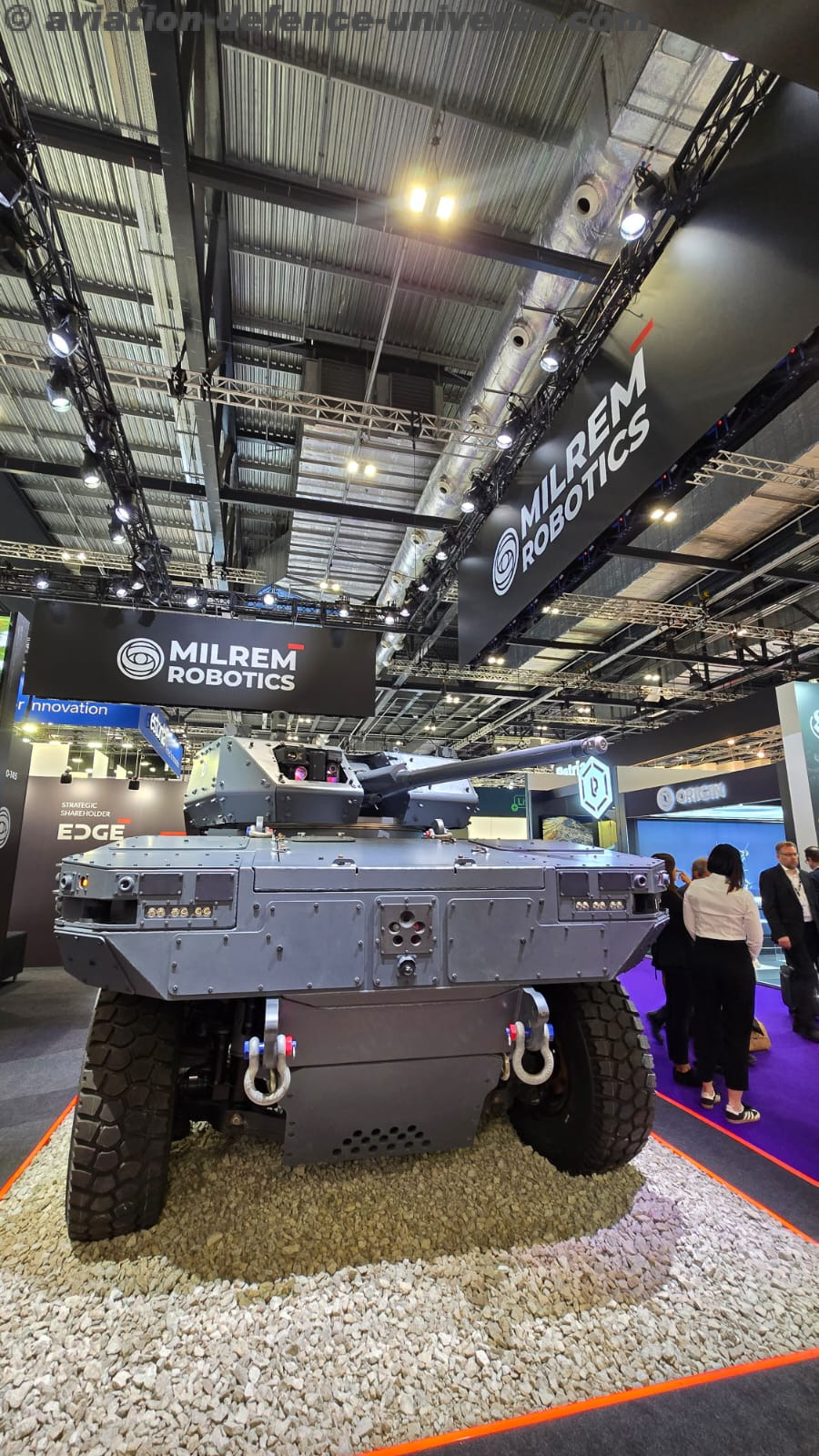 ADU. Patrick, we are here at the Milrem Robotics stand. What are you showcasing at DSEI this year?
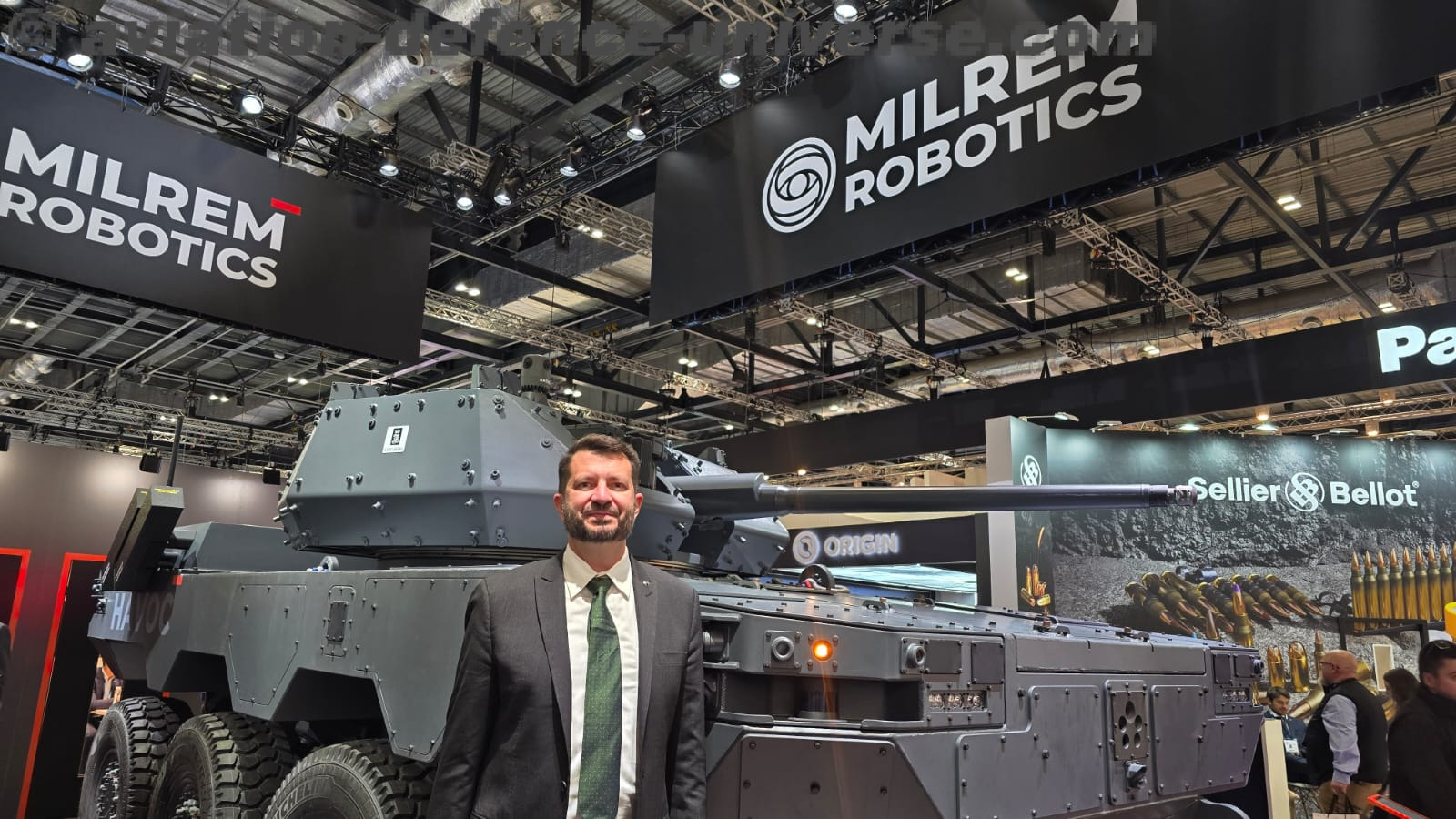
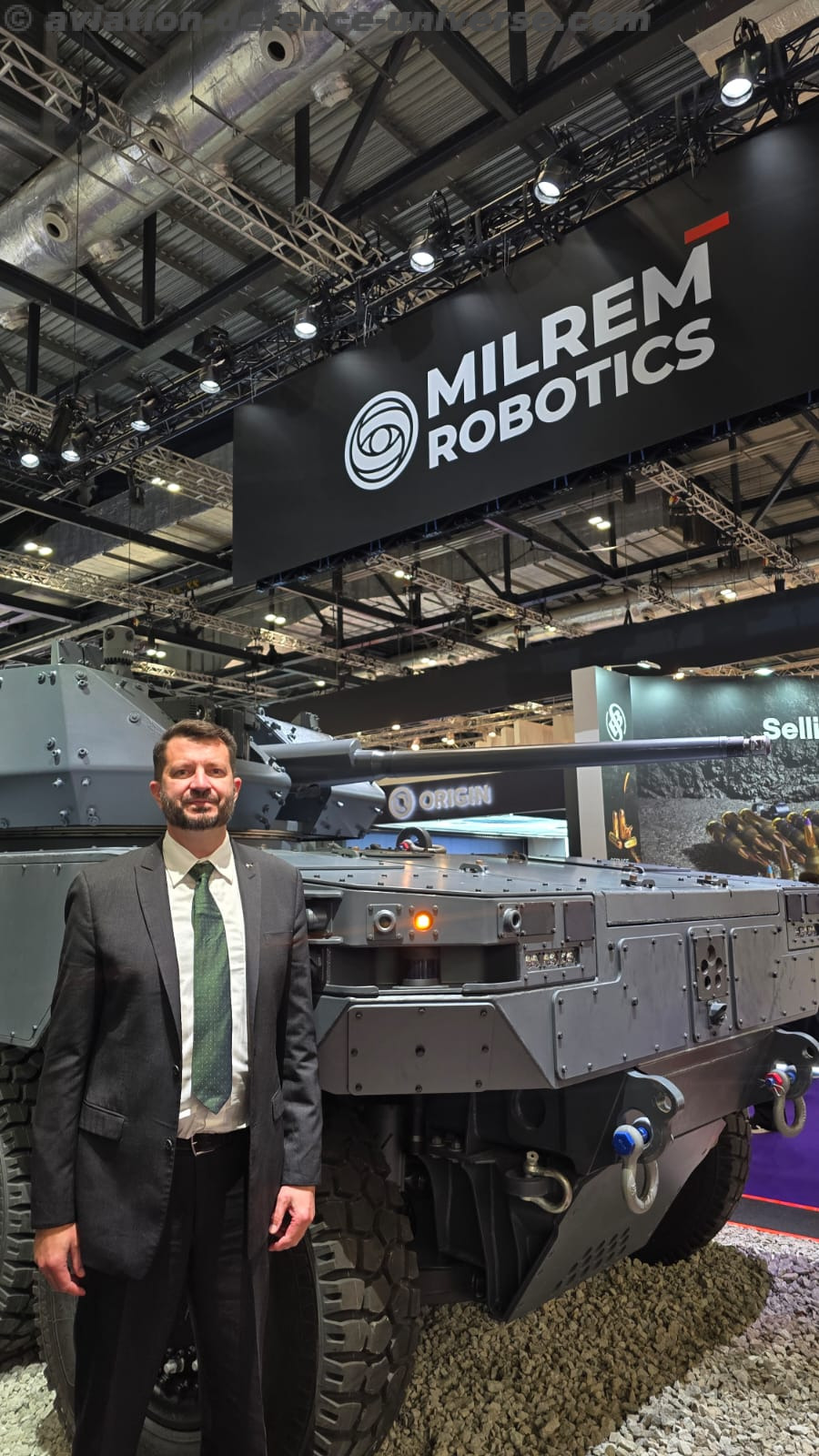
Patrick Shepherd. We brought several new and innovative systems to the event. The highlight is Havoc, our larger 8×8 vehicle, revealed for the first time to the public. It’s being designed under a contract with Edge Group as a technology demonstrator, pushing the limits of hybrid-electric propulsion for this size class. Today, it’s configured with a 30mm cannon, but its most significant use case is as a mobile counter-UAS system to protect infrastructure, mobile assets, and personnel against drone threats like those seen in Ukraine.
ADU. Is this a finished product or still in development?
Patrick Shepherd. This is a prototype. We’re building two of them and plan live-fire tests next summer. We’ll also trial them in harsh environments such as the deserts of Abu Dhabi before finalising configurations. The goal is to test technologies first, then optimise design and cost.
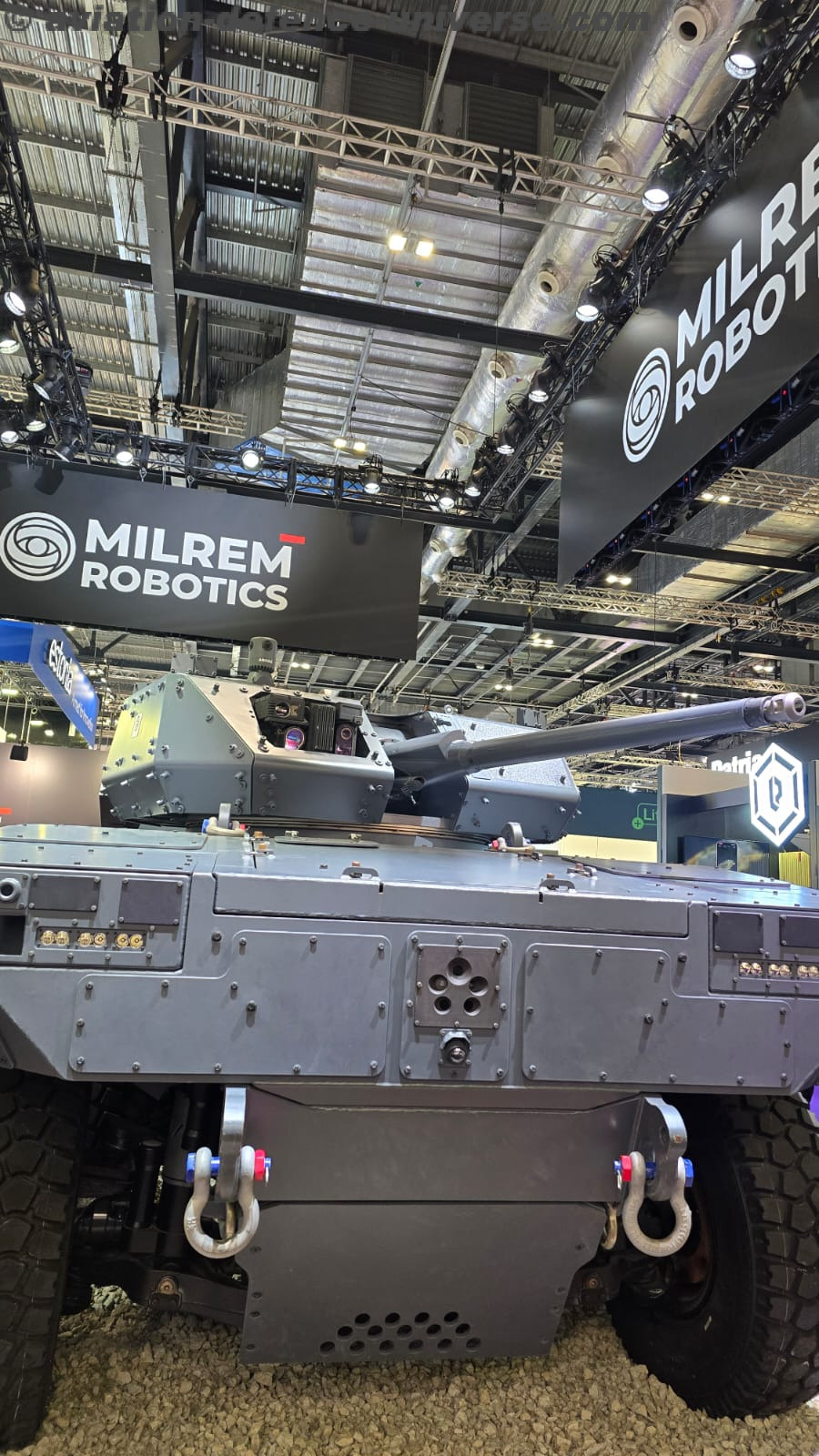 ADU. Can you elaborate on the uniqueness of Havoc 8×8 RCV?
Patrick Shepherd. The HAVOC 8×8 Robotic Combat Vehicle (RCV) is a cutting-edge ground combat platform enhanced with intelligent functions and designed for modern warfare. This vehicle is equipped with advanced AI-driven navigation and excels in offensive and defensive operations across diverse terrains, environments and climates.
ADU. You’ve also mentioned your UK initiatives. Could you elaborate?
Patrick Shepherd. Yes, local manufacturing is key in markets like the UK, India, and Canada. In the UK, we’re demonstrating local integrations—such as MSI’s turret and Overwatch’s ISR counter-UAS system—on our Themis platform. We’re ready for technology transfer and licensed assembly if a large order comes through.
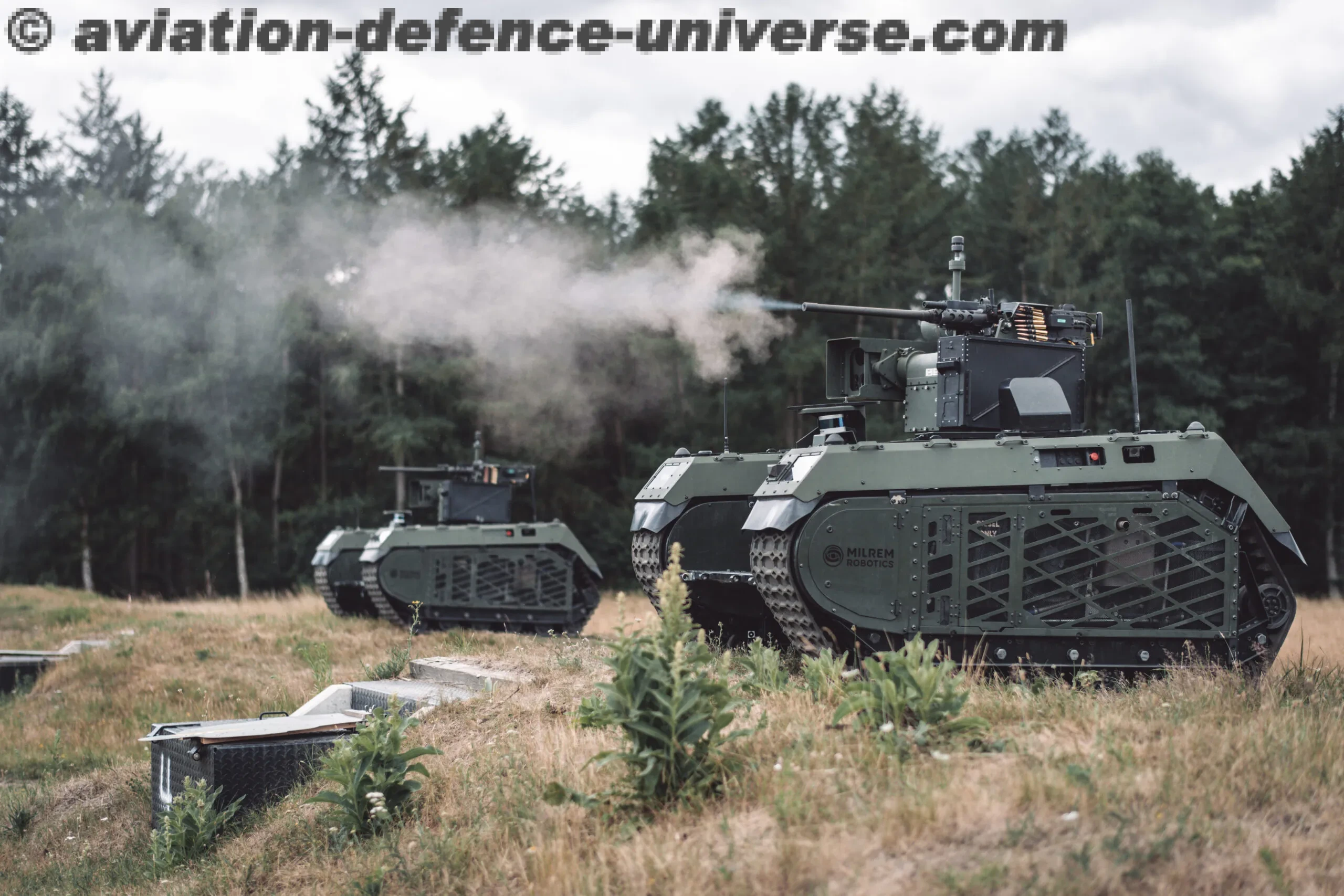 ADU. Milrem has deployed systems in Ukraine. What lessons have you learned from the battlefield?
Patrick Shepherd. We deployed 15 systems about three years ago, with over 10,000 combat hours logged. Some vehicles were destroyed, but the experience has been invaluable. We’ve simplified driver training, refined maintenance processes, and improved spare part logistics. Ukraine has become our most important real-world testbed, shaping not just Themis but also Havoc and Vector.
ADU. How has Milrem managed to maintain supply chains in a war zone?
Patrick Shepherd. It was tough initially. We invested months of effort inside Ukraine to build networks and logistics channels. Today, we can move spare parts in within days. It wasn’t about immediate profit but about commitment—something that has paid off significantly for both Ukraine and Milrem.
 ADU. Europe has been very supportive of Ukraine. Has this unity helped Milrem’s operations?
Patrick Shepherd. Absolutely. For the first time in my 20 years in Europe, I’ve seen such unity. Estonia, Finland, and other border countries understand what’s at stake. Our board, including EDGE, has fully backed our presence in Ukraine, telling us to prioritise support and lessons learned over profit.
ADU. What about your presence in other regions?
Patrick Shepherd. We’re active in 19 countries, with major programmes in Japan, Asia, and now Brazil. In the U.S., we’re working with the Cold Weather Research Institute. Our unique value is a global user community operating in different climates and conflicts, which helps us share lessons across all our platforms.
ADU. And how do you view India as a market?
Patrick Shepherd. India is challenging. We’ve been supporting Bharat Forge and EDGE there, but requirements are aggressive due to unique conditions. Still, we’re open to tech transfer and manufacturing in India. I’ve done tech transfers before and had excellent experiences, so we’re prepared if the opportunity is right.
ADU. Finally, what message would you like to convey about UGVs?
Patrick Shepherd. Many people think UGVs are meant to replace humans, but that’s not our goal. Our systems are designed to keep soldiers safer, faster, and more effective. UGVs are tools to enhance, not replace, the human element on the battlefield.
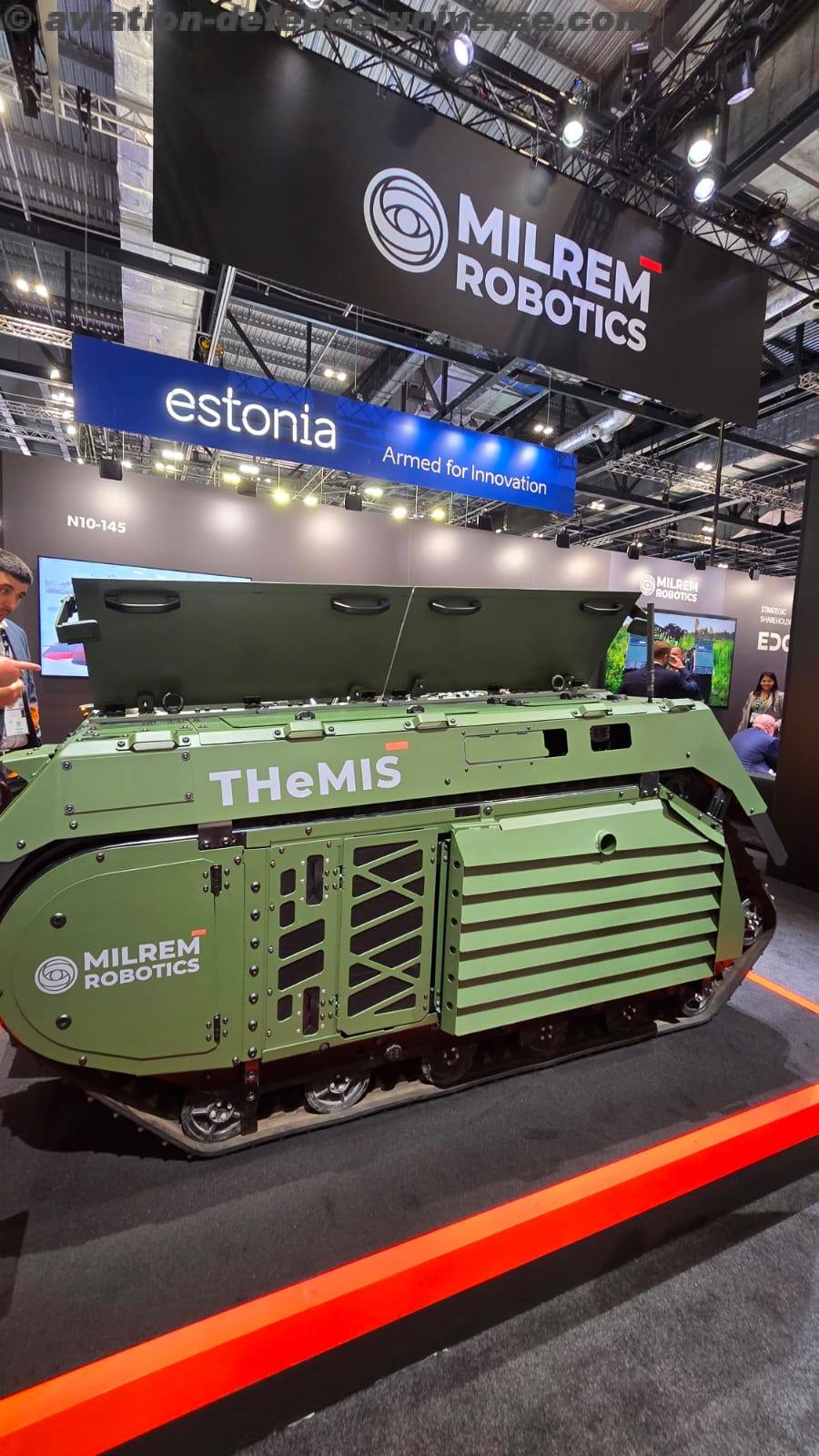 Among the Baltic nations, Estonia stands out for its unique blend of digital infrastructure and defence innovation. Known globally for its pioneering work in cybersecurity, Estonia has become a trusted partner in protecting NATO’s digital frontiers. Beyond cyber, its defence companies specialise in secure communications, situational awareness tools, and unmanned systems, all of which are increasingly vital in modern multi-domain warfare. With strong government backing and a culture of innovation, Estonia has become a model for how a small nation can develop niche expertise and provide capabilities that enhance both national security and allied strength.
Milrem Robotics, headquartered in Estonia, has emerged as a global leader in unmanned ground vehicle (UGV) development and robotics-based defence solutions. Best known for its THeMIS UGV and its larger Havoc 8×8 prototype, the company has combined cutting-edge hybrid-electric propulsion technology with battlefield experience gained from operations in Ukraine, where its platforms have logged thousands of combat hours. Now part of the UAE’s EDGE Group, Milrem is expanding its global footprint through partnerships in Europe, Asia, and North America, positioning itself as a key innovator at the intersection of robotics, autonomy, and defence.
It is spearheading a new era in unmanned ground vehicles—balancing innovation with battlefield-tested reliability. From Ukraine to the UK, and with ambitions stretching to Asia and India, Milrem is carving a niche as a trusted partner in robotics that enhance, rather than replace, the human role in modern warfare.
As told to Sangeeta Saxena


















































































-A4-Size-(2)_page-0001.jpg)