


 18th BRICS Summit




















 New Delhi. 27 May 2026. India’s unmanned aerial vehicle sector carries considerable promise, but ambition and addressable market are separated by a gap. The industry has been slow to acknowledge that commercial credibility cannot be built on laboratory simulations alone; it requires field tests.
That reckoning is now arriving, in concrete and airspace.
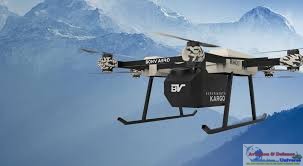
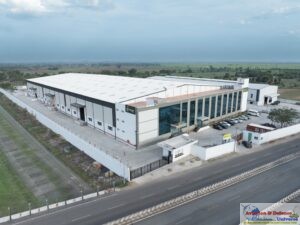
BonV Aero’s Rangeilunda Test Hub in Berhampur, Odisha, represents one of the more consequential signals yet. Designed for field testing across varied environmental conditions, it reflects a conviction that the broader sector is beginning to share that deployment-grade performance data, not controlled simulations, is the only honest foundation for scale.
“Every UAV that carries a payload over a populated area is making an implicit safety promise,” said Satyabrata Satapathy, Co-Founder & CEO, BonV Aero. “Rangeilunda exists because we believe that promise has to be earned in the field, not just asserted from a laboratory.”
The facility does not stand in isolation. The UAS Testing Foundation in Kanpur, a HAL-led consortium housed at IIT Kanpur’s Technopark, was established specifically to expand access to testing for MSMEs and startups, who have consistently identified infrastructure costs as their primary constraint. The Karaikudi UAV Test Site in Tamil Nadu, the Chikkaballapur flight testing complex in Karnataka, and the SIPCOT Industrial Park collectively represent a shift in national posture from intent to investment.
For the Directorate General of Civil Aviation, this matters. The regulator’s measured approach to Beyond Visual Line of Sight approvals has drawn criticism, but sound rulemaking requires honest data, and honest data requires field-grade testing environments. As this infrastructure multiplies, the evidentiary basis for expanded operational permissions grows proportionately stronger.
“The DGCA’s caution on BVLOS is not obstruction- it is due diligence,” said Satyabrata, adding that, “What the regulator needs is a stronger evidentiary base, and that is precisely what facilities like Rangeilunda are designed to provide.”
The larger structural question, however, is coordination. India’s low-altitude economy, spanning logistics, agriculture, surveillance, and urban air mobility, will not be unlocked by isolated investment. It requires an aligned triad of academia, industry, and government, working from shared standards and shared infrastructure.
BonV Aero’s position is unambiguous: innovation must earn its commercial licence through rigorous safety validation. That is not merely a business calculation. It is an obligation.

















































































-A4-Size-(2)_page-0001.jpg)