


 18th BRICS Summit














- Operational & technological lessons should be studied to improve our own preparedness: Rajnath Singh
- “Need to formalise integrated roadmap for next decade factoring in lessons learnt, challenges & opportunities while ensuring Aatmanirbharta”
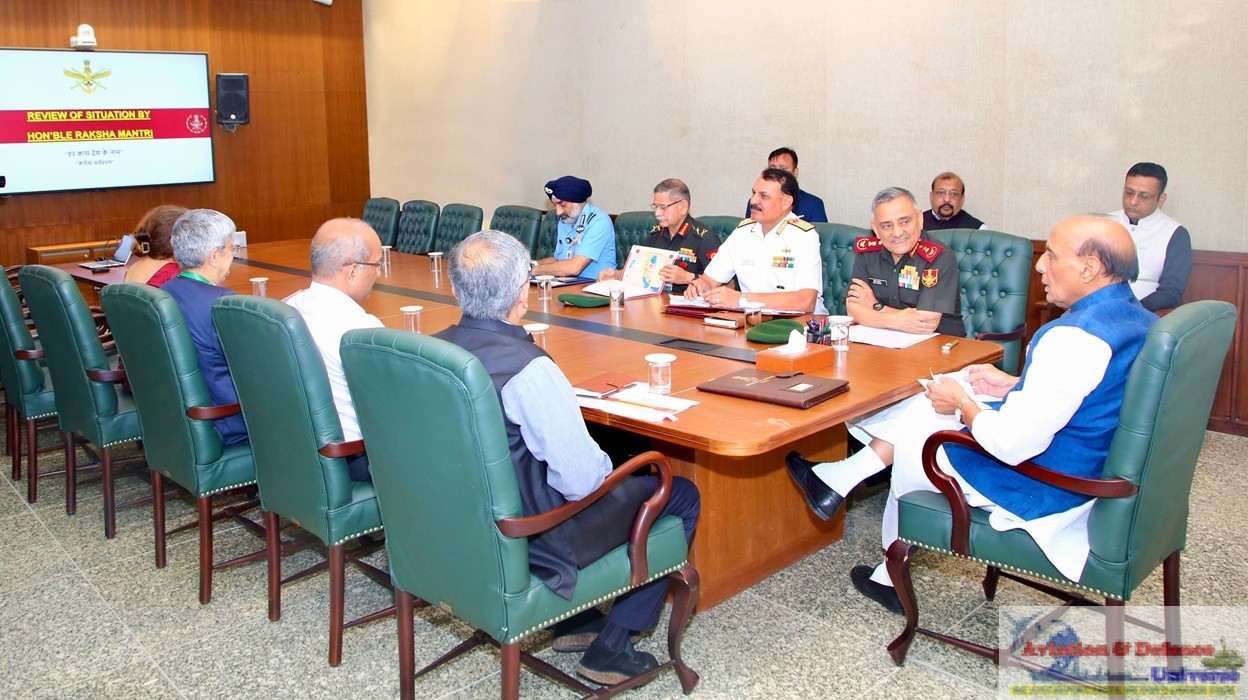
New Delhi. 25 Match 2026. Rajnath Singh took stock of the situation in West Asia and its effect on India’s defence preparedness during a meeting with Chief of Defence Staff, Service Chiefs, Defence Secretary, Secretary (Defence Production) and Chairman, DRDO in New Delhi on March 24, 2026. He was briefed about the global and regional security scenario, the impact of a possible escalation of the ongoing conflicts on India as well as the challenges and opportunities presented by the current geopolitical situation.
The impact of the situation on the supply chain management towards procurement and production of defence equipment, including maintenance and serviceability of existing equipment, was also examined.
Defence Minister directed that operational and technological lessons of the ongoing conflict should be studied continuously in order to improve India’s preparedness. “We need to formalise a comprehensive integrated roadmap for the next decade factoring in the lessons learnt, challenges and opportunities going forward whilst ensuring Aatmanirbharta and operational readiness across all fronts,” he said.






































































-A4-Size-(2)_page-0001.jpg)