

























All India- The West Bengal cabinet’s decision to transfer 31.905 acres across nine locations for border fencing, alongside land allocations for BSF outposts in Malda, Nadia, Cooch Behar, and North Dinajpur, reflects renewed urgency in securing one of India’s most challenging frontiers. Yet, the deeper issue lies beyond administrative action in terrain that resists conventional solutions.
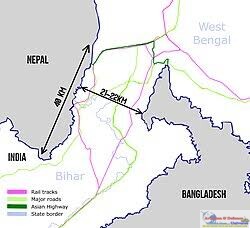
Of the 4,096.70 km India-Bangladesh border, 856.78 km remains unfenced, according to the Ministry of Home Affairs. West Bengal alone accounts for 2,216.7 km, with 569 km still open.
Critically, 112.78 km of this has been deemed geographically non-feasible to fence, a permanent vulnerability shaped by riverine terrain, shifting chars, and floodplains. These are not temporary gaps but enduring corridors, where static barriers fail and seasonal changes consistently undermine conventional border control.
The consequences are stark. Since 2014, there have been 8,632 infiltration attempts and 21,407 arrests along the India-Bangladesh border , the highest among India’s international borders. In 2025, peak arrests were recorded in October (380), September (330), and November (306), coinciding with post-monsoon terrain shifts that further weaken ground-level surveillance.
Recent land allocations, including 12.72 acres across 11 locations in North Dinajpur, underline the government’s continued push to expand fencing infrastructure. However, such measures cannot address stretches where fencing is structurally unviable.
This is where technology must bridge the gap. Unmanned Aerial Vehicles (UAVs), equipped with thermal imaging, AI-enabled detection, and persistent surveillance capabilities, offer a terrain-agnostic solution. Unlike static barriers, drones can adapt to shifting landscapes, monitor riverine zones, and provide real-time intelligence to BSF units operating in difficult conditions.
“The future of border security, especially in terrains that cannot be fenced or continuously monitored, lies in close collaboration between paramilitary forces and India’s deep-tech ecosystem,” said Satyabrata Satapathy, co-founder & CEO of BonV Aero. “Indigenous UAV companies bring the ability to design for India’s specific operational realities from riverine borders to low-visibility conditions while enabling faster deployment cycles and strategic self-reliance. In such environments, drones are not just force multipliers, they become the primary means of maintaining persistent surveillance and operational control,” he added.
As India recalibrates its border security approach, the message from West Bengal is clear: the challenge is no longer just about building fences, but about securing what cannot be fenced.














































































-A4-Size-(2)_page-0001.jpg)