


 Raksha Mantri Rajnath Singh to represent India at SCO Council of Heads of Government Meeting in Tajikistan

















- ITDS processor, paired with Northrop Grumman’s ATHENA sensor, will enhance aircraft and aircrew survivability
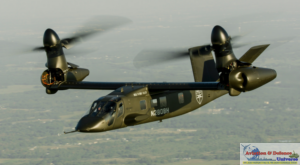 ASHBURN, Va. – Sept. 1, 2026 – Curtiss-Wright announced today that it was awarded an approximately $14 million contract from Northrop Grumman to provide sensor processing equipment supporting the Phase II development of the U.S. Army’s Improved Threat Detection System (ITDS), the future threat warning system designed to protect aircraft from air defense systems. The program aims to deliver advanced missile warning and threat detection capabilities across current and future U.S. Army aviation platforms, including the AH-64 Apache and MV-75 Cheyenne Future Long-Range Assault Aircraft.
Curtiss-Wright’s ITDS integrated processor provides a modular, ruggedized solution designed to ingest high-bandwidth sensor data, perform real-time processing and data fusion, and enable rapid integration of new capabilities within an open systems architecture that is purpose built for portability from platform to platform. Paired with Northrop Grumman’s Advanced Tactical Hostile Engagement Awareness (ATHENA) sensor, Curtiss-Wright’s integrated processor will enable timely missile warning and critical information flow across the platform to protect aircraft and aircrews.
“Combining Curtiss-Wright’s highly durable processing capability with Northrop Grumman’s ATHENA sensor will result in an unrivaled threat detection capability, providing the potential to protect aircrews from virtually any weapon system – air to air or surface to air – employed by our adversaries,” said Brian Perry, Senior Vice President and General Manager, Curtiss-Wright Defense Solutions. “Our integrated processor excels at rapidly processing and transporting large amounts of data in the most demanding environments, making it the optimal computing solution for latency-critical sense and response protection systems such as ITDS.”
Curtiss-Wright’s integrated processor utilizes MOSA- and SOSA aligned modules integrated within a conduction-cooled chassis designed for airborne deployment. High-speed optical interfaces and configurable I/O provide support for both modern digital sensors and legacy aircraft interfaces, enabling integration across a wide range of aircraft protection architectures. The integrated processor also delivers groundbreaking artificial intelligence-enabled compute architecture and real-time net-centric data sharing which ensures the platform can evolve alongside emerging sensor technologies, algorithms, and countermeasure systems.












































































-A4-Size-(2)_page-0001.jpg)