


















By Gp Capt Ashish Gupta (Retd)
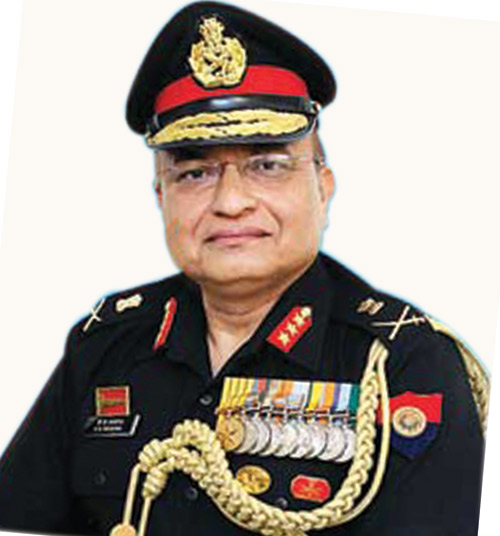
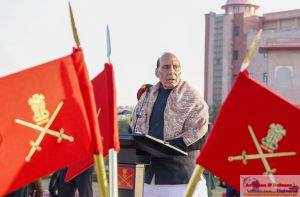
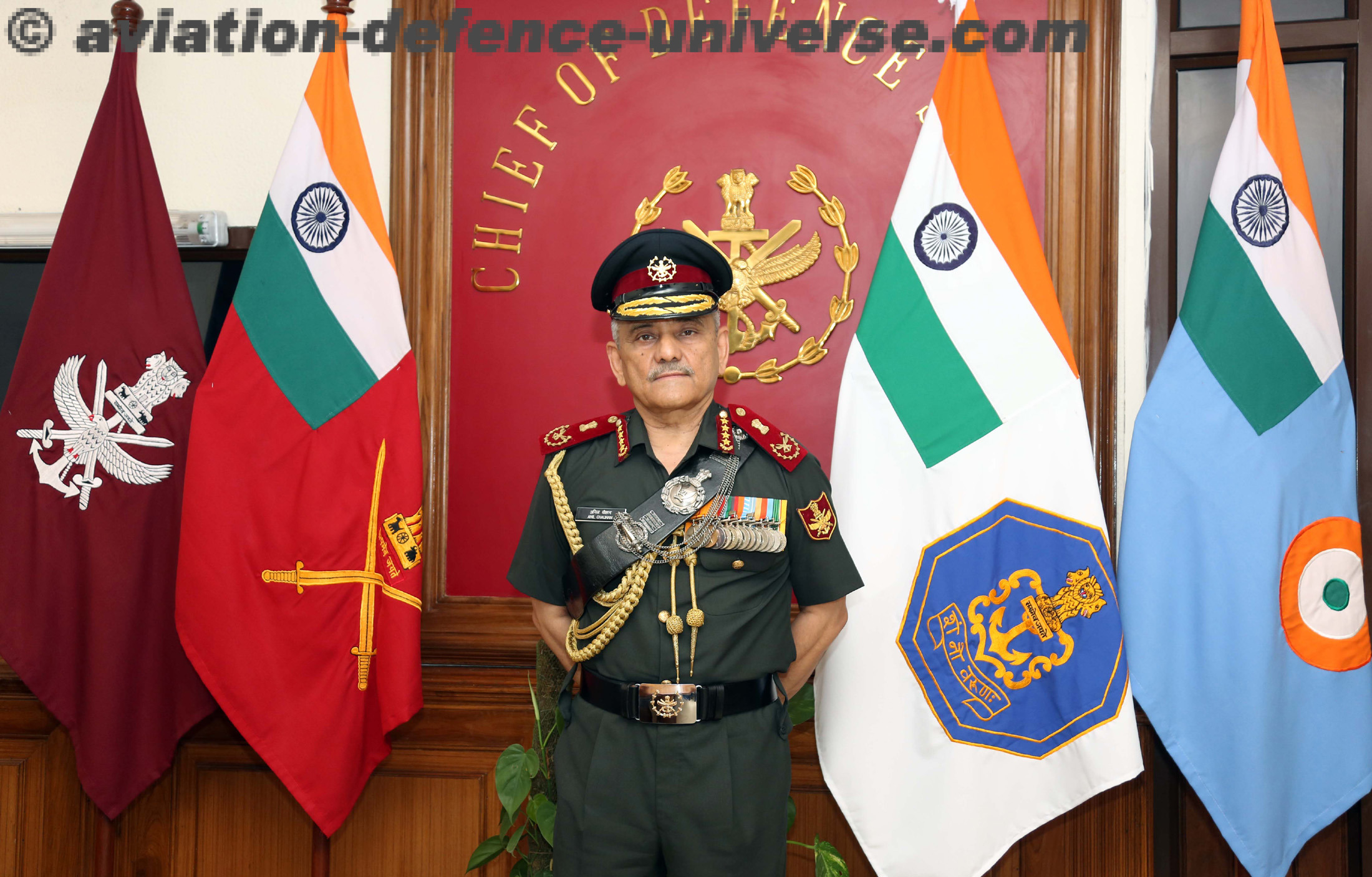
New Delhi. 21 May 2026. “शक्ति: युक्त्या विनीयते” Śaktiḥ yuktyā vinīyate: “Power must be guided by strategy.” This quote broadly sums up General Anil Chauhan’s vision and direction as the Chief of Defence Staff. His tenure, in due course, will turn out to be a seminal moment in the evolution of India’s military thought. He held the office at a time when the very nature of warfare seemed to be shifting in disturbing and sometimes contradictory directions. The wars in Nagorno-Karabakh, Ukraine, West Asia and the Red Sea have posed hard questions about many long-held assumptions about modern warfare. In the present context, the outcome of wars does not seem to be decided by large standing armies or expensive platforms alone. Instead, military operations today are increasingly reliant on widely dispersed networks, real-time information, drones, cyber capabilities, and multi-domain and multi-service integration.
Military institutions, much like civilisations themselves, survive through adaptation. The old Sanskrit injunction “चरैवेति चरैवेति” — “keep moving forward” — captures this strategic necessity rather well. It is with this strategic foresight General Chauhan sought to bring in a positive and perceptive change in India’s military preparedness. Through speeches, professional discussions, and strategic writings, with doctrinal certainty, he shared his thoughts on future warfare and a roadmap for India’s armed forces to tackle future challenges. His discourses are replete with recurring themes of future conflict, technological disruption and tri-service integration. His focus remains on preparing the military for wars that could be very different from those India had fought before, in an age when drones, cyber operations and real-time surveillance were changing operational realities.[1]
A cornerstone of General Chauhan’s strategic outlook is his focus on the difference between the “nature” of war and the “character” of war. General Anil Chauhan speaking on ‘Future Wars: Strategic Posturing through Military Power’ at the Chanakya Defence Dialogue in November 2025 said, “The nature of war remains constant, but the character of war changes,” referencing a classical distinction in strategic studies[2]. The nature of war – violence, uncertainty, political purpose and competition between adversaries – remains constant. But the character of war is constantly evolving as a result of technology, doctrine, organisation and social change. He often argued that preparation for future wars can’t be done solely on the basis of lessons learnt from past wars. Instead, the armed forces will have to study emerging technologies, follow ongoing conflicts around the world, and anticipate the operational environment of tomorrow.
Platform-Centric Warfare to System-Centric Warfare. During General Anil Chauhan’s tenure, the Russia-Ukraine conflict has become an increasingly central reference point in military discussions. This was largely because it shook several deep-rooted assumptions that had long been shaping contemporary strategic thinking. We have to be prepared for both, short, high-tempo wars driven by technological superiority as well as protracted wars of attrition. Drones, cyber operations, electronic warfare and real-time intelligence have changed battlefield behaviour in largely unanticipated ways. Modern warfare increasingly suggests that battlefield effectiveness may depend as much on sophisticated high-end platforms as on relatively inexpensive, expendable systems capable of imposing disproportionate operational costs[3]. General Chauhan’s comments on future warfare warn against the older assumptions that future wars will be won quickly through decisive battlefield victories achieved primarily by superior platforms or overwhelming firepower alone. The conflict instead suggested that wars could be long, adaptive and strategically messy, requiring militaries to reassess doctrine, logistics and force structures far more often than large institutions tend to like.
The term “आपद्धर्मः” (Āpaddharmaḥ) which comes from classic Indian thoughts can be loosely translated into “In times of crisis, conduct must adapt to circumstance.” It’s intellectually stimulating and extremely useful in articulating strategic discourse. It conveys the idea that extraordinary circumstances may require adaptive conduct outside normal conventions. Similarly, General Anil Chauhan has said on several occasions that future conflicts are unlikely to be confined to the familiar operational realms of land, sea and air[4]. Cyber networks, satellites, electronic systems, and the information domain are increasingly determining the battlefield outcome alongside conventional combat operations. A target may be detected by a satellite, a drone may continue surveillance, electronic warfare systems may jam communications, and eventually a long-range missile from another theatre may hit it. In this environment, military effectiveness is less about individual platforms acting independently and more about the speed of information processing, decision-making, and response. The conventional ideas about military power are being transformed focusing more on operational responsiveness, adaptability and integration.
Technology and the Operational Ecosystem. General Anil Chauhan’s observation that “Technology alone will not guarantee success in war” captures visible lessons from recent conflicts, especially those in Ukraine and the Iran wars. The technology itself does not drive modernisation. It is driven by skill, expertise and speed with which it is operationally absorbed. Why do artificial intelligence, cyber capabilities, autonomous systems and space-based surveillance matter? They are increasingly impacting battlefield coordination and decision-making. But these capabilities are limited unless integrated into training, operational planning and institutional culture. For him, adaptation was more important than acquisition per se. History is replete with instances of armies failing to exploit advanced equipment for operational success by not embedding and integrating technology into doctrine, training and organisational culture.
Jointness: An Imperative to Operate. This understanding defined General Anil Chauhan’s emphasis on jointness and military integration. He sees integration more as a reaction to the changing nature of the battlefield itself than as an institutional rearrangement[5]. Modern military operations increasingly depend not upon isolated platforms operating independently, but upon the creation of integrated “kill chains”. With these, all that constitutes war-fighting capability: sensors, decision-makers, communication networks, and weapon systems, are joined into a single operational architecture. In contemporary warfare, the effectiveness of a tank, aircraft, warship, or artillery system is determined less by its standalone sophistication and more by how efficiently it can function within this wider networked ecosystem. The Ukraine conflict, for example, repeatedly demonstrated how delays in interservice coordination could quickly degrade operational effectiveness. Future war conditions will make it challenging to fight using rigid, domain-specific approaches to military operations. A military force organised around narrowly compartmentalised structures may struggle to respond effectively to this complexity. This is why integrated theatre commands remained central to his reform agenda, even as debates over structure and implementation continue. Future wars will require faster joint decision-making than traditional arrangements can comfortably provide.
Whole of Nation Approach for National Security. In many ways, the old Vedic injunction — “सं गच्छध्वं सं वदध्वं” (“move together, speak together”) reflects the essence of a whole-of-nation approach rather well. Similarly, General Anil Chauhan’s thinking on integration reflects a broader conception of national power and its evolving basis. His speeches often brought out that future conflicts will be shaped as much by economic resilience, technological capacity, industrial depth and information control as by traditional military strength[6]. Recent wars have demonstrated how supply chains, industrial production and access to technology can affect battlefield sustainability over time. In essence, military capability is increasingly tied to broader national capacity, not just to isolated combat power. Future wars will require coordination between military institutions, industry, technology sectors and statecraft, turning a new leaf into strategic thinking.
Self-Reliance and Strategic Resilience. The Gita’s injunction — “उद्धरेदात्मनाऽत्मानं” (“elevate oneself through one’s own strength”) captures the philosophical essence of self-reliance in national security. General Anil Chauhan increasingly associated military preparedness with defence indigenisation and strategic self-reliance. The war in Ukraine has shown how prolonged fighting can put pressure on external supply chains and complicate access to ammunition, spare parts and critical technologies[7]. A military that depends heavily on foreign suppliers may eventually encounter operational constraints outside of its direct control. His thinking was closely aligned to the Hon’ble Prime Minister’s emphasis on Atmanirbhar Bharat, though the argument seemed to be more of a strategic necessity rather than economic rhetoric. Future conflicts will require the continuous replenishment of drones, sensors, electronic systems and precision munitions in combat conditions. In this context, indigenous defence production is directly related to wartime sustainability and national resilience. Strategic autonomy is directly correlated with industrial and technological self-sufficiency in protracted crises.
Future Warriors and Intellectual Adaptation. Large military institutions adopt slowly to changes as decades of operating tradition, institutional habits and deep-seated service identities take time to transition and reconfigure[9]. This cannot be achieved by policy directives alone. In India too, over the decades, the Army, Navy and Air Force have followed different operational trajectories, evolving their own professional cultures and strategic perspectives. General Anil Chauhan, cognizant of these realities, frequently commented that reforms of this scale need continuous professional dialogue, doctrinal evolution, and, more importantly, institutional trust. For him, integration is not a simple administrative adjustment. At the same time, he repeatedly argued that the changing nature of warfare offers less and less operational space for rigid service compartmentalisation.
Another recurrent theme in Anil Chauhan’s speeches is the increasing importance of professional military education and intellectual adaptability. His words often buttressed the notion that, in the future strategic environment, military leadership would demand far more than traditional battlefield acumen alone. It would increasingly require technological literacy, institutional adaptability, and the ability to integrate military power within a broader multidomain and national framework. Rapid technological change and the emergence of non-traditional threats are already making strategic choices more complex. The compressed operational timelines and volume of information to deal with, future military leaders will have to mix operational judgement, technological literacy and strategic flexibility. Traditional combat skills are still important, but they need to be augmented. Officers will be required to understand the nuances of cyber operations, space systems, information warfare and data-centric decision-making, particularly when conflicts are fought simultaneously across multiple domains and under constant technological pressure.
He often underscored the importance of military leaders being intellectually agile and technologically savvy. Future conflicts will likely squeeze decision cycles far more sharply than many traditional command structures were designed to handle. Information already flows across battlefields almost instantaneously, via real-time surveillance, autonomous systems and algorithmic decision-support tools. But access to information alone may not ensure effective decisions. Still, even with advanced platforms and sophisticated weapon systems, militaries that cannot process data rapidly, coordinate responses, or adapt operationally could still be strategically constrained. So, General Anil Chauhan appeared to view modernisation as a continuous process of institutional adaptation, not a finite exercise in technology acquisition. This focus on adaptation also seemed to be influenced by lessons from contemporary conflicts, where battlefield innovation often came from operational necessity rather than formal procurement cycles. Especially the Ukraine war demonstrated how rapidly militaries were compelled to improvise in areas like drone use, electronic warfare and decentralised operations. Commercial drones were quickly adapted for reconnaissance and strike missions, often faster than traditional acquisition systems could respond. General Anil Chauhan repeatedly stressed the importance of studying such conflicts carefully but not copying them directly as templates. India’s geography, threat perceptions and strategic conditions are quite different from the European theatre. His observations therefore implied that doctrinal adaptation has to be rooted in the operational realities of India and not by imitation of the wartime experience of others.
Hybrid Warfare and the Blurring of Conflict. An important aspect of General Anil Chauhan’s thinking concerned the increasingly uncertain boundary between conventional and non-conventional conflict[11]. Future wars, in his assessment, are unlikely to begin with formal declarations or remain restricted to visible military engagements alone. Cyberattacks, disinformation campaigns, economic pressure, grey-zone activities and psychological operations may shape the strategic environment long before conventional combat begins. Recent conflicts have already shown how digital networks, media narratives and infrastructure vulnerabilities can influence military outcomes even before troops are deployed in large numbers. Under such conditions, the distinction between war and peace appears far less stable than earlier strategic thinking assumed.
This knowledge also reinforced his constant emphasis on preparedness in peacetime. The mobilisation of forces after a crisis has taken shape can no longer be the basis of military readiness. The development of technological capabilities, cyber resilience, information systems and joint operational structures must be ongoing, well ahead of the conflict’s start. The early stages of future wars might be too rapid for adaptation to be delayed. A military capable of processing intelligence rapidly, synchronising responses across domains, and acting decisively from the outset could gain operational advantages that become difficult to reverse later, particularly in conflicts characterised by compressed decision timelines and persistent technological surveillance.
Mainstreaming the Discourse on Future War. One of the more significant intellectual shifts associated with General Anil Chauhan’s tenure was the discussions on the nuances of “future war” closer to the centre of India’s strategic discourse. Earlier debates on military modernisation often remained tied to platforms, acquisitions and force levels. During his tenure, however, conversations increasingly expanded to include issues such as multi-domain operations, artificial intelligence, autonomous systems, network-centric warfare, cognitive conflict, and integrated deterrence. That change may appear abstract at first glance, yet it arguably altered how many within the strategic community began to think about military preparedness itself. Procurement remained important, certainly, though the larger question increasingly became whether existing military structures and doctrines were prepared for rapidly changing forms of conflict.
The future battlefield, as General Chauhan often suggested, is likely to operate under conditions of persistent surveillance, long-range precision engagement, autonomous systems and overwhelming information flow. Decision timelines may shrink to uncomfortable levels. Under such pressures, militaries functioning through rigid hierarchies or outdated operational assumptions could struggle to respond coherently, even with advanced equipment at their disposal. His repeated emphasis on integration, adaptability, and future-oriented military thinking therefore reflected an awareness that technological change is gradually reshaping the relationship among information, decision-making, and combat effectiveness in ways that traditional structures may find difficult to absorb quickly enough.
India’s Evolving Security Environment. General Anil Chauhan’s contribution perhaps needs to be viewed within the wider context of India’s emergence as a major power and the broader national visions of Viksit Bharat and Atmanirbhar Bharat. These objectives aim to position India as a technologically capable, economically resilient and strategically autonomous state by 2047. His strategic outlook repeatedly suggested that military preparedness in the twenty-first century cannot remain separated from economic strength, industrial depth, technological innovation and national ambition more broadly. In several ways, his tenure coincided with a gradual shift in Indian strategic thinking, in which national security came to be viewed less narrowly as territorial defence alone and more within the broader framework of comprehensive national power.
His understanding of Atmanirbharta also appeared considerably broader than domestic manufacturing in a narrow sense. General Chauhan frequently implied that self-reliance must extend into ideas, doctrines, technological innovation and military thinking itself. Strategic autonomy, in that sense, depends as much upon intellectual capacity as upon indigenous equipment. A country may manufacture platforms domestically yet remain dependent on external technological frameworks or imported operational concepts. Perhaps for this reason, he repeatedly stressed stronger engagement between the armed forces, academia, industry, startups and research institutions. The objective seemed less about symbolic indigenisation and more about building institutions capable of adapting technologically in the face of long-term strategic competition.
The Enduring Legacy of General Anil Chauhan. General Anil Chauhan’s legacy may ultimately rest less on immediate outcomes than on the strategic direction he sought to establish for the armed forces. Military transformation rarely produces visible results within a few years. Processes such as integrated theatre commands, doctrinal reform, technological adaptation and professional reorientation generally unfold slowly, often unevenly and with institutional resistance along the way. Yet his tenure has provided a certain conceptual clarity for the future. The significance of his tenure lies in galvanising and creating momentum for longer-term strategic transitions.
His broader contribution perhaps reflects an emerging recognition within India’s strategic community that future wars are unlikely to be determined solely by the possession of advanced platforms or numerical strength. Increasingly, military effectiveness seems tied to how rapidly forces can integrate systems, process information, adapt operationally and coordinate action across multiple domains under persistent technological pressure. General Chauhan’s repeated emphasis on integration, adaptability and future-oriented military thinking, therefore, suggested an attempt to prepare Indian military institutions for a battlespace that may look distinctly different from the wars for which many conventional structures were originally designed.
[1] Adapting to Disruptive Tech, Rethinking Legacy Structures & Prioritising Tri-service Synergy Key to Tackling Today’s Security Challenges: CDS.” Press Information Bureau, Government of India, August 5, 2025. Press Information Bureau.
[2] Anil Chauhan, “Future Wars: Strategic Posturing through Military Power,” speech delivered at the Chanakya Defence Dialogue, November 2025, reported in “Nature of War Constant, Character Changes: CDS General Anil Chauhan,” The Economic Times, November 21, 2025.
[3] “CDS General Chauhan Says Lesson for India from Ukraine War Is Self-Reliance.” Hindustan Times, February 17, 2023.
[4] “Future Wars Will Extend Beyond Land, Sea and Air: CDS General Anil Chauhan.” The Times of India, April 27, 2025.
[5] “Jointness and Integration Essential for Future Warfare: CDS General Anil Chauhan.” The Hindu, July 18, 2025.
[6] “CDS Anil Chauhan Outlines Comprehensive Vision for India’s Evolving National Security Architecture.” Raksha Anirveda. November 18, 2025. https://raksha-anirveda.com/cds-anil-chauhan-outlines-comprehensive-vision-for-indias-evolving-national-security-architecture/.
[7] “CDS General Chauhan Says Lesson for India from Ukraine War Is Self-Reliance.” Hindustan Times. February 17, 2023. https://www.hindustantimes.com/india-news/cds-general-chauhan-says-lesson-for-india-from-ukraine-war-is-101677855740326.html.
[8] Ibid.
[9] “Future Warfare Will Demand Hybrid Warriors: CDS General Anil Chauhan.” The Times of India, August 18, 2025.
[10] “Future Warfare Will Demand Hybrid Warriors: CDS General Anil Chauhan.” The Times of India, August 18, 2025.
[11] “Future Warfare Will Demand Hybrid Warriors: CDS General Anil Chauhan.” The Times of India, August 18, 2025.
[12] Third Revolution in Warfare Underway, Says CDS General Anil Chauhan.” The Economic Times, July 14, 2025.
[13] “Adapting to Disruptive Tech, Rethinking Legacy Structures & Prioritising Tri-service Synergy Key to Tackling Today’s Security Challenges: CDS.” Press Information Bureau, Government of India, August 5, 2025.
[14] “India Must Be Self-Reliant in Ideas and Military Thinking Too: CDS General Anil Chauhan.” The Economic Times, August 27, 2025.








































































-A4-Size-(2)_page-0001.jpg)