


 18th BRICS Summit











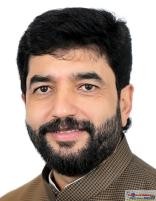


- 79-Year-Old Adventurer’s Extraordinary Journey
By Sangeeta Saxena
New Delhi. 15 February 2026. A palpable buzz of anticipation fills the corridors of MERI as the institution prepares to welcome Arvinder “Arvi” Singh Bahal, the globetrotter-turned-space traveller whose journey now stretches beyond Earth itself. For students who recently launched the MERI Space Club, his visit is more than an event—it is a moment where aspiration meets reality. From the Taj Mahal city of Agra to the edge of space, Bahal’s story embodies courage, curiosity and relentless exploration. As he steps onto campus, he brings with him not just tales of 196 countries and the Kármán line, but living proof that boundaries—geographical or cosmic—exist only to be crossed.
Born on October 13, 1945, in Agra and raised near the iconic Taj Mahal, Bahal’s life story reflects adventure, enterprise, and global exploration. Now based in Beverly, Massachusetts, he became a naturalised US citizen in 1979 after obtaining his Green Card in 1977. He has led Bahal Properties since 1975 and built successful ventures across fashion, sportswear, hospitality, and real estate over more than four decades.
 His journey began with an early stint at India’s National Defense Academy in 1962, which he left following a polo accident that caused partial hearing loss. Undeterred, he worked on a Scottish-owned tea plantation in Darjeeling before entering garment manufacturing near Delhi in 1970. Over the decades, Bahal has evolved into what he describes as a lifelong adventurer. He has travelled to all 196 countries across all seven continents, visited both the North and South Poles, skydived over Mount Everest and the Pyramids of Giza and explored remote regions such as Greenland, Patagonia, North Korea, and the Sahara Desert.
A licensed private pilot trained to fly helicopters and fluent in six languages, Bahal recently authored his first book, Tireless Traveler, chronicling his global journeys. But his most exciting and amazing journey would have been into space last year, the NS-34 mission launched from Blue Origin’s facility in West Texas. Bahal joined a diverse international crew that included tech entrepreneur Justin Sun, Turkish businessman Gokhan Erdem, Puerto Rican meteorologist Deborah Martorell, British teacher Lionel Pitchford and venture capitalist JD Russell.
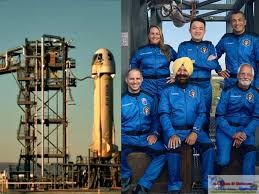 The flight carried the passengers beyond the Kármán line — approximately 100 kilometres above Earth — internationally recognised as the boundary of outer space. The suborbital journey will offer a few minutes of weightlessness and panoramic views of Earth before returning safely to the desert landing site. For Bahal, the mission represents the ultimate extension of a life defined by exploration — this time, not across continents, but beyond the planet itself.
Blue Origin’s New Shepard programme is a reusable, suborbital spaceflight system designed specifically for human space tourism and research payloads. Founded by Jeff Bezos, Blue Origin aims to lower the cost of access to space through reusable rocket technology. The New Shepard vehicle consists of a booster and a crew capsule, both designed for vertical take-off and landing.
So far, the programme has flown 70 people to space, including private citizens, scientists, and public figures. The capsule is fully autonomous, requiring no onboard pilots, and offers large windows for viewing Earth from space. The system’s reusability and automated design represent a new phase in commercial human spaceflight, making space tourism more accessible than ever before.
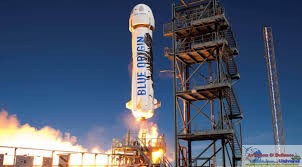 Arvinder “Arvi” Singh Bahal’s journey aboard Blue Origin’s NS-34 mission was not merely another space tourism milestone — it was the continuation of a life spent pushing boundaries. From growing up in Agra to travelling every country on Earth and having crossed the threshold of space, Bahal embodies the spirit of exploration that defines both aviation and spaceflight. As commercial space travel becomes a reality for private citizens, his flight stands as an inspiring testament to curiosity, resilience, and the timeless human urge to go farther — even beyond Earth itself.
Management Education & Research Institute(MERI), affiliated to Guru Gobind Singh Indraprastha University (GGSIPU), is all set to mark an exciting new chapter in its academic and extracurricular journey as it prepares to host its first major activity following the recent launch of its Space Club. The initiative reflects MERI’s growing emphasis on emerging domains such as space technology, aviation, innovation and research-driven learning. The Space Club aims to create a dynamic platform for students to engage with developments in the global space ecosystem, interact with industry experts, and explore opportunities in aerospace, satellite technology, and commercial space ventures. This upcoming event will serve as a launchpad for nurturing curiosity, scientific temper and future-ready skills among students, positioning MERI as an institution keen to align education with India’s expanding footprint in space exploration and technology.
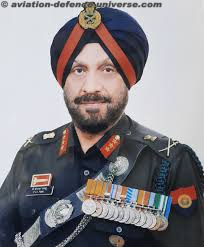 Lt. Gen. (Dr.) P.J.S. Pannu (Retd.), Advisor to MERI’s Space Club, continues to play a pivotal role in shaping the institution’s vision for strategic and space studies. Bringing with him decades of military leadership and deep insight into national security and emerging domains such as space, he mentors students to think beyond textbooks and engage with real-world strategic challenges. On Monday, 16 February at 11 AM, he will conduct a special fireside chat with Arvinder “Arvi” Singh Bahal, offering students a unique opportunity to interact with a global adventurer and space traveller. The session is expected to blend perspectives from defence, exploration and space tourism, reinforcing MERI’s commitment to inspiring young minds at the intersection of strategy, aviation and space.































































-A4-Size-(2)_page-0001.jpg)