





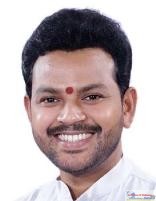


- Dissanayake assures “No hostile use of our land against India”
- India-Sri Lanka Forge Stronger Strategic Bonds as Modi Secures Key Agreements
By Jai Kumar Verma
 New Delhi. 17 April 2025. Prime Minister Narendra Modi’s recent visit to Sri Lanka marked a significant step in strengthening India-Sri Lanka ties, particularly in defence, energy, infrastructure, and trade. The visit reaffirmed Sri Lanka’s strategic role in India’s ‘Neighbourhood First’ policy and MAHASAGAR vision, emphasizing regional security and cooperation in the Indian Ocean. Seven key agreements were signed, including a landmark five-year defence cooperation pact, an India-UAE-Sri Lanka energy partnership, and infrastructure projects financed by India. A crucial highlight was Sri Lankan President Anura Kumara Dissanayake’s assurance that Sri Lanka would not allow its territory to be used against India, signalled a shift amid growing regional tensions involving China’s increasing presence in South Asia.
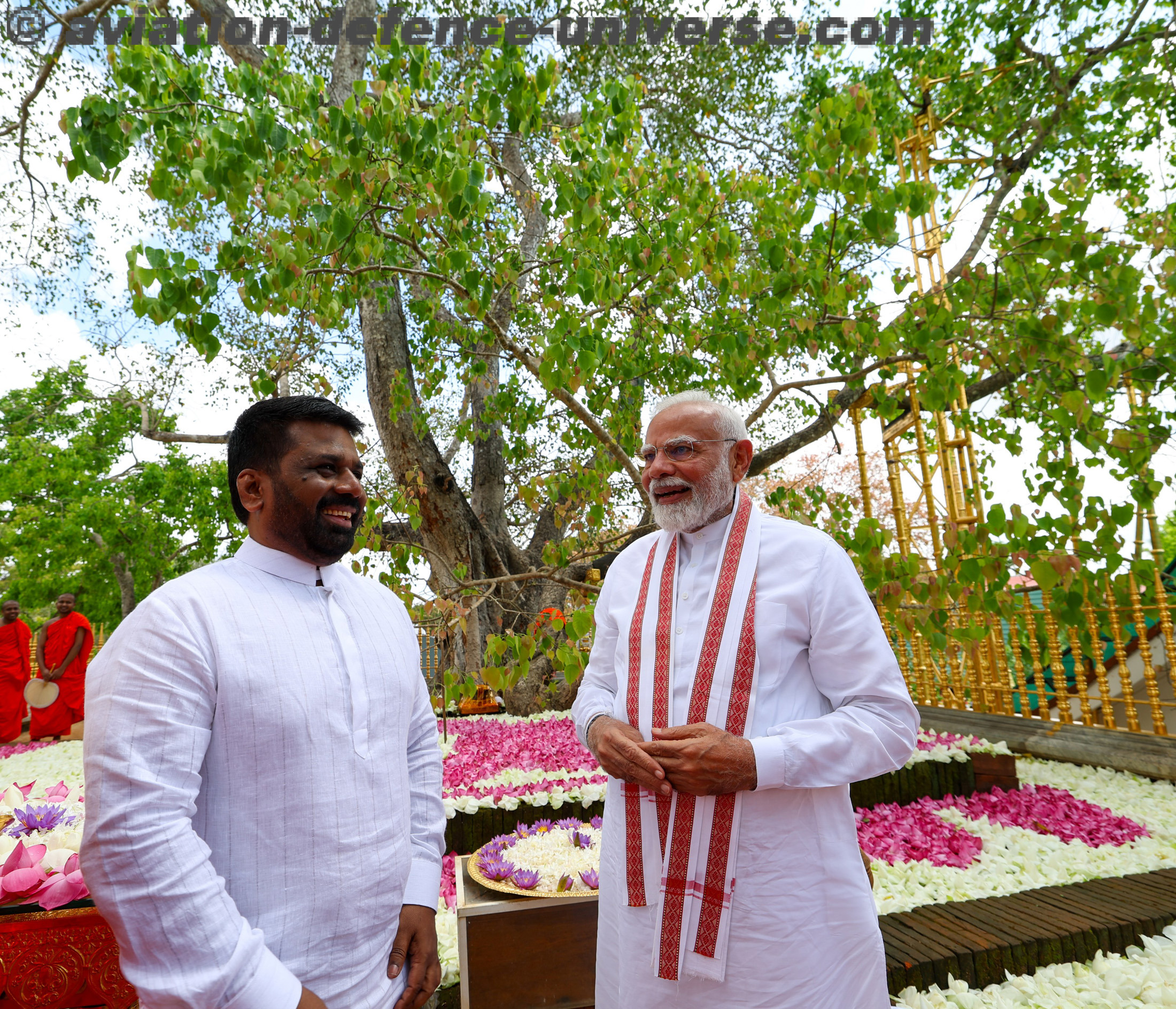
Prime Minister Narendra Modi concluded his two day “very productive” visit of Sri Lanka on 6th April 2024. Sri Lanka plays a vital role in India’s ‘MAHASAGAR’ vision which extends to the 2015 SAGAR initiative. SAGAR stands for Security and Growth for all in the (Indian Ocean) Region. Modi and Sri Lankan President Anura Kumara Dissanayake signed important agreements on various fields including defence, energy, digitalisation, health, infrastructure and in trade sectors. The current visit occurred on the invitation of Sri Lankan President Dissanayake. He paid his first official visit to India after taking over as President of Sri Lanka last year. Modi was the first foreign dignitary to visit Sri Lanka after leftist Dissanayake won Sri Lankan elections.
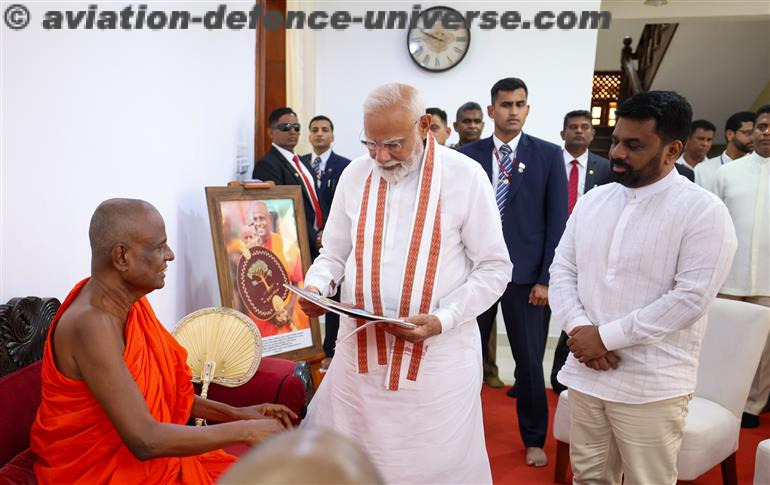 The island nation conferred “Mitra Vibhushana” which is Sri Lanka’s highest civilian award to Modi in recognition of his sincere efforts in strengthening ties between both the countries. Modi also visited the Jaya Sri Maha Bodhi temple in Anuradhapura and paid respects to the revered Buddhist shrine. The visiting Prime Minister also met with Most Ven Pallegama Hemarathana Nayake Thera, Chief Incumbent of the Great Eight Buddhist Shrines (Atamasthanadhipathi) of Anuradhapura. Modi also shared relics of the Buddha which was discovered in Gujrat in 1960. Modi also promised to develop Bodh Gaya as a spiritual city after discussing the matter with Sri Lankan President.
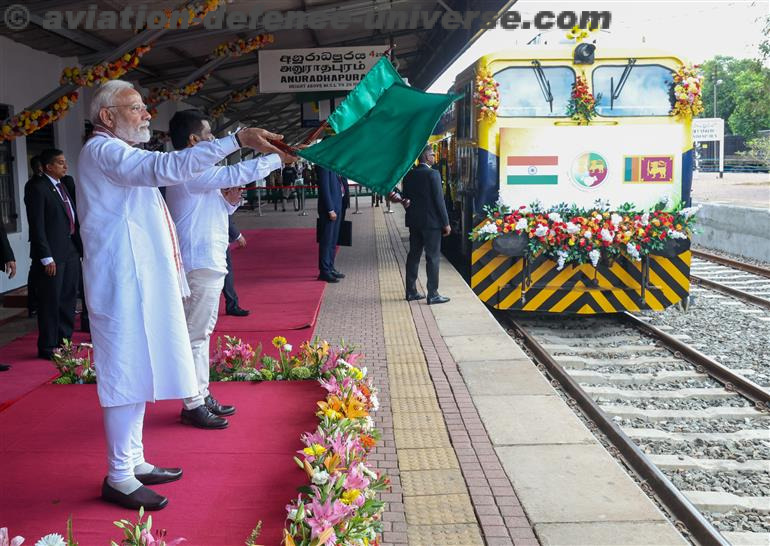 The upgraded Northern Railway Line between Maho to Omanthai and upgraded railway signalling system at Anuradhapura railway station were jointly inaugurated by Modi and Dissanayake. Both these projects were financed by India. Both the nations signed a five-year defence cooperation agreement. India would be training Sri Lankan military personnel under the agreement and both the countries would share information and technology. Modi while welcoming the agreement on defence cooperation mentioned that both countries would collaborate in security in the Indian Ocean through Colombo Security Conclave. The security conclave is to enhance the security of Indian Ocean and India, Sri Lanka, Bangladesh, Maldives and Mauritius are the members while Seychelles is an observer of Colombo Security Conclave. The conclave was on the initiative of Sri Lanka as it wanted to augment maritime security in the Indian Ocean Region.
Dissanayake commended and mentioned that India is not only a regional power but has also emerged as a world power. Dissanayake also mentioned that “I have reiterated our position to Prime Minister Modi that Sri Lankan territory will not be allowed to be used by anyone to undermine India’s security.” This promise is important as in past Chinese submarines and research vessels have called Colombo seaport. When India raised objections then Colombo has stopped their visits. On India’s request Chinese ships were not allowed as the ships were spy ships though China claimed them research vessels.
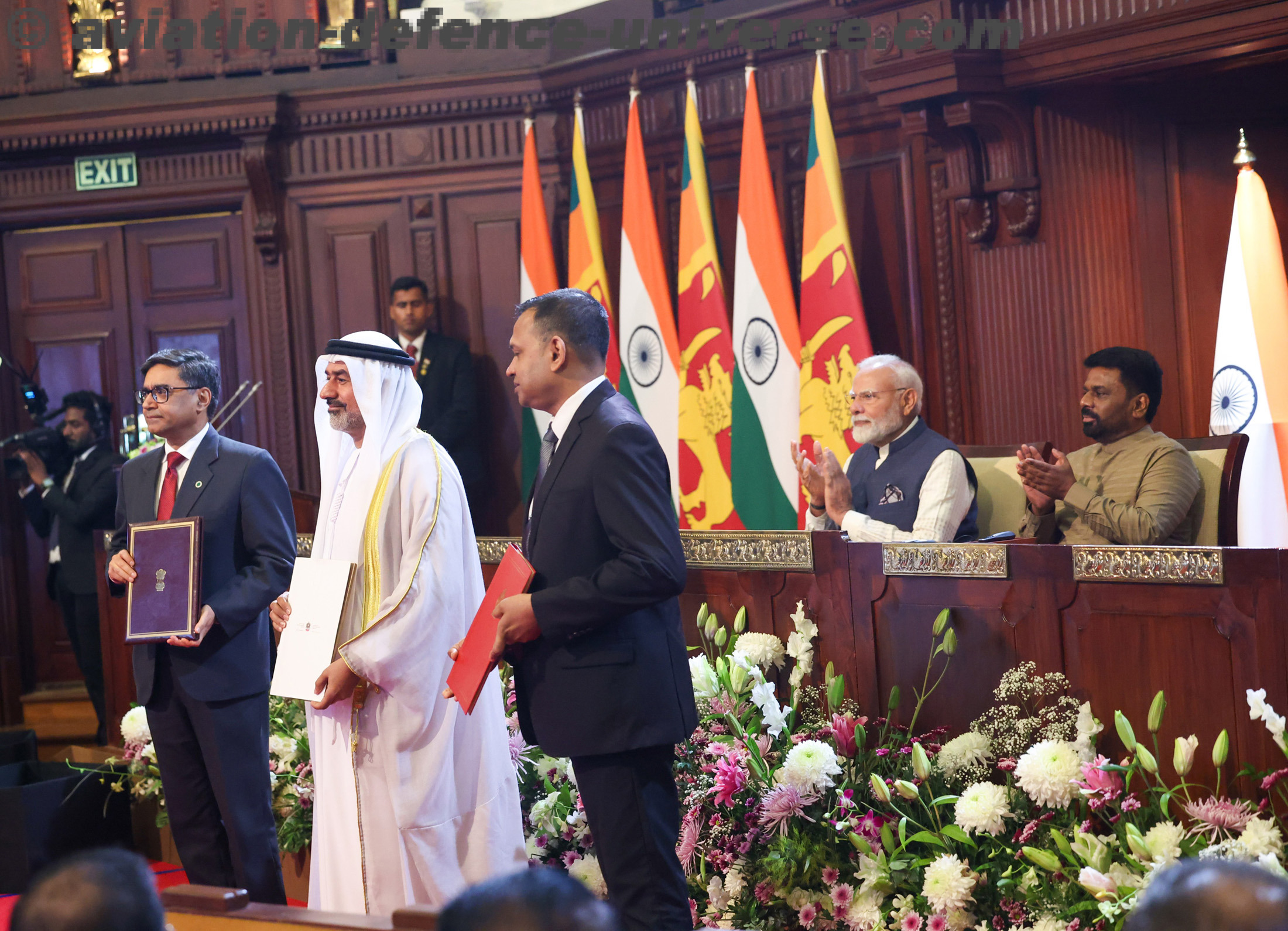
The other high point of Modi’s Sri Lanka visit was the agreement between India, United Arab Emirates (UAE) and Sri Lanka, to create an energy hub in District Trincomalee which has a natural harbour. A multi-product pipeline would be constructed in which two tank farm which is held by a Sri Lankan subsidiary of Indian Oil Corp would also be utilised. The three-nation energy agreement would help India to counter Beijing, as Chinese state-owned firm Sinopec has signed a deal with Colombo to construct a $3.2 billion oil refinery in Hambantota. It would be the biggest single foreign investment in the island nation which is very vital for the country’s economy. India, Sri Lanka and UAE would soon select the firms which would assess funding and viability of projects for the energy hub.
A $100 million solar power project which is a joint venture between India’s National Thermal Power Corp and Ceylon Electricity Board was also inaugurated by Modi. The 120-megawatt Sampur solar power plant is located in Trincomalee which was delayed for years. Both the countries have also concluded the debt restructuring process as Sri Lanka owes $1.36 billion loan from India’s Exim Bank and State Bank of India. Both India and Sri Lanka also signed pacts on power grid connectivity, security, healthcare and digitalisation.
Modi through this visit to the island nation wanted to balance the rising influence of Beijing in Sri Lanka which is strategically located. Although leftist leader Dissanayake paid his first visit to India after taking over as President of the country, he also paid the second visit to China in January this year. China is Colombo’s biggest single bilateral creditor. It’s debt on Sri Lanka was more than half in 2022 when the country defaulted on its sovereign debt. Beijing restructured its loan to Colombo and it helped Sri Lanka to come out from its worst-ever economic crisis.
 Dissanayake’s assurance that he would not allow Sri Lankan territory to be used against India is crucial, as overtly China shows that it wants to have cordial relations with India, but covertly it encircles India, as it considers Delhi as its potential rival. Recently Chinese President Xi Jinping wrote a letter to President Droupadi Murmu, about “Dragon-Elephant Tango” and having peace at the borders. These gestures are deceptive, as at present China is involved in trade war with United States, hence Beijing wants another market to sell its goods as China considers India as a big market. China wants to sell its goods to India but does not want to solve border issue. At present Nepal & Maldives both are leaning towards China. Nepal government is under pressure because of pro-monarchy protests and the demonstrators are protesting for the establishment of a Hindu Rashtra. The general public is frustrated because of rampant corruption, misgovernment, mismanagement, maladministration and political instability. Pro government elements without any evidence are alleging Indian hand behind these agitations. Modi also met with Myanmar’s military government chief Min Aung Hlaing in Bangkok in the sidelines of BIMSTEC meeting.
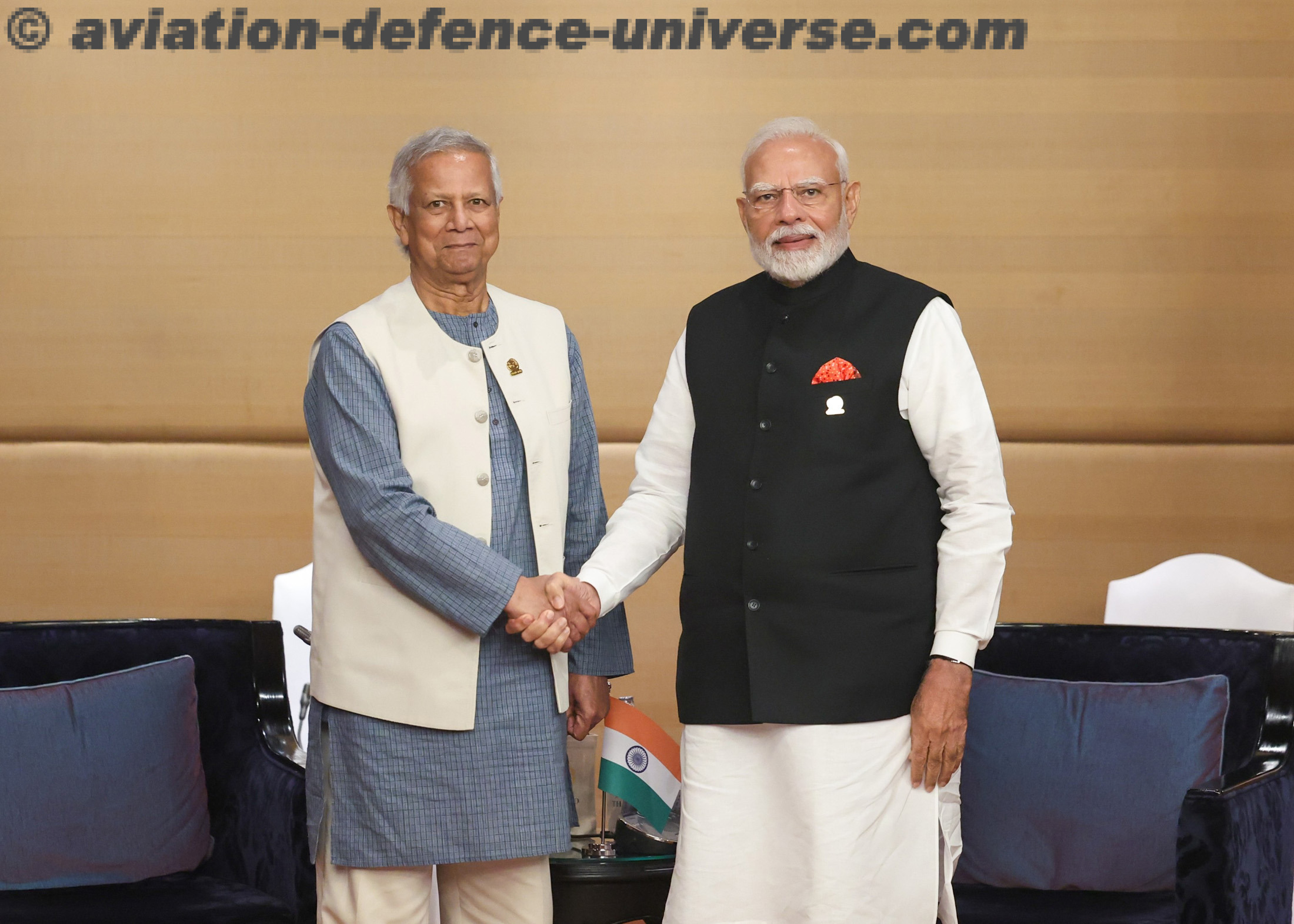
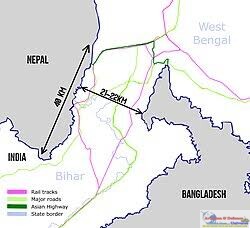
Modi also held talks with 84 years old Mohammed Yunus Chief Advisor of Bangladesh which shares longest borders with India and at present Dacca has adopted an anti-India stance. Recently during his China visit he made unwarranted reference of India’s North Eastern States. Yunus in a high-level roundtable discussion mentioned that the seven states of India in North East are a landlocked region of India and as they have no way to reach out the sea, hence it provides a huge possibility and it could be an extension of Chinese economy. Yunus also asserted that Dhaka was the “only guardian of the ocean for all this region”. China is all set to construct an airfield in Lalmonirhat district near India’s Jalpaiguri and Coach Behar Districts of India, courtesy Bangladesh’s magnanimity. Lalmonirhat is very near to the Chicken Neck area. India has terminated the trans-shipment facility given by India to Dacca’s export cargo, post these anti-India stances by Bangladesh. It should hurt Bangladesh’s exports to Bhutan, Nepal and Myanmar. In view of China’s aggressive designs and winning of India’s neighbours’, cordial relations with Sri Lanka are very important.
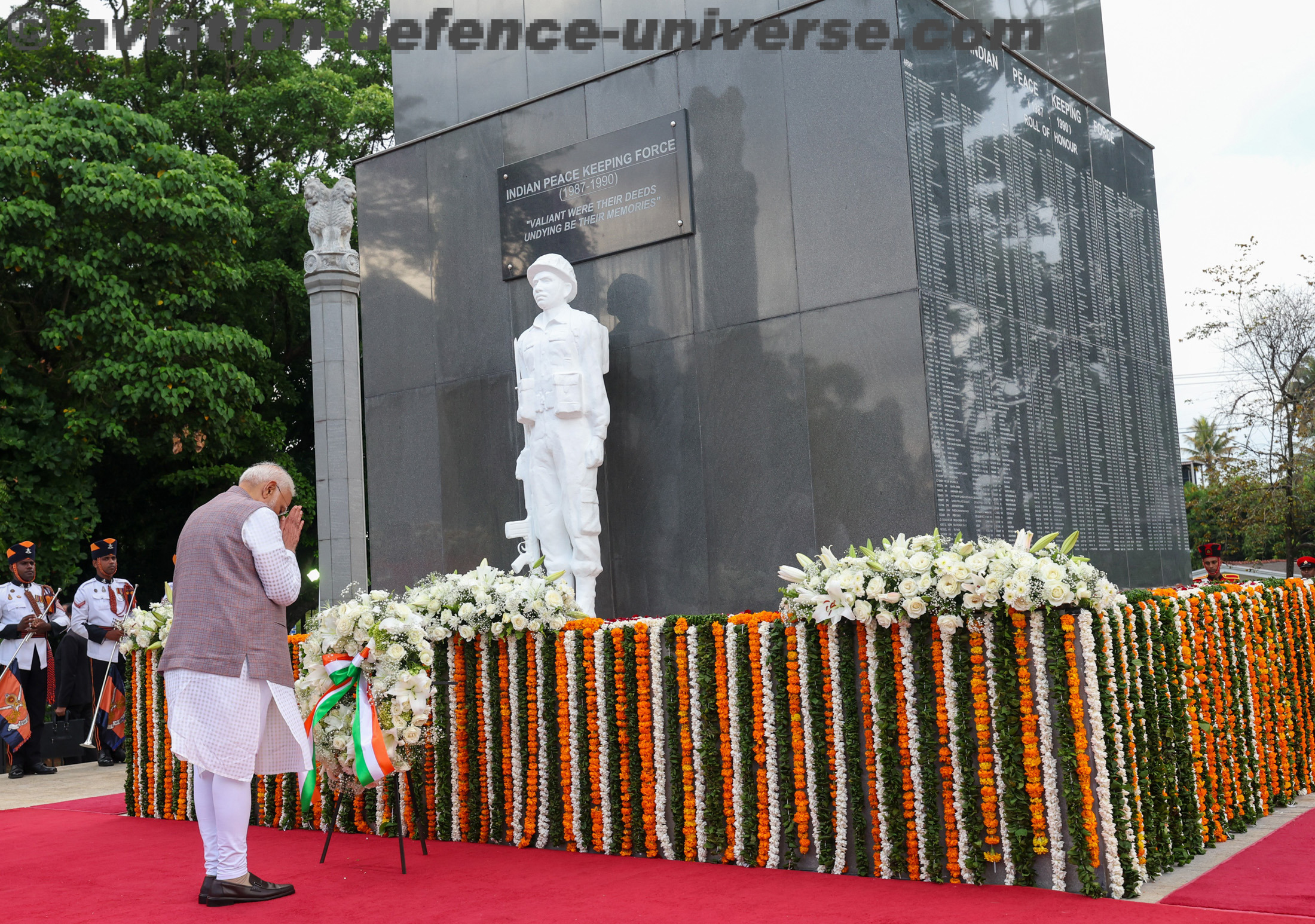
Prime Minister Modi’s visit to Sri Lanka reiterates India’s commitment to strengthening regional security and economic partnerships while countering China’s strategic influence in the region. The defence pact, energy hub project, and railway infrastructure upgrades highlight India’s growing role as a trusted partner in Sri Lanka’s development. President Dissanayake’s assurance of not allowing any hostile use of Sri Lankan territory against India is a crucial diplomatic win for New Delhi. However, China’s deep financial engagement with Sri Lanka and other neighbouring countries remains a challenge. As geopolitical dynamics evolve, India’s continued engagement with Sri Lanka and other South Asian nations will be key in maintaining regional stability and fostering long-term strategic partnerships.
(Jai Kumar Verma is a Delhi-based strategic analyst and member of United Services Institute of India and The Manohar Parrikar Institute for Defence Studies and Analyses,. The views in the article are solely the author’s. He can be contacted at editor.adu@gmail.com)















































-A4-Size-(2)_page-0001.jpg)