



















- “Historic Military Victory”: US Leadership Details Iran Campaign Success
- Pentagon Outlines Massive Strike Campaign as Ceasefire Takes Hold
- From Battlefield Dominance to Ceasefire: US Details Iran War Outcome
- US Military Claims Strategic Overmatch as Iran Agrees to Ceasefire
By Sangeeta Saxena
New Delhi. 08 April 2026. After any war, the ultimate accountability of a government lies not on the battlefield but before its own people. No matter how narratives are shaped in the immediate aftermath, the truth of a conflict—whether victory, stalemate, or defeat—inevitably comes to light. Citizens, who bear the costs of war through lives lost, economic strain, and national sacrifice, demand clarity, honesty, and justification. Governments may attempt to control perception in the short term, but over time, facts emerge through veterans’ accounts, independent analysis, and historical scrutiny. A credible leadership must therefore confront its people with transparency, acknowledging both achievements and setbacks, because in the long run, public trust is as critical to national strength as military success itself.
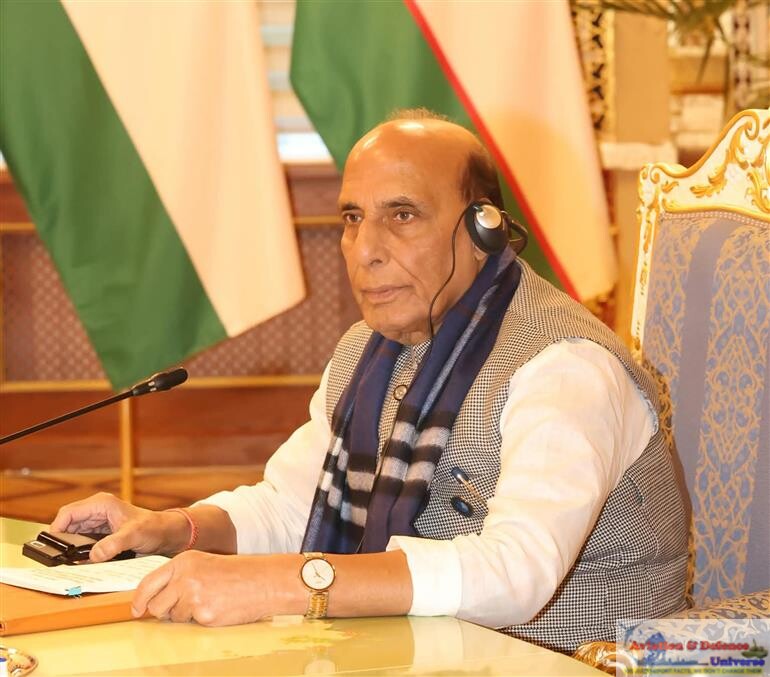
The United States formally outlined the scale and impact of its recent military campaign against Iran as Secretary of War Pete Hegseth and Chairman of the Joint Chiefs of Staff, Air Force General Dan Caine, addressed a high-profile press briefing following the announcement of a ceasefire. The briefing provided a detailed account of Operation Epic Fury, a 38-day military operation that the US leadership described as decisive, overwhelming, and strategically transformative. The ceasefire, according to US officials, came after sustained military pressure that significantly degraded Iran’s ability to project power.
Opening the briefing, Secretary of War Pete Hegseth framed the conflict in historical and strategic terms, stating, “Iran has been a threat to the United States and the free world for 47 years… chants of death to America… targeting our people, killing Americans… No longer. Not on our watch.”
He credited President Donald Trump’s leadership for the outcome, asserting, “Other presidents marked time… President Trump made history… no other president has shown the courage and resolve of this commander in chief.” Describing the outcome of the campaign, he declared, “Operation Epic Fury was a historic and overwhelming victory on the battlefield… a capital V military victory.” Hegseth emphasised the scale of the damage inflicted on Iran’s military capabilities, stating, “By any measure, Epic Fury decimated Iran’s military and rendered it combat ineffective for years to come.” He further highlighted the operational efficiency of US forces, noting, “In less than 40 days… using less than 10 percent of America’s total combat power, [we] dismantled one of the world’s largest militaries.”
Detailing specific outcomes, he said, “Iran’s navy is at the bottom of the sea… Iran’s air force has been wiped out… Iran no longer has… a comprehensive air defence system… Their missile program is functionally destroyed.” On the ceasefire, Hegseth asserted, “Iran begged for this ceasefire… This new regime was out of options and out of time, so they cut a deal.”
He also underlined the leverage held by the United States, stating, “President Trump had the power to cripple Iran’s entire economy in minutes… but he chose mercy.” Highlighting the broader strategic message, he added, “They thought they could bleed America with impunity… Well, they just learned the hard way what happens when you try to fight us directly.” He concluded with a strong endorsement of US military capabilities, stating, “Our troops… showed the world what America is all about… Job well done but stay vigilant and stay ready.”
Chairman of the Joint Chiefs of Staff, General Dan Caine, provided operational details and a more measured assessment of the campaign. He began by honouring casualties, stating, “I want to start this morning by honouring the 13 members of our American Joint Force who were killed in action… Their names and their bravery will never be forgotten.”
Outlining the mission objectives, he said, “The president… ordered the Joint Force to execute Operation Epic Fury… to destroy Iran’s ballistic missile and drone capabilities, destroy the Iranian Navy and destroy their defence industrial base.”
He confirmed mission success, noting, “Over the course of 38 days… the Joint Force achieved the military objectives as defined by the president.” While acknowledging the ceasefire, he cautioned, “A ceasefire is a pause and the joint force remains ready… to resume combat operations with the same speed and precision.” Providing detailed statistics, he stated, “The United States Joint Force has struck more than 13,000 targets… more than 4,000 dynamic targets… immediately addressed.”
On the degradation of Iran’s capabilities, he said, “CENTCOM forces destroyed approximately 80 percent of Iran’s air defence systems… more than 1,500 air defence targets… more than 450 ballistic missile storage facilities.” He added, “The Iranian Navy now lies mostly at the bottom of the Arabian Gulf… more than 90 percent of their regular fleet.”
On industrial impact, he stated, “We’ve destroyed Iran’s defence industrial base… their ability to reconstitute those capabilities for years to come.” Highlighting the scale of operations, he said, “The joint force flew more than 10,000 missions… Combined… we struck more than 13,000 targets.”
He also emphasised the intensity of the campaign, stating, “This is gritty and unforgiving business… chaotic… unpredictable… and there’s always unknowns.” Reflecting on the resilience of US forces, he added, “Our people proudly walked into those unknowns and continued forward.” On the broader objective, he noted, “Our objective always is to create the conditions for peace. And today, we have.”
He concluded with a tribute to the armed forces, stating, “We stand here… humbled… Their performance is fuelled by a deep commitment to each other, their mission and to our country.”
The press briefing by Secretary of War Pete Hegseth and General Dan Caine presented a comprehensive picture of the United States’ military campaign against Iran, framing it as a decisive and overwhelming success that forced a ceasefire under pressure. While US leadership emphasised battlefield dominance and strategic outcomes, the acknowledgment that a ceasefire remains a pause reiteratedes the fragility of the situation. As the focus shifts from combat operations to diplomacy, the long-term stability of the region will depend on how effectively the ceasefire translates into a sustainable political settlement.
Has the press conference at Washington DC by Pentagon achieved this aim of truthful feedback to the nation? Not quite—and it would be unrealistic to expect a wartime press conference to fully meet that standard.
The briefing in Washington DC by senior Pentagon leadership clearly aimed to project strength, control the narrative and reinforce public confidence. It highlighted operational success, scale of military achievement, and strategic outcomes. That is typical of official communications during or immediately after conflict—especially from governments seeking to justify military action and maintain domestic and international credibility. However, truthful feedback to a nation requires more than operational statistics and declarations of victory. It involves:
- Acknowledging losses, uncertainties, and limitations
- Addressing long-term consequences (regional instability, economic impact, escalation risks)
- Providing independent verification of claims
- Allowing space for critical scrutiny and dissent
While the briefing did mention casualties and operational challenges, its overall tone was decisively one-sided, focused on success and dominance. That suggests it was more of a strategic communication exercise than a full, transparent accounting of the war. In most democracies, the fuller truth emerges later—through parliamentary oversight, media investigations, veterans’ testimonies, and historical analysis. So, the press conference is only the first layer of the narrative—not the final truth.






































































-A4-Size-(2)_page-0001.jpg)