


 18th BRICS Summit

















- Modi–Macron Talks Mark New Era in India-France Relations with Strategic Upgrade
- Strategic Convergence: India and France Chart Horizon 2047 Roadmap for Global Cooperation
- India and France Elevate Ties to ‘Special Global Strategic Partnership’
By Sangeeta Saxena
Mumbai. 17 February 2026. Modi and Macron have built one of the most intuitive leader-to-leader equations in India’s diplomacy. It is a relationship driven less by ceremony and more by steady strategic alignment. Under their watch, Indo-French ties have moved from a strong partnership to a confident, future-facing alliance that spans defence industrial cooperation, civil nuclear energy, space, climate action, technology and now AI-led innovation. What stands out is the ease with which Paris and New Delhi speak the same language on sovereignty, resilience and a rules-based order, while still keeping the relationship practical. From Make in India defence manufacturing and MRO ambitions to Horizon 2047 and the Year of Innovation, the Modi–Macron era has turned goodwill into delivery—and positioned India and France as partners who don’t just react to the world, but help shape it.
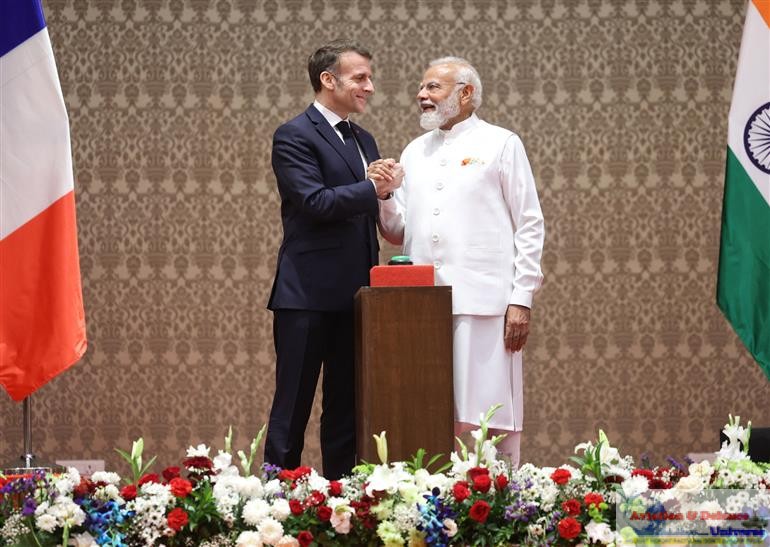
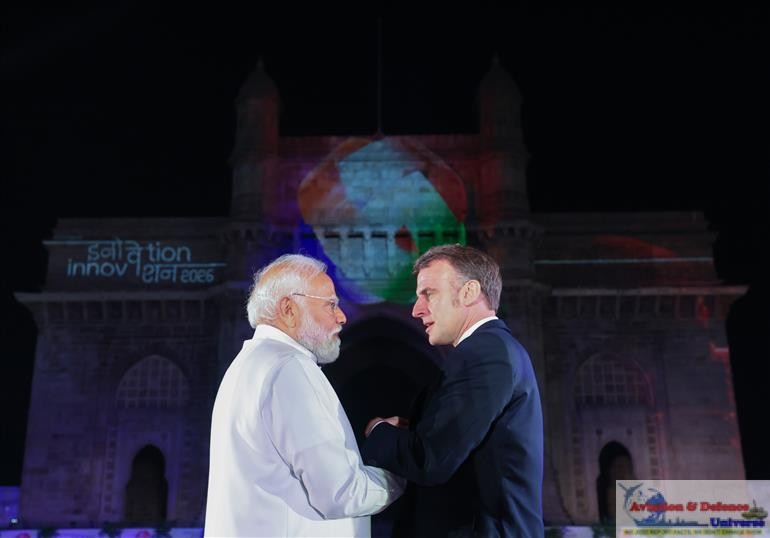 At the invitation of Prime Minister Narendra Modi, President of the French Republic Emmanuel Macron paid an official visit to India from 17–19 February 2026. During his fourth visit to India, President Macron participated in the Artificial Intelligence Impact Summit 2026 and held extensive bilateral discussions with Prime Minister Modi. The two leaders jointly inaugurated the 2026 India-France Year of Innovation in Mumbai on 17 February.
The visit followed Prime Minister Modi’s trip to France in February 2025 and marked a significant milestone in bilateral relations. On this occasion, both leaders agreed to elevate their relationship to a “Special Global Strategic Partnership,” reflecting the growing ambitions, mutual trust and expanding scope of cooperation between the two countries.
The decision to upgrade the relationship signals India and France’s shared vision to act as a force for global good. The move builds upon the 25th anniversary of the Strategic Partnership celebrated in 2023, during which the two sides adopted the Horizon 2047 Roadmap — a long-term blueprint for bilateral cooperation up to India’s centenary of independence and 50 years of the Strategic Partnership.
To ensure structured progress, the leaders established an annual Foreign Ministers Comprehensive Dialogue to review cooperation across economic security, global issues and people-to-people exchanges. The partnership aims to strengthen sovereignty, resilience and coordinated responses to global challenges in an increasingly uncertain international environment.
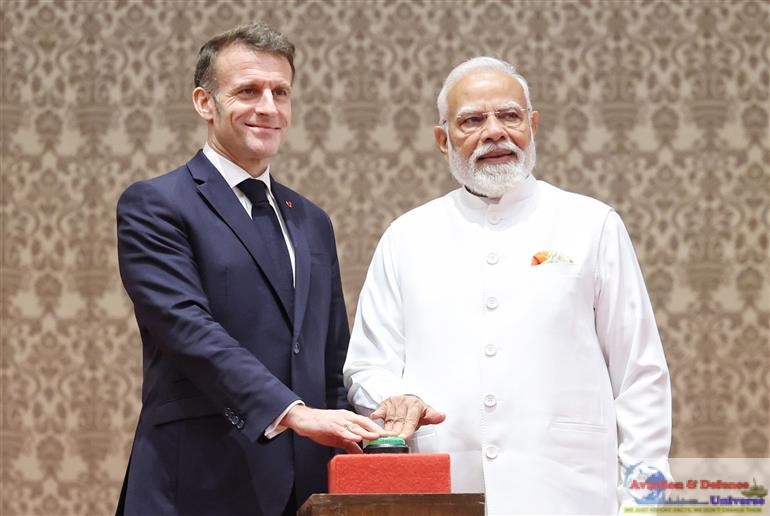 Defence continues to remain a cornerstone of the relationship. The two leaders agreed to intensify joint research, co-design, co-development and co-production of advanced defence platforms under the Defence Industrial Roadmap agreed in 2024. They welcomed the contract to procure 26 Rafale-Marine fighter jets and reaffirmed cooperation in helicopter and jet engine development. The leaders also jointly inaugurated the H125 Final Assembly Line in India — a significant Make in India milestone — combining the strengths of Tata Advanced Systems and Airbus to serve domestic and export markets. They appreciated the success of the Scorpène submarine programme and welcomed continued cooperation in submarines. Cooperation in defence space, maritime security, cybersecurity and critical minerals was strengthened, alongside reaffirmed commitment to a free, open and rules-based Indo-Pacific region.
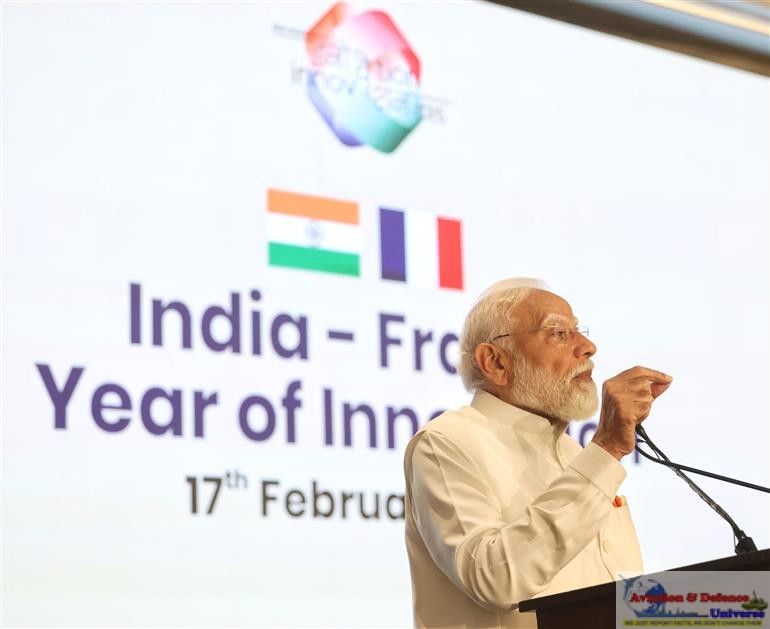 President Macron congratulated Prime Minister Modi on India’s successful organization of the AI Impact Summit 2026. Both leaders reaffirmed their commitment to secure and trustworthy artificial intelligence that serves public interest and planetary progress. They emphasised democratizing AI resources and bridging the global AI divide.The 2026 India-France Year of Innovation will feature collaborations across innovation, science and technology, AI, healthcare, sustainable development, education and the creative economy. The initiative aims to foster partnerships between startups, research institutions and industry. France extended an invitation to India to participate in the 2026 G7 Summit hosted by France. Prime Minister Modi welcomed the invitation and reiterated India’s commitment to contributing constructively to discussions on macroeconomic imbalances, development financing, economic security and climate action.
The two leaders reaffirmed their commitment to reformed multilateralism and urgent reform of the United Nations Security Council. France reiterated its firm support for India’s permanent membership in the UNSC. They also expressed concern over the war in Ukraine, developments in Iran and Gaza, and reaffirmed their support for diplomacy and peaceful resolution of conflicts in accordance with international law. India and France strengthened their partnership for climate action, reaffirming commitment to the Paris Agreement and sustainable lifestyles. Cooperation under the International Solar Alliance (ISA) and Coalition for Disaster Resilient Infrastructure (CDRI) was highlighted. In nuclear energy, France supported India’s target of achieving 100 GW nuclear power capacity by 2047. The two sides agreed to deepen cooperation in civil nuclear energy, including Small Modular Reactors (SMRs) and Advanced Modular Reactors (AMRs).
Ocean governance, biodiversity protection and decarbonisation initiatives also formed key pillars of the environmental partnership. Both leaders welcomed sustained growth in bilateral trade and investments. They welcomed the amendment to the bilateral tax treaty and reaffirmed their commitment to unlocking economic potential in MSMEs, startups, aerospace, energy, logistics and digital sectors. Cooperation in civil aviation was strengthened through a declaration of intent, alongside the launch of a new airline route between Saint-Denis de la Réunion and Chennai. Digital payment cooperation expanded with UPI now operational in France.
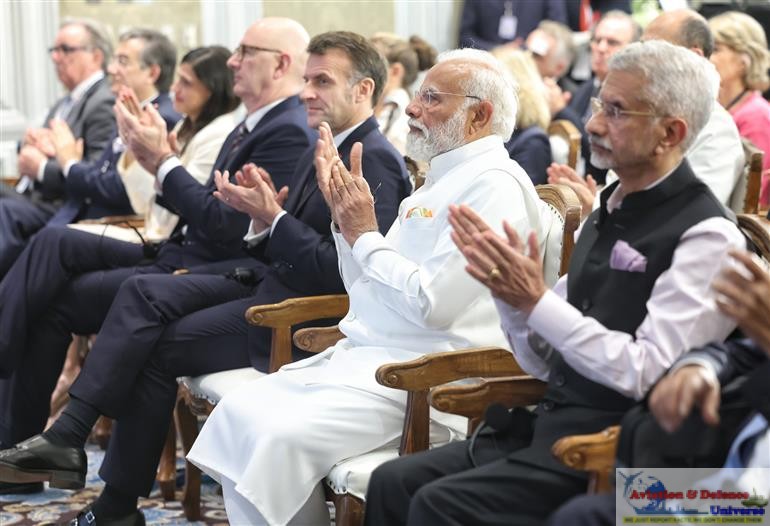 Education, culture and mobility were central themes of the visit. Both sides committed to strengthening student exchanges, aiming to host 30,000 Indian students in France by 2030. Scientific cooperation expanded with new joint research centres in AI, digital sciences and advanced materials. Cultural initiatives included expanded cooperation between museums, heritage institutions and creative industries, alongside preparations for the 30th anniversary of the Strategic Partnership in 2028. Health cooperation advanced with AI-driven healthcare research partnerships involving Sorbonne University, AIIMS and other institutions.
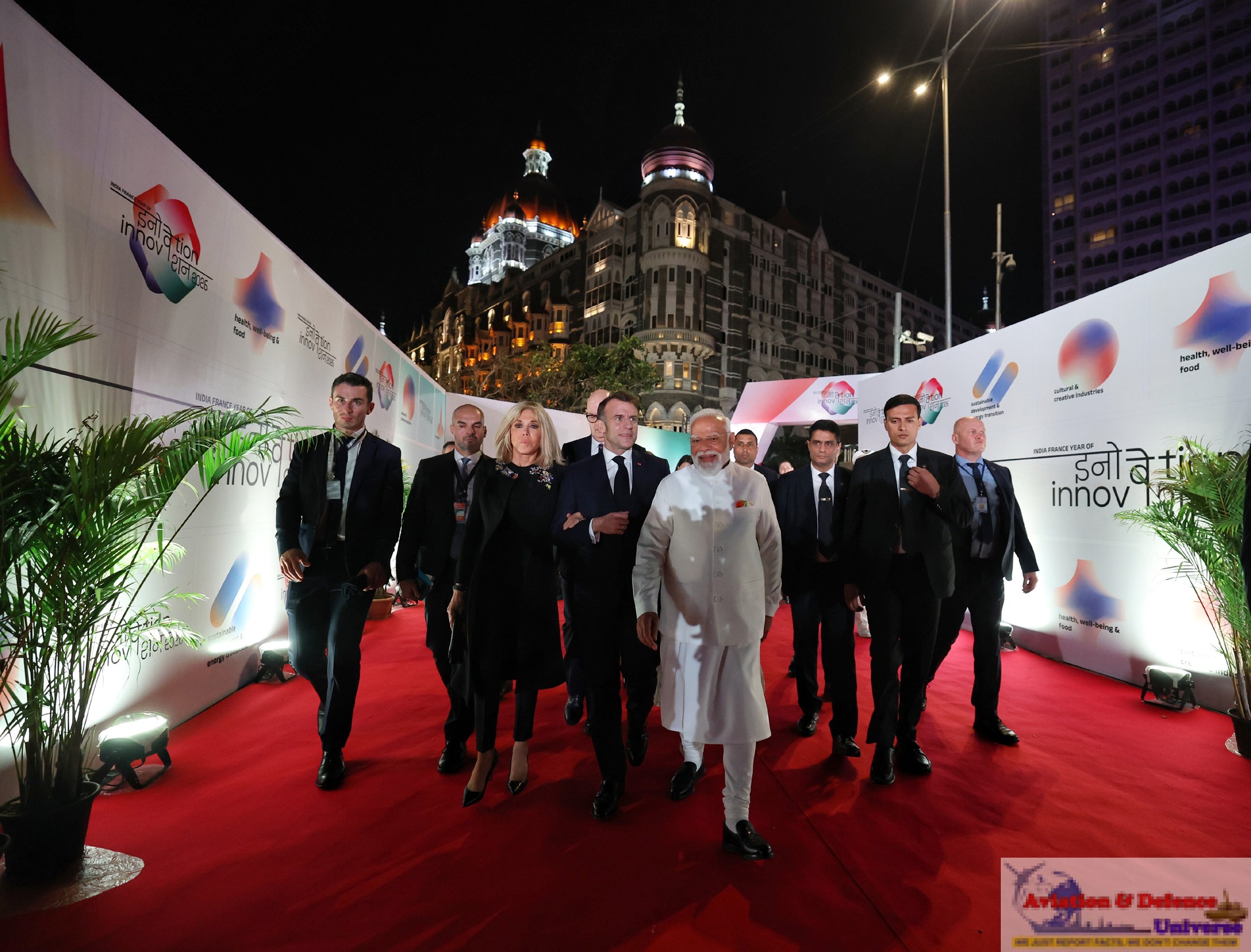 President Macron’s 2026 visit to India and the elevation of ties to a Special Global Strategic Partnership mark a transformative moment in India-France relations. Anchored in defence, innovation, climate action and multilateral engagement, the partnership reflects deep strategic trust and a shared commitment to shaping a stable, inclusive and rules-based global order. As the two democracies advance the Horizon 2047 Roadmap, the upgraded partnership signals not only closer bilateral coordination but also a broader ambition — to jointly address global challenges, strengthen economic resilience and expand opportunities for their people. The India-France relationship now enters a new chapter defined by strategic depth, technological collaboration and global leadership.




























































-A4-Size-(2)_page-0001.jpg)