 18th BRICS Summit





















- Shells, Sanctions, and Suspicion: Border Fighting Escalates into the Worst Crisis Since 2021
- Leaves Dozens Dead as Pakistan, Afghanistan Trade Blame and Block Routes
- Pakistan–Afghanistan Relations on the Brink
By Jai Kumar Verma
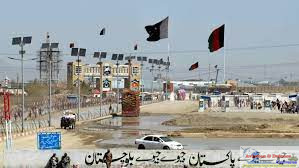
New Delhi. 07 November 2025.Tensions have once again erupted along the volatile Pakistan–Afghanistan frontier, sparking a new cycle of violence that has left dozens dead and disrupted vital cross-border trade. Over the past weeks, fierce exchanges of fire near the Kurram and Chaman sectors have displaced local populations, destroyed homes, and forced the closure of major trade routes, including Torkham and Ghulam Khan. Both sides blame each other for triggering the clashes: Islamabad accuses Kabul of harbouring militants responsible for attacks inside Pakistan, while Afghanistan denounces Pakistan’s artillery shelling as indiscriminate and a violation of its sovereignty. The renewed hostilities mark one of the most serious flare-ups since 2021, highlighting the fragile nature of bilateral relations between the two neighbours and raising fears of a broader regional security crisis.

As the violence escalated, Pakistan alleged that India was secretly influencing the situation, claiming Afghanistan is acting on Delhi’s behalf. Pakistani officials argue that India’s intelligence agencies are backing anti-Pakistan elements operating from Afghan soil. Kabul strongly denies these accusations, calling them unfounded and an attempt to divert attention from Pakistan’s own internal security issues. Analysts warn that if such rhetoric continues, it could further strain already tense regional relations and complicate efforts to restore peace along the border.
Officials from both countries have made public statements blaming each other for starting the latest clashes. Pakistan alleges that it is responding to cross-border attacks by militants based in Afghanistan. Meanwhile, Afghan authorities deny the claims, saying Pakistan’s shelling is harming innocent civilians. Efforts by tribal elders and local leaders to mediate peace have so far failed, though both governments have expressed interest in dialogue once tensions ease.
The recent violence has also raised fears of a larger regional crisis. Experts warn that without proper communication and trust, small border fights could grow into a wider conflict, affecting not only security but also humanitarian conditions in both nations. For now, people living near the border are hoping for calm and for both governments to find a peaceful solution before more lives are lost.
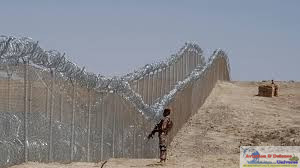 Pakistan which considered Afghanistan as its extension after Taliban came to power, became a flashpoint of violence, in October 2025 marking some of the most intense clashes in recent years. Heavy fighting erupted across multiple sectors, with Pakistani media reporting the deaths of over 23 Pakistani troops and the killing of more than 200 militants or Taliban-linked fighters. On 12 October, Pakistan closed its main border crossings including Torkham, Chaman, Angoor Adda, and Ghulam Khan following fierce exchanges of fire. According to media reports Pakistani artillery units destroyed several Afghan border posts during these engagements. Earlier in March 2025, both sides had only just reopened the Torkham crossing after a month-long closure that began on 21 February 2025, when Afghan forces reportedly objected to Pakistan constructing a new outpost near the frontier. These repeated escalations are disturbing and analysts describe them as the “most severe cross-border fighting since 2021”. Although both countries have not declared war but increasingly it is resembling one in scale and duration.
Pakistan claims that the Afghan Taliban administration must prevent militant groups from using Afghan territory to attack Pakistan. Islamabad insists that several armed factions, including Tehreek-e-Taliban Pakistan (TTP) elements, operate freely across the border, launching raids into Pakistani districts. Kabul, however, denies harbouring such groups and condemns Pakistan’s artillery strikes as violations of its sovereignty. The humanitarian and political fallout from these clashes has been severe. The closure of border routes has choked vital trade links for land-locked Afghanistan, disrupting the flow of goods, food, and medicine. Border communities on both sides have suffered displacement and property damage as shells hit homes and markets, worsening an already fragile humanitarian situation. Analysts note that while the conflict remains officially undeclared, the scale of military operations, repeated cross-border bombardments, and the shutdown of key trade routes now constitute a serious security crisis between Islamabad and Kabul. The battle between these two countries not only threaten bilateral relations but also the broader stability of the South-Central Asian region.
 Despite the worsening situation, diplomatic efforts for de-escalation have continued intermittently. In early 2025, representatives from Pakistan and Afghanistan held informal talks in Doha, facilitated by Qatari and Chinese mediators, to discuss cross-border security and the repatriation of Afghan refugees. Although the meeting produced no concrete agreement, it was seen as a step toward rebuilding communication channels. Later, in mid-2025, Turkish officials hosted a closed-door dialogue in Ankara involving senior diplomats and security advisers from both countries. The Turkish initiative aimed to promote confidence-building measures, such as joint border monitoring and reopening key trade routes. However, progress was limited due to mutual distrust and continued militant activity along the frontier. Still, these diplomatic efforts indicate that both sides recognise the need to prevent a complete breakdown of relations.
Several interconnected factors are driving the recent escalation of hostilities between Pakistan and Afghanistan. Pakistan has repeatedly accused the Afghan Taliban government of allowing militant groups, such as the TTP, to operate from Afghan territory and launch attacks inside Pakistan. In response, Pakistan has strengthened border security by building fences, barriers, and outposts, particularly near key crossings like Torkham. Afghanistan, however, views these constructions as encroachments on its sovereignty, which has triggered repeated clashes. Pakistani airstrikes targeting suspected militant hideouts inside Afghan territory have further inflamed tensions, with Kabul condemning these actions as violations of its sovereignty and retaliating in some cases.
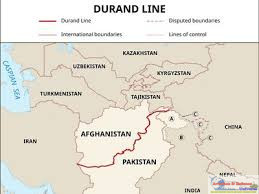
Beyond immediate security concerns, broader geopolitical and strategic mistrust plays a major role. Pakistan fears growing Afghan ties with India and perceives New Delhi’s influence in Afghanistan as a threat. Conversely, the Afghan Taliban government seeks to assert its independence and resist perceived pressure from Pakistan. Historic disputes, including the contested Durand Line border, continue to fuel mistrust. The humanitarian and economic impact of border closures which disrupts the trade, transit, and livelihoods of persons residing both sides of border, adds urgency to the conflict and increases tension. In short, these skirmishes are not caused by a single event but are the outcome of long-standing structural mistrust, cross-border militancy, contested borders, and changing regional dynamics since 2021.
Meanwhile India has officially ended its operations at the Ayni Airbase in Tajikistan after a bilateral  agreement with Tajikistan expired and the strategic utility of the base diminished. Regional experts claim that India had to abandon Ayni airbase because of pressure from Russia, China and Pakistan. Meanwhile, reports have surfaced that Afghanistan may offer India access or some hold in the Bagram Air Base north of Kabul, a facility formerly used by U.S. forces. However Afghan officials, have rejected claims that India has been offered control or presence at Bagram, calling such reports are “baseless”.
Although Afghanistan’s skirmishes with Pakistan do not directly involve India, the conflict carries major strategic, security and diplomatic implications for New Delhi. Instability along Pakistan’s western border could divert Islamabad’s military focus and resources, potentially freeing up its eastern front. The porous Afghanistan-Pakistan border and the presence of militant groups such as TTP and others adds a layer of concern. Any pressure on Pakistan might cause these militants to re-orient their activities, heightening the risk of regional terrorism and radicalisation that could indirectly affect India. Meanwhile, Pakistan’s Defence Minister Khawaja Asif has alleged that Afghanistan is acting as a “proxy” for India, stating that Kabul is fighting a “proxy war” for New Delhi. He also warned that Pakistan is prepared for a two-front war, including along its eastern border with India.
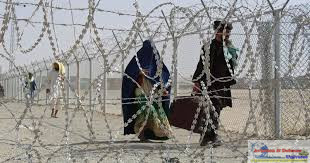 India’s long-standing engagement with Afghanistan through developmental aid, infrastructure projects, and diplomatic outreach are also affected. Pakistan has historically sought to keep Afghanistan within its sphere of influence, and the ongoing clashes may limit India’s ability to operate freely in Kabul or complicate its bilateral initiatives. At the same time, perceptions of increased Indian influence in Afghanistan can intensify Pakistan’s suspicions, creating additional tension. Economic and connectivity considerations are another dimension: repeated closures of key border crossings like Torkham and Chaman disrupt Afghanistan-Pakistan trade routes, indirectly affecting India’s access to Central Asia and regional supply chains.
Humanitarian and refugee concerns are also relevant, as escalation along the Pakistan-Afghanistan border could create spill over pressures on India, either through refugee inflows or instability along its own borders. Strategically, India must monitor whether Pakistan, under pressure in the west, seeks alternative measures to counterbalance, including proxy activity targeting India. In sum, while not a direct party, India must carefully navigate the evolving Pakistan-Afghanistan conflict, balancing its strategic, security, economic, and diplomatic interests while maintaining regional relationships and avoiding unintended entanglement.
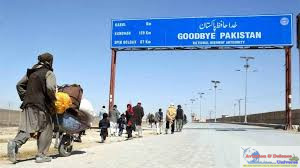 The return of violence along the Pakistan–Afghanistan border underscores how deep-rooted mistrust, militant activity, and contested borders continue to destabilize South-Central Asia. Despite limited diplomatic engagement through Doha and Ankara dialogues earlier in 2025, efforts at de-escalation have failed to build lasting confidence. The humanitarian toll — including civilian casualties, trade disruptions, and mass displacement — is growing, while the political rhetoric intensifies with accusations involving India and wider regional rivalries. Analysts warn that unless both Islamabad and Kabul commit to sustained dialogue, confidence-building measures, and strict control over non-state actors, the border conflict could evolve into a larger confrontation with grave implications for regional stability and connectivity. For now, the frontier remains a flashpoint — a stark reminder that peace between Pakistan and Afghanistan remains as elusive as ever.
(Jai Kumar Verma is a Delhi-based strategic analyst and member of United Services Institute of India and The Manohar Parrikar Institute for Defence Studies and Analyses. The views in the article are solely the author’s. He can be contacted at editor.adu@gmail.com)










































































-A4-Size-(2)_page-0001.jpg)