




















- Indian Army on a march towards the Digital Battlefield
- Harnessing the power of Innovation
- Stride towards Atmanirbharta & Data-Centric Warfare
By Sangeeta Saxena
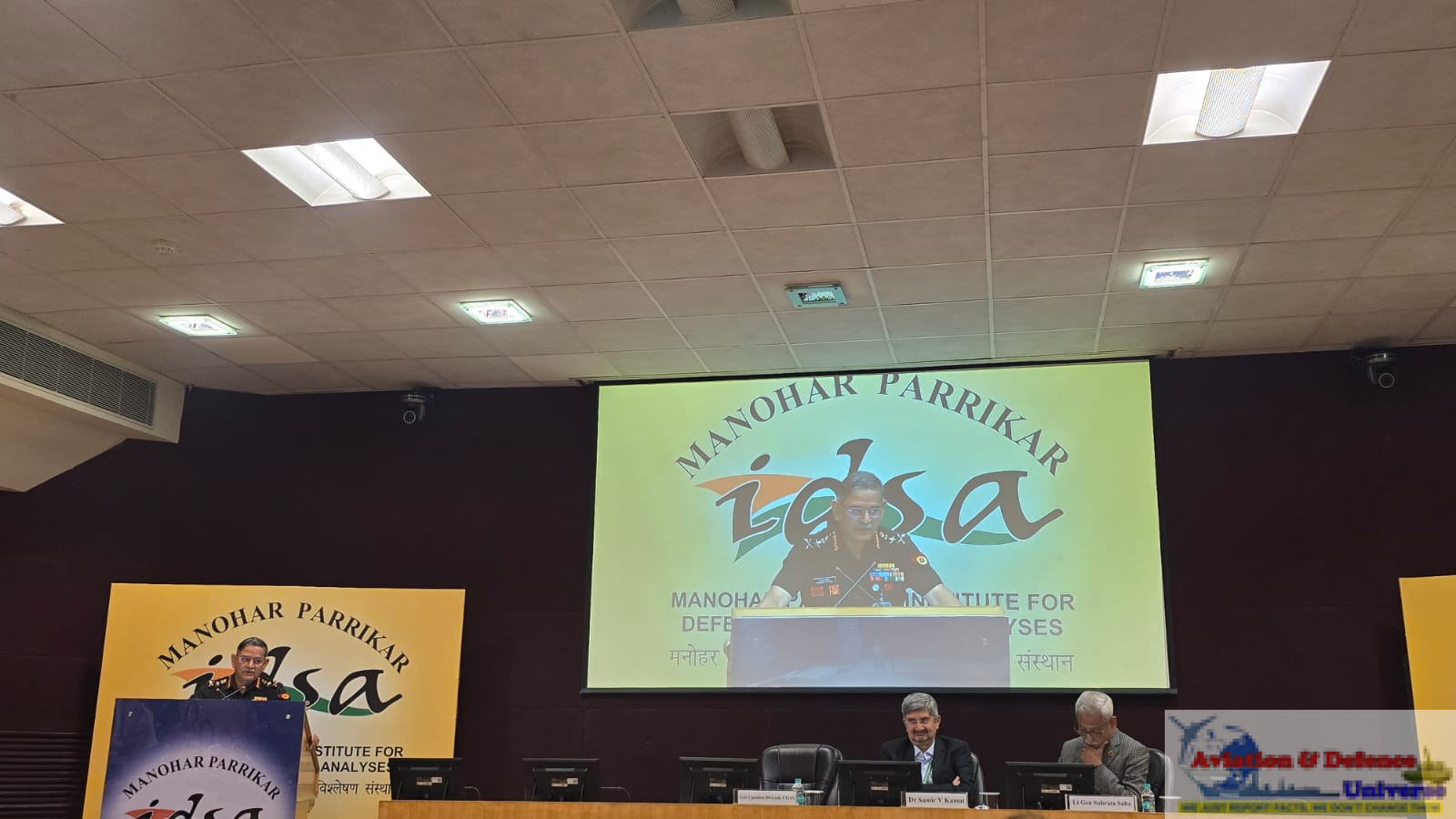
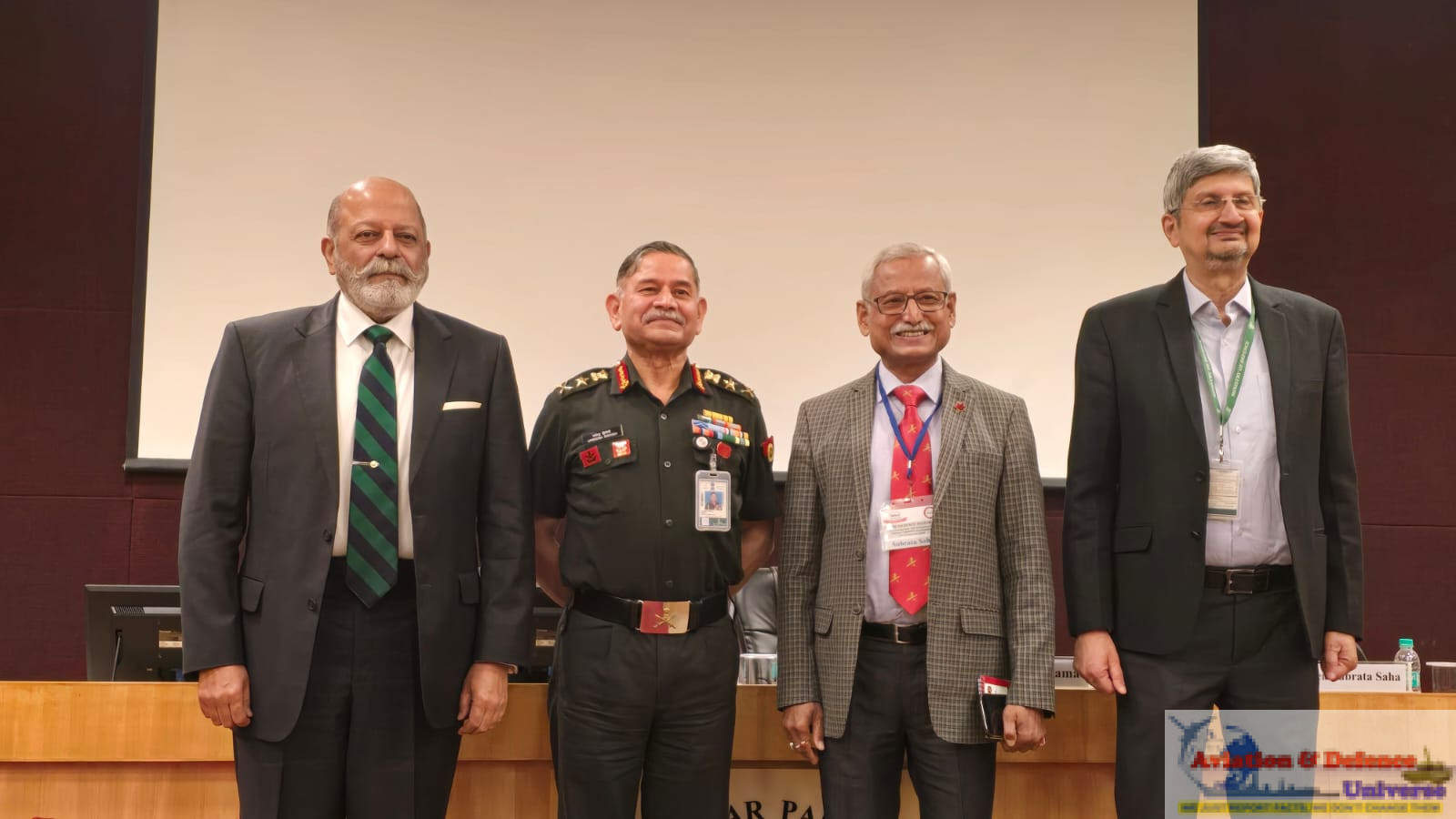
New Delhi. 12 November 2025. From adopting to leading — India’s defence technology is writing a new story. At the Delhi Defence Dialogue 2025, Chief of the Army Staff General Upendra Dwivedi presented a compelling vision of transformation for the Indian Army—an institution steadily evolving from a manpower-intensive to a technology-intensive force. Declaring 2024–25 as the Year of Technology Adoption, the Army Chief outlined how emerging technologies like artificial intelligence, robotics, quantum computing, and autonomous systems are reshaping modern warfare. His address reflected not only strategic foresight but also the Indian Army’s pragmatic approach to jointness, innovation, and human-centric technology absorption, ensuring that the soldier remains at the core of every advancement.
 General Dwivedi reiterated that the Army is preparing for a multi-domain and multi-terrain future battlefield through systematic technological transformation. From AI-driven systems and precision strike capabilities to edge data servers and autonomous platforms, the Army is harnessing innovation to build network and data-centric warfare capabilities. Exercises like Prachand Pahar, Trishul, and Teesta Pahar have already demonstrated integration between terrain adaptability and technological command. The Chief announced that the forthcoming 2026–27 period will be the Year of Network and Data Centricity, symbolising the Army’s next leap toward real-time decision superiority and predictive operations. Under his leadership, the Army’s focus has moved from “platform versus platform” to platform versus capability, making cost-effective technologies central to battlefield advantage.
Indian Army Chief reminded, “Along the borders, drones are stalking the armour columns. Electronic warfare systems are jarring radios. Precision fires are reaching much beyond 100 kilometres in range. Information campaigns and psychological operations are waged even before a single shell lands. If these are the situations we are facing, let me highlight the three Ds changing the war scenario today — Democratisation, Diffusion, and Demography. Democratisation reflects how emerging technologies like AI, quantum computing, robotics, autonomous systems, direct energy weapons and cyber tools have levelled the battlefield. The platform alone is no longer relevant; it must be supported by multiple layers of these democratised technologies. Especially in the grey zone, these technologies play a very important role. Platforms are useful for conventional kinetic battles, but it is these new tools that fight the unseen wars across other domains. Diffusion represents the rise of actors who are geographically dispersed yet interconnected. Demography signifies the emergence of citizen soldiers, guardian forces, and merchants who sometimes play both sides — selling equipment, orchestrating or facilitating conflicts.”
“In the Indian context, with our two-and-a-half front challenge and more, we must ensure that new technologies fit within the framework of the five generations of warfare — from trench warfare to manoeuvre warfare, hybrid warfare, and the latest fifth-generation warfare. In trench warfare, we will still see the robo-mule and GS-mule moving together, because that remains the operational necessity, ” he stated.
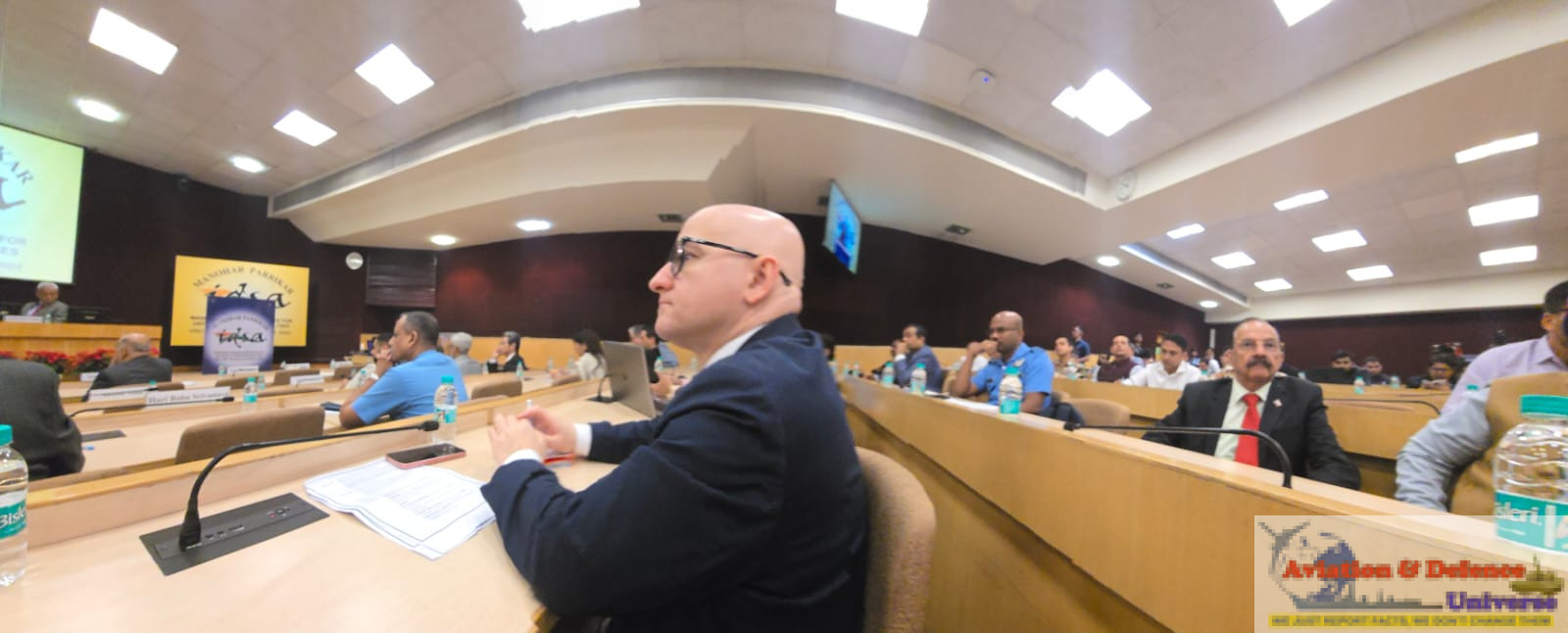 Emphasising the triad of Jointness, Atmanirbharta, and Innovation (JAI) as the foundation of modern warfare, General Dwivedi reaffirmed the Army’s commitment to self-reliance in defence technology. Through collaboration with the Defence Research and Development Organisation (DRDO), academia, and Indian industry—including MSMEs and start-ups—the Army is advancing a new culture of accelerated innovation. Initiatives like Army Design Bureau (ADB), Futures Command, and multiple technology clusters have become incubators of ideas and prototypes. Nearly ₹2.1 lakh crore has been invested in R&D and procurement since 2019, showcasing the Army’s faith in Indian innovation. The Chief called for a spiral model of development, where indigenous solutions are tested, refined, and scaled to meet evolving operational needs. Atmanirbharta, he noted, is not isolation but collaborative innovation that strengthens India’s strategic autonomy.
The Army Chief informed, “The Indian Army is already in a Decade of Transformation, working on five pillars of change — each requiring technological infusion. I am glad that Industry 4.0 has now evolved into Industry 5.0, which brings the human back to the centre of the technological process. Technology is not here to replace the human; it is here to support the human. This is a melange of ecosystem and technology, both working in balance. As Karl Builder wrote in The Masks of War, the Air Force’s strength lies in technology, the Navy’s in platforms, but the Army’s unique strength lies in its human resource. That is why Industry 5.0 is music to my ears — it’s about human-centric technology adoption. We envision humans amplified by AI — where creativity, empathy, and problem-solving remain under human control while technology enhances decision-making. Technology Generation 7, which includes 7-nanometre microchips, next-generation computing, and intelligent systems, is now on the table for integration. The Indian Army is ensuring we interpret and integrate these advances meaningfully for our operational advantage.”
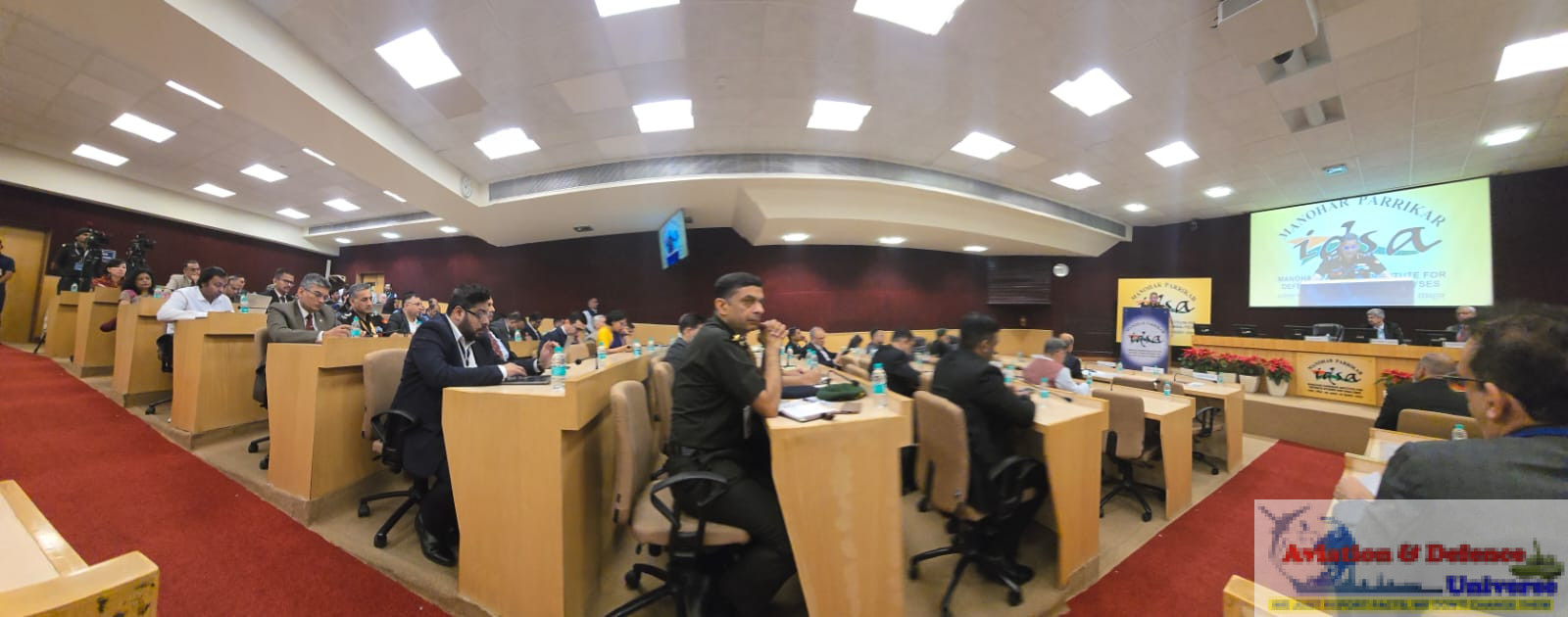 He emphasised, “India’s geography demands that land remains the currency of victory. Therefore, technology must deliver dividends on land — for destruction, occupation, or eviction, even in virtual realms. Our end state is clear — smart boots on ground sharing space with bots; ears on the net supported by electronic, cyber and quantum sensors; minds in the cloud and eyes in the sky. We must pursue cloud-centric warfare integrated with network-centric operations because battles can get isolated, and sometimes must be fought even without technological support. ISR will continue to be crucial in shortening the kill chain. Our Honourable Raksha Mantri recently inaugurated the Edge Data Server at Jaisalmer — a major step toward data-centric warfare, enabling regional flexibility and faster operational execution through connected networks. We aim for decisions at the edge with smart kill-chain execution. Steel must come with stealth, and every soldier must wear a shield on his wrist. With over 12 lakh soldiers, digital enablers like biosensors and health monitors will help track condition, location, and readiness in real time.”
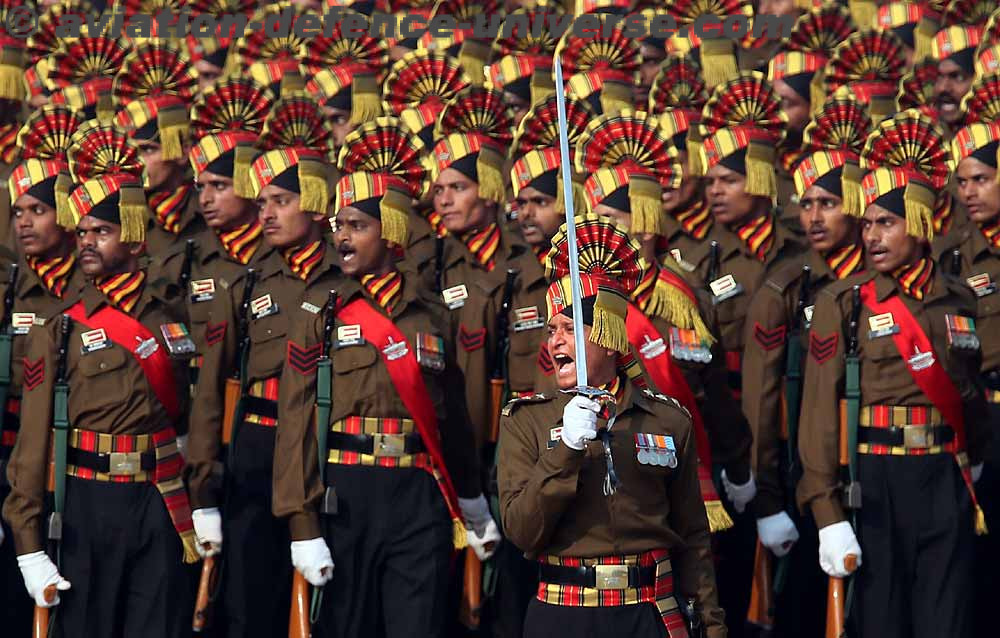 But the million dollar question is – what happens to equipment of today’s army – are they on the verge od becoming redundant? “Legacy systems will continue for at least five to seven years — you can’t change them overnight. We follow the 30-30-30 principle, where modernization occurs in phases. While old platforms are upgraded, we must exercise patience with new systems. Physical and digital infrastructure gaps persist. Our satellite aspirations are evolving, and our network spectrum still needs maturity. Skill deficit is another challenge — by 2027, there will be 2.3 million AI-related jobs globally, but only 1.2 million skilled professionals. Outsourcing this talent will be costly, so the Army must develop internal AI expertise today. Cultural resistance is natural — comfort zones are shaped by one’s last qualification. Overcoming that mindset is part of our reform process. I am happy to share that the new Defence Procurement Manual (DPM) has been released, and the Defence Acquisition Procedure (DAP) will be finalised by year-end — major steps toward streamlined acquisition. We must also acknowledge our import dependency — critical components will still need to be sourced externally for the next four to five years until our R&D base expands. However, with patience and targeted investment, this gap will close, ” pronounced General Dwivedi.
Reaffirming that “the Army’s true strength lies in its people,” General Dwivedi highlighted the human-centric approach to technology adoption. Describing Industry 5.0 as “music to my ears,” he explained how technology must amplify—not replace—the human element. To ensure that soldiers and officers adapt seamlessly to emerging systems, the Army is investing in education, skilling, and partnerships. The number of Army officers pursuing M.Tech programmes at IITs has increased from 65 to 95, while paid internships and collaborative research with premier institutes have created a bridge between military needs and technological expertise. The Chief also introduced the concept of Techno Commanders, signalling a shift from traditional tactical leadership to one rooted in digital literacy and data fluency. The message was clear: technology is only as effective as the soldier who wields it.
 He proclaimed, “JAI — Jointness, Atmanirbharta, and Innovation — must drive us forward. We are now accelerating innovation through MSMEs, start-ups, and micro-entrepreneurs, especially in forward areas. Since 2019, the Indian Army has invested approximately ₹2.1 lakh crore in R&D and procurement — a testament to our commitment to self-reliance and future readiness. Transformation is not only about technology; it is a cultural shift. We focus on five Ps — Procedures, Processes, People, Partnerships, and Platforms. We’ve established 16 technology clusters, each led by senior officers, to bridge the gap between innovation and implementation. Our Army Design Bureau and R&D wings are pushing boundaries — 70% of our 2025 capital procurement will go toward new-age technologies. Over 100 patents have been filed; many already approved. The Army is embracing Techno Commanders over purely tactical ones, ensuring our leadership understands both warfare and technology.”
Continuing on the effort made by the army in harnessing technologies of the time the Chief of the force stated, “We are aligning with national missions in AI, space, quantum, and 6G. Our partnerships with DRDO, academia, and industry are deepening. The Army is moving from technology absorption to data centricity — and by 2026–27, we will declare the Year of Network and Data Centricity. Three Regional Data Centres, each with 128 GPUs costing ₹150 crore, are being established to advance AI and computing capabilities. We are ready to launch Digitisation 3.0 — a landmark step in our digital transformation. We are working on AI in a Box, Agentic AI with IIT Madras, and Infusion Systems with IIT Delhi. Our chatbot Jigyasa is just one example of how digital tools can empower field formations. These initiatives ensure our troops operate efficiently, even in low-connectivity environments.”
 He is convinced that, “Autonomous and robotic systems are the future. We are adapting platforms like Shakti software to control more artillery guns, adopting precision strike capabilities, and redefining air defence to account for drone swarms in the ‘air littoral’. The number of drones operating in a 500 km frontage could reach 10,000 — requiring new thinking and counter-UAS systems. We have revitalised our Army Base Workshops to become innovation hubs — manufacturing drones and adopting DRDO-transferred technologies. Our Simulator Design Division is being reopened to strengthen indigenous simulator development. We are also embracing 3D printing for spares, bunkers, and composite materials — ensuring self-sufficiency in logistics and infrastructure. Biological and human enhancement technologies, from bio-suits and acclimatisation research to exoskeletons, are enhancing soldier survivability.”
“The troika of industry, academia, and military — supported by the rhombus of R&D, finance, and policy — forms the foundation of our future readiness. The Army remains the fulcrum connecting all these domains. This journey is collaborative; no single agency can fight or innovate alone. Our mission is clear — to create smart soldiers, sharp systems, and strong partnerships. We are committed to building an Army that leads from the front — technologically advanced, operationally ready, and human at its core, ” asserted General Dwivedi.
General Upendra Dwivedi’s address at the Delhi Defence Dialogue 2025 encapsulated a defining moment in India’s military evolution—a confident, self-reliant, and forward-looking Army embracing the future with open arms. By harnessing emerging technologies, strengthening indigenous innovation, and empowering its human capital, the Indian Army is not only preparing for the wars of tomorrow but also redefining what modern warfare means for India. As the Chief aptly concluded, the journey ahead is about melding human ingenuity with technological precision to create an agile, adaptive, and formidable force—ready to lead in the digital age of defence.












































































-A4-Size-(2)_page-0001.jpg)