


 18th BRICS Summit








- Remembering Air Cmde Jasjit Singh: A Legacy of Strategic Vision and National Security Thought
- From League of Nations to Global Governance: Ram Madhav Calls for Statesmanship in a Changing World
- CAPS Reimagined: Jasjit Singh’s Vision Expanded as CAPSS Announced
By Sangeeta Saxena
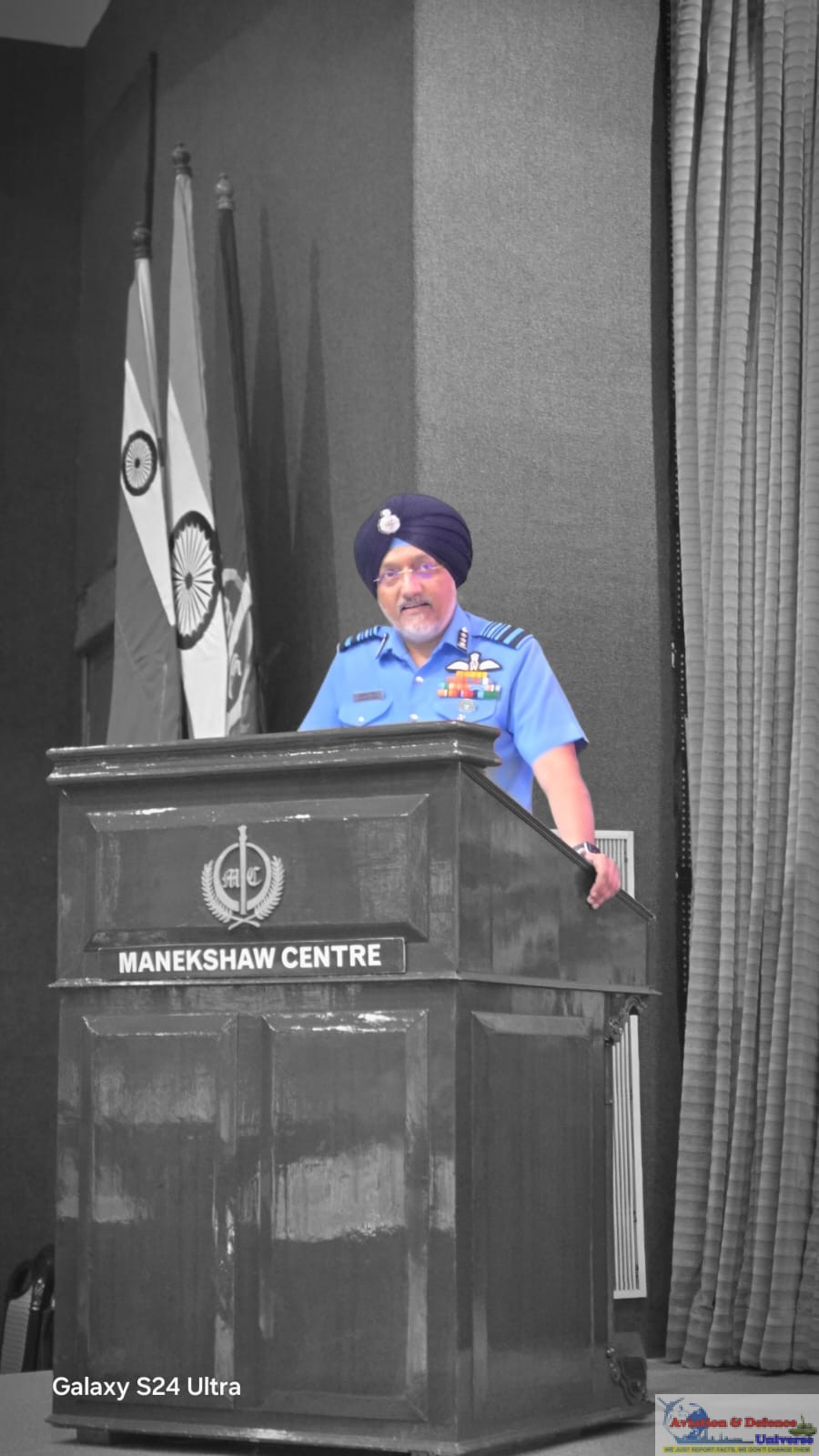
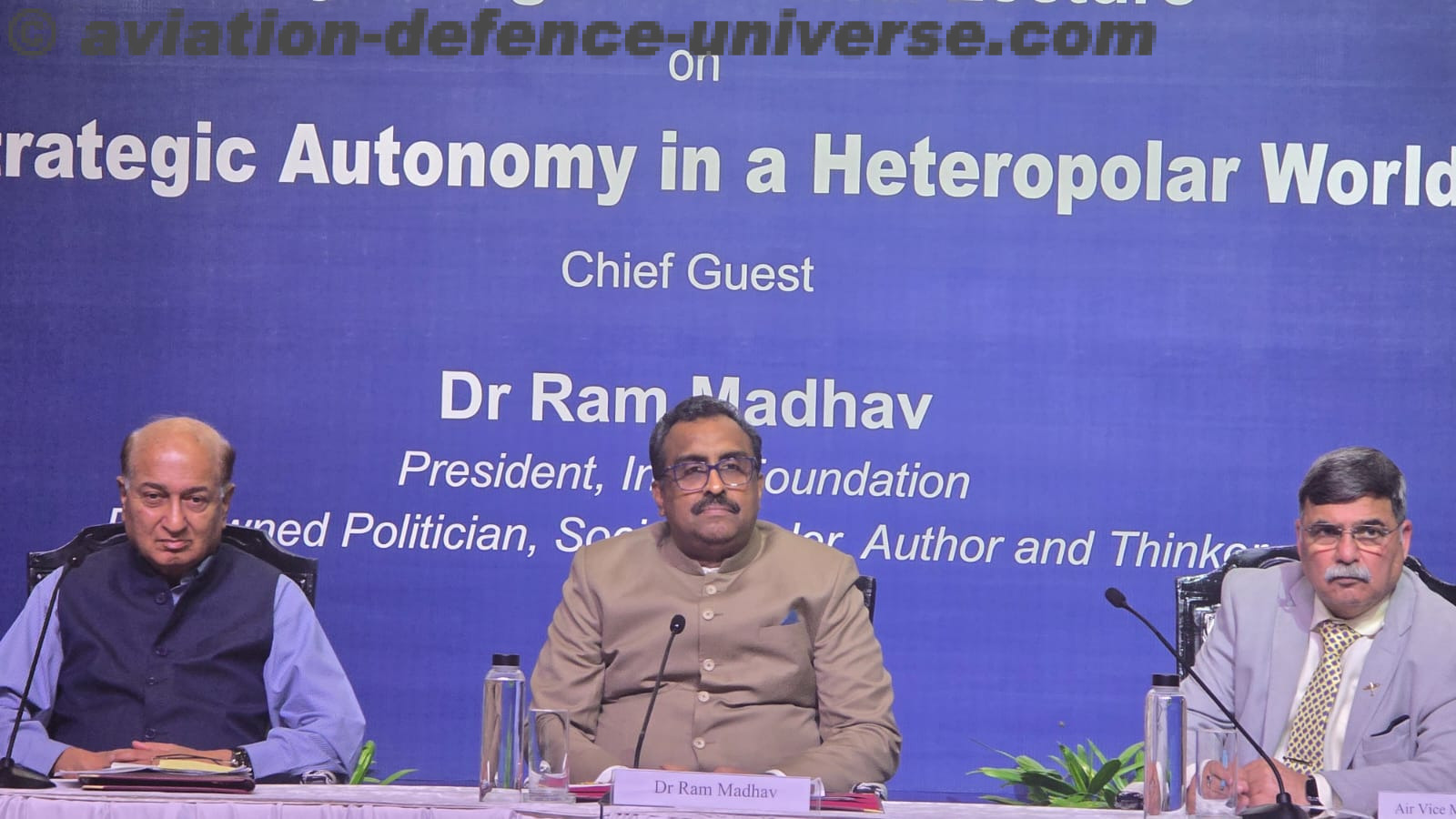
New Delhi. 04 August 2025. The Jasjit Singh Memorial Lecture, held on the occasion of the 12th death anniversary of Air Commodore Jasjit Singh (Retd.), brought together eminent voices from India’s strategic, academic, and diplomatic circles. The keynote address by Dr. Ram Madhav, President of India Foundation, shed light on pressing geopolitical realities, India’s global standing, the need for a new multilateral institutional order, and challenges in India’s volatile neighbourhood. The event also marked the renaming of the Centre for Air Power Studies (CAPS) to the Centre for Aerospace Power and Strategic Studies (CAPSS), a move that underscores the expanding remit envisioned by Jasjit Singh. Reflections by AVM Anil Golani (Retd.), DG of CAPSS, and Ambassador G. Parthasarthy, Trustee at the Forum for National Security Studies, added depth and homage to the legacy of a man whose ideas shaped India’s strategic doctrine.
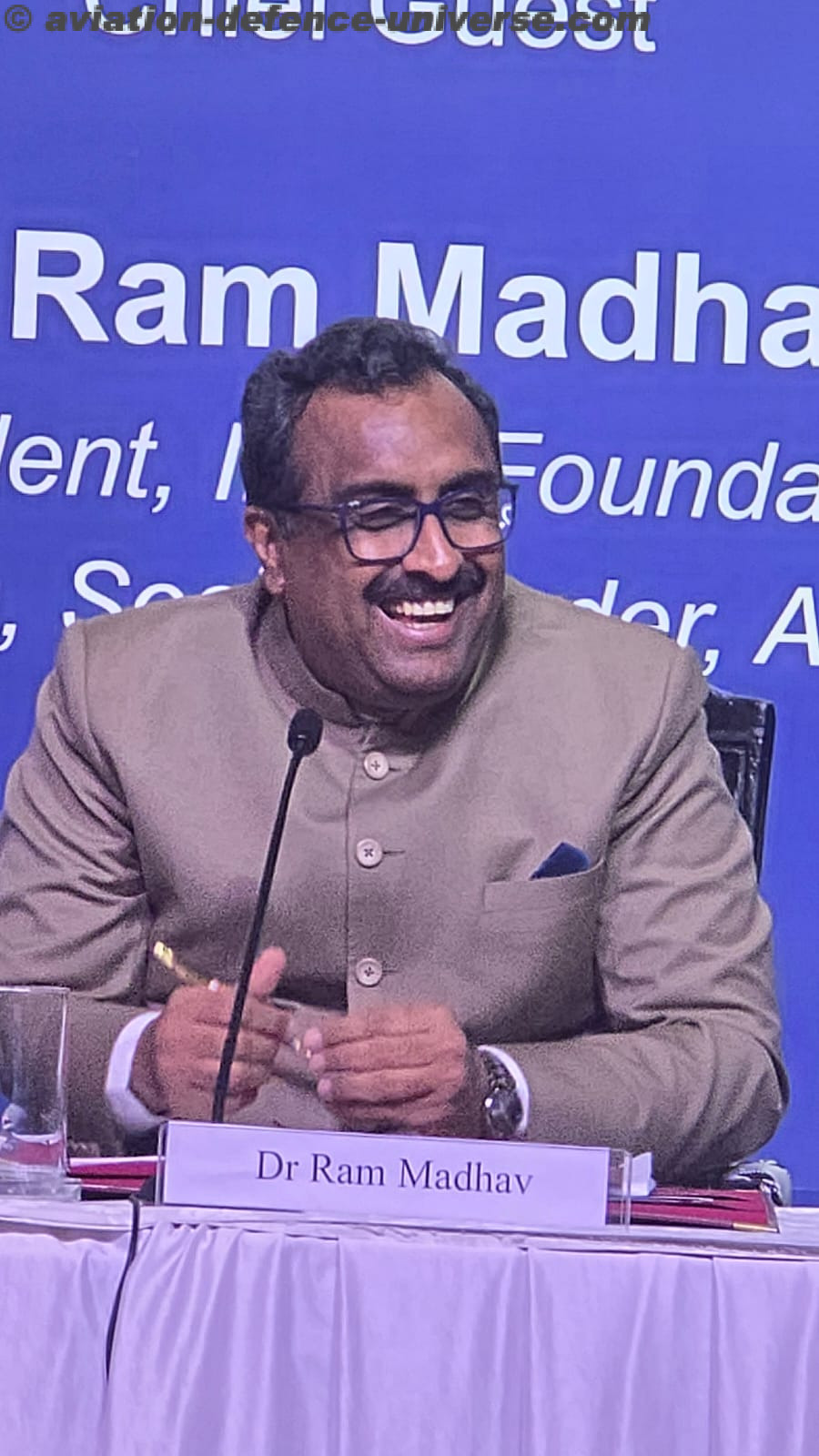 Dr. Ram Madhav, President, India Foundation — Renowned Politician, Social Leader, Author, and Thinker and above all a great orator in his memorial lecture on Air Commodore Jasjit Singh exhorted, “When I say India, not just India — there are other countries. I mentioned the names of some of those countries. They deserved to be there on that high table. So, our right to be there is undisputed. India should be there on the high table — it is India’s legitimate right. Why can’t we be there today? So, that right, I say, we still hold. But how far it will be useful — I have my opinion. I openly said that it may not be really very helpful.”
“On the issue of tariffs — you see, you are dealing with a different kind of leadership in President Trump. President Trump is a very transactional leader. So, you need to brace up to deal with the kind of challenges that he will throw at you. Government is trying to tackle those issues without compromising on India’s interests. India and the US have weathered many such challenges — not just today. We have seen very difficult days in the 1960s and 1970s when the Americans were openly siding with Pakistan. We faced that situation too. But over the decades, we realised that in spite of certain occasional hiccups that come into our relationship from time to time, the most important and the last big hiccup that came was after the 1998 nuclear test fires. President Clinton was furious. He imposed a good number of sanctions. But we just took them in our stride. We waited for a couple of years. We waited for regimes to change. And we built a relationship. Because after all, at the end of the day, the US and India share certain very important and common values. And of course, beyond that is our people-to-people connect, which must be described as natural allies. So, that being the relationship, some of these situations need to be tackled carefully. Wait for the cloud to pass. Wait for these challenges to pass. Try and tackle them. But I think India today is in a position where nobody can probe it — India. Or nobody can blackmail India. Nor, nobody can ignore India — remember. We are too big, we are too strong to be completely ignored. These are tactics people deploy. If somebody is a very transactional person, he will deploy all sorts of tactics. Our people know in the government how to handle those situations,” Dr. Madhav added.
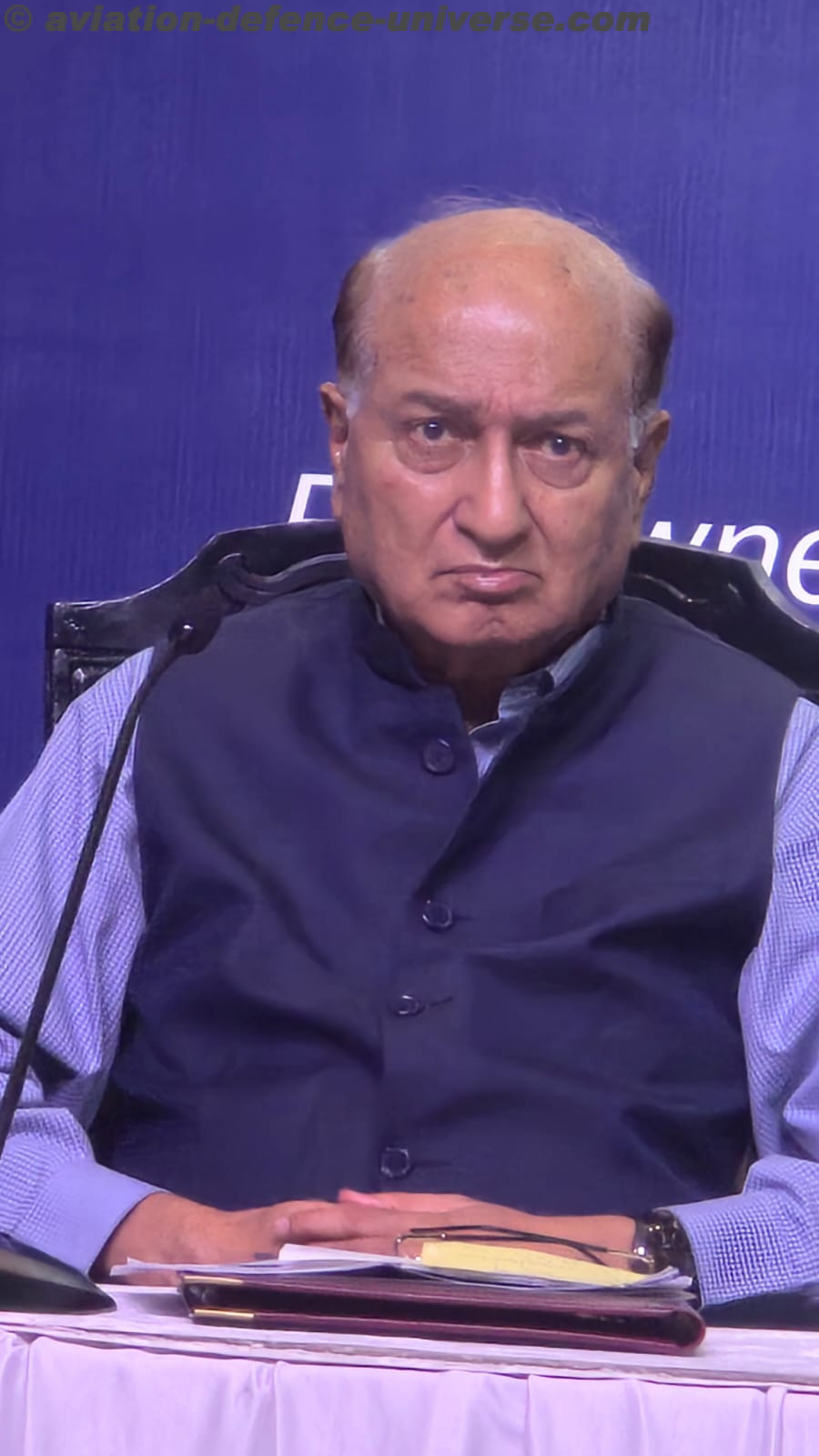 G. Parthasarathy, session chair, Trustee of the Forum for National Security Studies and former Career Diplomat remarked, “I am distinguished to be present on this occasion. I must say I am particularly delighted to be there. May I add that I had the pleasure of knowing him a long time ago, when he and K. Subrahmanyam, among others, dominated the strategic discourse. In fact, from the political side, he was one of the few who approached issues with academic depth and historical perspective. Being with him at several seminars, especially in those days of K. Subrahmanyam, was always enriching. So I shall not stand in the way of the audience listening to the speaker.”
He was Ambassador of India to Myanmar, 1992–95, High Commissioner of India to Australia (1995–98), High Commissioner of India to Pakistan (1998-2000) and High Commissioner of India, Cyprus (1990–92). Later he was the spokesperson of the Ministry of External Affairs and the Prime Minister’s Office.
Reflecting on their personal rapport, he said, “Dr. Madhav, may I say that we had known each other for a decade or more, and I was sure that the audience—as well as all of us—would appreciate not just your socio-political insights but also your international perspective. I did not think we could have had a better person from the political platform who could so effectively address an academic and military audience.”
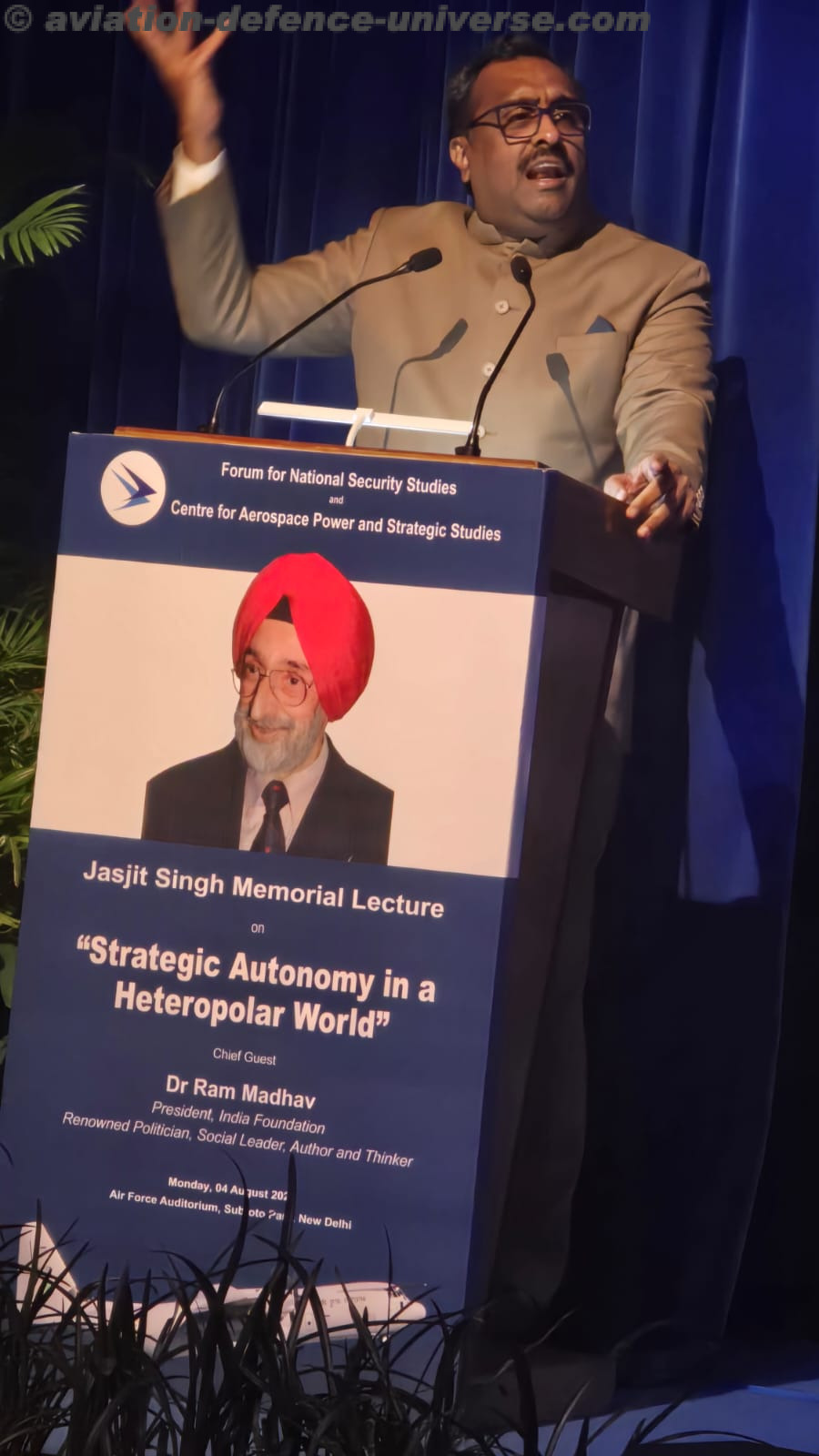 Dr. Madhav continued, “We are in a very, very turbulent and volatile neighbourhood. We are increasing our strength. We are able to tackle those challenges effectively. We know where to stop. That is the reason I think we did the very right thing to cause a ceasefire at a very timely moment. Because once you prolong a war, you can never end it. Big, big countries are unable to end wars. We are seeing that happening in different parts of the world. So, that is why I said we are thoughtful enough to tackle these challenges. Yes, in the neighbourhood, occasionally different kinds of challenges arise. Our relations with neighbours are currently posing certain threats, certain challenges. But these challenges are not something that are insurmountable or something that is happening for the first time. They have happened before. We tackled them. We live in a very difficult neighbourhood. As long as there is China — if it is not Pakistan, some other country will be there for China. You make good friends with Pakistan. Have a very good friendly government there. Do you think China will sit idle? It will try to find another Pakistan somewhere else. Be prepared for it.”
He added justifying the ceasefire during Operation Sindoor, “You will be posing challenges. We are capable enough. Our security forces are capable enough to tackle those challenges. We have shown time and again. But we also know when to stop. That is the beauty of our security forces. It was a decision taken collectively by security forces. They know when to stop it. So, you have to handle it, they handled it.”
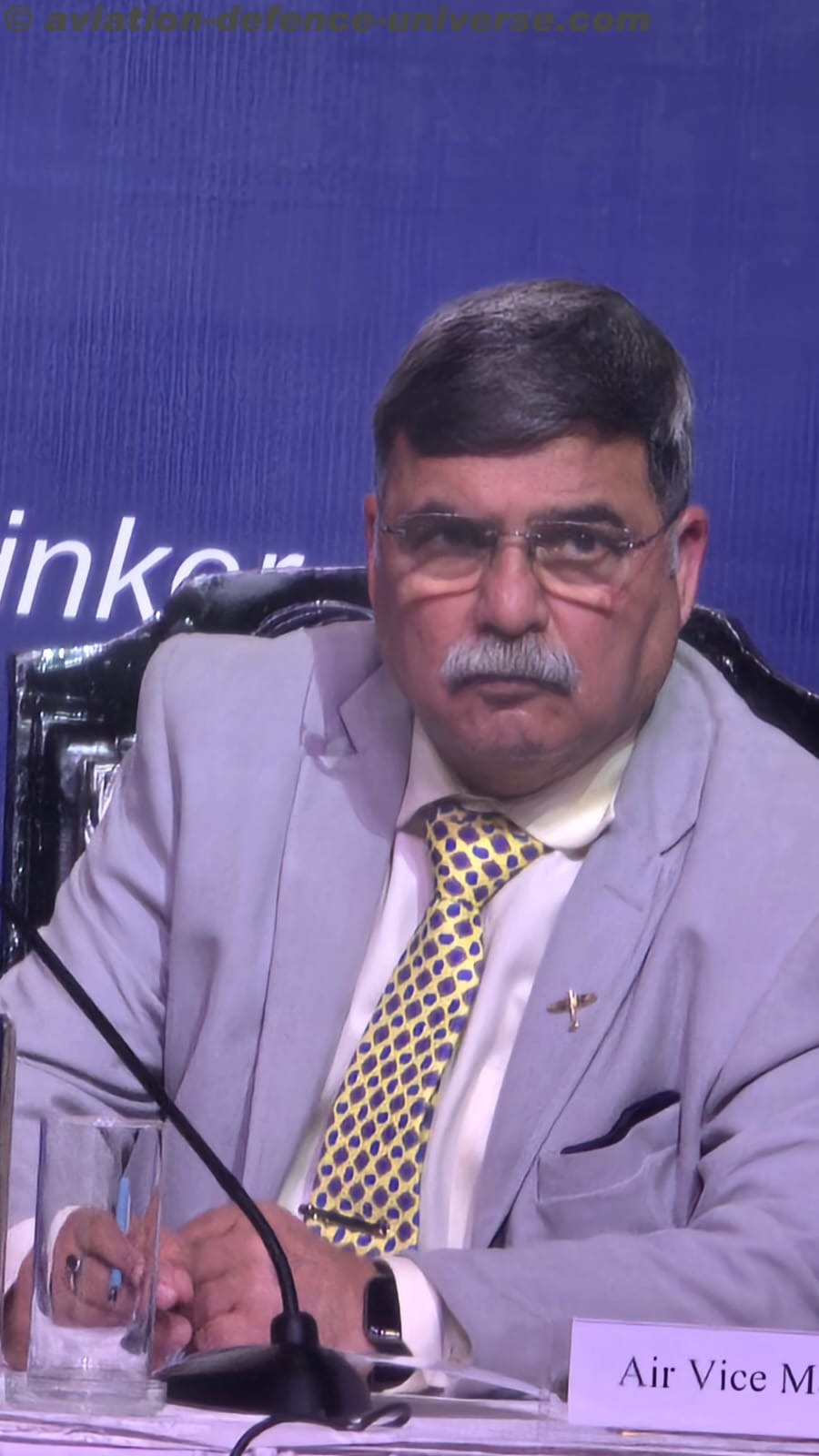
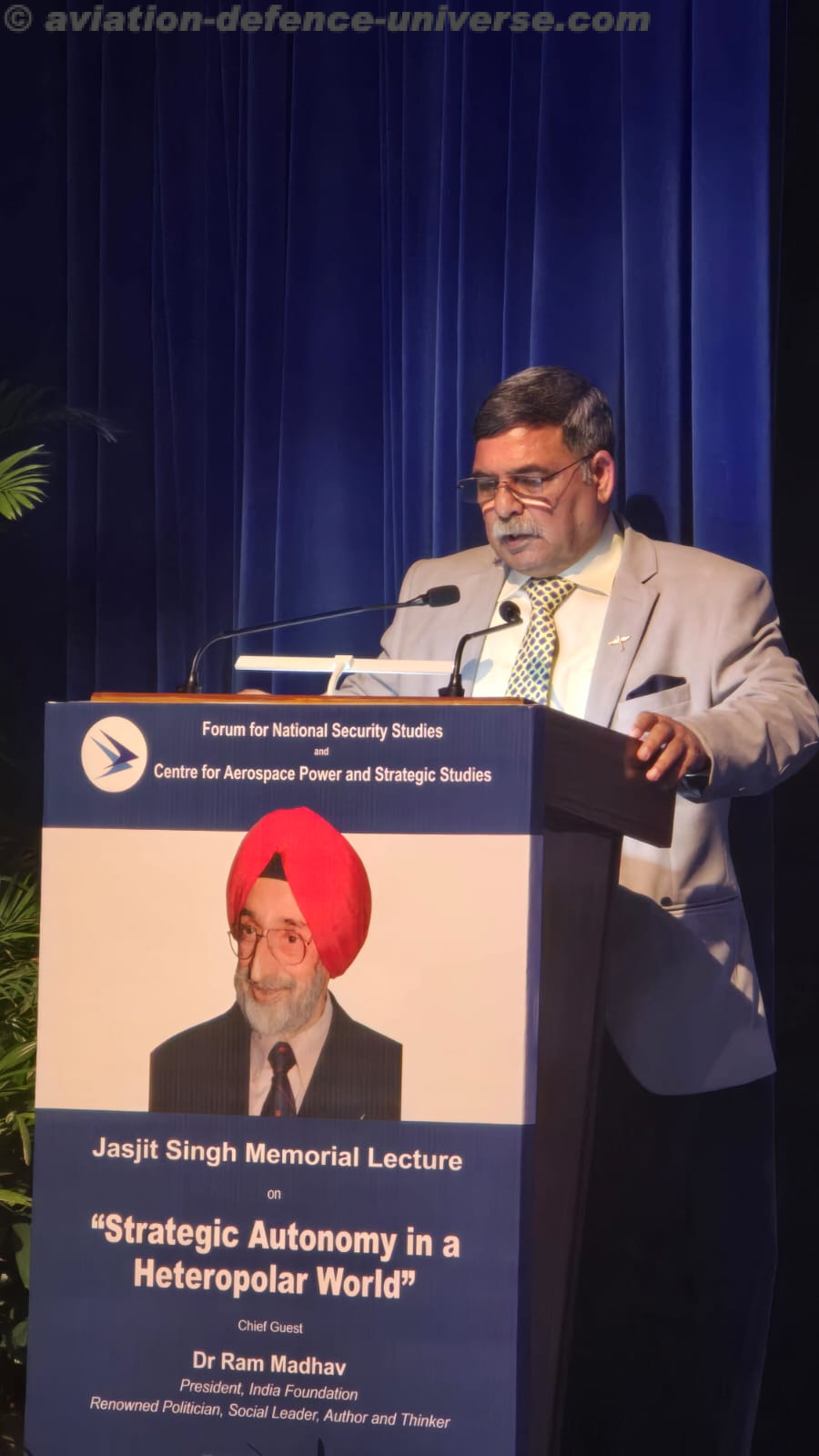 Air Vice Marshal Anil Golani (Retd.), Director General, Centre for Aerospace Power and Strategic Studies (CAPSS) in his welcome address recapped the soldier, the human being, the academician and the military visionary Air Commodore Jasjit Singh was and the legacy he had left for generations of soldier scholars in CAPS. He stated, “Air Commodore Jasjit Singh was the founder director of the Centre for Air Power Studies, a national security think tank that was set up in 2001. Since then, CAPS has grown into a credible institution on matters related to aerospace security, nuclear energy security, and strategic challenges in our neighbourhood and the Indo-Pacific. It was the vision and mission of Air Commodore Jasjit Singh to nurture the intellectual capital of the country and to imbibe it with a deep sense of national security consciousness. He ensured that CAPS pursued this mission through rigorous research and its dissemination via seminars and publications. We are proud to have published over 300 books and journals. Following his demise in 2013, CAPS began commemorating his invaluable contribution to national security with an annual memorial lecture. Incidentally, today marks the 12th anniversary of his passing.”
The Centre for Air Power Studies (CAPS), established in 2001 as an autonomous body, is dedicated to research and in-depth analysis of national security, defence, and aerospace issues within the evolving strategic and international security environment. Its primary objective is to enhance understanding of these subjects among the Armed Forces, the strategic community, and the public, while also contributing to policy formulation and informed decision-making. With effect from 18 July 2025, CAPS has been rechristened as the Centre for Aerospace Power and Strategic Studies (CAPSS). The institution now hosts a multidisciplinary faculty comprising senior retired and serving officers from the three Armed Forces, academic scholars from leading national universities, and former members of the diplomatic corps. In addition to research and publications, CAPSS also conducts short-term orientation capsules for officers from the Armed Forces, security agencies, and technological organisations.
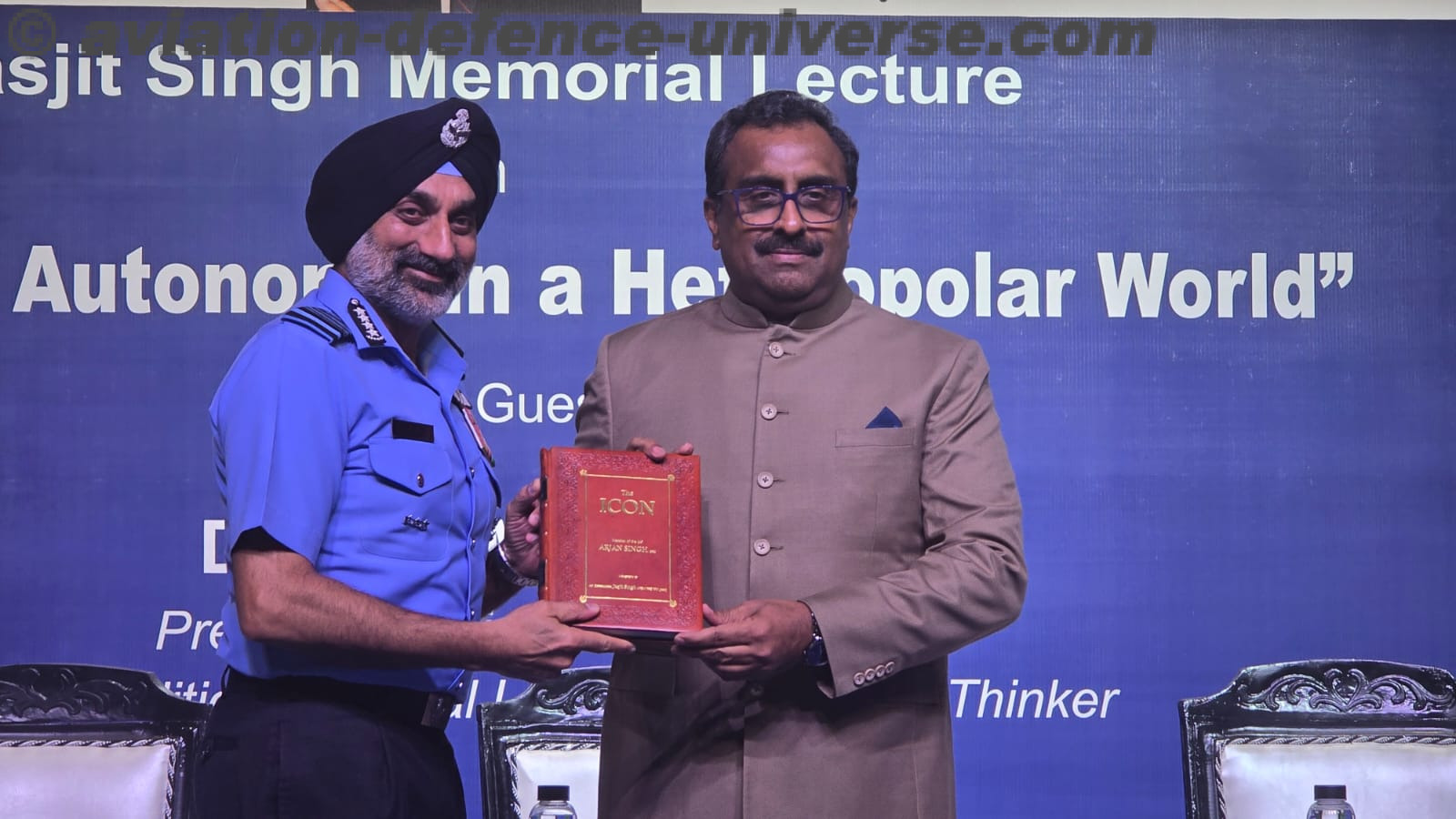
 “Born on 8th July 1934, Air Commodore Jasjit Singh served as a fighter pilot in the Indian Air Force from 1956 to 1988. He actively participated in both the 1965 and 1971 wars, flying several operational missions. During the 1971 war, he was awarded the Vir Chakra for gallantry in launching attacks against enemy tanks and gun positions, despite intense ground opposition. He later commanded No. 17 Squadron from January 1975 to April 1977—a squadron which now operates the Rafale—and was also actively involved in operations around Delhi. A passionate advocate of national security, after his retirement he joined the Institute for Defence Studies and Analyses (IDSA) and went on to become its longest-serving Director General from 1987 to 2001. He then founded CAPS in 2001 and led it until his passing in 2013. A prolific author, he penned numerous books on air power, nuclear and national strategy, China, the Kargil War, military leadership, joint operations, technology, and India-Pakistan issues, among many other strategic subjects. His intellectual canvas was vast, even extending to writing The Icon, a biography of Martin Luther King Jr.”
Dr. Ram Madhav continued, “What is needed today is to have statesmen to look at a new institutional framework. By the same day, there is a reason. Please remember, in the last century, United Nations-centric multilateralism was not the first multilateralism that was sought to be constructed. The first was what Woodrow Wilson tried to create after the First World War. It used to be called the League of Nations. Woodrow Wilson, towards the end of the First World War, came out with a 14-point charter as a basis for relations between the nations in the world. That’s how the League of Nations came into existence. But Wilson lost power in the elections in 1920. His successors decided that it was none of the business of America to get into this whole managing-the-world business — League of Nations, global governance and all that. They said, ‘We should bother about ourselves.’ So, the U.S. did not join the League of Nations. Those who created the concept did not join it. The Soviet Union, initially under Lenin, refused to join. It joined much later. By the time the Soviet Union joined, France had walked out. Germany walked out. Italy walked out. So, when the Second World War broke out, by then the League of Nations had become a paper tiger. It was bound to die.”
 He reiterated, “But fortunately for the world, we had statesman leaders at that time. There was Roosevelt in America and there was Churchill in England. Churchill and Roosevelt came together in 1941 while the war was still on. They came out with what is called the Atlantic Charter — a charter which would define global governance post-Second World War. Do you know that Atlantic Charter became the basis for the creation of global multilateralism in the form of the United Nations, in place of the League of Nations? A big lesson for us to understand — when the world changes, institutions must also change. That is why, this tendency is important. By the way, when the U.N. was actually being created, neither Roosevelt was there — Roosevelt had died — nor Churchill was there — Churchill had been defeated. But the idea they created became the basis for a new multilateral order. The problem now is, we do not have statesmen. We need people to stand up and say, ‘Now that the world is changing, we are entering into a new order. Let us create a new kind of global framework for relations between countries.’ We are too lazy to think about it. We keep talking about how to reform it. It is beyond reform — not because it is bad or anything — but because the world has changed. So, on multilateralism today, probably you will be forced to do that.”
 The Jasjit Singh Memorial Lecture 2025 was not merely a tribute to one of India’s most respected strategic thinkers, but a timely conversation on India’s current and future role in global power equations. Dr. Ram Madhav’s call for fresh statesmanship in global governance, along with his candid insights on India’s rise, its complex neighbourhood, and the transactional nature of contemporary geopolitics, resonated strongly with the military and academic audience. The rechristening of CAPS to CAPSS symbolizes a forward-looking institutional expansion in line with Jasjit Singh’s legacy. Together, these reflections mark a moment of continuity, introspection, and aspiration for India’s strategic and intellectual leadership.
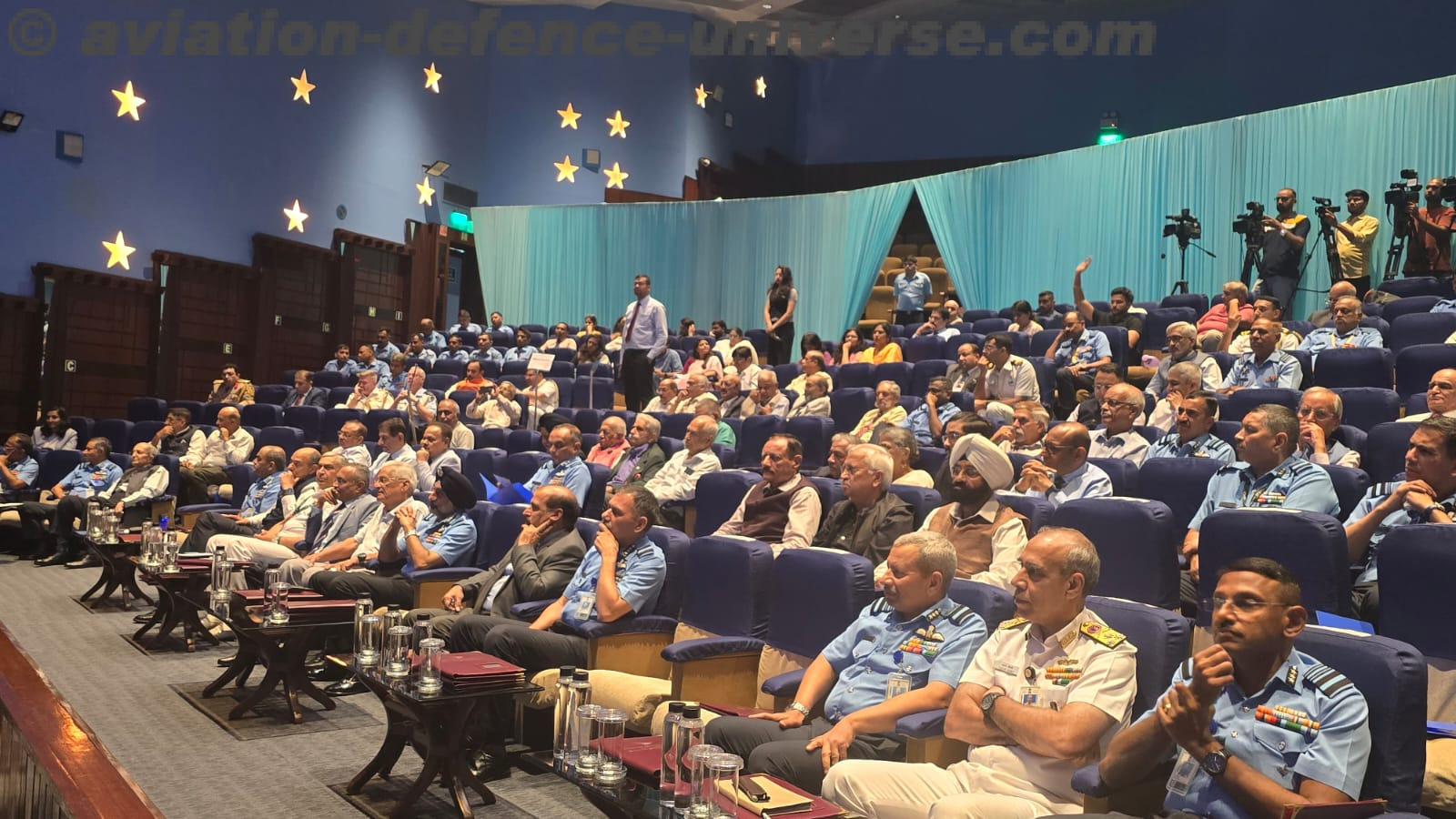
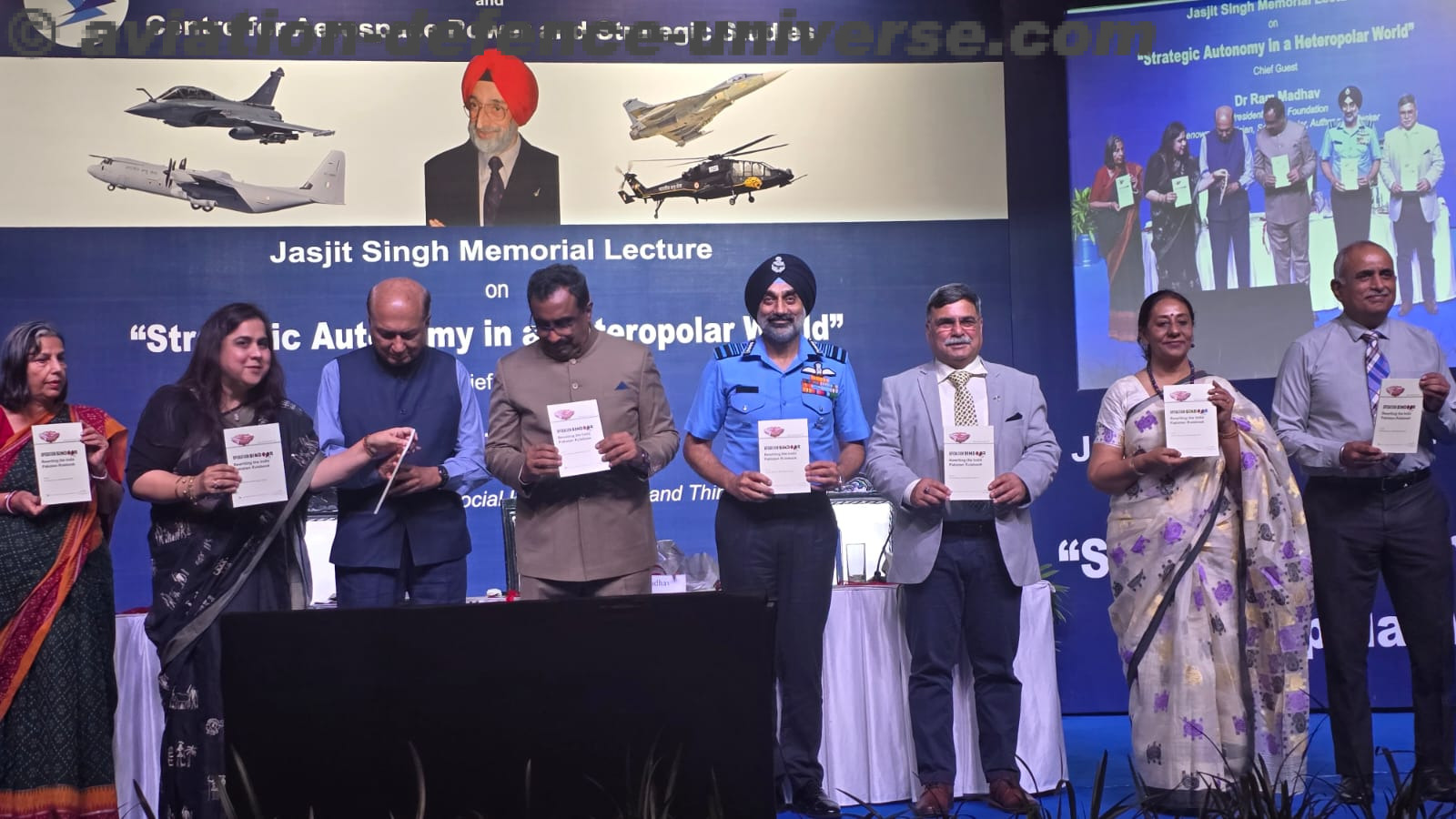 And just as if testimony to this the first row saw along with the Chief of Air Staff Air Chief Marshal AP Singh former service chiefs, diplomats, veterans and intelligentsia listening with rapt attention. Recently retired F-O-C-in-C Western Naval Command Vice Admiral Sanjay Jasjit Singh son of Air Cmde Jasjit Singh was also present in the audience. Post the address and the Q&A the IAF Chief along with Dr. Ram Madhav and Ambassador G Parthasarthy released the New Delhi Paper : 13 titled Operation Sindoor : Rewriting the India Pakistan Rulebook, Edited by CAPPS DG Air Vice Marshal Anil Golani (Retd.) and chapters written by Team CAPPS, sticking to their vision to be an independent centre of excellence on national security contributing informed and considered research and analyses on relevant issues. And what more relevant than Operation Sindoor in India of 2025.

























































-A4-Size-(2)_page-0001.jpg)