 18th BRICS Summit















- From Vikhroli to Global Aerospace Supply Chains: Inside Godrej Enterprises Group’s Aerospace Operations
- Inside the Aerospace Shopfloor: Witnessing High-Precision Manufacturing
- From Titanium to Inconel: A First-Hand Look at Godrej’s Aerospace Operations
- Automation, Precision and Aerospace Excellence Push India’s Aerospace Manufacturing
By Sangeeta Saxena
Mumbai/New Delhi. 07 May 2026. India’s aerospace manufacturing ecosystem is steadily evolving into a hub for advanced engineering, precision production, and high-complexity industrial capability. At the forefront of this transformation is Godrej Enterprises Group, whose aerospace division at Vikhroli, Mumbai, has emerged as an important contributor to both Indian and global aerospace programmes. During a recent media visit to the company’s dedicated aerospace manufacturing facility, the scale of technological sophistication, advanced materials expertise, and precision-driven production processes offered a compelling insight into how Indian industry is integrating itself into the global aerospace supply chain. From advanced CNC machining and robotic hot forming systems to specialised brazing capabilities and aerospace-grade metallurgy, the facility reflects the growing maturity of India’s high-end aerospace manufacturing ecosystem.
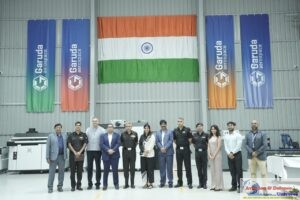
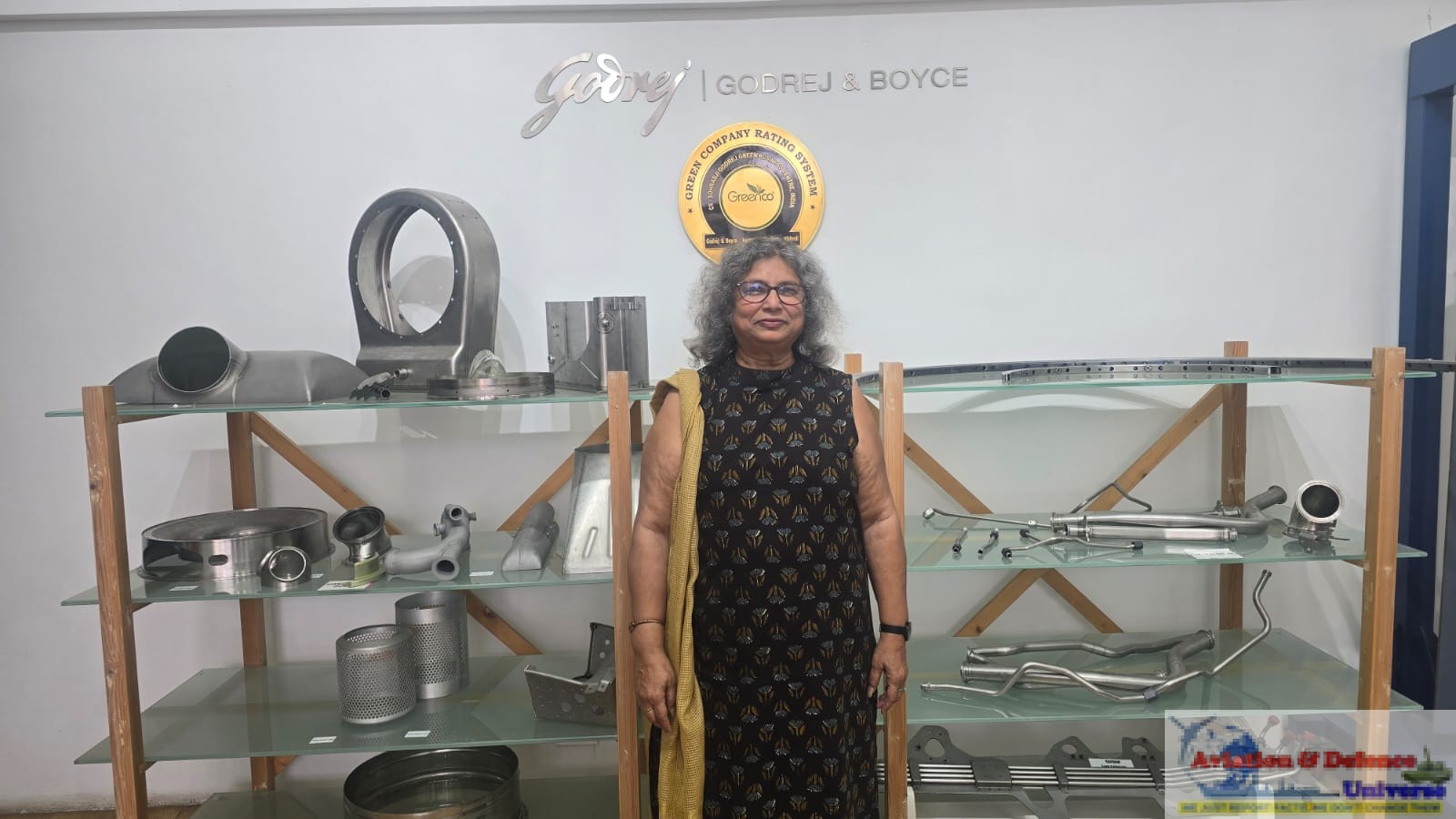 Stepping into this aerospace manufacturing facility was a reminder that some of the most advanced engineering capabilities in India often operate quietly behind factory walls, away from public attention. During a recent media visit to the facility, I witnessed firsthand how precision engineering, advanced manufacturing technologies, and aerospace-grade metallurgy are shaping India’s growing presence in the global aerospace supply chain.
Spread across a dedicated 35,000 sq. ft. manufacturing space, the aerospace division of Godrej Enterprises Group is equipped for high-precision and high-complexity aerospace production. The scale of operations immediately stood out, but even more striking was the level of technological sophistication embedded into every stage of manufacturing.
 As we walked through the shopfloor, the focus on precision became evident. The facility manufactures a wide range of critical aerospace components, including aero-engine tubing, structural sub-assemblies, ducting systems, mounting brackets, and actuators for both Indian and global aerospace programmes. Many of these components are destined for demanding aerospace applications where even microscopic deviations are unacceptable.
One of the most impressive aspects of the visit was observing the advanced CNC machining infrastructure. The highly automated computer-controlled systems are capable of machining aerospace-grade metals with extraordinary accuracy, repeatability, and consistency. Engineers at the facility explained how these systems support the manufacturing of complex aero-engine and structural components for next-generation aviation platforms. Watching the machines operate with near-perfect synchronisation reinforced the scale of technological maturity that Indian industry has achieved in this sector.
The visit also provided insights into the company’s expertise in handling advanced aerospace materials. The facility works extensively with titanium, aluminium, steel, and high-performance nickel-based alloys such as Inconel — materials known for their strength, heat resistance, and complexity in machining. These are not ordinary industrial metals; they are specialised aerospace-grade materials used in some of the world’s most demanding operating environments.
Another highlight of the tour was the integrated hot forming facility, where robotic furnace and press systems are used to manufacture complex thin-wall aerospace engine components. The sheer scale of the infrastructure was remarkable. The facility supports hot forming up to 600 tonnes, with furnace heating capabilities reaching up to 900°C, enabling the shaping of high-strength aerospace materials under tightly controlled conditions. The integration of robotics into these processes demonstrated how automation is increasingly becoming central to high-end aerospace manufacturing.
 Equally fascinating was the brazing facility, which supports temperatures ranging from 480°C to 1300°C within a precisely qualified hot zone. The technical team explained how such specialised capabilities are essential for aerospace manufacturing processes that demand exceptional metallurgical precision and long-term reliability. It became clear during the interaction that aerospace manufacturing is not just about machining components — it is equally about mastering material science, thermal engineering, and quality assurance at the highest levels.
What stood out throughout the visit was the confidence with which the facility positioned itself as part of the global aerospace ecosystem. The operations reflected a broader shift taking place in Indian industry — from conventional manufacturing toward advanced, high-value aerospace production integrated into international supply chains.
The media interaction also reinforced the growing importance of indigenous industrial capability in sectors such as aerospace and defence. Facilities like the one at Vikhroli are not merely manufacturing units; they represent India’s expanding ability to contribute to next-generation aviation programmes through precision engineering, advanced manufacturing, and technological expertise.
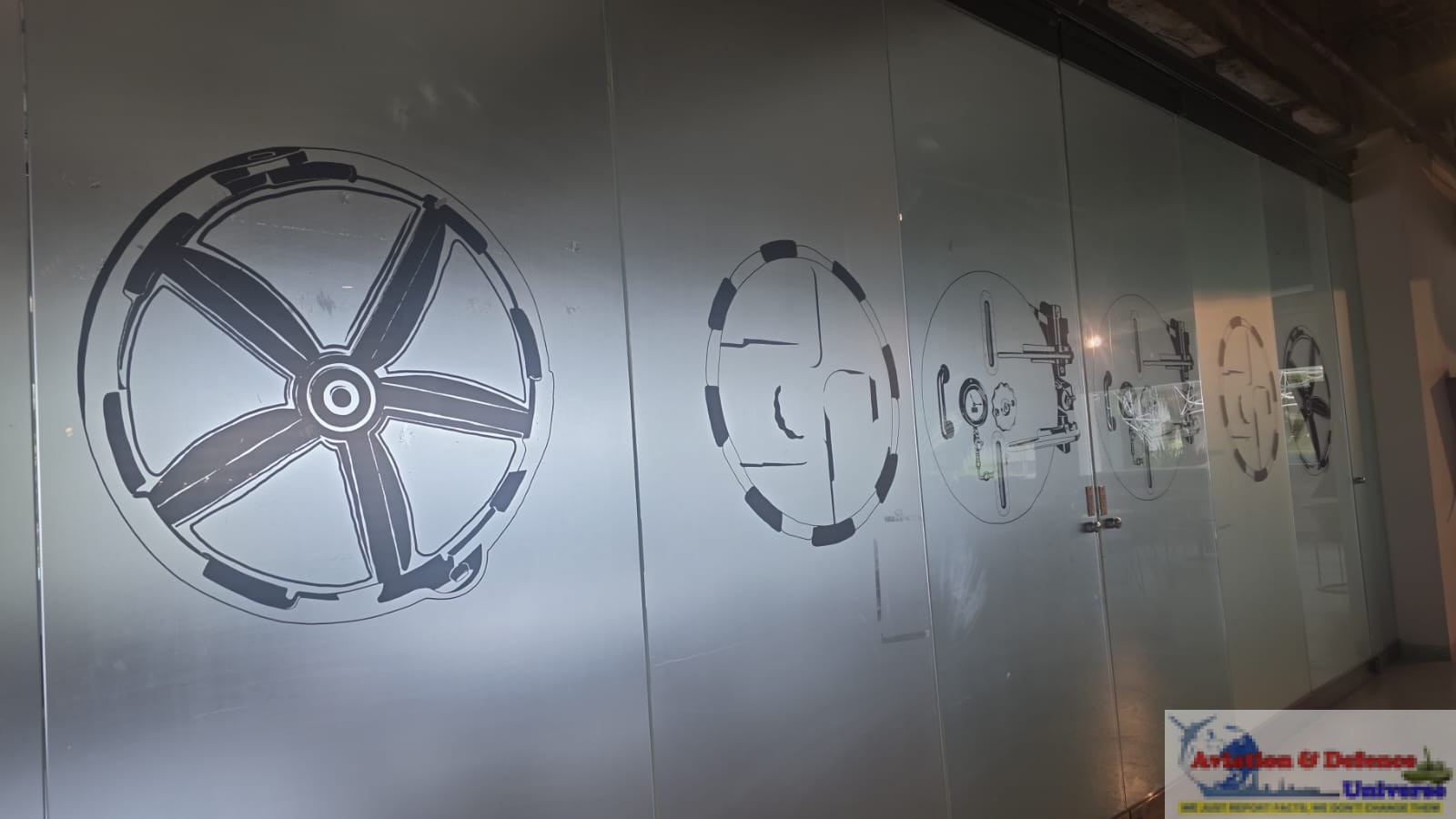
 Founded in 1897 by Ardeshir Godrej and later expanded with the support of his brother Pirojsha Godrej, Godrej Group has grown into one of India’s most respected and diversified industrial conglomerates. What began as a venture driven by indigenous manufacturing and self-reliance during the colonial era evolved into a pioneering enterprise that contributed significantly to India’s industrial growth across sectors such as engineering, consumer goods, appliances, furniture, security solutions, real estate, aerospace and advanced manufacturing. Over more than a century, the Godrej legacy has been defined by innovation, quality, trust and nation-building. From manufacturing India’s first indigenous locks and safes to developing advanced aerospace and defence engineering capabilities, the group has consistently adapted to changing technological and industrial landscapes while maintaining a strong commitment to sustainability, ethics and innovation. Today, the Godrej name remains synonymous with industrial excellence and continues to play a significant role in shaping India’s manufacturing and technological ecosystem both domestically and globally.
 As I left the facility, the impression that remained was not simply of machines and production lines, but of an ecosystem quietly building capabilities that align India with the future of global aerospace manufacturing. The media visit to Godrej Enterprises Group’s aerospace facility in Vikhroli highlighted the growing depth and sophistication of India’s aerospace manufacturing capabilities. Beyond the advanced machinery and automated production systems, the facility demonstrated the level of precision, engineering expertise, and technological integration now being achieved by Indian industry in one of the world’s most demanding sectors.
As global aerospace programmes increasingly seek reliable, high-quality manufacturing partners, facilities such as this underscore India’s emergence as a serious player in advanced aerospace production. The visit also reflected a broader industrial transition — from conventional manufacturing toward high-value, technology-intensive engineering capable of supporting next-generation aviation platforms. In many ways, the Vikhroli facility stands as a symbol of India’s ambitions to strengthen indigenous capability while simultaneously becoming an integral part of the global aerospace ecosystem.










































































-A4-Size-(2)_page-0001.jpg)