









- From Prediction to Preparedness : Restructuring for Future Warfighting Realities
- Adapting to Disruption: Indian Army’s Roadmap for Combating Modern Conflicts
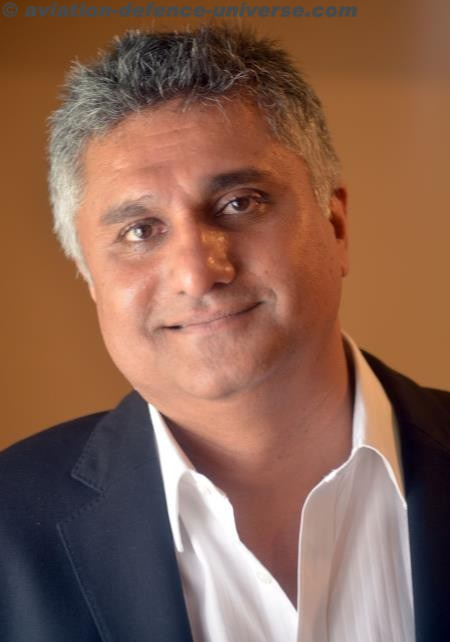
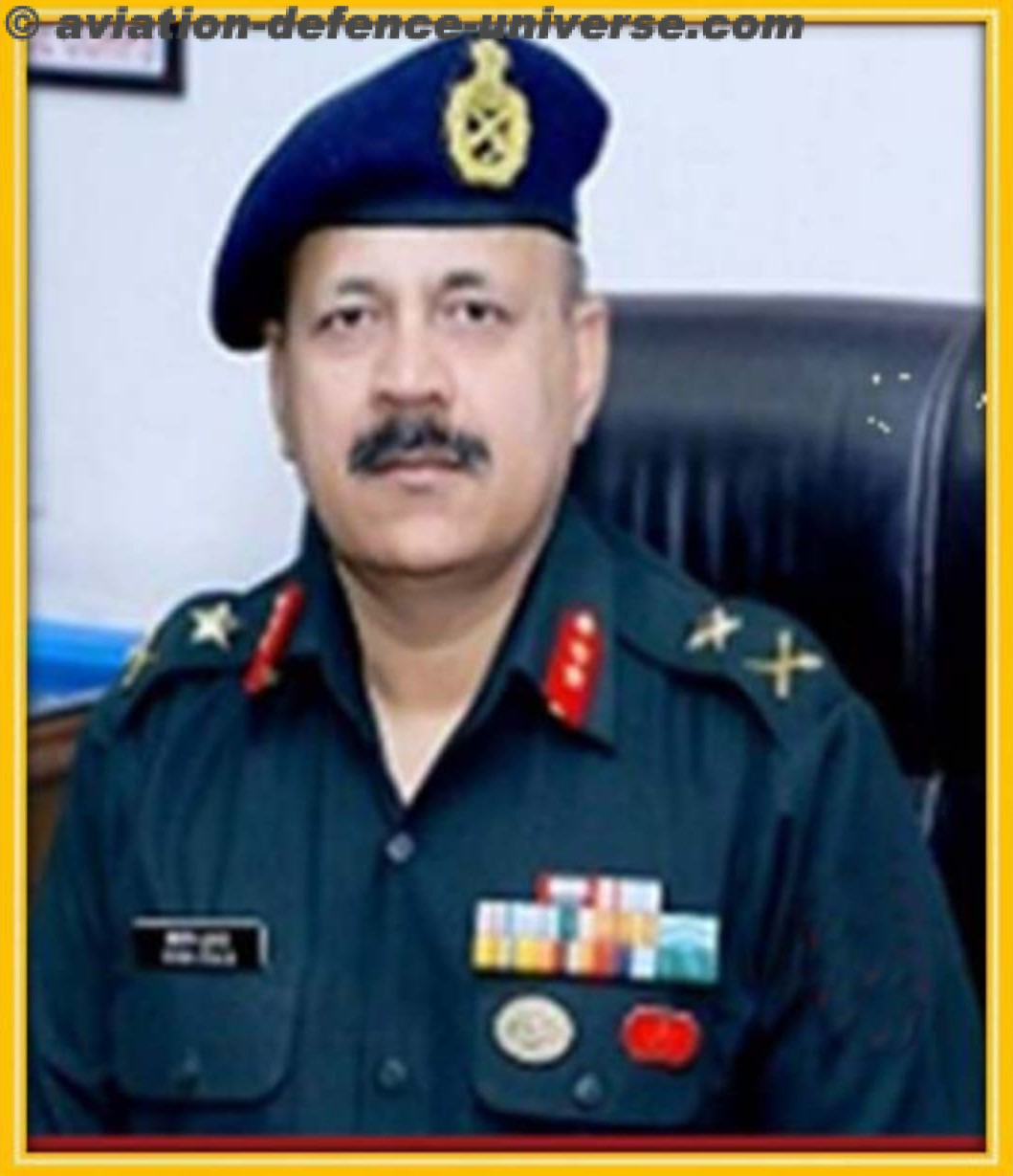
By Maj Gen (Dr.) Ashok Kumar, VSM (Retired)
New Delhi. 15 January 2026. The character of war has undergone a fundamental transformation. Gone are the days when future conflicts could be anticipated with reasonable certainty, allowing nations to structure their armed forces around predictable threat scenarios. For decades, even nuclear-capable states followed relatively stable warfighting doctrines and force postures. That era has now decisively ended. A convergence of geopolitical, geoeconomic, and—most critically—technological disruptions has reshaped the global security environment. The rapid democratization of advanced military technologies has significantly narrowed the capability gap between strong and relatively weaker states, while simultaneously empowering non-state actors with unprecedented destructive potential. Ongoing conflicts such as the Russia–Ukraine war and disruptions to Red Sea shipping by the Houthis illustrate this new reality with striking clarity.
Against this backdrop, the Indian Army has emerged as a proactive force, leading structural and doctrinal reforms to align itself with the demands of future warfighting. Army Day provides an apt moment to assess how the Army is preparing not only for conventional conflicts, but also for long-range precision warfare, multi-domain operations, and persistent proxy and hybrid threats. Such an ecosystem had prevailed for a considerable period of time the world over, resulting in countries restructuring their forces and resources for requisite capability development for war fighting as applicable to the countries. The trend did not change even for nuclear-capable nations for considerable No of years.
Somewhere along this line, the basic tenets of war fighting underwent a major change which could not have been contemplated by most of the nations. There were multiple disruptions sweeping the world which played an important role towards this new emerging phenomena. These disruptions included primarily Geo-political disruptions, Geo-economic disruptions, and technological disruptions. Out of these, the technological disruptions have taken the centre stage as they have democratised the availability of massive war fighting newer tools in the hands of anyone and everyone. This has been resulting in reducing the capability gap between stronger and relatively weaker nations. The Russia-Ukraine ongoing war is a live example of this new phenomena.
The technological democratization has also empowered non-state actors giving them much more capability as compared to yester years. Houthis are the live example of this trend .They disrupted Red Sea shipping activities resulting in mobilisation of naval forces by US and UK for their protection.
In addition, long-range and precision war fighting alongside these nuanced tools have brought in a new paradigm shift in war fighting which were utilised during Operation Sindoor as well, a still ongoing operation between India & Pakistan, though its first active phase got over on 10 May 25 having started on 07 May 25 giving the decisive win to India.
The real credit goes to CDS along with three service chiefs for a well-coordinated operation. During the conduct of Operation Sindoor, while IAF and Navy did play their important role, the Army was not only unleashing long-range precision weapons across the borders and LOC but was heavily engaged in LOC duels as well. Such a situation is likely to continue for the Army albeit with more intensity in days to come. Regular violations of airspace by Drones and increased terror activities in J&K are being witnessed as we are celebrating this Army day. It was therefore essential for Army not only re-organise itself for evolving theaterisation but it also needed to be able to re-organise itself for future battles across as well as being able to handle Pakistan sponsored proxy war/terrorism in the valley and beyond.
This Army Day is a perfect occasion to re-evaluate the Army’s preparation for its future readiness not only for the conventional battles but for future battles as well as all other challenges the nation faces. Some of the areas wherein the Army has shown unprecedented progress are as under:
- Ready for Adopting Theaterisation. The issue of theaterisation is one of the biggest and radical changes India wishes to execute in the post-independence Lot of grounds have been already smoothened out for integrated operational role of all the three services but formal launch of Integrated Theatres is still awaited. An avoidable debate has commenced in certain quarters about adequacy of resources as a pre-condition of adoption of Theaterisation whereas Theaterisation was never about adequacy of resources with services (as it can never happen and thus has not been made a pre-condition for such a change wherever it has been adopted) but Theaterisation was always about optimisation of available resources. Army has shown its willingness to go ahead with Integrated Theatres as and when it is formalised.
- Reorganisation of Organisational Structures. Army has been quick to undertake major organisational restructuring to adopt new tools like drones, swarm drones and counter drones besides enhancing long range precision weapon capabilities. It announced some opf these radical changes on 26 Jul 25 to reorganise certain entities. These were ‘Rudra’ all arms brigades, ‘Bhairav’ Light commando battalions and ‘Shaktibaan’ Regiments. In addition, Divyastra batteries in conventional artillery regiments and Drone platoons in all infantry battalions have been planned. These changes not only give a potent capability to Indian Army but also do away with ad-hoc use of drones which was essential to be addressed since long. The structured equipping of drones, both for surveillance and strike roles, will herald a new era of force accretion not only benefitting the Indian Army but will also assist Indian defence manufacturers to produce indigenous equipment to ensure strategic autonomy for the nation. The organisational restructuring is not only limited to these changes but also cover a large No of other changes which have also been made having far-reaching consequences. One of these seminal changes is approval of IBG (Integrated Battle Groups) which was conceived No of years back including trials having been succesful but these have been been approved now. This will transform the Indian Army.
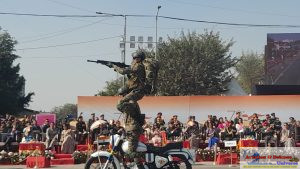
- Resurgent Army. This Army Day while marching in Jaipur, Army has emerged as a prime mover in the defence domain for national resurgence moving towards collective goal of ‘Viksit and Sashakt Bharat’ in 2047. This location may be also linked to raising of the first Theatre command as and when the same is formalised.
- While the Army has created a niche for itself over the years, the stride in the past one year leading to this Army Day has been outstanding, to say the least. On one hand, it raises the responsibilities of Indian Army and on the other hand, it gives it an unprecedented lead in the nation building.
As the Indian Army commemorates this Army Day, it stands at the forefront of India’s military transformation. Over the past year, the pace and depth of reform have been exceptional—ranging from readiness for theatreisation and approval of Integrated Battle Groups, to sweeping organisational restructuring that embeds drones, precision fires, and agile combat formations at the tactical level.
These reforms are not merely incremental upgrades; they reflect a decisive shift in mindset—from preparing for predictable wars to preparing for uncertainty itself. By institutionalising new technologies, optimising existing resources, and embracing jointness, the Army is positioning itself to meet future conflicts across the spectrum, while continuing to counter persistent threats along the borders and within the hinterland.
This renewed posture enhances not only India’s military readiness but also its broader national resurgence as the country moves toward the vision of a Viksit and Sashakt Bharat by 2047. With greater responsibility comes greater opportunity—and the Indian Army has clearly taken the lead in shaping both.
(Maj Gen Ashok Kumar, VSM (Retd) is Director General Centre for Joint Warfare Studies (CENJOWS), a Kargil war veteran and a defence analyst. He specialises on neighbouring countries with special focus on China. The views in the article are solely the author’s. He can be contacted at editor.adu@gmail.com).