


















- Building Tomorrow’s Aerospace: Emerson’s Vision for India’s Indigenous Defence Technology
- Self‑Reliance through Innovation with Make in India and A&D Testing
- Driving self reliance : How Test & Measurement Tools Empower India’s Aerospace Revolution
By Sangeeta Saxena
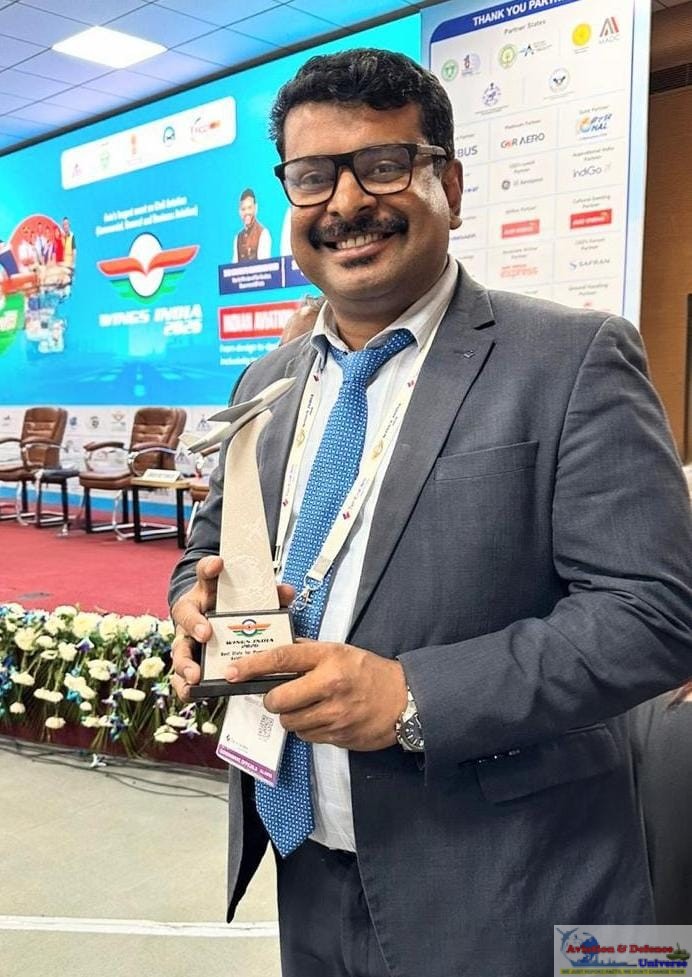
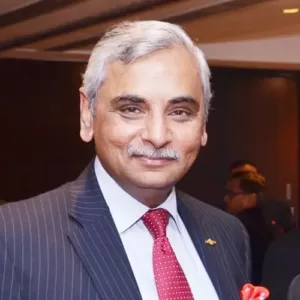
New Delhi. 15 October 2025. Aviation & Defence Universe sat down with Baskar Ceri, Managing Director, India and Global ADG-BU at Emerson Test & Measurement (formerly NI), for an in-depth conversation about the technological forces transforming aerospace and defence. Ceri described how artificial intelligence (AI), automation and hypersonic technologies are redefining both military and civil aerospace capabilities, while advanced test and measurement solutions and secure 5G‑enabled communication networks are shortening development cycles and improving reliability. He noted that sustainability has entered mainstream defence R&D, with electric/hybrid propulsion and sustainable aviation fuels gaining traction.
On the policy front, programmes such as Make in India, Atmanirbhar Bharat, Buy Indian‑IDDM and iDEX are turbocharging indigenous R&D and attracting strategic investment into India’s A&D ecosystem. Emerson’s role, he explained, is to provide modular hardware‑in‑the‑loop test platforms and digital twins that allow Indian engineers to create and own their intellectual property while staying globally competitive. The conversation also covered leadership in a rapidly changing industry, advice for entrepreneurs and the company’s plan to make cutting‑edge testing accessible to Indian start‑ups and defence programmes.
ADU. What are the key technological advancements shaping the future of the aerospace and defence (A&D) sector in India and globally?
Baskar Ceri. The aerospace and defence (A&D) industry is experiencing a significant transformation, with cutting-edge technologies redefining capabilities both in India and around the world. These innovations are improving operational efficiency, sustainability, and strategic self-reliance. The most influential advancements include: AI, Hypersonic Technology, SCN, ATS and Green Technologies.
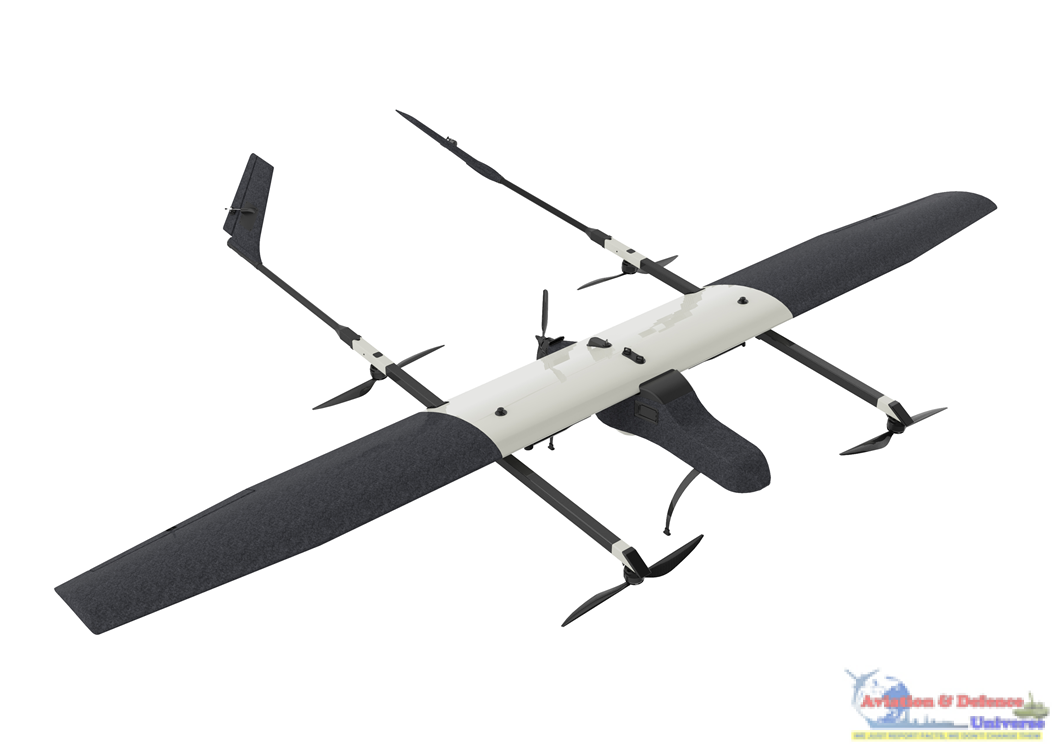
AI is fundamentally reshaping A&D operations. It enables predictive maintenance, smarter supply chains and enhances autonomous systems. In India, AI-powered drones and unmanned aerial vehicles (UAVs) are boosting surveillance and combat performance, while predictive analytics help optimize maintenance and resource deployment.
Hypersonic Technology is one of the most groundbreaking innovations. Hypersonic vehicles and missiles—capable of exceeding speeds of Mach 5—promise to redefine both commercial aerospace and military strategy due to their unmatched speed and agility. These systems are expected to outperform conventional defence technologies.
Secure Communication Networks is the adoption of 5G and phased-array antennas is improving real-time intelligence sharing and battlefield communications.
Automated Test Systems are crucial in improving reliability, reducing testing time, and offering richer data insights. Emerson (formerly National Instruments) is a key player in this space, offering scalable, software-integrated solutions that evolve with the industry. By leveraging digital thread and twin technologies, they enable real-time simulations, diagnostics, and lifecycle optimization. Our advanced RF and radar testing tools, along with Hardware-in-the-Loop (HIL) simulation, ensure high-precision validation of mission-critical technologies
Green Technology and Sustainability is increasingly central to A&D innovation. Electric and hybrid propulsion systems, sustainable aviation fuels (SAFs), and lightweight composite materials are being developed to cut emissions and boost energy efficiency
ADU. How is India’s A&D ecosystem adapting to the increasGing demand for indigenous and advanced defence technologies?
Baskar Ceri. India’s aerospace and defence (A&D) landscape is undergoing a significant shift to cater to the growing demand for locally developed and cutting-edge defence solutions. This evolution is being fueled by bold government initiatives, increasing investments, and deeper collaboration between public and private sectors. The focus is on driving innovation through programs like ‘Make in India’ and ‘Atmanirbhar Bharat’, while actively encouraging partnerships and tech-driven growth.
A range of strategic policies and frameworks—including Buy {Indian-IDDM (Indigenously Designed, Developed, and Manufactured)}, iDEX (Innovations for Defence Excellence), the Strategic Partnership Model, Defence Acquisition Policy (DAP), Defence AI Council (DAIC), and Defence AI Project Agency (DAIPA)—are playing a pivotal role in transforming India’s defence ecosystem. These initiatives are streamlining procurement processes, promoting homegrown innovation, encouraging collaboration, and accelerating the use of AI and advanced technologies in defence production.
India is embracing high-impact technologies such as Artificial Intelligence (AI), Quantum Computing, Cybersecurity, and space-based capabilities. This forward-thinking approach is keeping India globally competitive, fostering continuous innovation, and positioning the country as a rising leader in next-gen defence capabilities.
Targeted financial support is empowering the Indian defence sector. Budget allocations through mechanisms like the Technology Development Fund are driving R&D, encouraging indigenous development, and nurturing a startup ecosystem that’s injecting fresh energy and innovation into the A&D value chain.
ADU. How does test and measurement technology contribute to the development and validation of next-gen aerospace and defence systems?
Baskar Ceri. Test and Measurement (T&M) technology plays a foundational role in the development and validation of next-generation aerospace and defence systems by ensuring precision, performance, and safety at every stage of the product lifecycle. Modern A&D systems are highly complex, integrating advanced avionics, radar, communication, and control systems. T&M solutions validate the performance of these components under simulated real-world conditions—from extreme temperatures to high-speed dynamics—ensuring they meet mission-criticalreliabilitystandards.
Rigorous testing is essential for systems used in high-stakes environments like space and combat zones. It allows for early identification of design flaws, reduces risk, and helps maintain compliance with stringent industrystandards.
Automated and software-connected T&M systems accelerate product development cycles and provide deeper insights through real-time data analytics. Technologies like Hardware-in-the-Loop (HIL) simulation, digital twins, and RF test solutions, as provided by Emerson (formerly known as NI), enable rapid prototyping, continuous validation, and lifecycle optimization of defence platforms.
ADU. With the push for self-reliance in defence manufacturing, how are test and measurement solutions supporting India’s ‘Make in India’ and ‘Atmanirbhar Bharat’ initiatives?
Baskar Ceri. With the Indian government increasing its efforts each year to promote Make in India and Atma Nirbhar Bharat, particularly in defence manufacturing, there is a growing focus on indigenous development. Recent conflicts have brought certain areas — such as drone and anti-drone technologies — into sharper focus. We are already working closely with several startups in these domains, as well as directly with government agencies, and will continue to do so.
Our approach is centered around using COTS (Commercially Off-The-Shelf) technology, which forms the backbone of our solutions. The actual intellectual property (IP) is developed in India — either by our partners or directly by our customers. We work with leading organizations such as Tata Advanced Systems, DRDO, Ministry of Defence, and ISRO, enabling them to create and own the IP. This is a key way in which we contribute to Atma Nirbhar Bharat and Make in India. We classify ourselves as a Class 2 supplier, as we provide critical technology that significantly supports Make in India initiatives. Our partners, who integrate local IP and build complete systems, often qualify as Class 1 suppliers.
ADU. How do you see the role of leadership evolving in the highly specialized and innovation-driven test and measurement industry?
Baskar Ceri. In today’s uncertain and complex world, the importance of strong leadership has never been greater.. It’s not just about test and measurement — with the changes happening through AI and other emerging technologies, we need to be much stronger in our fundamental values and in knowing what we are trying to achieve. This includes having a clear ambition for the country, in line with Atma Nirbhar Bharat, and understanding our responsibility as corporate citizens. We must also be clear about the values that guide us, because in this area there is no grey. It is crucial to know exactly what we are trying to achieve and the value system we stand by. As Indians, we have a certain value system and we must follow it, sticking to our core principles while striving to achieve our goals. Complexity has always been a part of progress — every generation feels it more than the one before — and today, things evolve at an exponential pace. In any time frame, change is happening with rapid speed, yet the fundamentals of leadership do not change: having a clear idea of what we are doing, where we are going, and upholding our value system.
ADU. What advice would you give to entrepreneurs looking to build scalable, innovative solutions in aerospace and defence techno
Baskar Ceri. Begin by experimenting quickly — conduct fast experiments and learn from failures promptly. Be open to failures and don’t get too attached to any one idea. If something isn’t working, be willing to drop it and move forward. The key is to have mechanisms in place to validate ideas quickly, ideally by engaging directly with customers or end-users. The faster you can create and complete these feedback loops, the better. Technology and the world are changing at rapid speed, so agility is essential. The fundamentals of entrepreneurship still hold true — you need a great team; you cannot drive everything alone. Build on strong fundamentals and clear core values, then grow from there. In aerospace and defence specifically, the complexity of the sector and recent conflicts have highlighted areas where we remain dependent on external sources. Self-reliance is critical, and there is significant opportunity to develop indigenous technologies. The government is actively supporting faster innovation in this space. For example, a drone solution from BITS Hyderabad was recently adopted by the Army. Entrepreneurs should identify such gaps quickly, focus on advanced capability enablers that are reshaping aerospace and defence globally, and work on building local capabilities in those areas. These are critical zones for development and innovation in India.
ADU. Being a part of Emerson’s Test and Measurement Group, how do you plan to make testing easier and more accessible for defence and aerospace industry trials in and for India?
Baskar Ceri. As part of Emerson’s Test and Measurement Group, our goal is to simplify and elevate testing for the defence and aerospace industries in India by driving innovation, localization, and accessibility. With the T&M sector at the cusp of transformation, driven by emerging technologies and evolving market needs, we’re committed to redefining traditional workflows with faster, more precise, and intelligent testing solutions. Our investments in India—including our expanded R&D center in Bangalore—are helping us work more closely with local customers to co-innovate based on regional requirements. This proximity enables us to provide tailor-made solutions for the defence and aerospace sectors, where precision, reliability, and speed are critical. Our focus on indigenous development, through partnerships and localized calibration and manufacturing services, directly supports the country’s initiatives to be self-sufficient. Moreover, we are addressing critical sector challenges such as increasing system complexity and cybersecurity through robust, software-connected platforms and digital twin technologies.
By strengthening education, infrastructure, and ecosystem partnerships, we aim to build a skilled workforce and foster self-reliant innovation. Emerson T&M is not just delivering tools—we’re enabling India’s defence and aerospace leaders to accelerate innovation, reduce testing cycles, and achieve global benchmarks faster and more efficiently.
Throughout the interview Baskar Ceri putforth a vision of a self‑reliant Indian aerospace and defence sector built on innovation, strategic partnerships and rigorous testing. He underscored how AI‑enabled predictive maintenance, hypersonic systems and resilient 5G communications are already reshaping the global A&D landscape. India’s policy environment has shifted decisively in favour of indigenous design and manufacturing, backed by funding mechanisms and collaborative programmes like iDEX. Test and measurement technologies, he argued, are the backbone of this transformation—automated, software‑connected platforms such as hardware‑in‑the‑loop simulators and digital twins accelerate R&D, reduce risk and enable Indian engineers to retain IP while meeting export‑quality standards. For start‑ups, he advocated rapid experimentation, customer engagement and strong core values. Leadership, he said, requires clarity of purpose and adherence to national and corporate values amid rapid technological change. With Emerson investing in R&D and manufacturing in India and partnering with major defence players, Ceri sees a future where Indian entrepreneurs, armed with world‑class testing tools, develop next‑generation unmanned systems, radar and communications to meet the nation’s Atmanirbhar Bharat ambitions.
As told to Sangeeta Saxena