











- Twin Otter to Transform India’s Last-Mile Connectivity. De Havilland’s Yogesh Garg Speaks to ADU
- Seaplanes, Desert Ops & Northeast Lift. De Havilland Maps Big India Plans
- India Will See 30–40 Seaplanes & Small Aircraft Soon
- Twin Otter to Power India’s Training, Tourism & Transport Growth
By Sangeeta Saxena
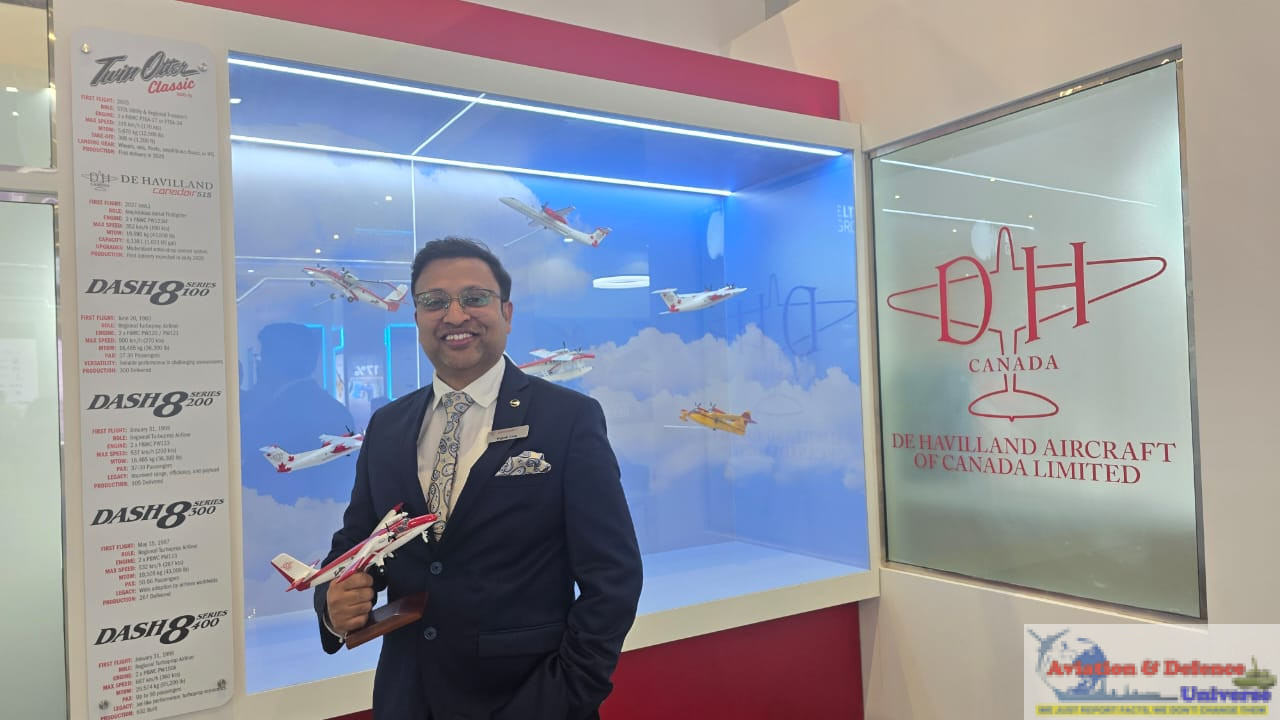
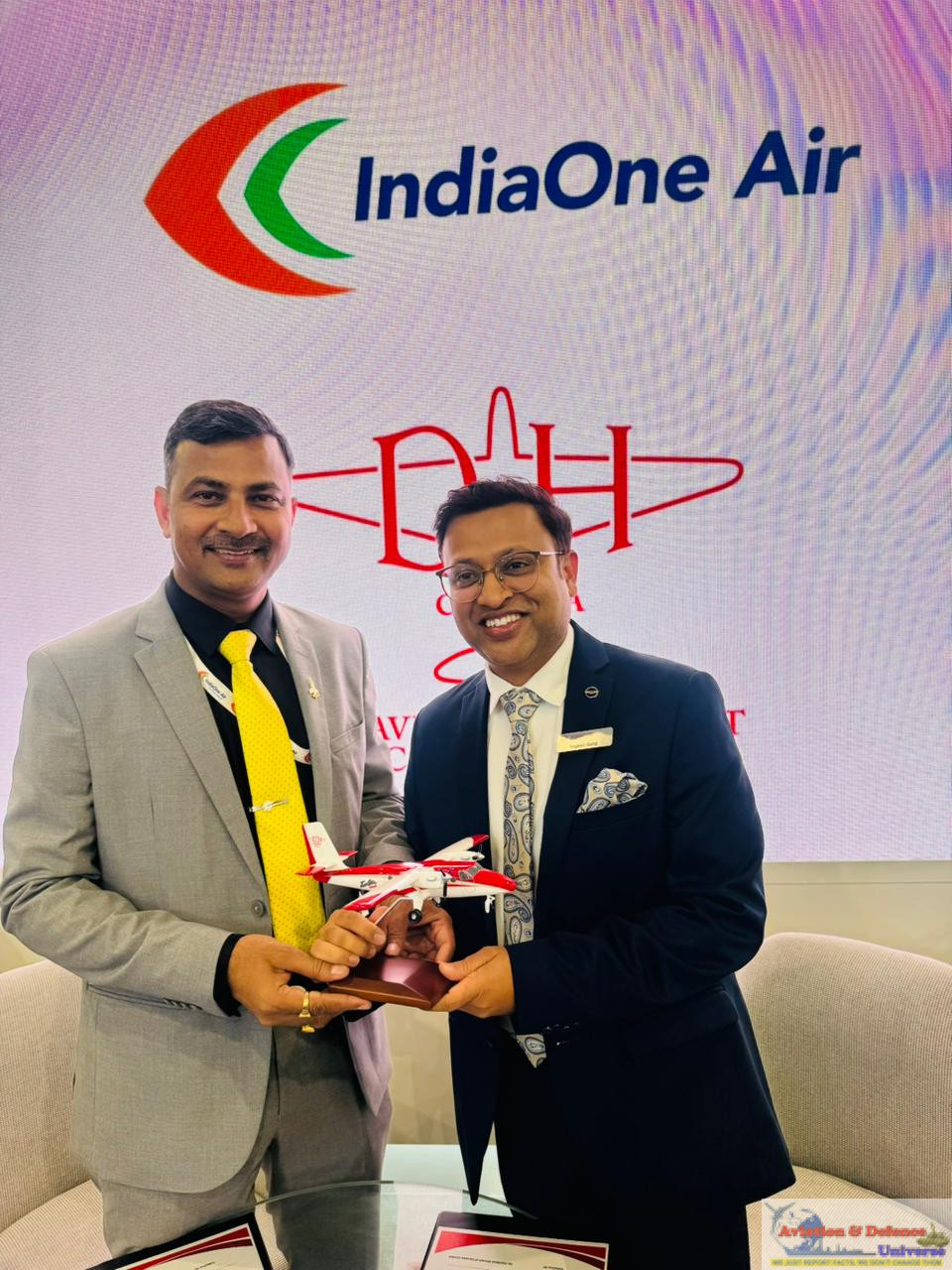
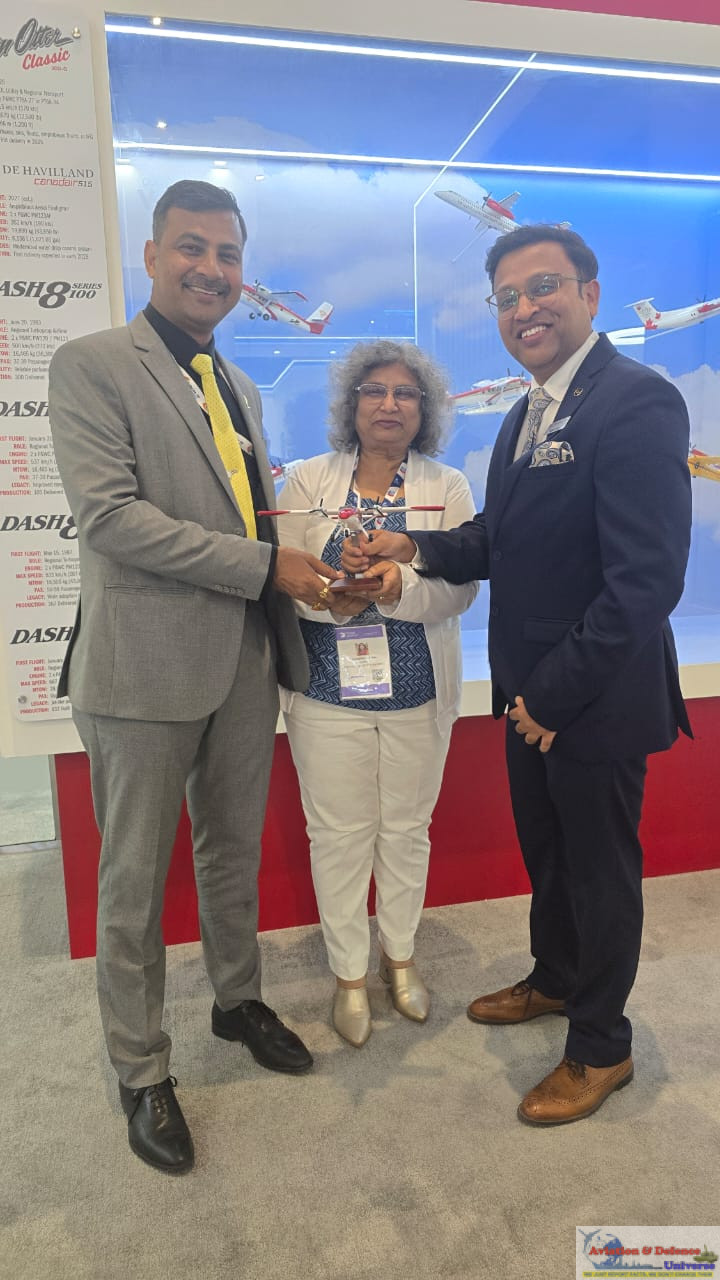
Dubai. 21 November 2025. At the Dubai Airshow 2025, De Havilland Aircraft of Canada made major headlines with India One Air signing an LOI for up to ten Twin Otter Series 300-G aircraft. For India, this marks a defining moment in regional aviation, especially in last-mile connectivity and amphibious operations. ADU caught up with Yogesh Garg, Director of Sales for Asia Pacific & Middle East, to discuss India’s market readiness, seaplane future, state partnerships, MRO strategy, and how the Twin Otter is set to revolutionise remote and challenging terrain operations.
 ADU. This has been a very eventful Dubai Airshow for your company. What is new?
Yogesh Garg. This has been a very exciting airshow for us with continuous engagements and major developments for the region. Yesterday we signed an LOI for up to ten aircraft with India One Air, a regional operator based in Ahmedabad. Beyond that, we are working closely in the Gulf on both commercial and military contracts, which we will be announcing soon. The show has been very successful with back-to-back interactions with customers, and the momentum is extremely positive.
ADU. What is the overall India outlook for De Havilland, especially beyond yesterday’s announcement?
Yogesh Garg. India has made major progress toward making seaplanes a reality, and we have been working very closely with the DGCA, MOCA and State governments. Skyhop is set to start amphibious operations soon between Cochin, Agathi and Lakshadweep islands. This is the result of consistent government focus to make seaplanes operational. We are also working with scheduled operators to expand Twin Otter operations into the hinterland and Tier-3 and Tier-4 towns. Twin Otter will play a leading role in improving last-mile connectivity in India.
ADU. Apart from India One, are there other scheduled operators that you are in talks with?
Yogesh Garg. Yes. We are actively engaged with operators such as SpiceJet, Skyhop and others looking to benefit from the UDAN scheme using aircraft below 20 seats. Smaller fleets will see significant traction now. India will likely deploy 30–40 small aircraft and seaplanes over the next two to three years.
ADU. De Havilland has interacted with aerospace-focused Indian states. What is the progress in Telangana?
Yogesh Garg. Our headquarters sent a large delegation last year to evaluate suppliers in Telangana and Karnataka. We identified several promising vendors with strong engineering capability. We are now shortlisting them for subcontracting and structural part manufacturing. Very soon, you will see a vendor ecosystem in India supplying directly to Canada.
ADU. Is De Havilland considering a manufacturing line in India
Yogesh Garg. At this stage, we are looking at subcontracting and part suppliers rather than a dedicated production line. For structural parts, India is very promising, and we see strong potential to integrate Indian vendors into our global supply chain.
 ADU. What about an MRO facility for Twin Otter in India
Yogesh Garg. Twin Otter is a self-sufficient aircraft and we encourage operators to build in-house capability. It is a simple, mechanical aircraft, and worldwide the operator itself handles the maintenance. India already has a Dash-8 approved MRO with GMR, but Twin Otter maintenance is ideally done by the operator to reduce costs and develop capability.
ADU. How does amphibious operation impact maintenance requirements
Yogesh Garg. Seaplanes need more frequent checks because of corrosion from saline water. They require facilities near a dock or a hangar with a ramp for easy movement from water to land. We are working with Indian operators and state governments to build suitable waterport infrastructure to support dedicated seaplane maintenance.
ADU. Have you launched specific marketing or demos for mountainous regions like the Northeast
Yogesh Garg. Absolutely. Twin Otter is ideal for short sectors in the Northeast. Larger aircraft cannot fill seats economically, while Twin Otter can run high-frequency routes with 19 passengers. We have already conducted demos from Umiam Lake to Shillong and Guwahati, and the travel time reduced dramatically. Amphibious operations can eliminate runway needs entirely. We are engaged with states like Arunachal, Nagaland and Manipur to operationalise this.
 ADU. Can Twin Otter also operate in desert terrains
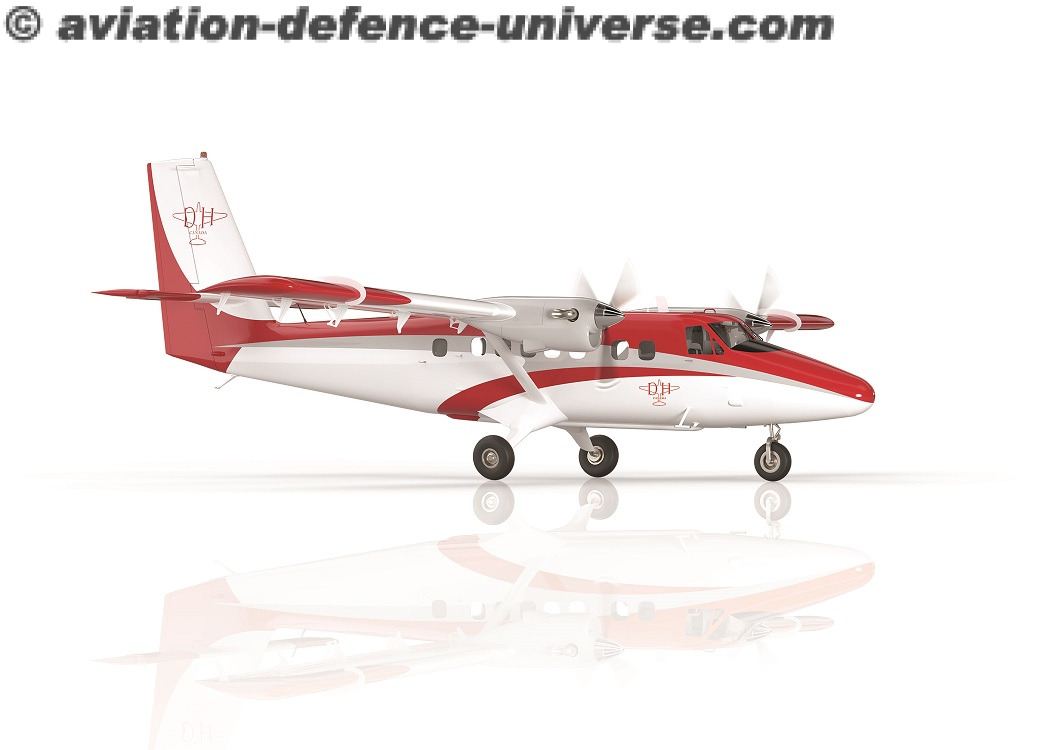
Yogesh Garg. Yes, easily. With Tundra tyres fitted on the Twin Otter, it can land almost anywhere, including unpaved surfaces and sand strips. The aircraft displayed at the airshow here operates in the UAE desert. You do not need infrastructure or runways. This flexibility is unmatched.
ADU. Is Twin Otter a good aircraft for pilot training and solving India’s pilot shortage
Yogesh Garg. It is an excellent solution. Twin Otter is under 5,700 kg, so a CPL holder can log hours flying it and build experience to earn an ATPL. India faces a shortage of ATPL holders, not CPLs, so this can bridge the gap. Twin Otter can produce skilled first officers and future captains, giving them hands-on flying experience.
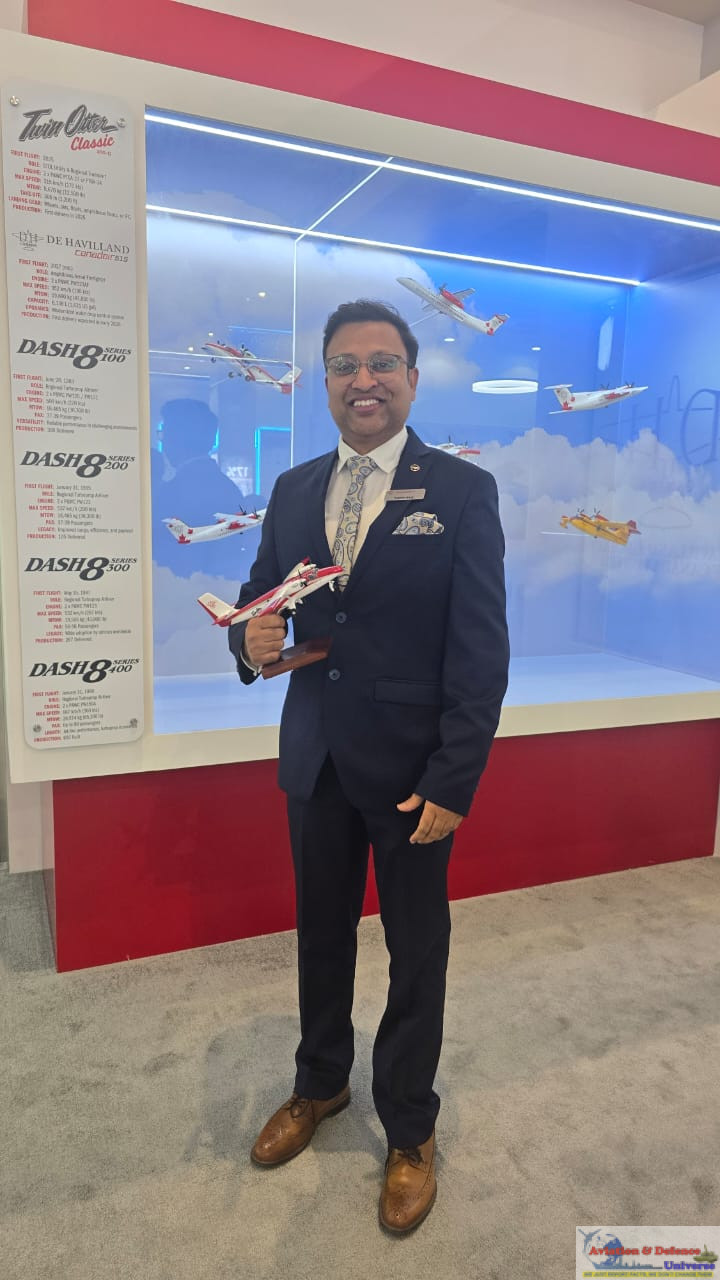 ADU. Since you are looking after the entire region, could you share some background on your portfolio and how other markets compare with India?
Yogesh Garg. I currently manage the Asia Pacific and Middle East regions, including China, and it is a very diverse portfolio. On one side we have Maldives, which operates more than 100 to 200 amphibious aircraft, and on the other side the UAE runs more Dash-8 aircraft for charter operations. Indonesia is another strong market where amphibious aircraft dominate. So it is a mix of very different requirements.
When I compare these markets to India, it stands out because India can use all types of our products within one geography. You see potential seaplane operations, amphibious aircraft usage, and demand for regional connectivity. For example, SpiceJet represents the regional market, Flybig operates small aircraft, Skyhop is coming in with seaplanes, and AirPower 30 uses Twin Otters for geo-surveillance. This unique mix makes India one of the most versatile markets in our portfolio.
ADU. What type of aircraft market do you see in China
Yogesh Garg. China is comparatively a closed market, but we have still been able to enter with Twin Otters. You see both land and amphibious versions operating there. We have yet to tap the Dash-8 market in China, but Twin Otter is promising there and continues to attract interest.
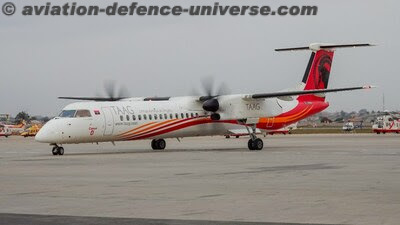
ADU. The Twin Otter seems to offer multiple mission roles. What makes this aircraft so versatile?
Yogesh Garg. The Twin Otter is extremely versatile because of its flexible interior configuration and the ability to convert it into different roles within a few hours. You can use it as an all-passenger aircraft, switch it into cargo, opt for a quick-change layout, or configure it for dual-class, VIP, paratroop operations, special missions, or medevac. The versatility extends beyond the cabin, as we can change the landing gear to make it a wheel plane, a land plane, or a full amphibious aircraft. It can even operate with skis or intermediate rotation gear for icy terrains. This single aircraft can perform multiple missions very effectively.
ADU. So the same aircraft can operate on snow, water, and land?
Yogesh Garg. Exactly. When fitted with amphibious gear, it becomes a full seaplane. With floats, it transitions into a float aircraft. Add skis and it can land and take off on ice or snow. This adaptability allows it to operate in water regions, arctic environments, deserts, and remote terrains. It has a remarkable short take-off and landing capability, making it ideal for difficult locations with very limited infrastructure. The aircraft has been in continuous service for more than 50 years, and even today it remains unmatched in utility. Canada developed a true workhorse during the Second World War era, and its value continues to grow globally.
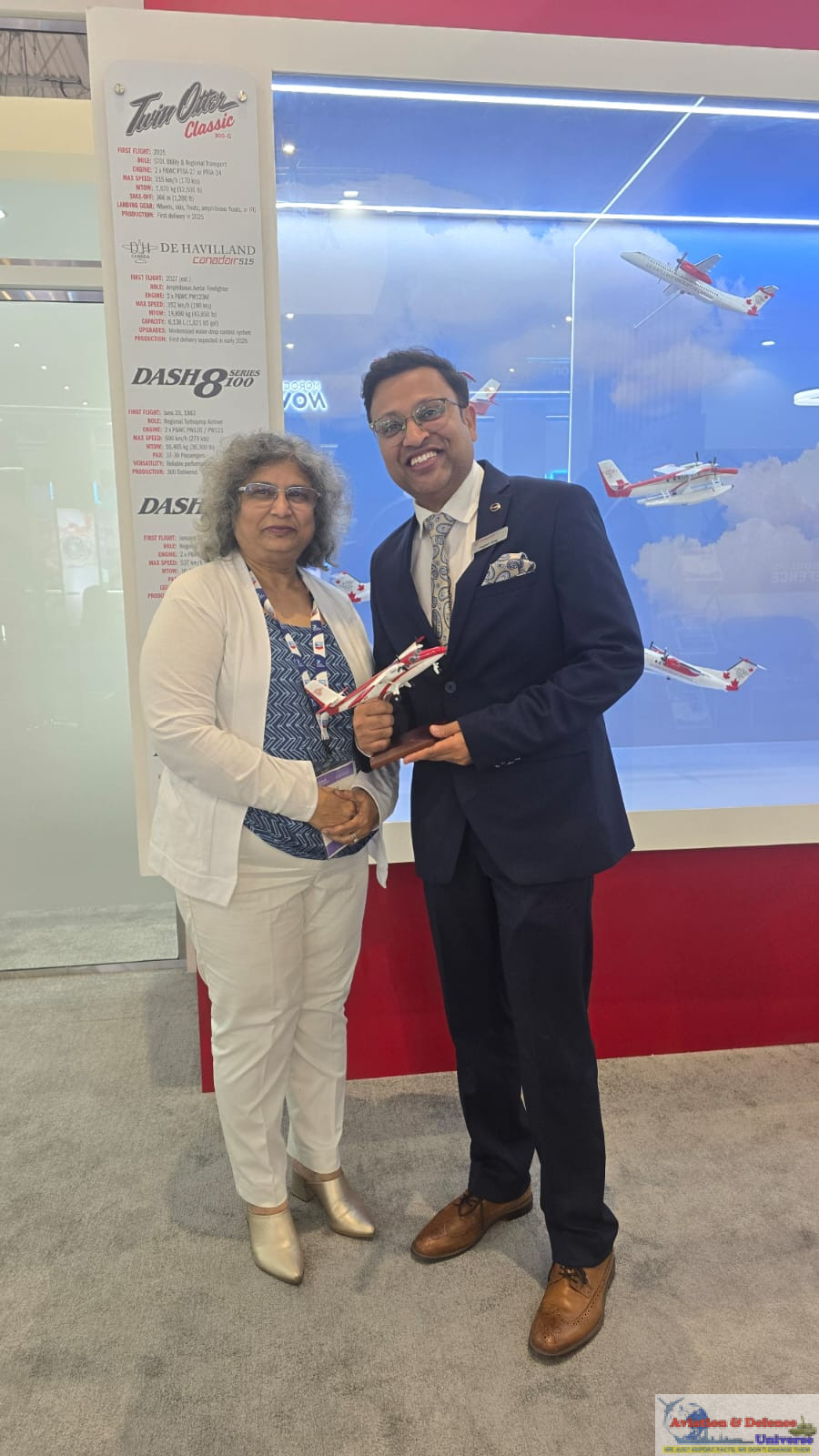
ADU. Apart from passenger and cargo roles, what other special variants exist?
Yogesh Garg. Another important platform from De Havilland is our Water Bomber, used for firefighting. It is the only aircraft in the world capable of scooping water directly from lakes or seas and deploying it over forest fires. This showcases how adaptable our aircraft family is—from operating in remote Arctic regions to fighting fires, transporting passengers, carrying cargo, or serving special missions. The Twin Otter has truly earned its reputation as an aircraft that can go anywhere and do nearly anything.
From amphibious routes in Lakshadweep to mountain connectivity in the Northeast and desert mobility in Rajasthan and the Gulf, the Twin Otter is emerging as India’s most versatile aviation solution. With a vendor supply chain soon linking Indian manufacturers to Canada, De Havilland’s partnership with India extends far beyond aircraft sales. As pilot training, last-mile air access and infrastructure converge, the Twin Otter is ready to become India’s frontline workhorse for commercial and special-mission roles. De Havilland is not just selling aircraft to India. It is preparing India to fly itself.
As told to Sangeeta Saxena/ Interview conducted at Dubai Airshow 2025