



















- “Platform Agnostic and Modular”: Alex King on Lockheed Martin’s Future Turret Vision
- From Warrior to Ajax to the Future: Lockheed Martin Showcases Advanced Turret Innovation
By Sangeeta Saxena
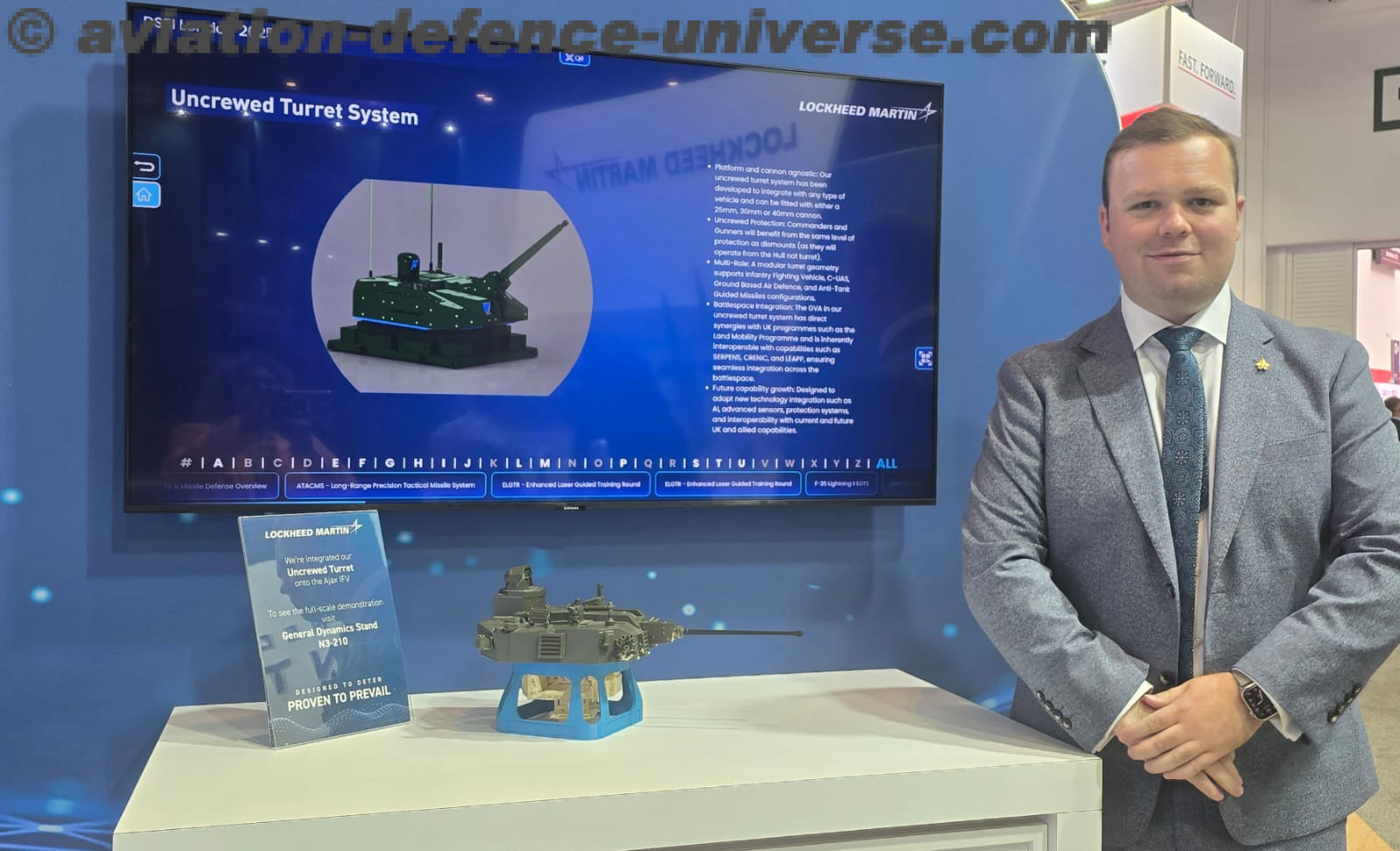
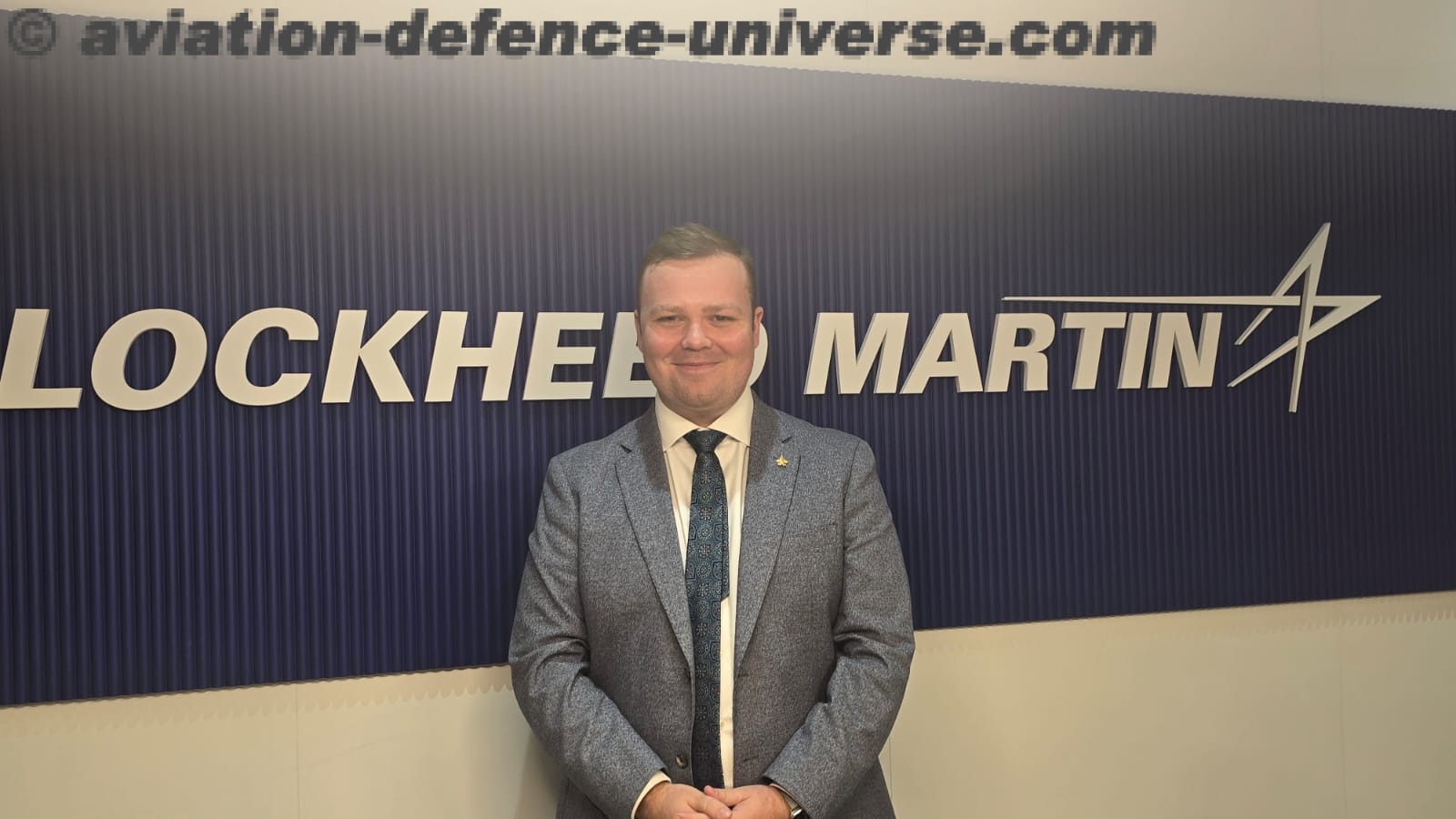
Excel Centre, London. 12 September 2025. At DSEI London 2025, Lockheed Martin UK unveiled a groundbreaking step in land systems innovation – an optionally manned, uncrewed turret designed for next-generation infantry fighting vehicles. ADU had the opportunity to sit down with Alex King, Business Development Lead for Complex Systems at Lockheed Martin UK, to discuss the significance of this development, its export potential, and how Lockheed Martin is shaping the future of land warfare.
 So for the common man – what is an uncrewed turret? An uncrewed turret is an advanced weapon system mounted on an armoured vehicle where the crew does not sit inside the turret itself. Instead, soldiers operate the turret remotely from within the safety of the vehicle’s hull. Traditional turrets usually house gunners, loaders, or commanders in a heavily armoured but still exposed position. In contrast, an uncrewed turret moves the crew into a more protected space inside the vehicle, reducing their vulnerability to enemy fire and battlefield threats. And we continue with ADU’s one-on-one with the expert – Alex King.
ADU. Alex, could you begin by telling us about what you are presenting at DSEI this year?
Alex King. I’m based at our Ampthill site in Bedfordshire. My portfolio covers vehicles and turret work. At DSEI 2025, we launched our brand-new prototype uncrewed turret, developed in partnership with General Dynamics. It builds on decades of pedigree from the Warrior and Ajax turret programmes, combining proven capability with digital innovation.
ADU. What makes this turret different from existing systems?
Alex King. Two aspects stand out. First, platform agnosticism – it can be integrated onto both new and existing vehicles, offering customers an affordable upgrade path without needing to procure new fleets. Second, modularity – the turret can be adapted with different calibres of cannons, anti-tank guided weapons, or even new sensors. This flexibility ensures that customers can tailor the system to their specific needs.
ADU. How do you see this system serving both UK and export markets?
Alex King. While the prototype is currently aligned with the Ajax programme, we’ve designed it for a global market. The UK pedigree and digital design make it attractive to NATO partners and international customers, including those in Asia, Europe, the Middle East, and beyond. We’re already exploring export opportunities, and localisation is a key element – enabling industrial partnerships, skills training, and co-development in customer nations.
 ADU. What facilities and capabilities back this innovation?
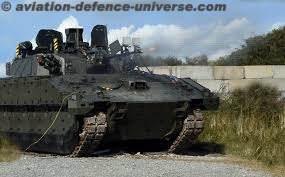
Alex King. Our Ampthill site is Lockheed Martin’s crown jewel in the UK – a facility with decades of turret expertise and deep investment in digital manufacturing. It’s where we’ve integrated lessons from Warrior and Ajax and transformed production processes. The site allows us not just to build but to innovate rapidly, making us uniquely placed in the UK to deliver this type of advanced turret capability.
ADU. And what about the long-term vision – where does Lockheed Martin see this technology heading?
Alex King. We believe the future of turrets is uncrewed, but we’ve made ours optionally manned to meet diverse customer needs. This is not just about technology; it’s about affordability, modularity, and survivability. By moving crews from the turret into the vehicle, we enhance protection while ensuring lethality and adaptability. Our vision is to deliver a turret that evolves with operational requirements – whether for retrofit, new platforms, or future combat vehicles.
 ADU. Can you give us a bit of background about Lockheed Martin’s work in turret design?
Alex King. Absolutely. Ampthill, our site in Bedfordshire, has a significant capability in turret design and has been delivering turrets for over 20 to 25 years. We’ve worked on both the Warrior Programme – the infantry fighting vehicle – as well as the Ajax vehicle, which was in partnership with General Dynamics. We designed and developed both of those turrets. That pedigree and experience form the foundation of what we’ve unveiled at DSEI 2025.
ADU. And what was the key motivation behind developing this new turret?
Alex King. The real passion behind this project stems from the future needs of the UK Army and our export customers. Our priority was to develop a capability built on a trusted and well-qualified design. The new turret is based on the Warrior platform – an optionally crewed design – leveraging the investment and technology already in place. At the same time, we’ve integrated lessons from our more digital turret on the Ajax vehicle. By combining the heritage of Warrior with the modernity of Ajax, we’ve developed a brand-new, optionally manned, uncrewed turret. This was the basis of the launch we showcased here at DSEI, again in partnership with General Dynamics, with whom we continue to have a very strong relationship.
ADU. Is General Dynamics your only partner for this turret programme?
Alex King. While General Dynamics remains a close and key partner, this turret has been deliberately designed with flexibility in mind. Although the prototype is currently aligned to the Ajax Infantry Fighting Vehicle programme, the turret itself is platform agnostic. That means it can be fitted onto any customer vehicle – new or existing – as a retrofit. Customers won’t necessarily need to invest in brand-new fleets. They could simply upgrade with this turret to gain a generational leap in capability.
 ADU. And what is the other key feature you mentioned?
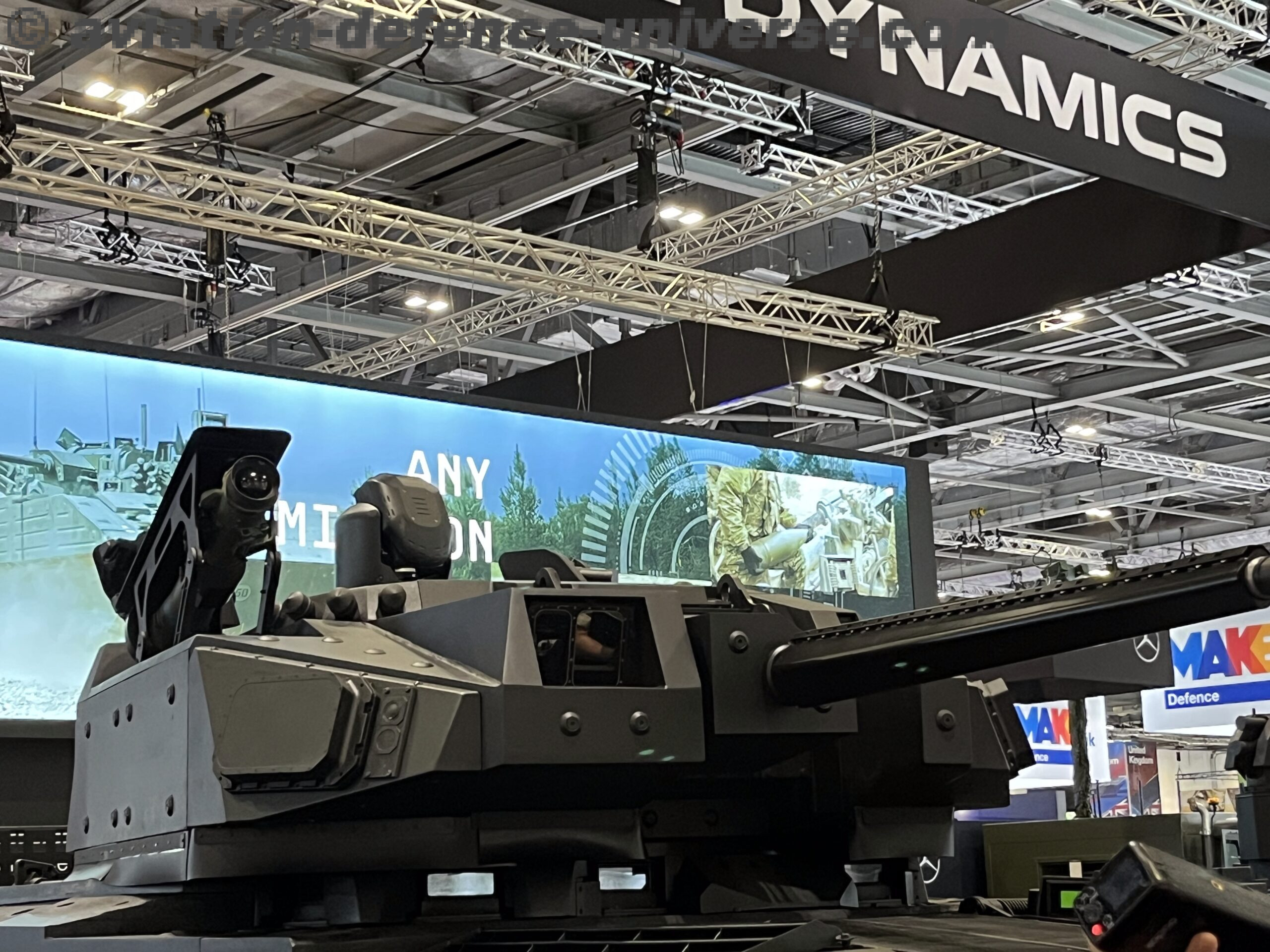
Alex King. The second is modularity. Traditionally, turrets are tied to one cannon calibre and possibly a single secondary weapon system. Our new turret is different – it has a modular design. For instance, the cannon can be swapped between 25mm, 30mm, or 40mm depending on customer requirements. For the UK, the design is currently centred on a 40mm system, but if a customer needs short-range air defence or airburst ammunition capability, those options can be integrated. The modular approach means the turret can be adapted as missions evolve, making it highly versatile and future-ready.
ADU. Alex, you mentioned earlier that the new turret isn’t just about modular cannon options. Could you explain more?
Alex King. Absolutely. What excites us most is that it isn’t only the cannon that can be swapped out. The anti-tank guided weapon system is also fully adaptable. For instance, the turret currently on display with General Dynamics has a Javelin fitted, but we can integrate any other weapon system as required by the customer. That could be a new anti-tank guided missile, or even an alternative sensor. This adaptability is at the core of the turret’s modularity, and it’s one of the two major elements – alongside platform agnosticity – that we’ve been so eager to present to our customers.
ADU. Who are the potential customers you are targeting for this turret?
Alex King. At the moment, there isn’t an existing UK government contract for the IFV programme, since we’re still in the early design phase. What we’ve demonstrated here is essentially a prototype. That said, we see very strong demand from both domestic and export markets. While I can’t disclose specific names at this stage, it’s clear that as the global security environment evolves, customers are prioritising lethality and survivability. This turret delivers both – enabling upgrades to new calibres of cannon, new weapon systems, and importantly, moving crew members from inside the turret to safer positions within the vehicle. That added protection makes this system a compelling proposition for both the UK and international clients.
 ADU. Where are these turrets being manufactured, and what facilities are supporting this development?
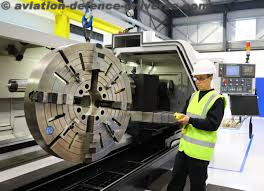
Alex King. Lockheed Martin has over 20 years of turret design and manufacturing capability at our Ampthill site in Bedfordshire, which actually dates back to the 1950s. It’s a facility with an immense pedigree and a highly skilled workforce. Ampthill remains our primary UK manufacturing hub for turrets, and we’re also open to working with customers on localisation as needed. What’s unique is that our advanced manufacturing facility there is Lockheed Martin’s only wholly owned site in the UK. That makes us probably the only company in the country with the depth of turret expertise needed for this kind of work.
ADU. Could you elaborate on the kind of investments Lockheed Martin has made into Ampthill?
Alex King. Certainly. We’ve invested heavily into transforming Ampthill into what we call a digital factory. This is part of Lockheed Martin’s wider global initiative, “One LMX,” which represents the largest internal investment we’ve ever made. It’s about digital transformation across technology, people, and processes. Thanks to this, we’ve significantly reduced the time it takes to manufacture turrets – by about 75–80% compared to the past. This digital transformation is helping us deliver not only faster but also more efficiently and consistently, ensuring customers get a modern, future-proof capability.
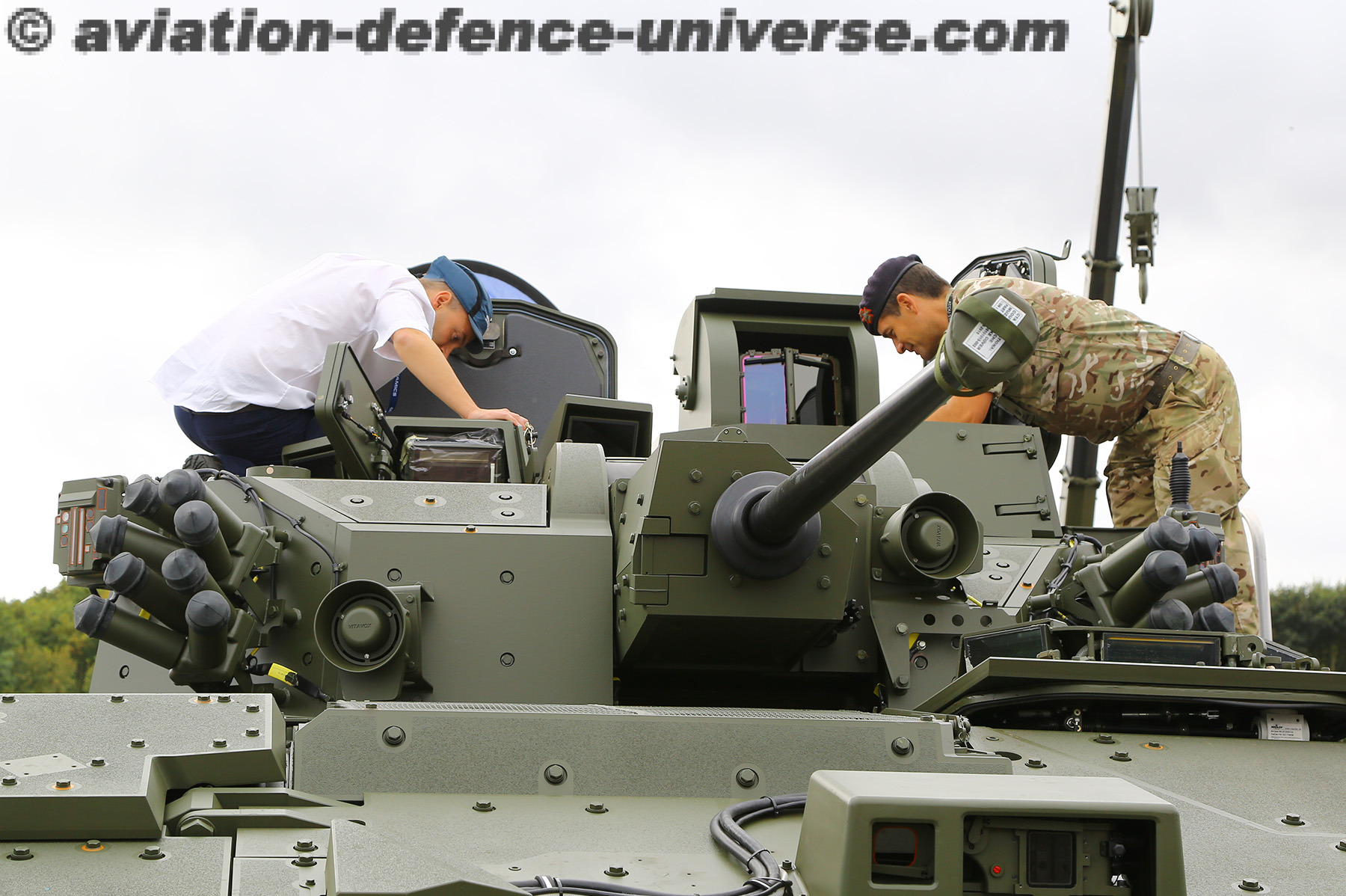
Lockheed Martin UK has come a long way since it successfully delivered the first production turrets for the Army’s new AJAX vehicles to prime contractor General Dynamics Land Systems, in 2018. Lockheed Martin UK’s new uncrewed turret is a step forward in modular land systems, designed with adaptability, survivability, and export readiness at its core. With a strong foundation of UK expertise and global collaboration, the system reflects Lockheed Martin’s broader multi-domain strategy – innovating across air, sea, and land. As Alex King highlighted, this turret is not just a UK innovation but a global offering, capable of transforming how armies approach lethality and survivability in modern conflict.
The uncrewed turret represents a significant leap in armoured vehicle technology, combining decades of proven expertise with cutting-edge innovation. Designed as an optionally manned system, the turret moves crew members from inside the turret to protected positions within the vehicle, greatly enhancing survivability on the battlefield. Its modular architecture allows integration of different calibres of cannon—such as 25mm, 30mm, or 40mm—as well as interchangeable anti-tank guided weapons or advanced sensors, making it highly adaptable to diverse mission requirements. Platform-agnostic by design, the turret can be mounted on both new and legacy vehicles, enabling armies to upgrade capability without investing in entirely new platforms. By merging lethality, flexibility, and protection, the uncrewed turret is poised to redefine the future of land combat systems.
Lockheed Martin UK’s Ampthill facility is a 64-acre, wholly owned site and the only one of its kind in the UK dedicated to advanced turret design, vehicle systems, and mission integration. With around 550 employees, it delivers proven, battle-winning solutions for the British Forces, including air-land integration, ground-based air defence, and complex mission systems. Recognised as Lockheed Martin’s greenest UK site with ISO50001 energy certification, Ampthill combines cutting-edge research, digital manufacturing, and a strong environmental and safety ethos to provide affordable, next-generation solutions in partnership with British industry and academia.
As told to Sangeeta Saxena