












- From Gaganyaan to Global Markets : Akashlabdhi’s Soft Structures, Hard Impact
- Inflatable, Affordable, Sovereign : Akashlabdhi’s Bet on the Future of Space
- India’s Space Start-ups Go Orbital : Inside Akashlabdhi’s Vision at Dubai Airshow
By Sangeeta Saxena
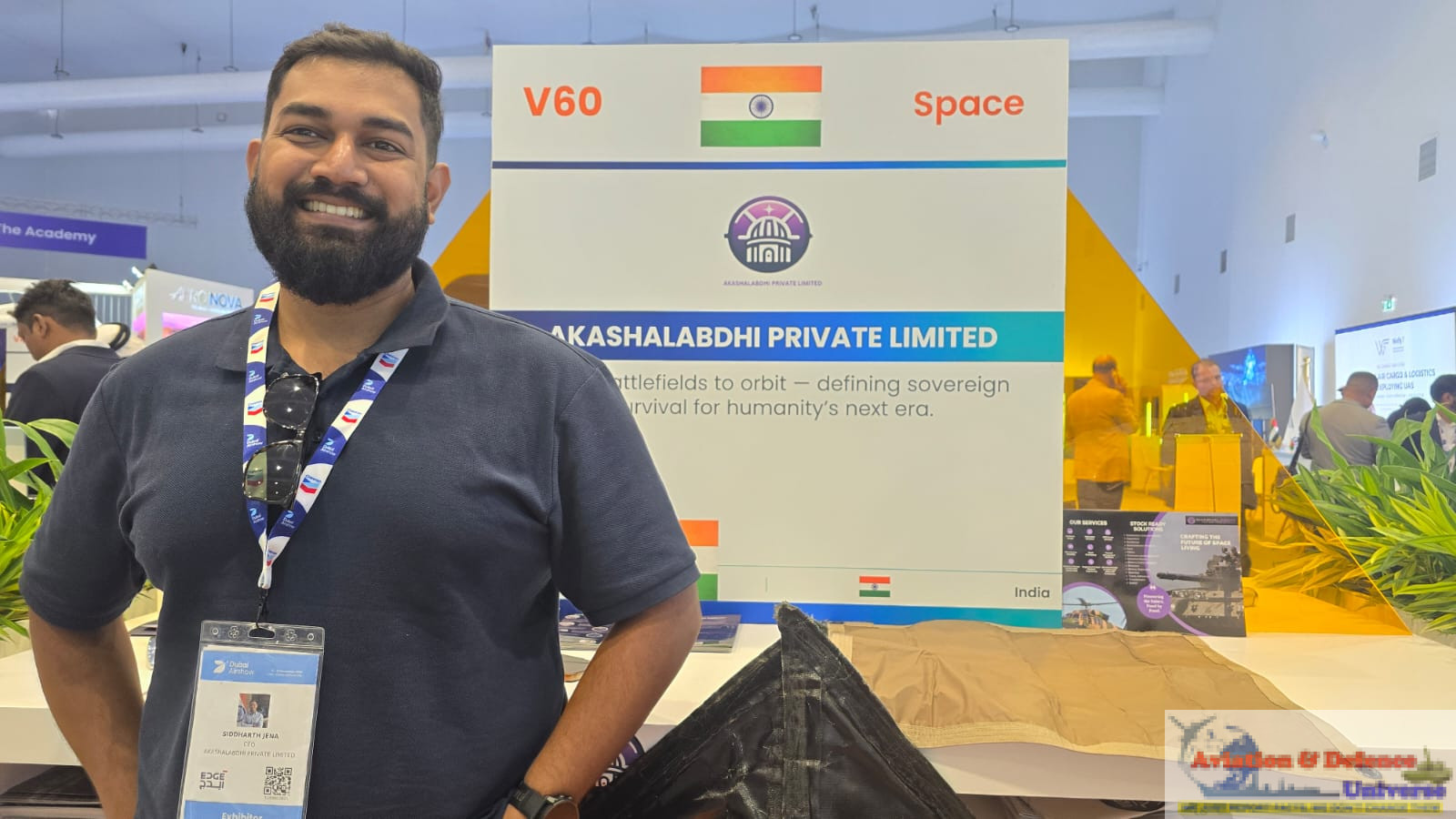
Dubai. 01 December 2025. At the Dubai Airshow’s Inspiration Zone, India’s defence and space start-ups are quietly redefining how the world thinks about orbital infrastructure. One such innovator is Akashlabdhi Private Limited, a Bengaluru-based company working on inflatable, soft-material space structures that dramatically reduce launch weight while maximising operational volume in orbit and on planetary surfaces.
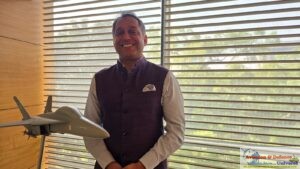
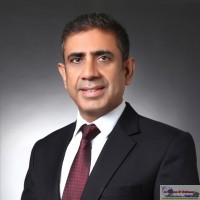
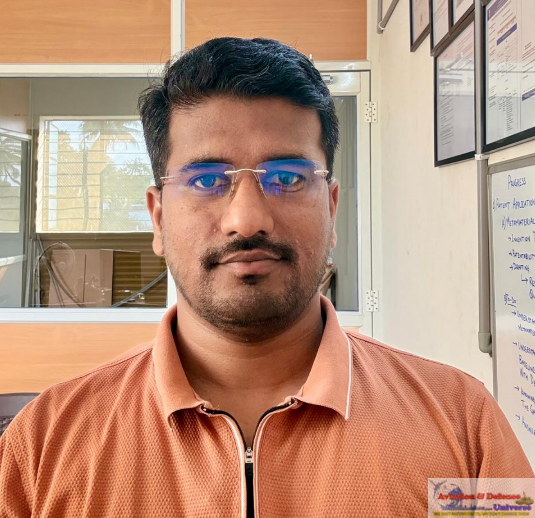
Dr. Siddharth Jena, Founder and CEO of Akashlabdhi, is an ex-Indian Air Force officer, an IIT Roorkee postgraduate, and a PhD in Wind Engineering. With deep expertise in wind tunnel testing, advanced materials, inflatable structures, and operations management, he has led international projects, won the Dr C V Raman Young Researcher Award, and represented India at the TiE Global Pitch Challenge 2023 in Silicon Valley. At Dubai Airshow, he spoke to ADU about Akashlabdhi’s vision, traction, and India’s expanding role in the space economy.
ADU. We are meeting here at the Dubai Airshow and what exactly are you showcasing?
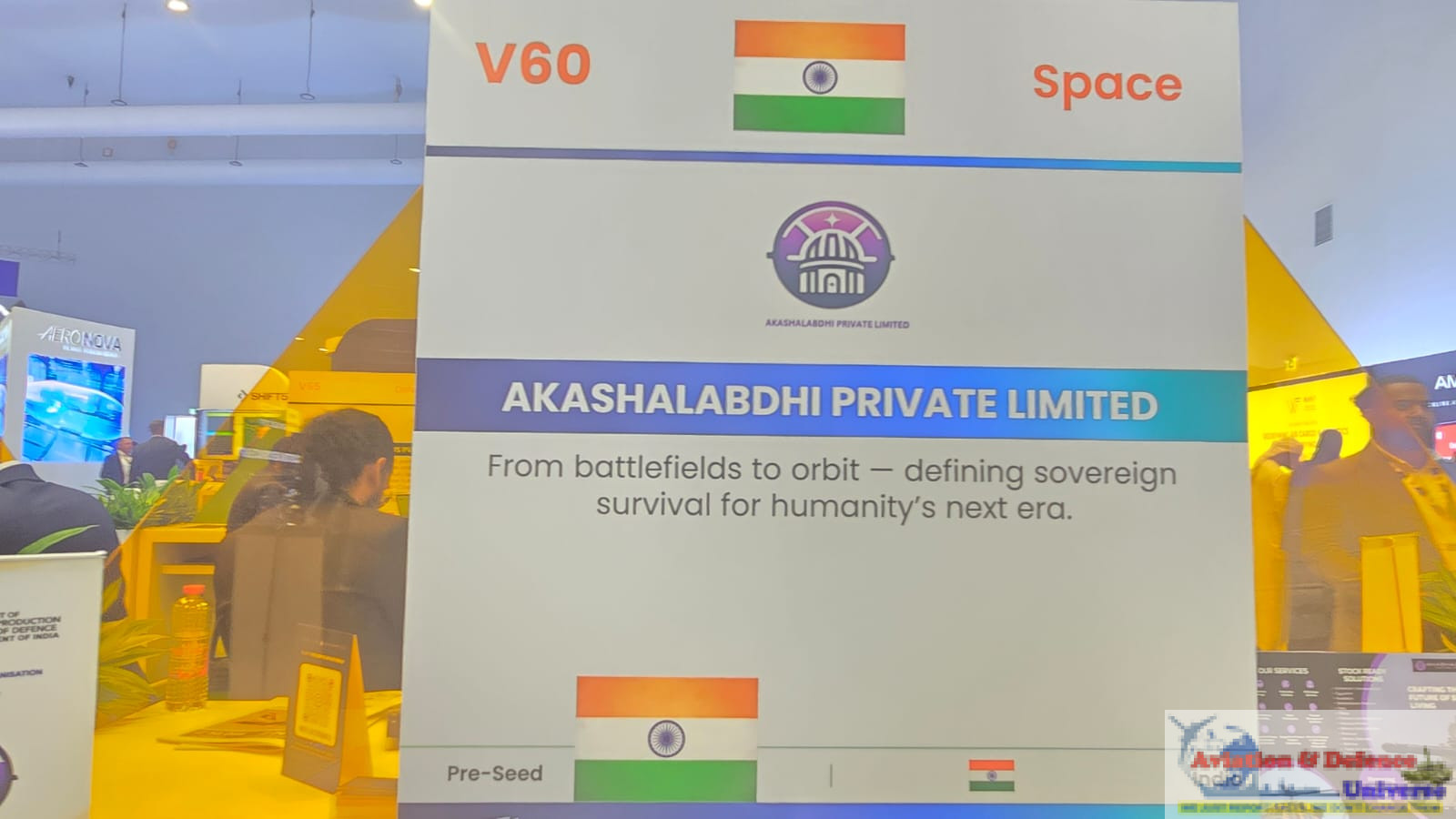 Dr. Siddharth Jena. Thank you. Our company is Akashlabdhi Private Limited. In Sanskrit, Labdhi means laboratory, so Akashlabdhi essentially translates to Laboratory in Space. That is precisely what we are building. We are developing large-scale infrastructure in space, both in orbit and on planetary surfaces, using soft-material, inflatable structures. The idea is simple but powerful. With the lowest possible launch mass from Earth, we can achieve the maximum usable volume once deployed in space.
ADU. So these are inflatable space structures. Where are they being used currently?
Dr. Siddharth Jena. Yes. Our inflatable modules are currently being taken up by the Indian Air Force for the Gaganyaan mission, India’s human spaceflight programme under ISRO. That is one of the main reasons we are here at Dubai Airshow—to showcase this capability to international stakeholders as well.
ADU. Why do you believe inflatable structures are so critical for the future of space infrastructure?
Dr. Siddharth Jena. Today, only a handful of countries—India, the US, Russia, China—can afford traditional space stations. Many nations simply cannot invest that kind of capital. Inflatable structures change that equation. Compared to hard, metallic modules, they offer far more usable space, better habitability, and significantly lower costs. This means countries that never imagined having a sovereign presence in space can now realistically aspire to one.
ADU. Beyond habitation, what kind of work can these structures enable in orbit?
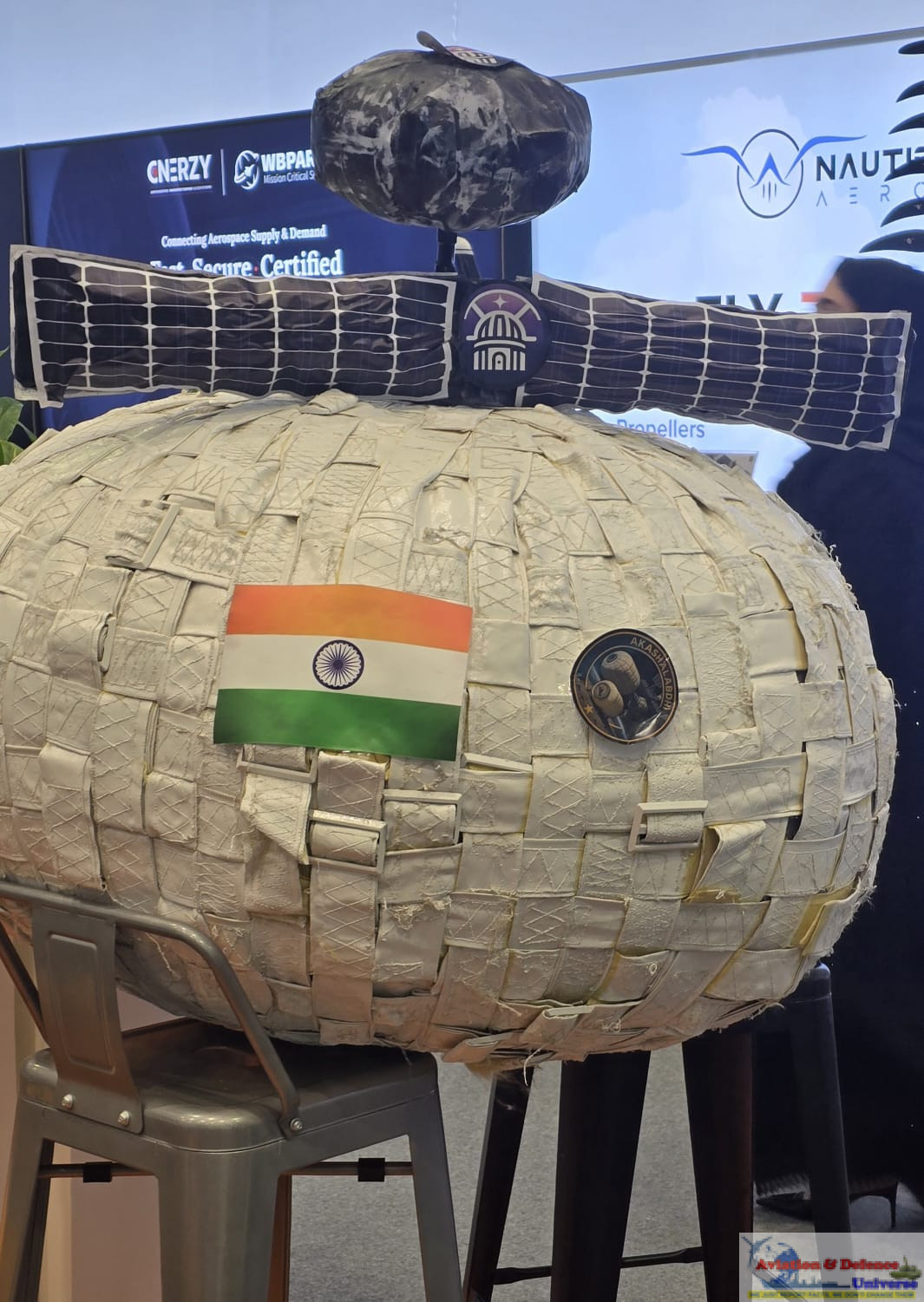 Dr. Siddharth Jena. A great deal. Space offers a unique environment that cannot be replicated on Earth. For example, drug development for cancer and diabetes, advanced biomaterials, and high-grade alloys like shape-memory alloys or thin-film aerospace materials are far more feasible in microgravity. The challenge so far has not been imagination—it has been the lack of orbital infrastructure to manufacture or experiment at scale. Our inflatable modules are designed to bridge that gap and unlock the true potential of the space economy.
ADU. How has the response been here at the Dubai Airshow?
Dr. Siddharth Jena. The response has been very encouraging. We have had strong interest from US-based investors, including those who have invested in companies like Axiom and Vast. From a business standpoint, we have seen traction on multiple fronts. We are providing one of our pilots to Vast, a US company working on its own space station. We also had a visit from the Prince of Saudi Arabia, who asked his team to explore our modules for space tourism in the Middle East.
Additionally, we are seeing unexpected but exciting use cases. Aeronova is interested in using our structures for aerial logistics, something even we had not initially envisioned. Meanwhile, BGT Space, a China-based company, is exploring our inflatable solar arrays for large satellite platforms.
ADU. The Indian government has created a dedicated start-up zone here. How important has that support been?
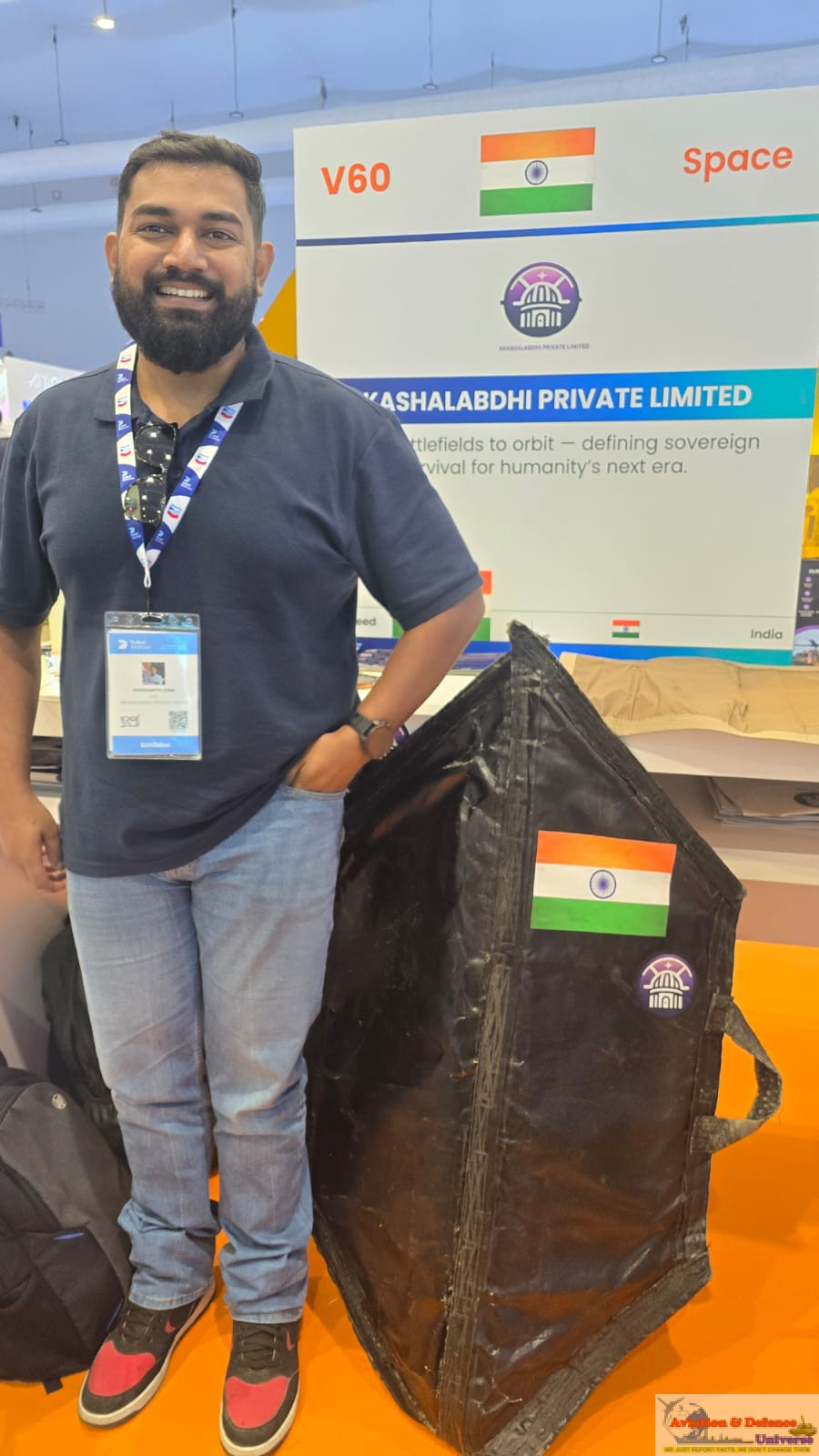 Dr. Siddharth Jena. It has been extremely important. Earlier, opportunities like this were very rare for start-ups. The government not only sponsored our stall—which is expensive at an airshow like this—but also partially supported travel and accommodation. That kind of backing makes a huge difference. It signals confidence in Indian innovation and allows start-ups like ours to focus on technology and partnerships rather than logistics.
ADU. That’s wonderful to hear. Any final thoughts?
Dr. Siddharth Jena. India’s space ecosystem is at a turning point. With policy support, private innovation, and global engagement coming together, we now have the opportunity to build sovereign, scalable infrastructure in space—not just for India, but for the world. We are excited to be part of that journey.
Akashlabdhi’s inflatable space structures represent a quiet but transformative shift in how humanity may live, work, and manufacture beyond Earth. By dramatically lowering costs while expanding capability, Dr. Siddharth Jena and his team are positioning India not just as a space-launch nation, but as a provider of next-generation orbital infrastructure. From Gaganyaan to global partnerships, Akashlabdhi’s vision underscores how Indian start-ups are becoming essential players in the evolving space economy.
As told to Sangeeta Saxena / Interview was taken at Dubai Airshow 2025