











- Herne Makes Waves at DSEI 2025. Nick Martin Speaks to ADU
- Herne Redefines Naval Autonomy
- Herne’s Global Potential and Opportunities for India
By Sangeeta Saxena
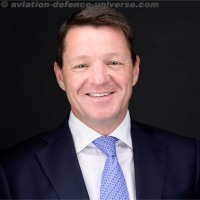
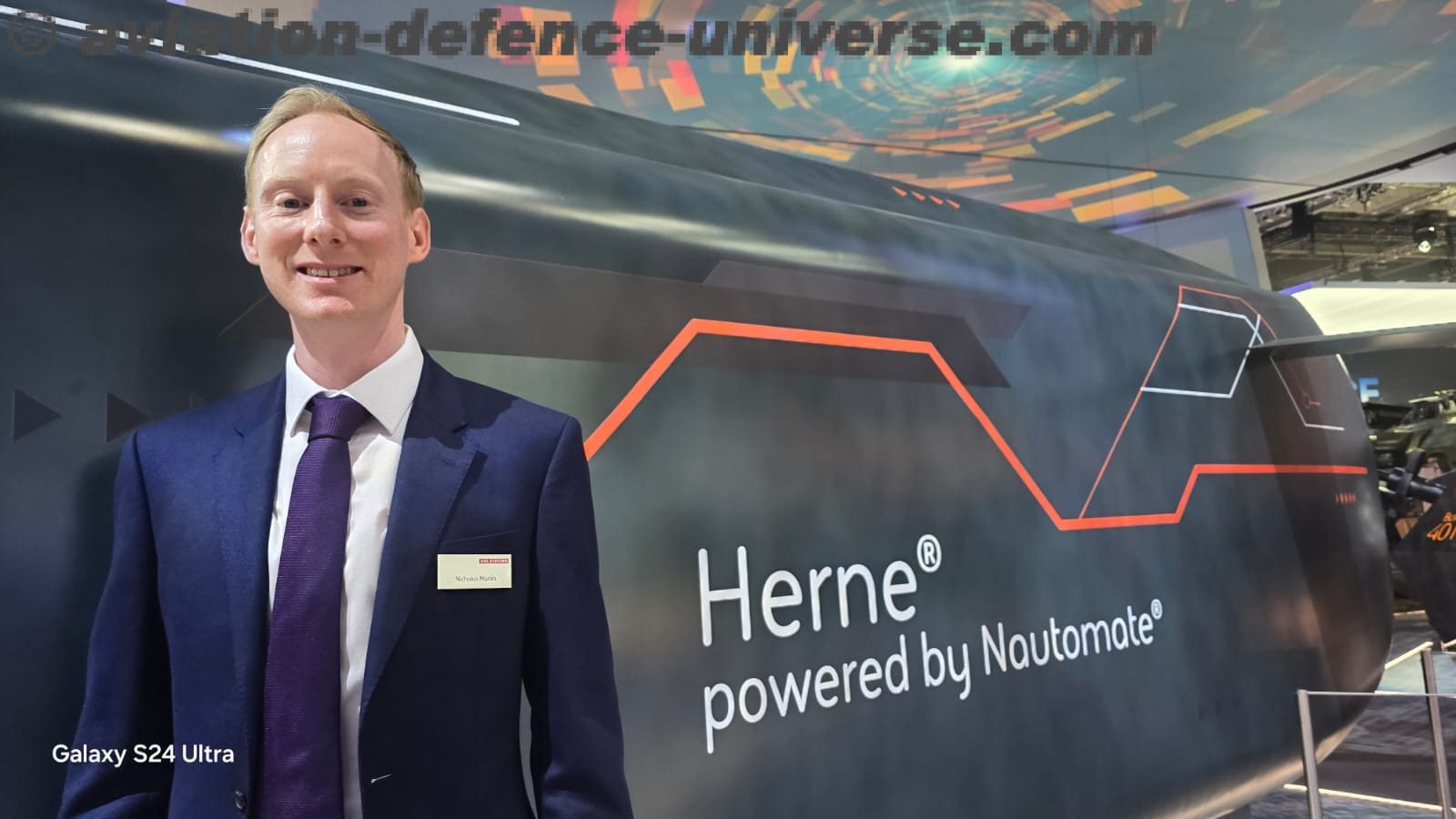
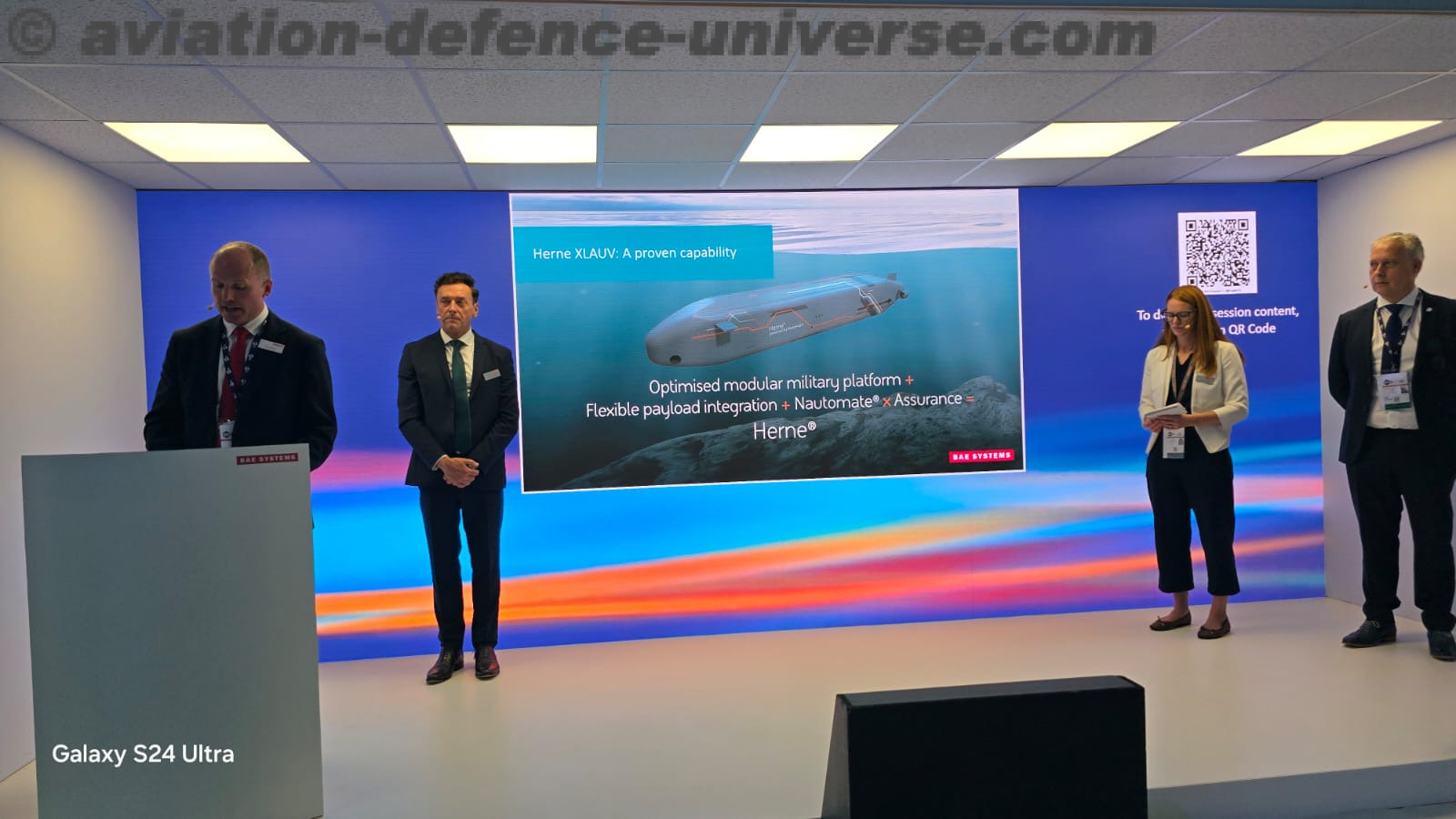
Excel Centre, London. 09 September 2025. At DSEI 2025 in London, BAE Systems attracted significant attention with the unveiling of Herne, its Extra-Large Autonomous Underwater Vehicle (XLAUV). Designed for long-range missions and multiple operational roles, Herne is being positioned as a versatile capability for navies worldwide. Aviation & Defence Universe (ADU) spoke with Nick Martin, Project Manager for Herne at BAE Systems, about the development, capabilities, global interest, and potential collaboration opportunities, including with India.
ADU. Herne has been making news on the opening day of DSEI. Could you tell us what this project is all about?
Nick Martin. Certainly. Last year we put a prototype XLAUV—what we call Herne—into the water. Since then, we’ve been in the design phase, developing the product further. By this time next year, we expect to have the finalised vehicle in the water and ready for sale to customers.
ADU. Could you explain more about Herne’s design and its usefulness for navies worldwide?
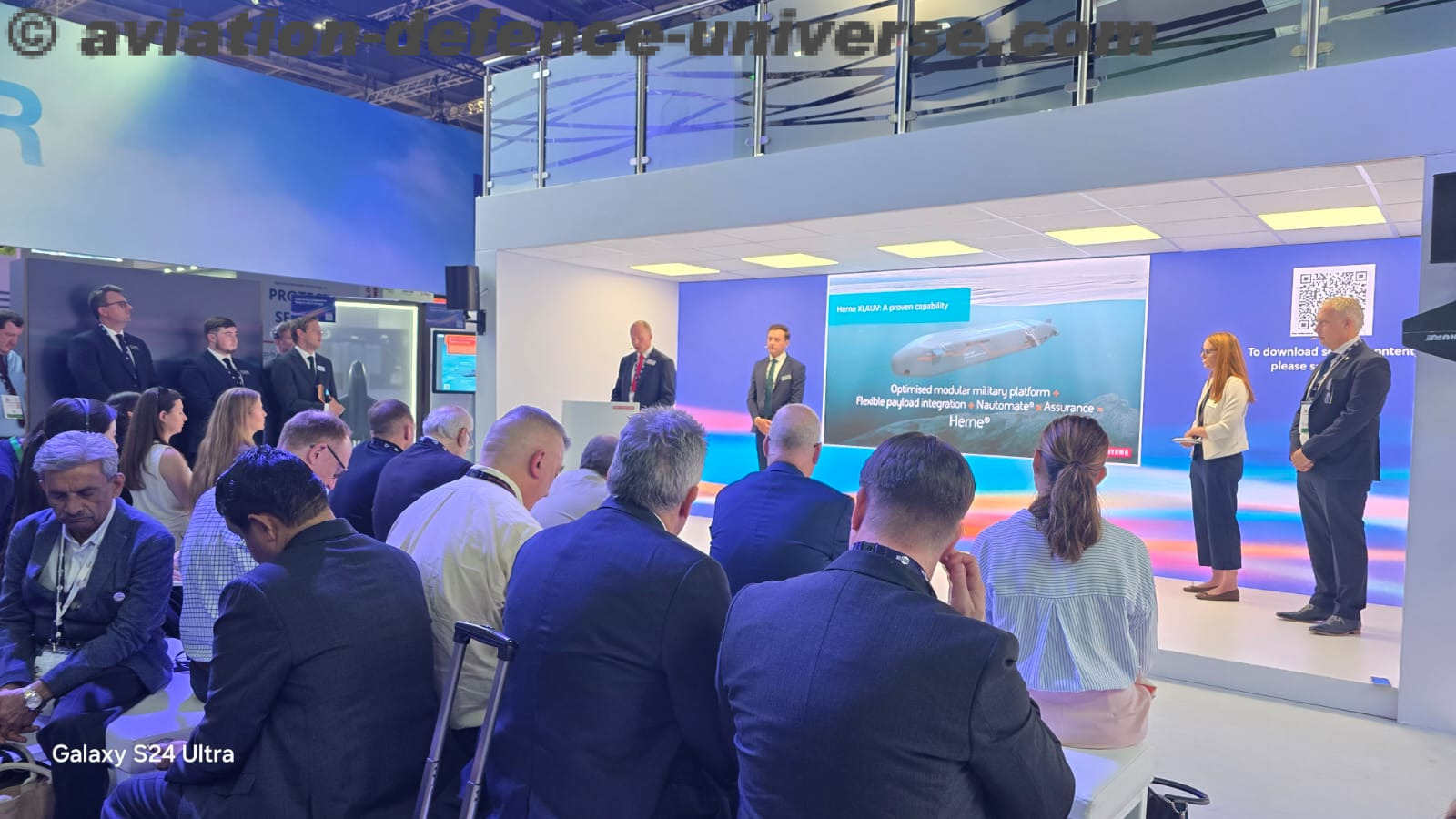
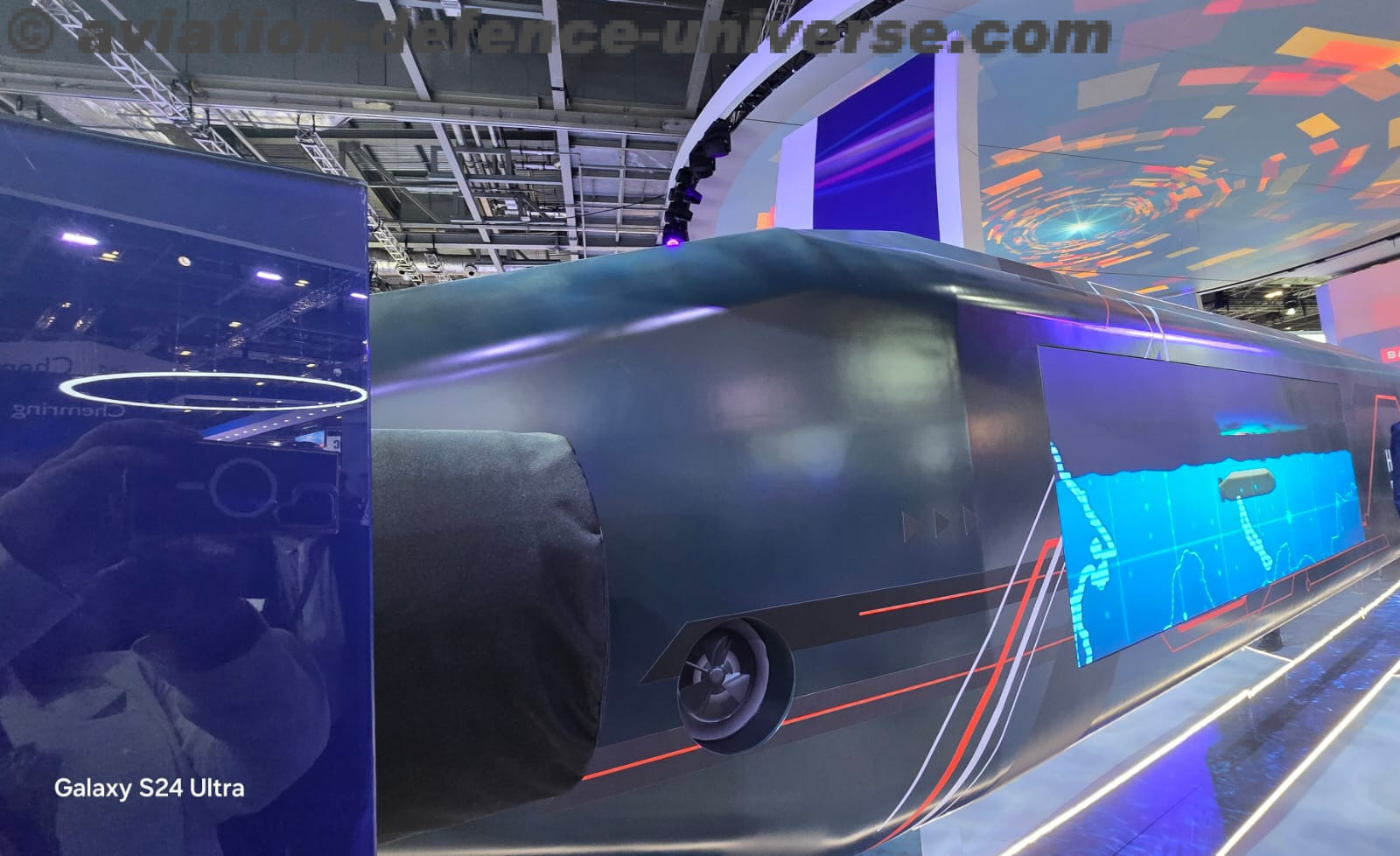
Nick Martin. Herne is about 12 metres long and is designed to fit into a 40-foot ISO container, making it easy to deploy anywhere in the world. The vehicle is split into two main sections: one houses the energy system—either lithium-ion batteries or a hydrogen fuel cell—providing a range between 2,000 and 5,000 kilometres. The other section is dedicated to payloads. That’s where it gets interesting. Herne can deploy torpedoes, conduct ISR missions with its mast, carry out electro-optical warfare, and more. Its flexibility makes it valuable for multiple naval missions.
BAE Systems and Canadian company Cellula Robotics announced a major step forward in their partnership with the signing of a 10-year exclusive agreement to continue joint development of Herne, an extra-large autonomous submarine designed for military use. The agreement builds on successful trials conducted in 2024, during which the craft completed a pre-programmed intelligence, surveillance, and reconnaissance mission powered by Nautomate, BAE Systems’ platform-agnostic autonomous control system. The two companies confirmed that they aim to deliver a market-ready craft by the end of 2026, positioning Herne as one of the most advanced and cost-effective underwater systems available to defence customers worldwide. Continuing with our interview.
ADU. What stage of development is Herne at now?
Nick Martin. After putting the prototype in the water, we conducted extensive sea trials. We learned what worked well and where we needed improvements. The vehicle’s structure has evolved into a bolted framework, making it more configurable, and we’ve worked with our submarines colleagues to create a more hydrodynamically efficient design. Internally, much remains the same as the prototype but upgraded, allowing us to move to market quickly.
 ADU. Have you started engaging with customers internationally?
Nick Martin. Yes, we’ve seen huge interest from customers around the world. We’re already in discussions with several nations, which is very encouraging for a product at this stage of development.
ADU. Is India a market you are considering for Herne?
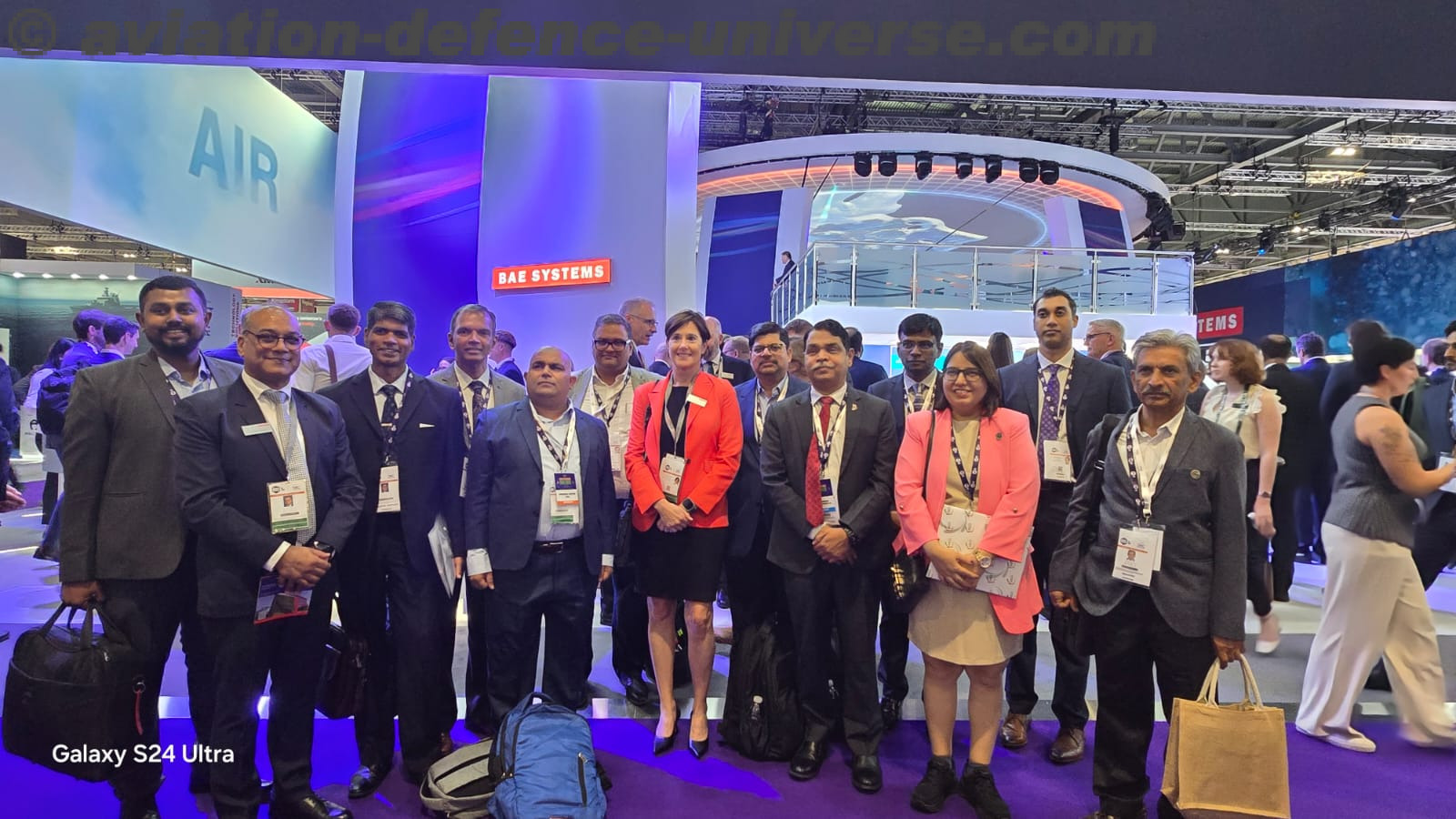
Nick Martin. Absolutely. India is a large and growing defence market, and it’s also a close partner for the UK. Herne is modular and adaptable, so we could easily explore collaboration with Indian industry—whether that’s in manufacturing sub-components or adapting the vehicle for local requirements. While no contracts are in place yet, it’s definitely an opportunity we’d like to pursue.
Herne has been configured to provide armed forces with a versatile and persistent underwater capability. It can support anti-submarine warfare, undertake covert surveillance missions, and safeguard critical underwater infrastructure across large stretches of seabed. Unlike traditional submarines, Herne requires no resupply or life support systems, allowing it to operate independently or in tandem with crewed platforms at far lower cost. With a modular design powered by advanced hydrogen-based energy solutions from Cellula, the system offers significant endurance, efficiency, and flexibility, ensuring it can integrate seamlessly with other naval assets while keeping personnel out of harm’s way. We continue speaking with Nick Martin.
ADU. You also mentioned Nautomate autonomy software. Could you expand on that?
Nick Martin. Nautomate is our autonomy software suite. It started with surface boats, which we’ve successfully made autonomous. We’ve recently integrated new payloads, such as a remote weapon system with a 50-calibre machine gun on a high-performance military boat. So, Herne isn’t just about underwater capability—our autonomy software extends across platforms and domains.
ADU. What about upcoming trials for Herne?
Nick Martin. Trials are ongoing in general, but for Herne specifically, next year will be a big milestone. We’ll start testing in Vancouver and then expand trials globally, depending on requirements. These will help us refine the vehicle further before launch.
 ADU. Finally, how do you feel about representing Herne and BAE at DSEI 2025?
Nick Martin. Personally, I’m proud to represent the fantastic team behind Herne. We’re based in Portsmouth, working closely with our partners at Cellula Robotics in Vancouver. From whiteboard design to water in just 11 months—that’s how fast the first prototype came together. We’re working at a similar pace now, and it’s exciting to showcase that progress here at DSEI.
According to BAE Systems and Cellula Robotics, the collaboration has already delivered results at an exceptional pace—moving from “whiteboard to water” in just 11 months and completing trials in both the UK and Canada. These trials have informed several design improvements, with the companies continuing to refine the submarine’s structure and capabilities. Leaders from both firms hailed the agreement as a demonstration of shared vision: BAE Systems called Herne a “game-changer in the underwater battlespace,” while Cellula described it as a “cost-effective force multiplier” that fills a critical gap in naval operations. Together, they emphasised that the partnership not only represents cutting-edge engineering but also sets the stage for a new era of autonomous underwater warfare.
Herne, BAE Systems’ Extra-Large Autonomous Underwater Vehicle, is one of the key highlights at DSEI 2025, reflecting the growing importance of autonomous maritime platforms. As Nick Martin explained, its modularity, long range, and payload flexibility make it adaptable for multiple naval missions—from ISR to strike capabilities, global interest is already high and potential collaborations on the horizon, including with India, Herne exemplifies the future of underwater autonomy.
As told to Sangeeta Saxena