





















- From Detection to Mitigation: Mary Lou Smulders on Dedrone’s Counter-Drone Vision
- Dedrone’s Software-Led Agility and Open Architecture Approach
By Sangeeta Saxena
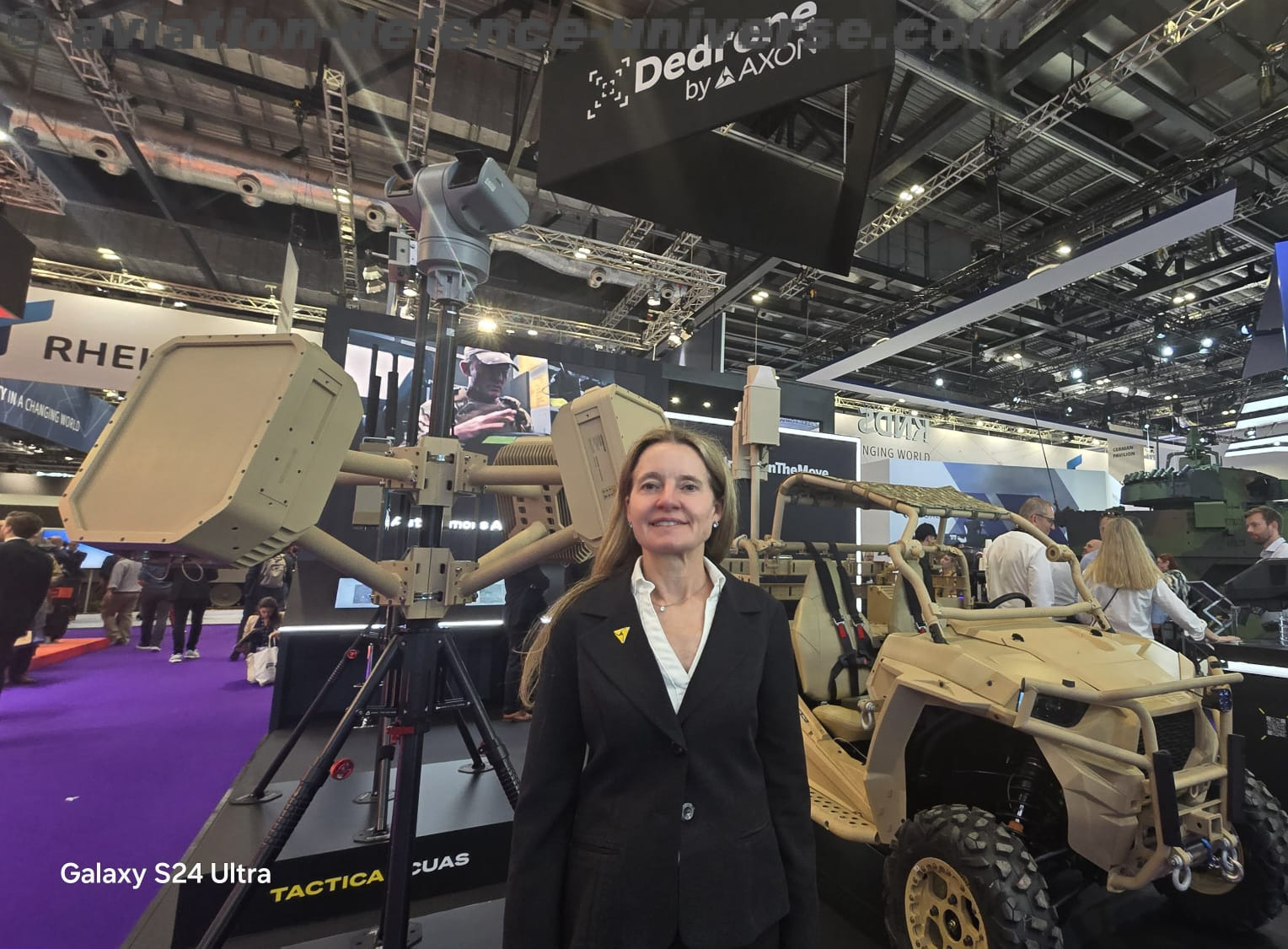
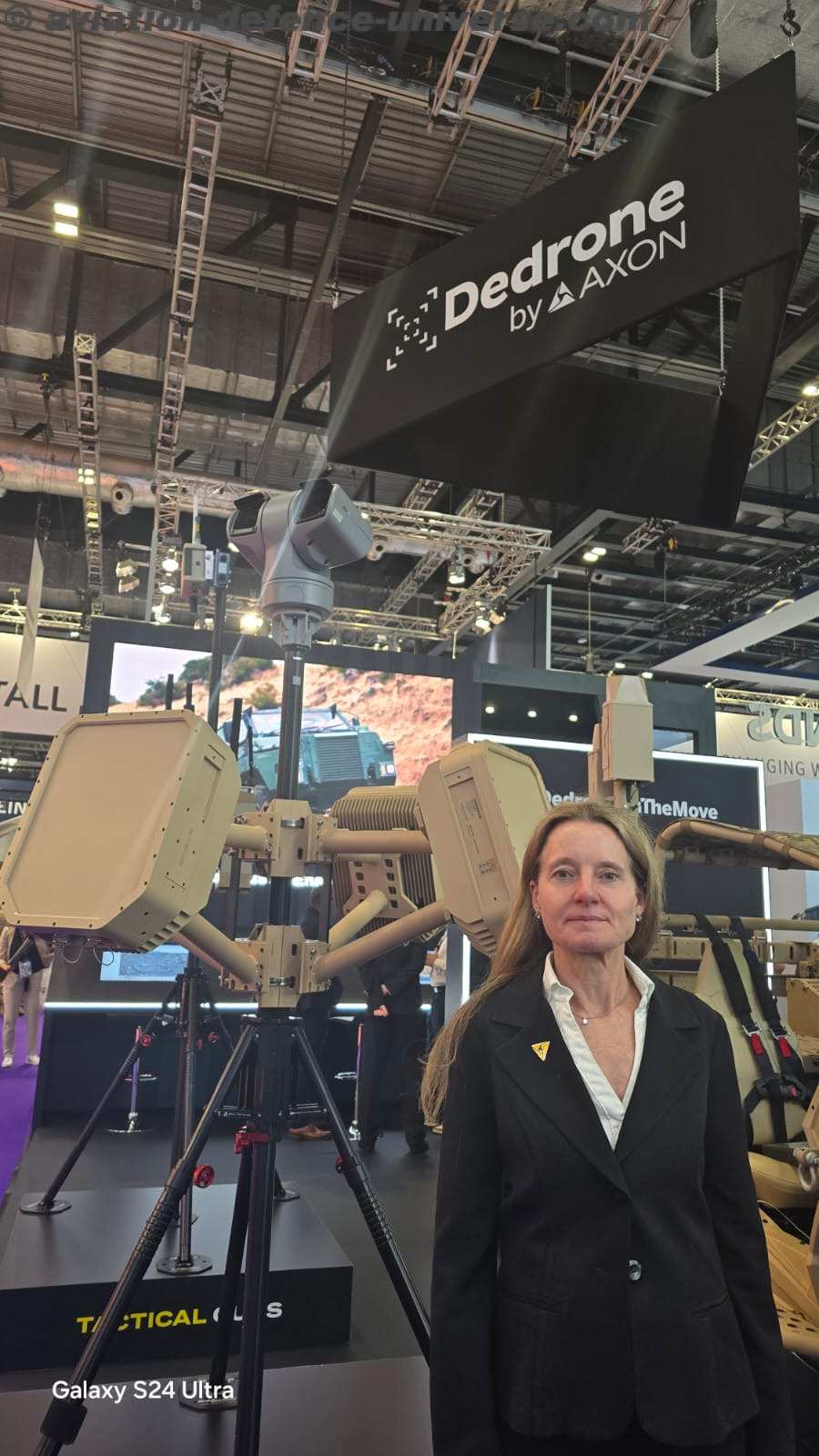
Excel Centre, London. 09 September 2025. At DSEI 2025 in London, ADU caught up with Mary Lou Smulders, Chief Marketing Officer of Dedrone by Axon, to discuss the company’s pioneering counter-drone technologies. With drones rapidly transforming both commercial and military landscapes, Dedrone has emerged as a trusted leader in airspace security, protecting critical infrastructure and defence forces across 33 countries, including India. In this candid interaction, Smulders outlines Dedrone’s layered approach to drone defence, its open architecture philosophy, and the importance of software-led agility in an era of fast-changing aerial threats.
ADU. At the highest level, how would you describe Dedrone by Axon’s core mission?
Mary Lou Smulders: We are an airspace security company. In simple terms, we stop the bad drones and enable the good drones to fly.
 ADU. How exactly does your counter-drone solution work?
Mary Lou Smulders: It’s a four-step process: detect, track, identify, and mitigate. First, we detect drones before the human eye or ear can sense them. Then we track their location—and often the pilot’s. Third, we identify whether the drone is friend or foe, and finally, if it’s hostile, we mitigate it using methods ranging from electronic warfare to kinetic solutions.
ADU. Everyone asks, “Can I just shoot the drone out of the sky?” How do you actually deal with a hostile drone?
Mary Lou Smulders: It’s not as simple as that. There are four key steps when you think about a counter-drone solution. The first is detect. You have to know a drone is out there before the human eye or ear can sense it so you have time to react. Detection through a sensor network driven by AI fusion creates a clear picture of the sky.
ADU. Once you’ve detected something, what comes next?
Mary Lou Smulders: Step two is track — which is really about locating the drone. Often we can also tell you where the pilot is, if there’s a pilot involved.
ADU. And identification? How does that work?
Mary Lou Smulders: Step three is identify, and that runs on two vectors. First, friend or foe — is this one of our authorised drones or is it unauthorised? Second, what kind of drone is it? That identification is crucial because the type of drone determines the best mitigation method.
 ADU. So mitigation is the final step. What options exist there?
Mary Lou Smulders: Yes — mitigate, or stop the drone. There are various approaches. In public-safety cases policing might simply use the pilot coordinates we provide and ask the operator to stop. Other options include electronic-warfare techniques to sever the link between pilot and drone, up to kinetic measures that physically disable the drone. The identification stage tells you which mitigation is appropriate.
ADU. You’ve mentioned open architecture. Why is that significant?
Mary Lou Smulders: Many competitors push closed systems, but we believe in open architecture. Our solutions can integrate a range of sensors—radar, RF, EO/IR cameras, acoustics—and adapt mitigation measures to the specific threat profile. Whether it’s smuggling in prisons or lethal drones on the battlefield, flexibility is essential
ADU. How important is software in your approach?
Mary Lou Smulders: Software is at the core. Our C2 (command and control) system provides a consistent backbone across solutions. It enables agility—critical because threats evolve rapidly, as seen in Ukraine, where adversaries moved from off-the-shelf drones to spoofing and custom builds. A software-led approach ensures fast-paced adaptation.
ADU. How widespread is Dedrone’s deployment today?
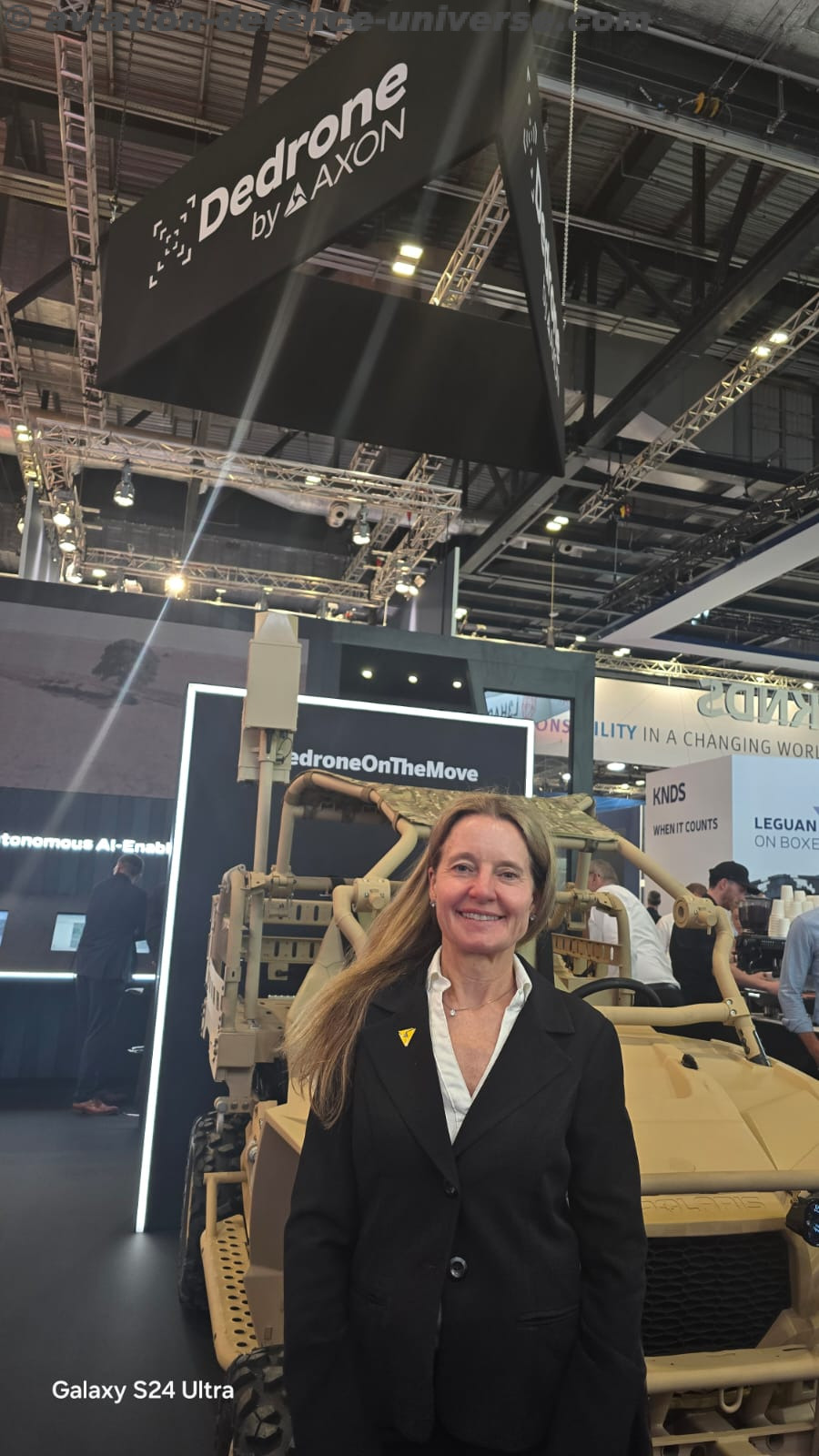 Mary Lou Smulders: We are the most trusted counter-drone company in the world, operating in 33 countries. We protect nearly 1,000 sites globally, across public safety and defence, including six of the seven G7 nations. India is very much part of our operational footprint
ADU. Can Dedrone solutions support India’s armed forces and paramilitary?
Mary Lou Smulders: Absolutely. Our systems are relevant for all three services—Army, Navy, Air Force—as well as paramilitary forces like the BSF. Borders are critical, but so is protecting key infrastructure and cities. With our networking capability, we can secure even mountainous terrain by linking nodes together.
ADU. What about mobility—can these systems be deployed on vehicles or ships?
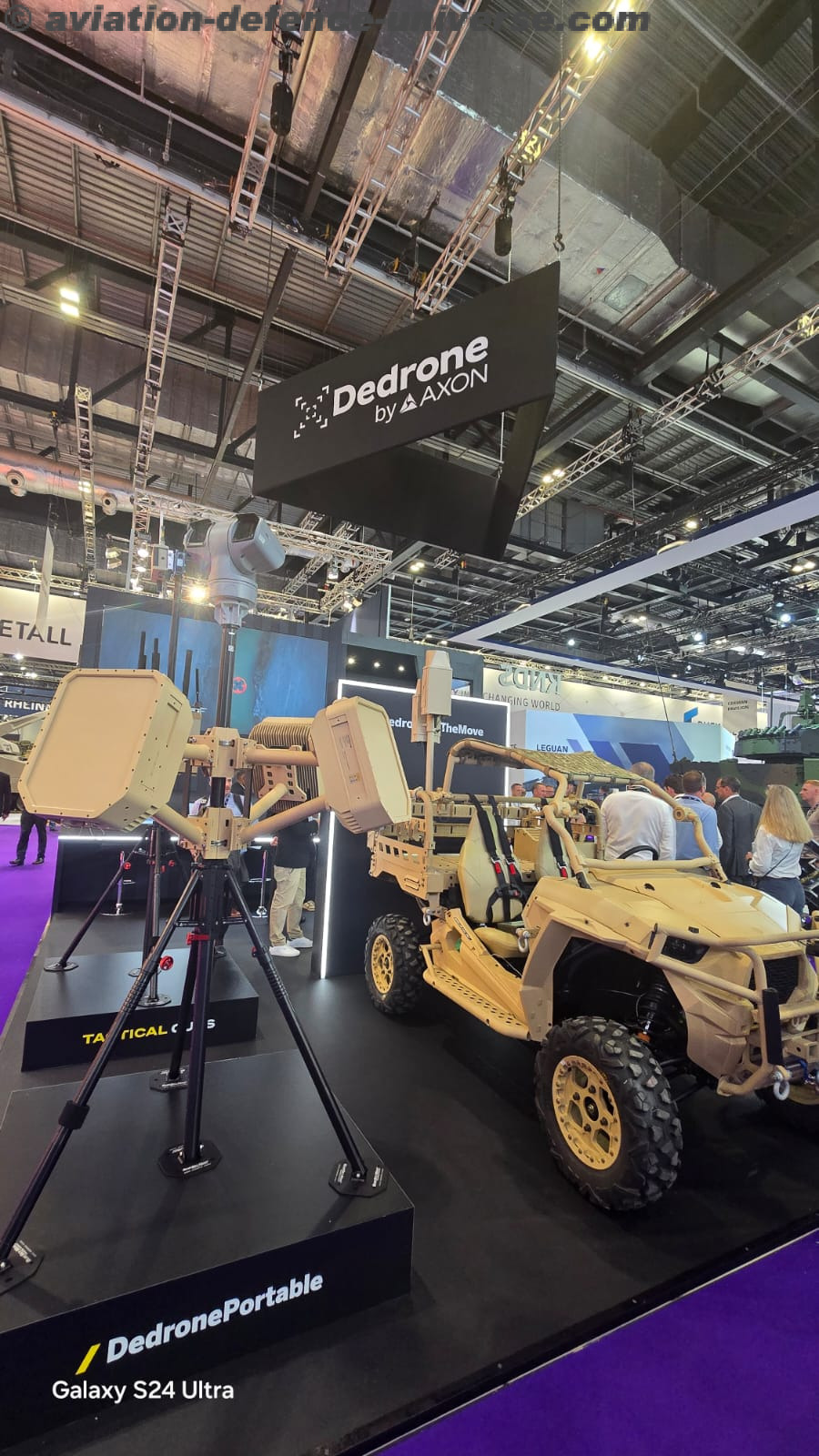
Mary Lou Smulders: Yes. We distinguish between “on the halt” systems, where the vehicle stops to scan, and “on the move” solutions, which continuously track while moving. We’re advancing both. In fact, you’ll see our systems mounted on Polaris and Bushmaster vehicles here at DSEI. Our vision is that every vehicle in a conflict zone should have one of these affordable, compact systems.
ADU. Are you providing protection here at DSEI itself?
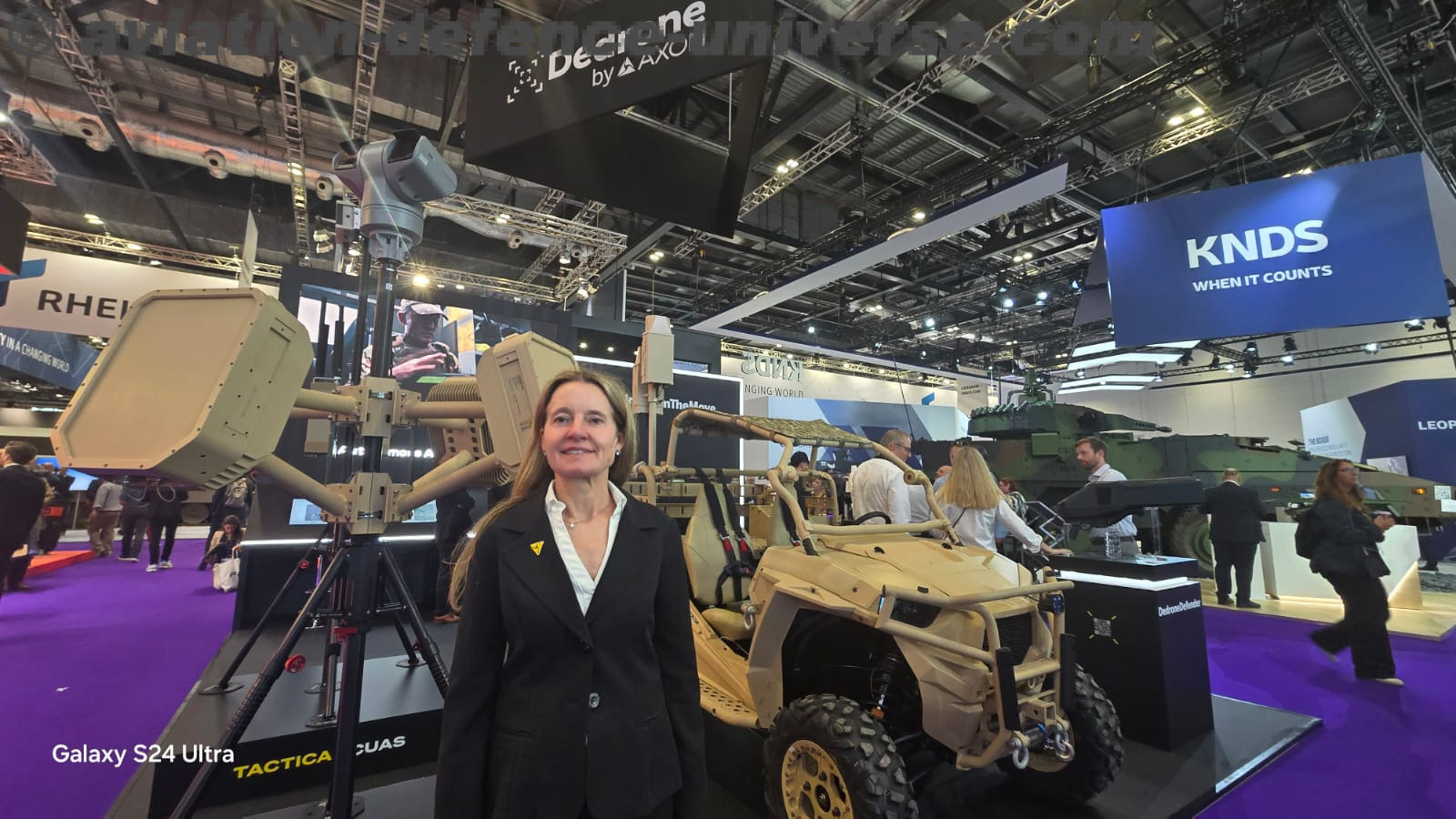 Mary Lou Smulders: Yes, Dedrone is the official anti-drone protection provider for DSEI. We’ve deployed live systems at the Excel Centre, showcasing our ability to track drone activity in real time
ADU. What distinguishes Dedrone from others in the field?
Mary Lou Smulders: Three things: software-led agility, networking capability, and open architecture. We own our core software, but we welcome partners for sensors, radars, and vehicles. Our goal is not to sell everything ourselves but to deliver the best tailored solutions
Through its layered detect-to-mitigate approach, open architecture design, and commitment to software-driven agility, Dedrone by Axon is setting global standards in counter-drone security. As Mary Lou Smulders highlights, their solutions are already trusted by defence and public safety agencies across the world—including India. With threats evolving faster than procurement cycles, Dedrone’s adaptability and networked approach stand out as essential in modern airspace defence.
As told to Sangeeta Saxena