




















- Patrik Selling on the Flexible, Lethal, Reliable gun
- From WWII to DSEI 2025: The Enduring Power of the Bofors 40mm
- Bofors’ 40mm Gun: Tradition Meets Innovation”
By Sangeeta Saxena
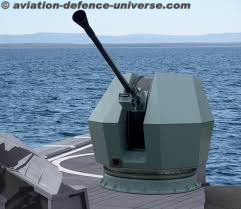
Excel Centre, London.12 September 2025. Bofors is a name which needs no introduction in the world of military guns. The Bofors gun has long been a mainstay of naval forces worldwide, serving as a critical layer of defence across fleets from the Second World War to the present day. Its compact design, rapid rate of fire, and reliability made the original 40mm L/60 the standard anti-aircraft gun on countless warships during WWII, protecting Allied convoys and fleets from waves of enemy aircraft. In the post-war era, as naval threats evolved, many navies upgraded to the Bofors L/70 and later models, which brought improved range, accuracy, and compatibility with modern fire-control systems. Today, the latest Bofors 40 Mk4 is deployed by advanced navies such as those of Sweden, Finland, Brazil, South Korea, and Thailand, providing precision engagement against aerial, surface, and asymmetric threats, including drones and fast-attack craft. Its adaptability has allowed it to remain relevant in both blue-water and littoral operations, making it one of the most widely used and enduring naval guns in history.
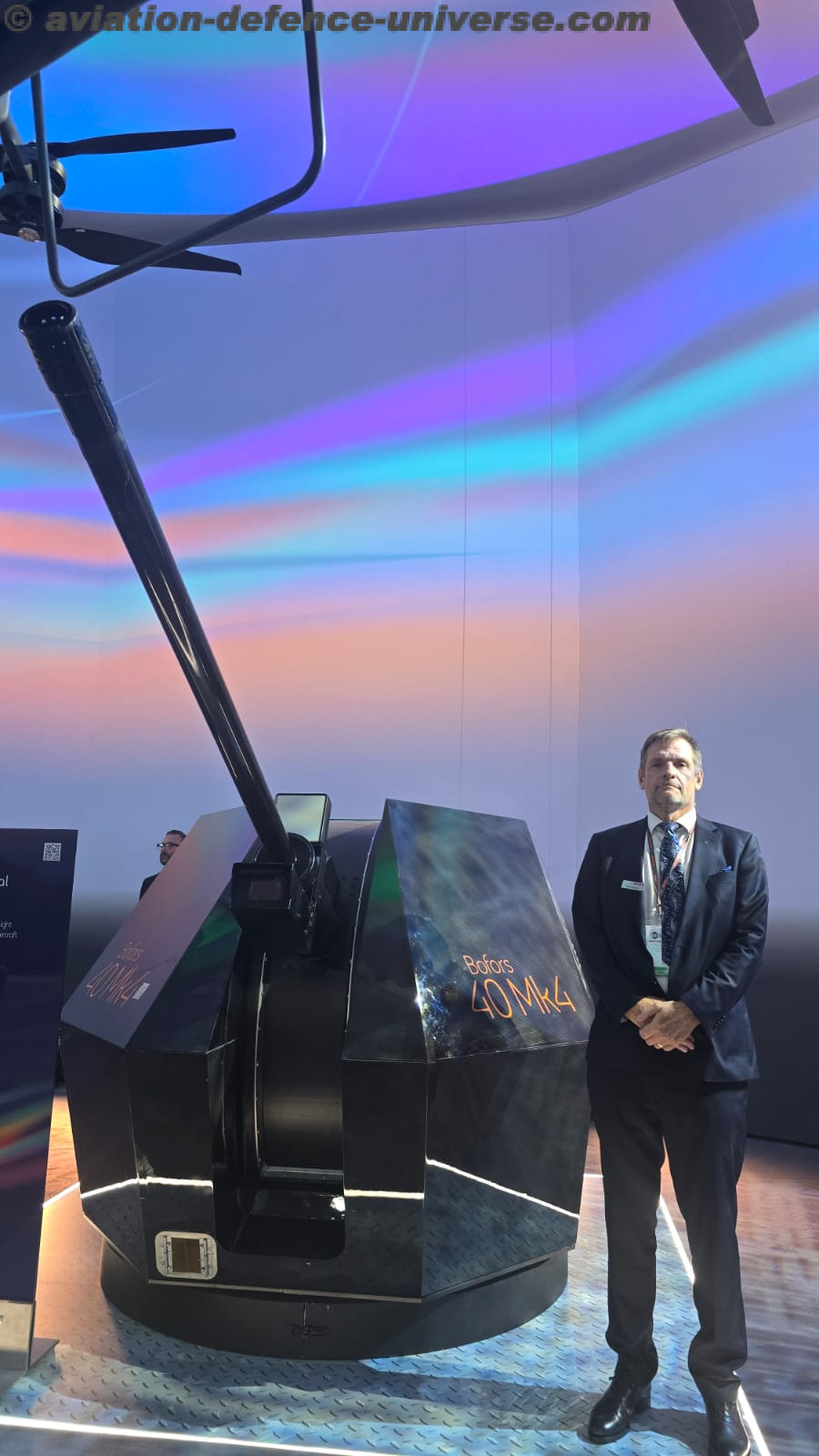
At DSEI 2025 in London, ADU had an exclusive opportunity to speak with Patrik Selling, Director Naval Sales at BAE Systems Bofors, about the evolution of the iconic Bofors 40mm gun. From its historic roots in the 1930s to its cutting-edge fourth-generation design, the system has continually adapted to meet modern threats—ranging from helicopters and small boats to drones and terrorist craft. Patrik shared insights on its flexibility, advanced ammunition, modularity, and growing relevance across naval and land platforms worldwide.
 ADU. The Bofors 40mm gun has a long history. Could you take us through its evolution?
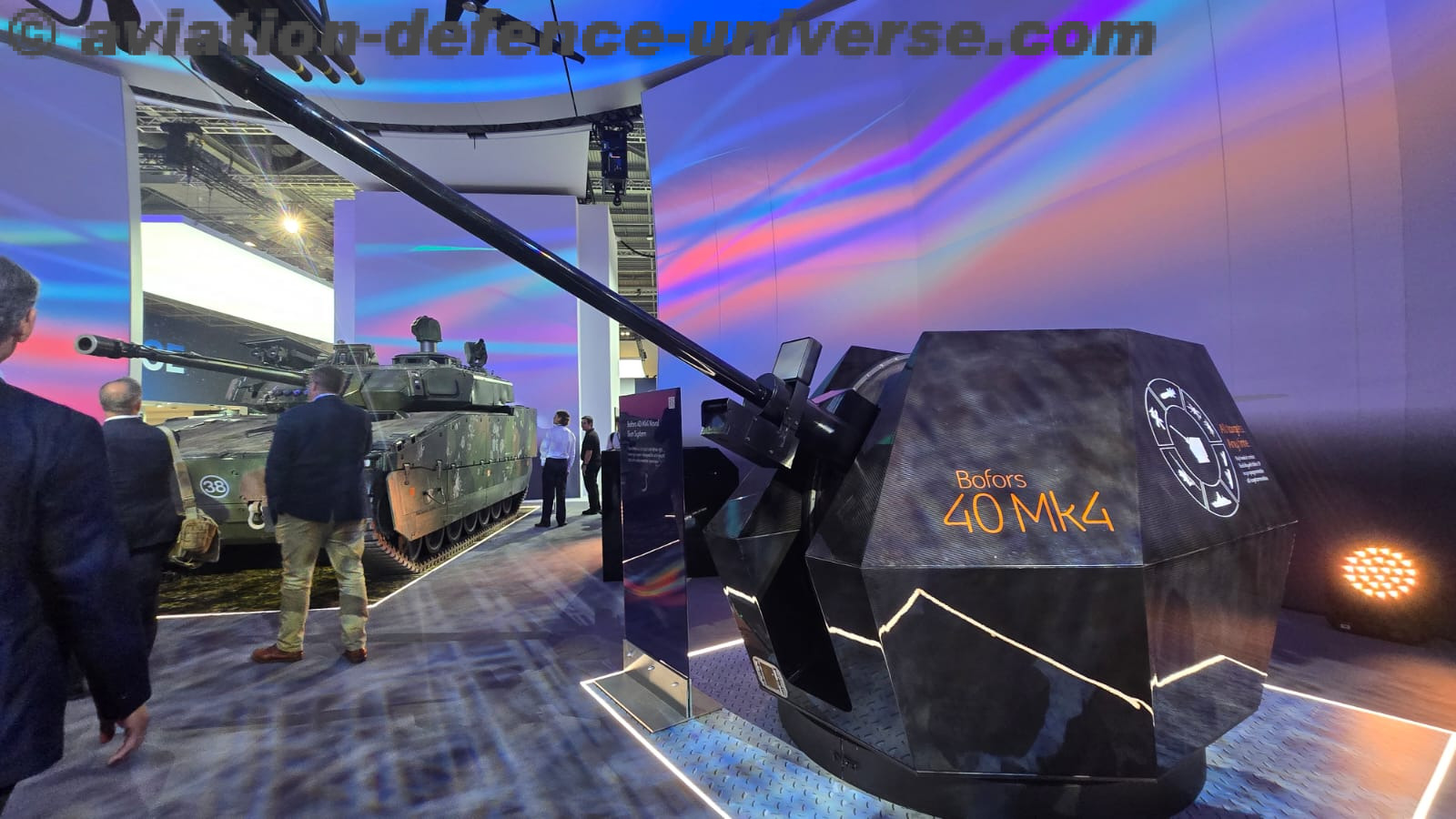
Patrik Selling. This is the fourth generation of the Bofors 40mm gun. The first Mk1 was constructed in the 1930s and was successfully used during the Second World War. Later came the Mk2 and Mk3, but after a strategic pause, we completely reimagined the system. While the barrel and loading mechanism remain steel, the new version is filled with sensors, software-controlled, and powered electrically instead of hydraulically. With carbon fibre and alloys, it’s lighter, more flexible, and adaptable to different platforms like trucks and smaller boats.
ADU. What makes this generation different from earlier models?
Patrik Selling. The weapon now integrates advanced technology—fully electric motors, automated magazines capable of switching ammunition types instantly, and lighter materials. It achieves a high rate of fire—300 rounds per minute—and uses 3P programmable ammunition with contact, time, and proximity fuses. Each round acts like a small radar-guided system, dispersing tungsten fragments for devastating shrapnel effects. Originally designed for helicopters, boats, and missiles, it now also proves highly effective against small to medium drones.
ADU. How easy is it for crews to operate and maintain?
Patrik Selling. Very easy. Maintenance is simplified because you just change large parts without mechanical complexity. It has high reliability and short crew training times—just one to two weeks. Navies today often have personnel who serve only a few years, so systems must be user-friendly. For maintenance staff, training may be longer, but we don’t even require large overhauls anymore if daily upkeep is done.
 ADU. Which navies are currently using this system?
Patrik Selling. We have a wide customer base. The UK Navy deploys it on the Type 31 frigates, and the Netherlands and Belgium are using it on new ASW frigates and mine hunters. Finland has it on fast attack crafts, and even the Japan Coast Guard has purchased 30 units. In total, it is in use across nine countries, with over 75 sales completed globally.
ADU. Ammunition is critical. Could you elaborate?
Patrik Selling. Absolutely. The 3P programmable ammunition is one of our proudest achievements. It has been in development for 30 years, continually improved, and remains highly effective. This makes the 40mm gun not just a weapon but an intelligent system that delivers precision, lethality, and adaptability against evolving threats.
ADU. Could you explain the flexibility this gun brings to customers?
Patrik Selling. We see that customer requirements are constantly evolving, and the beauty of our system is that it’s modular. That makes it quite easy to develop further. We are not stuck in a dead end—on the contrary, we can continue to add, improve, and adapt as operational needs change.
ADU. Could you give us some examples of how this modularity can be applied?
Patrik Selling. Certainly. One idea we have is to place the system on a container, making it highly mobile. For instance, in a conflict like Ukraine, civilian infrastructure is often targeted. A modular system could be moved easily to protect power plants, ports, or railway stations—wherever it’s needed. That’s essentially a land-based version. But it can also be deployed at sea. You could mount it on a merchant vessel that doesn’t otherwise have protection, and suddenly that ship has a defensive shield. It’s all about providing more flexibility.
ADU. And what about the technical specifications? What’s the weight of the system?
Patrik Selling. The system weighs about two and a half tonnes with a full magazine. We’ve managed to reduce the weight by around 40%, which is significant. But perhaps the bigger achievement is that we’ve lowered the production time. Thanks to modular design, subcontractors deliver larger, pre-assembled components. This makes assembly easier, speeds up production, and allows us to get systems out of the factory and into the hands of customers much faster.
 ADU. Is the gun adapted for land forces too?
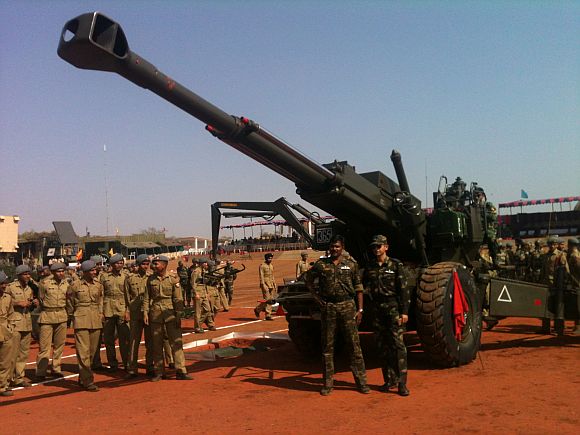
Patrik Selling. Yes. The system can be mounted on trucks in the Tridon configuration, complete with its own fire control. It’s the same gun, just in a land systems version. We’re also exploring containerised versions for protection of civilian infrastructure—ports, power plants, railways—or even merchant ships that need defence. Its modularity ensures flexibility and ease of adaptation.
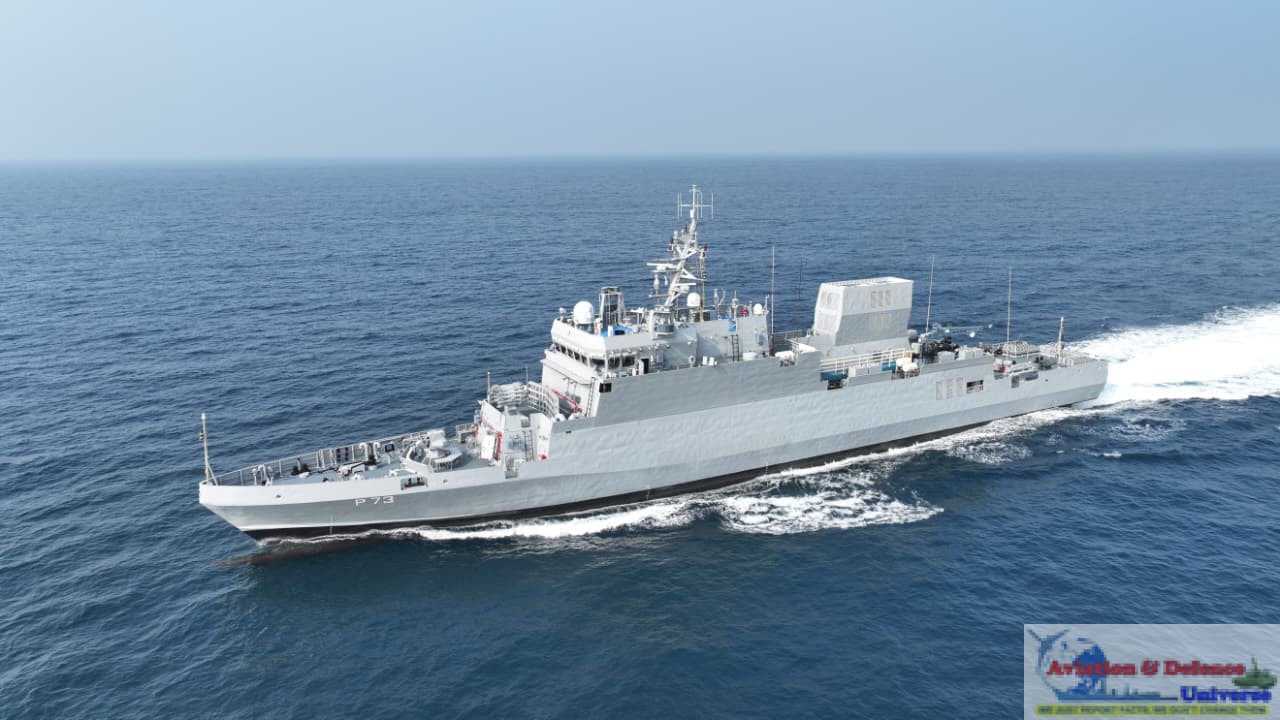
The Indian Navy employs the 40mm Bofors anti-aircraft gun as a key armament on several of its vessels, most notably as the main gun on the bow deck of the Sukanya-class Offshore Patrol Vessels (OPVs). Originally designed by Sweden’s Bofors, this versatile L/70 gun has been indigenously manufactured for decades by the Indian Ordnance Factories, ensuring sustained availability and integration into the fleet. With a rate of fire of 120 rounds per minute, the gun provides effective close-range defence against aerial threats and surface targets, making it a reliable and cost-effective solution for patrol and escort duties. Its continued deployment underscores both the enduring utility of the Bofors design and India’s capability to localise production of critical naval weapon systems in support of self-reliance and operational readiness.
The Bofors 40mm gun exemplifies how legacy systems can evolve into future-ready solutions. With modular design, lighter materials, intelligent ammunition, and adaptability across naval and land domains, BAE Systems Bofors has ensured that this iconic gun remains relevant in an era of drones, asymmetric threats, and rapid technological change. As Patrik Selling highlighted, its flexibility, ease of use, and proven reliability continue to make it a system of choice for navies and armed forces worldwide.
As told to Sangeeta Saxena