






















- Missiles, Intelligence and Regional Shockwaves: A War Without De-Escalation
- From Shadow War to Open Conflict: Redefines West Asian Security & Muslim Unity
- Ripple Effect Across Global Energy and Security Systems
By Sangeeta Saxena
New Delhi. 06 March 2026. A week since the war broke out in West Asia , from precision strike to a regional crisis, the conflict continuously and rapidly unfolding , the world is on the edge watching the Israel-USA led war on Iran, Iran’s retaliation and safes havens like UAE suddenly becoming vulnerable to attacks from the skies and a new connotation to Muslim unity. And seven days hence no end seems in sight and de-escalation seems not a strategy in this war.
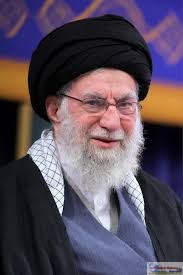
Day one shook the world as the conflict had escalated dramatically when Israel, with operational support from the United States, launched coordinated air strikes against key targets inside Iran. The attacks focused on strategic facilities and high-value leadership locations in Tehran and other major cities. Several senior political and military figures were reportedly killed during these strikes, including Iran’s Supreme Leader and members of his close circle. The operation also targeted missile launch infrastructure and command centres, signalling a shift from covert rivalry to open military confrontation.
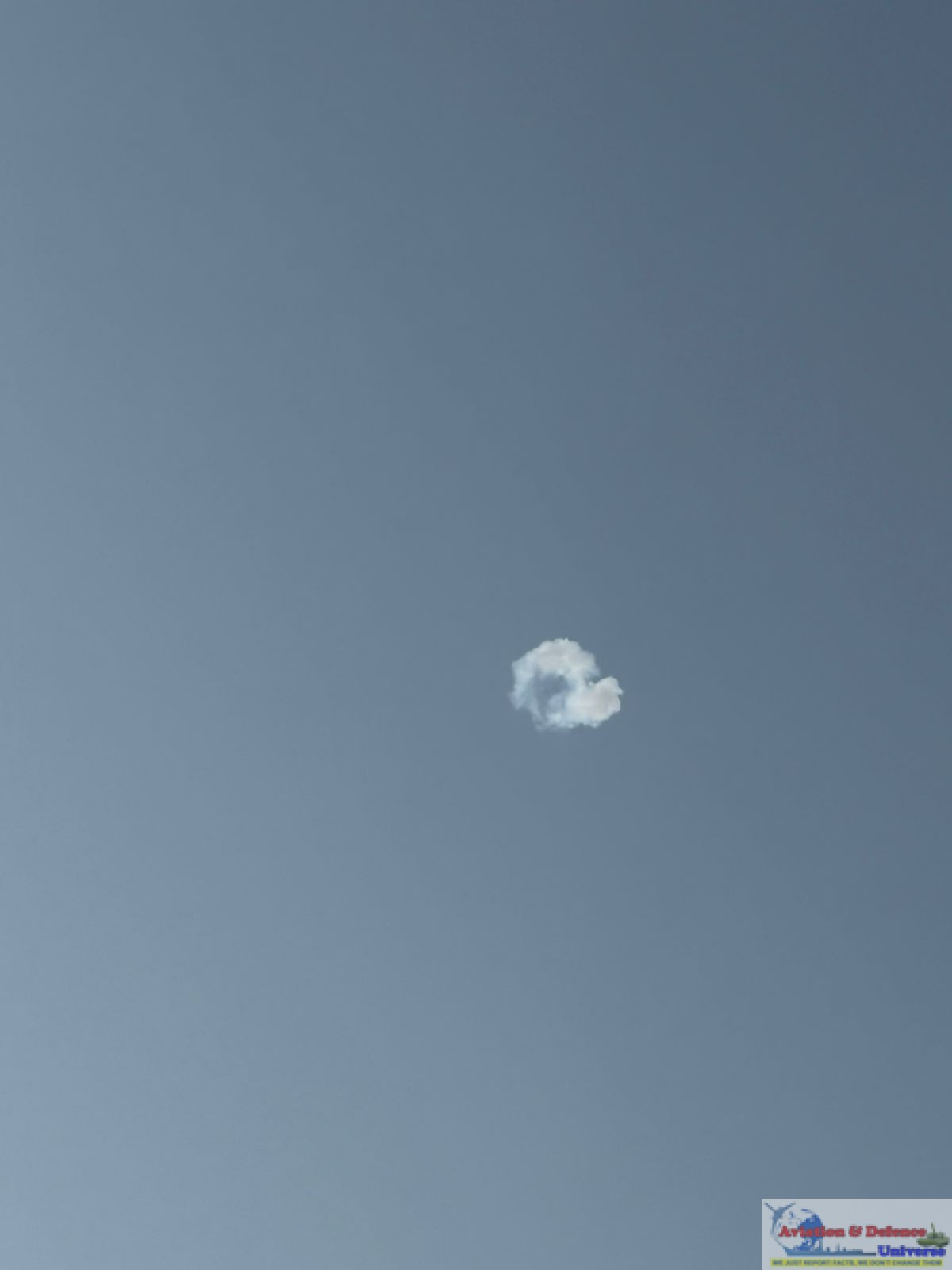
Day two saw Iran’s Counterstrike when it responded swiftly with a large-scale retaliation involving ballistic missiles and armed drones. These strikes were directed toward Israeli territory and military facilities connected to the United States and its allies across the region. Installations in Gulf states hosting American forces were also targeted. The attacks highlighted Iran’s ability to project military power across West Asia, while regional air defence systems were activated to intercept incoming missiles and drones.
Came Day three which saw intensified Israeli Air Campaign where Israel expanded its military response by launching additional air operations aimed at degrading Iran’s strategic capabilities. These strikes reportedly hit missile depots, air defence systems, and facilities associated with the Revolutionary Guard. The campaign sought to weaken Iran’s ability to sustain retaliatory attacks while simultaneously dismantling parts of its military command infrastructure.
Day 4 dawned and it was clear that the regional spillover of the conflict could not be stopped. By the fourth day, the confrontation began affecting the broader region. Iranian drones and missiles were reportedly directed at military bases linked to U.S. forces in the Gulf, while Israel continued targeting locations connected to Iranian influence networks in neighbouring territories. The widening scope of the conflict created anxiety across West Asia, disrupted commercial aviation routes, and triggered volatility in global energy markets.
Mounting casualties and strategic uncertainty became evident as the conflict entered its fifth day. The scale of destruction and casualties inside Iran continued to grow, with military installations and infrastructure suffering significant damage. Despite the intensity of the exchange, neither side showed clear indications of launching a large-scale ground war. Instead, the confrontation evolved into a high-technology conflict characterised by missile exchanges, air strikes, cyber operations, and intelligence-driven targeting.
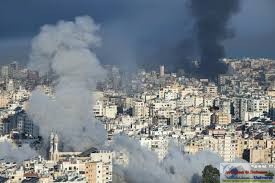
By the sixth day, the confrontation between Israel and Iran had grown beyond direct bilateral exchanges and was beginning to affect the wider West Asian region. Iran launched additional waves of ballistic missiles and armed drones toward Israeli territory while also targeting locations associated with U.S. and allied military presence across parts of the Gulf. In response, Israel continued its air operations deep inside Iran, focusing on military installations, missile launch sites, and strategic command facilities. Simultaneously, Israel widened the scope of its military campaign by striking positions linked to Hezbollah in Lebanon, particularly in the southern suburbs of Beirut. Authorities issued evacuation warnings in areas expected to be affected by the attacks. As the conflict intensified, several Gulf countries heightened their security posture and activated air defence systems to intercept potential threats. The broader regional atmosphere became increasingly tense, with shipping routes, aviation corridors, and energy markets beginning to show signs of disruption. International reactions also intensified on this day. Governments across Europe and Asia began reviewing evacuation plans for their citizens in the region, while diplomatic efforts to contain the conflict gained urgency. The growing involvement of regional actors indicated that the confrontation was gradually shifting from a direct Israel–Iran exchange into a wider regional security crisis.
On the seventh day, military operations escalated further as Israel, reportedly supported by U.S. intelligence and logistical capabilities, carried out additional strikes against key Iranian military and strategic facilities. Some of the targets were believed to include underground command infrastructure and operational centres connected to Iran’s military leadership. Iran responded with another round of missile launches and drone operations aimed at Israeli targets. The attacks forced widespread civilian alerts and shelter protocols in several Israeli cities. Reports also indicated that some of the incoming missiles used advanced warhead configurations designed to increase destructive impact.
Beyond the battlefield, the conflict’s wider implications became increasingly visible. Energy markets reacted with heightened volatility as concerns grew about the security of shipping routes near the Strait of Hormuz, a critical artery for global oil supplies. Airlines rerouted flights to avoid the conflict zone, and international powers intensified diplomatic engagement in an attempt to prevent further escalation. By the end of the seventh day, the war had clearly evolved into a high-intensity confrontation with regional and global consequences.
The precise targeting of Iran’s leadership is widely believed to have relied on sophisticated intelligence cooperation between the United States and Israel. Such operations typically combine multiple intelligence sources, including satellite surveillance, signals interception, cyber monitoring, and human intelligence networks operating on the ground. Long-term tracking of leadership movements and communication patterns can provide detailed insights into meeting schedules and secure locations. When this intelligence is fused with real-time surveillance data, it enables highly accurate strikes against specific individuals or facilities. The operation demonstrated how modern intelligence capabilities—integrating technology, data analysis, and covert field operations—can play a decisive role in shaping military outcomes in contemporary conflicts.
The latest escalation between Israel and Iran has transformed a long-standing shadow conflict into an open military confrontation, sending shockwaves across the entire West Asian region. What began for decades as a covert rivalry—marked by proxy conflicts, cyber operations, and targeted assassinations—has now moved into direct strikes on strategic targets, senior leadership figures, and critical infrastructure. The coordinated military operations launched by Israel and the United States against Iranian targets in February 2026 represent one of the most dramatic escalations in regional geopolitics in recent years. Iran’s retaliatory missile and drone strikes against Israeli territory and several Gulf locations have further intensified tensions, raising fears of a wider regional conflict.
The repercussions of this confrontation extend far beyond the immediate battlefield. West Asia sits at the crossroads of global energy supply, maritime trade routes, and strategic alliances, making any instability in the region a matter of global concern. Rising military tensions have already triggered volatility in global oil markets, increased security risks around the Strait of Hormuz, and heightened anxiety among regional governments. Countries across the Gulf are strengthening air defence systems and security protocols as the possibility of spillover attacks grows. For the wider international community—including major energy-importing nations such as India—the conflict represents not only a geopolitical crisis but also a significant economic and security challenge.