









-
Indian Navy in 2025 : High-Tempo Operations, Global Partnerships and Indigenisation Drive
By Cmde Ranjit B Rai
 New Delhi. 04 December 2025. The Indian Navy celebrated its first Navy Day on December 4, 1972 in New Delhi, after its success in the 1971 war in ‘Op Trident’ when three Osa Class missile boats sank three warships off Karachi, and 70 years on, the annual tradition to honour the contributions and sacrifices of naval personnel and to raise awareness about India’s maritime capabilities and responsibilities continues with more and more punch on display.
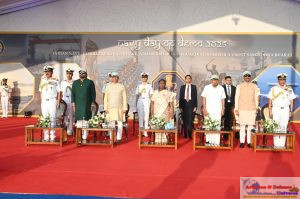
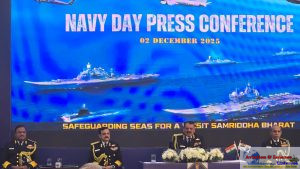
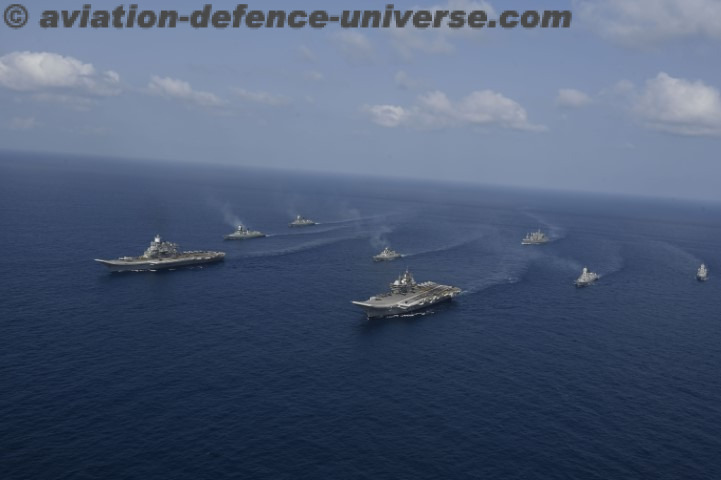
Ships are opened to visitors at ports with ‘Bara Khanas’ on board, and in naval establishments. In 2020, Prime Minister Narendra Modi decided to celebrate Armed Forces Day outside New Delhi, and the first Army Day celebration took place on January 15, 2021, in Bengaluru, Karnataka. This move has paid dividends by bringing the services’ activities and capabilities home to the states. This year, the Navy will showcase its sea-going and fighting capabilities, with warships fitted with BrahMos missiles, which were readied for Op Sindoor, a submarine, and fly-pasts off the Shangumugham Beach, Thiruvananthapuram, on 3rd December, in an Operational Demonstration to celebrate its maritime prowess as a Combat Ready, Cohesive, Credible ‘Aatmannirbhar Force’ safeguarding Samriddha (prosperous) Bharat.
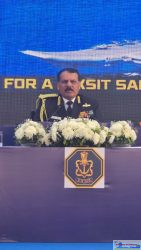
The Hon’ble President of India and Supreme Commander of the Armed Forces, Smt. Droupadi Murmu will grace the occasion as the Chief Guest, hosted by Admiral Dinesh K Tripathi, Chief of the Naval Staff. The demonstration will also be witnessed by the Hon’ble Governor and Chief Minister of Kerala, Union nd State ministers, senior Central and State Government officials, military dignitaries and a large gathering of spectators. Op Demo 2025 at Shangumugham Beach will be live streamed on Indian Navy social media platforms in addition to live broadcast by Doordarshan channels.
 The growth of the Indian Navy has been a source of surprise worldwide, and many give credit to the Navy’s risk-taking and the ‘paradox’ of failure, which is the concept that while we are conditioned to fear failure, it is actually essential for growth and success. The paradox lies in the contradiction between a strong desire to avoid failure and the reality that it is a necessary stepping stone to achieving great things, providing knowledge, resilience, and opportunity—furthermore, more by reframing military failures and accidents as tools for learning rather than endpoints. The Indian Navy has overcome the fear of failure with risk-taking since its inception in 1947, when it was a small maritime force divided between India and Pakistan, and has used that paradox to grow. A few thousand officers and sailors went to British shipyards to bring back INS Delhi (Achilles, 1948), INS Mysore (Gambia, 1958), and INS Vikrant (Hercules, 1961), and eleven new frigates (Brahmaputra, Khukri, and Talwar class) in the 1960s. Their experience in the UK germinated a desire to build warships in India, and the first large frigate, INS Nilgiri, built by Mazagon Docks at Bombay, was commissioned in 1973 by Mrs. Indira Gandhi.
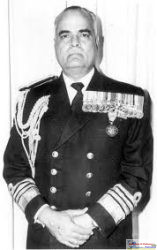
Despite the Navy’s war-fighting and anti-submarine capabilities in 1965 with newly acquired warships, the Navy was not allowed to take part in the 1965 war by a risk-averse Cabinet decision under Prime Minister Lal Bahadur, following the Intelligence Bureau’s (IB) report that Pakistan’s newly acquired lethal submarine, PNS Ghazi, was lurking off Bombay. The Indian Navy had no submarines. This loss of face prompted then Rear Admiral SM Nanda to say, “If war comes again, the Navy will go to Karachi”, and Navy took the risk fearlessly in the 1971 war under Nanda as its Chief of Naval Staff. The Indian Navy celebrates Navy Day every year on 4th December.
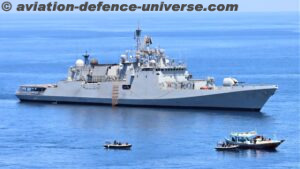
 The current Navy is a formidable force of two nuclear submarines with long-range K-4 nuclear-tipped missiles, another on the anvil, two aircraft carriers flying powerful MiG-29K fighters with KH-35 air-to-ship missiles and rockets, 12 Boeing P-8i maritime surveillance and attack aircraft with Harpoon missiles and ASW Torpedoes, and 140 other platforms to keep the Indian Ocean secure. Of these, 70% are built in India, and the dozen leading destroyers are equipped with 750 km-range, world-acclaimed, home-made BrahMos ship-and land-attack missiles. Currently, sixty-five large and small warships are on order and under construction in India, and none abroad. The Navy is the first to introduce quantum computing in its communications and artificial intelligence in its systems. Moreover, to understand India’s maritime position, it is said, ‘India holds the bolt and key to the Indian Ocean, known as China’s Malacca dilemma’.
Naval shipbuilding and production, technology, design, and innovation for advancing national maritime interests, and every Dollar saved in imports has had a 2.5 multiplier effect in India’s economy. India’s private defence shipyards and the industry’s ecosystem have expanded to supply all small platforms and large OPVs to the Navy and the Coast Guard. No ship is under import. Larsen and Toubro Ltd (L&T) is set to provide three new unique training and five large multipurpose ships. The Navy’s large strategic nuclear submarine Public-Private Partnership under DRDO with Larsen & Toubro Ltd is led by INS Arihant, and Defence Secretary Rajesh Kumar Singh has stated that all future bids will be opened equally to private shipyards. Small nuclear plants are to be opened to private industry, and the Navy’s experience with the Bhabha Atomic Research Centre’s (BARC) small, classified, compact reactor on Arihant will help spark inquiry.
The Navy is currently engaged in one of the most ambitious and transformative expansion programmes in its history, a testament to India’s rising stature as a maritime power with the potential to achieve higher comprehensive national power (CMP). This bold initiative, spearheaded by India’s political and defence leadership under the guidance of Prime Minister Narendra Modi, is called Project Mahasagar (Mutual and Holistic Advancement for Security and Growth Across Regions) for trade, capacity building, and mutual security. Mahasagar also means “vast ocean” in Hindi. Defence Minister Rajnath Singh has supported the Navy’s clear and unwavering vision, which is centered on asserting India’s dominance across the vast and strategically vital Indian Ocean Region (IOR) while simultaneously extending its influence into the broader Indo-Pacific theatre. The primary objective is to ensure that critical sea lines of trade—lifelines that facilitate the movement of goods, energy, and commerce for nations across the region—remain secure, open, and accessible to all, fostering stability and prosperity in this increasingly contested maritime domain. Technological advances and commercial aspirations in India have increased, and rapid industrialization has enhanced the Navy’s ability to harness the hardware and software talent available within the DRDO, industry, and Universities.
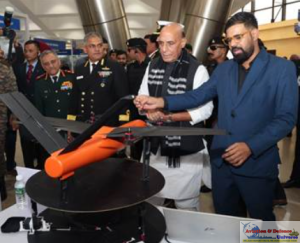
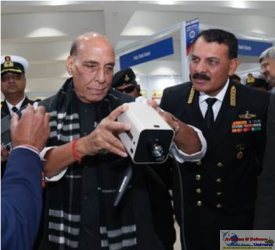 This year, before Navy week, the Navy held its two-day Swavlamban 2025, ahead of India’s Navy Day Celebrations, from 25th November at the Manekshaw Centre in New Delhi. The word ‘Swavlamban’ stands for self-reliance and the Indian Navy has since India’s Independence lived with a desire to make in India. Swavlamban is an annual event of the Naval Innovation and Indigenisation Organisation (NIIO), conducted in collaboration with the Society of Indian Defence Manufacturers (SIDM), and it provides a unique platform to showcase indigenous maritime technologies and foster cooperation between the Indian Navy and the nation’s innovation ecosystem in the pursuit of Atamnirbharta. This edition featured tangible products that have matured over time and will soon be deployed for operational use. Raksha Mantri visited the exhibition and was apprised of the equipment on display.
Raksha Mantri Rajnath Singh visited the Swavlamban exhibition and was apprised of the equipment on display. He stated, “India is entering a golden era of defence innovation, and its foundation is being laid by our innovators & young entrepreneurs who are integrating economic strength, strategic thinking and technological advancements.” He felicitated the SMEs, innovators for coming forth with path-breaking solutions and helping the nation emerge as a builder, creator, and leader, and not merely a buyer.
Navy’s motto is ‘Shan na Varuna’, may the Lord of the Seas bless the Indian Navy, on its Navy day.
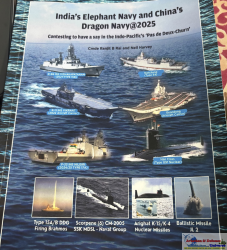
(Commodore Ranjit B Rai is the author of ”India’s Elephant and China’s Dragon Navy@2025” with Neil Harvey and is Vice President Indian Maritime Foundation and curates a Maritime Museum in Delhi’s Defence Colony. He is former DNI and DNO who curates a Maritime Museum at C 443 Defence Colony in New Delhi. He was second in Command of INS Nilgiri, commissioned by PM Mrs Indira Gandhi in 1972, referred to as the Navy’s Harbinger Ship with a record commission by its officers and men.)