


















 Bangalore. MBDA’s stand at AERO INDIA 2017 will focus on a number of messages covering both the product as well as the industrial advantages that MBDA is offering to India. India’s defence forces need the very best and most advanced equipment to meet the many operational challenges facing the country. MBDA’s extensive product portfolio covering all three operational domains – air, sea and land is available to fulfil this need.
Similarly, MBDA is striving to advance the government’s widely publicised Make in India policy. MBDA has the know-how, the experience of international cooperation and the latest guided missile and guided missile system technology which it is well prepared and eager to share with India.
Though MBDA will be displaying a wide range of products to demonstrate its unique ability to meet the operational needs of all three of India’s armed services, the main emphasis will be on the company’s air-launched missile systems. Of course, with the Rafale contract now having been signed, MBDA will focus on the weapons that will fully optimise the multi-role operational capabilities of this latest generation combat aircraft.
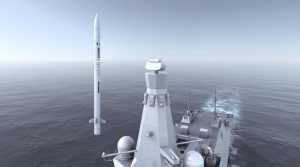
As discussions well advanced with the Indian Navy for a short-range surface to air weapon to fill a recognized capability gap, a full scale model of the SR-SAM missile will take pride of place on the company’s stand. This programme sees MBDA supporting the DRDO and represents the cornerstone of MBDA’s long term partnership and cooperation strategy in India. Also on display is a weapon that truly warrants the sobriquet “Fifth Generation”. This weapon, MMP, is being developed as a highly advanced successor to the successful MILAN with a range of important features placing it well beyond the capabilities of the competition. It is also a weapon that MBDA is proposing as the basis of a major future cooperation in line with the Make in India strategy. Given the advanced state of play regarding the contract for the Rafale aircraft that has been chosen for the IAF, MBDA’s stand will be showcasing the full weapon suite associated with this world-leading combat aircraft.
 A PROUD PARTNER OF THE IAF
Equipping the IAF with the very best to enable it to meet the challenges ahead
MBDA can provide the latest generation of weapons to not only ensure air supremacy but also to carry out precision strikes against a wide variety of static and fast moving surface targets. With the Indian Air Force enhancing and modernising the operational capabilities of its fleet of Jaguar and Mirage 2000 aircraft while planning for the arrival of the Rafale, AERO INDIA 2017 will showcase MBDA’s extensive range of air-to-air and air-to-ground guided weapon systems.
 METEOR is a six-European nation programme that will provide the key future BVR air-to-air armament for Europe’s new generation of combat platforms including of course the Rafale. This missile’s very long range combined with its ramjet-induced speed, result in a weapon that has an unequalled No Escape Zone. In fact METEOR has been designed to be many times superior to the most sophisticated current and emerging Medium Range Air to Air Missile (MRAAMs) threat. Its advantages provide an added dissuasive power to an air force in so far as any enemy will need to think seriously before venturing into potentially lethal air space as with METEOR, there can only ever be one winner! The advanced technology contained within METEOR controls speed and fuel consumption throughout the flight envelope. This ensures that maximum power and hence agility are maintained at the extremes of range where other MRAAMs have long since ceased being effective. As well as showing off MBDA’s mastery of the most advanced technologies, METEOR is vivid proof of the company’s skill in managing international cooperative programmes.
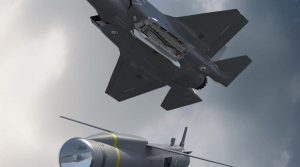
 Deep strike is a major requirement for a modern air force. The ability to deliver a precision strike against high value targets such as well protected control bunkers/centres, key infrastructures and military installations from a safe stand-off distance is crucial in the early days of a conflict as was shown in Iraq and Libya. At AERO INDIA 2017, MBDA is displaying, SCALP/STORM SHADOW, which is in operational service on the French Air Force’s Rafale aircraft (as well as with other European air forces) and which has proved its unerring and unmatched ability to combine very long range with devastating target effect during combat operations carried out by the air forces of the UK, France and Italy.
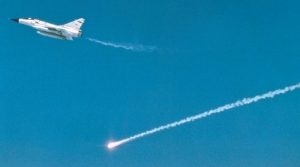
MICA is being delivered for the IAF’s Mirage 2000 upgrade. It is also a weapon system closely associated with the Rafale. Showcased on MBDA’s AERO INDIA 2017 stand, this is the only missile in the world featuring two interoperable seekers (active radar and imaging infrared) to cover the spectrum from close-in dogfight to long beyond visual range. Its ability to fly out to BVR in passive mode before the seeker locks on in the final stages of the end game has earned it the sobriquet “silent killer” as the target has little time to react or to deploy effective countermeasures.
ASRAAM is an important element of the upgrade programme for the IAF’s Jaguar bomber fleet. This short range air-to-air missile’s speed not only provides safe separation from the Jaguar’s above-wing pylons, it also guarantees “first shot first kill” to avoid getting involved in a dogfight. As the Jaguar is a low-flying aircraft, threats will most likely come from more agile fighters with altitude superiority, ASRAAM offers a major advantage here in its unmatched “snap-up” capability, its ability to rapidly divert upwards once fired.
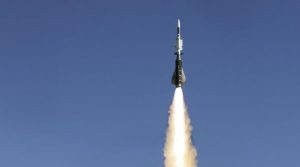 BRIMSTONE goes from strength to strength with trials and combat deployment clearly demonstrating the unmatched capabilities of this weapon in meeting the operational challenges of today. Trials have included firing at targets moving at speeds of up to 70 mph from a variety of launch conditions, including long range and high off-boresight. Test scenarios have also simulated a cluttered road environment, as typically encountered during recent conflicts. Every shot achieved a direct hit on the target. BRIMSTONE has won international acclaim following its successful combat deployment during recent operations in Libya and Afghanistan and more recently Syria. Precision surface strikes are a major feature of today’s air force mission and BRIMSTONE with its dual millimetric wave radar and semi-active laser (SAL) seeker gives the pilot a great deal of flexibility. A salvo of BRIMSTONES can be launched in fire-and-forget mode or, should man-in-the loop be required because of complex operational conditions, the SAL mode can be selected. Significantly, as MARITIME BRIMSTONE, the missile has proven its capabilities as a surface-to-surface weapon. Whether air or surface launched, BRIMSTONE is the only weapon currently available that can engage not only a rapidly advancing column of MBTs and fast moving land targets but also swarming FIACs (Fast Inshore Attack Craft) a fast emerging and worrying threat in coastal waters.
OPTIMISED AIR DEFENCE, STRATEGIC TECHNOLOGY TRANSFER
Transfer of Technology that really makes the difference
Make in India can benefit and make major leaps forward in progress by having access to the levels of cutting-edge technology that MBDA has developed over many decades of advanced research and development. Many people in the industry are making such a claim for India but often this technology is way below the necessary level to make a real difference to India’s indigenous capability. MBDA on the other hand is prepared to go the whole distance and to offer technology at an advanced level. Moreover, it has the full backing of its domestic governments to do so.
SRSAM is a DRDO project which MBDA is proud to be supporting as it reinforces the partnership model which the company has been advancing for many years within the country. Much has been written about this IDDM (Indian Designed Developed and Manufactured) project which stresses MBDA’s commitment to India’s Make in India policy. Offering the highest levels of technology transfer and a major boost to the Indian defence industry sector, SRSAM is an ideal solution for the short range air defence needs of India’s Navy. Discussions are well advanced, all the elements are in place and as soon as a green light is given, within three years this latest technology capability will commence deliveries to the Indian Navy with full delivery completed within five years.
 MISTRAL has proven itself a major success story with a 96% success rate in all firings. This highly versatile IR missile, the missile deployed from the MBDA ATAM launcher already integrated on HAL’s ALH Rudra and being integrated on the LCH, can be deployed from a number of land and ship based launch systems. With the competition currently underway to meet India’s VSHORAD requirement, at AERO INDIA 2017 MBDA will be displaying the MISTRAL MANPADS system. Easy to use, quick to set up, deploy, fire and reload, MISTRAL MANPADS was designed from the outset to be a highly portable tripod mounted system. Easily managed by one operator for the tripod and another for the missiles, the system has a distinct advantage over beam-riding systems in that its heat sensitive seeker allows the missile to be fully autonomous, a vital capability in dealing with close in, manoeuvring threats. The system, which has already carried out several successful fire evaluation trials for India, can also be mounted on vehicles. Importantly for India’s defence sector, should MISTRAL be selected, it will be manufactured locally under license, similar to the arrangement regarding MBDA’s MILAN ATGM.
MEETING THE CHALLENGES OF THE MODERN BATTLEFIELD
Building on over 40 years of successful cooperation
MILAN has been manufactured under licence in India by BDL for over 40 years and represents the very foundations of MBDA’s Make in India strategy which has long been the company’s focus. As a worthy successor to this weapon (the anti-tank system currently in service with the Indian and French Armies and that has been sold to 40 other armies around the world) and drawing on experiences gained from recent conflicts which have shown that delivering effects without collateral damage is a major operational requirement, MBDA has been developing a fifth generation ATGM weapon known as MMP.
MMP is a vital addition to MBDA’s range of battlefield systems and features both “man in the loop” and “fire and forget” capabilities. It can be fired from confined spaces and against non-line of sight targets. Suitable for a wide range of battlefield targets (from MBTs to infrastructures) and platforms (from portable firing posts to vehicles and army aviation platforms), MMP’s architecture and technologies position the 4km range missile well ahead of the competition. The programme is well advanced and in 2017 first deliveries will commence of the 400 launchers and 2,850 missiles ordered by the French army. Of major significance is the fact that MBDA is discussing with India the possibility of a major joint project to further cement the Make in India policy, a project that would see a co-development of a future fifth generation weapon based on elements of proven MMP technology but designed to meet India’s specific operational parameters such as range, launch platform and warhead type. Such a project would again involve unprecedented levels of technology transfer to India thanks to its special relationship with MBDA. It would also fall exactly within the IDDM guidelines outlined in the last DPP announcement.
PARS 3 LR is being delivered to the German Army to provide its Tiger helicopters with the capability of targeting and defeating a wide range of mobile and stationary ground targets from latest generation armour-protected vehicles to bunkers with pinpoint accuracy. For pilot safety, the fire-and-forget missiles, once launched, navigate autonomously to their respective targets without requiring further input from the gunner thereby allowing the helicopter to quit its position should there be a danger. For India’s ALH Rudra, MBDA has sourced an Indian partner to develop a special twin launcher which will be displayed at the exhibition.
ATAM has been delivered to India to equip the HAL weaponised version of the Advanced Light Helicopter, the ALH Rudra. The system is based on two launchers each deploying two MBDA MISTRAL missiles. Given the wide range of roles that the Rudra will have to undertake, ATAM will provide the helicopter’s crew with a weapon that is not only easy to use but one that can be operated in the whole flight envelope from nap of the earth to 15,000ft and at flight speeds from hovering to up to 200 knots. The same system is currently undergoing integration on the LCH platform also manufactured by HAL.
MARITIME SOVEREIGNTY
Helping India advance and protect its coasts, shipping routes and international interests
Sea power or command of the sea means different things to different nations and recent developments have seen navies around the world adjusting to their new strategic environments and peacetime missions ranging from sovereignty operations and patrols to new challenges such as those posed by terrorism, piracy and even organised crime. Certainly there has been a growing recognition of the role navies can play in taking control of the littoral environment. Covering both blue and brown water operations, MBDA can offer a range of systems ideally suited to India’s specific operational requirements.
EXOCET probably ranks as the world’s best known anti-ship missile. It is certainly well known in India where the submarine variant, SM39, has already been delivered to the Indian Navy to arm its Scorpene submarines (Project 75). The AM39 version can be launched from Maritime Patrol Aircraft, strike fighters such as the Rafale as well as medium to heavyweight helicopters. Features such as low signature, sea-skimming flight at very low altitudes, late seeker activation, enhanced target discrimination and ECCM combine to make this a redoubtable weapon indeed. In its Block2 Mod2 latest evolution it is now fully compliant with the latest generation of aircraft platforms. The MM40 Block 3 variant within the EXOCET family, is a 200+ km class weapon suitable for launch from ships or from coastal batteries. Already in service, this latest generation EXOCET features 3D waypoints, low sea-skimming flight profile and the ability to strike coastal land targets as well as ships.
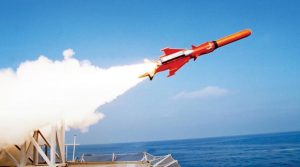
MARTE is a family of fixed and rotary wing and ship-launched anti-ship missile weapon systems designed to meet operational requirements in complex littoral environments and blue water scenarios. At AERO INDIA 2017 is displaying MARTE ER, the latest addition to the family. The high sub-sonic MARTE ER is equipped with a turbo-jet engine giving it a range of well over 120km, thus enabling it to engage enemy vessels well over the horizon. Other enhancements include an optimized terminal guidance system and 4D waypoints including altitude and time for simultaneous time on target attack. MARTE ER offers rotary and fixed wing aircraft, ships and land-based coastal defence systems a significant operational advantage.
During a series of joint MBDA-Airbus Military trials carried out in 2013, a MARTE MK2/S instrumented missile was successfully released from the under wing pylon of a CN295 Maritime Patrol Aircraft, thereby validating the missile’s aerodynamic integration on the platform. MARTE MK2 and MARTE ER share a high degree of commonality providing the user not only exceptional operational flexibility but also advantages in terms of life cycle costs.
MBDA will also be displaying its NCM (Naval Cruise Missile) that is currently finalising its development in readiness for it to be declared operational on the French Navy’s Barracuda nuclear powered submarine in 2018. This very long-range, surface attack stand-off cruise missile is designed to attack deep into enemy territory. Given its range, it will provide navies and surface and sub-surface vessels with the ability to maintain a prolonged dissuasive force in theatre unlike an aircraft launched missile.
Drawing on elements of the combat-proven SCALP/Storm Shadow and weighing some 1,400 kg with an overall length of around 6.50m, NCM offers destructive power against key infrastructure targets. Maximum precision and minimum collateral damage are assured thanks to the weapon’s guidance system which combines inertial guidance, terrain matching, and GPS with an imaging infrared seeker to achieve metric accuracies in the terminal phase. The missile has already been tested for both surface ship and submarine launch (vertically launched for the former and via the torpedo tubes for the latter with the submarine version housed in a special sea to air transition container). Surface ship operational capability was declared in May 2015 after a series of test firings had been successfully completed.









































































-A4-Size-(2)_page-0001.jpg)