








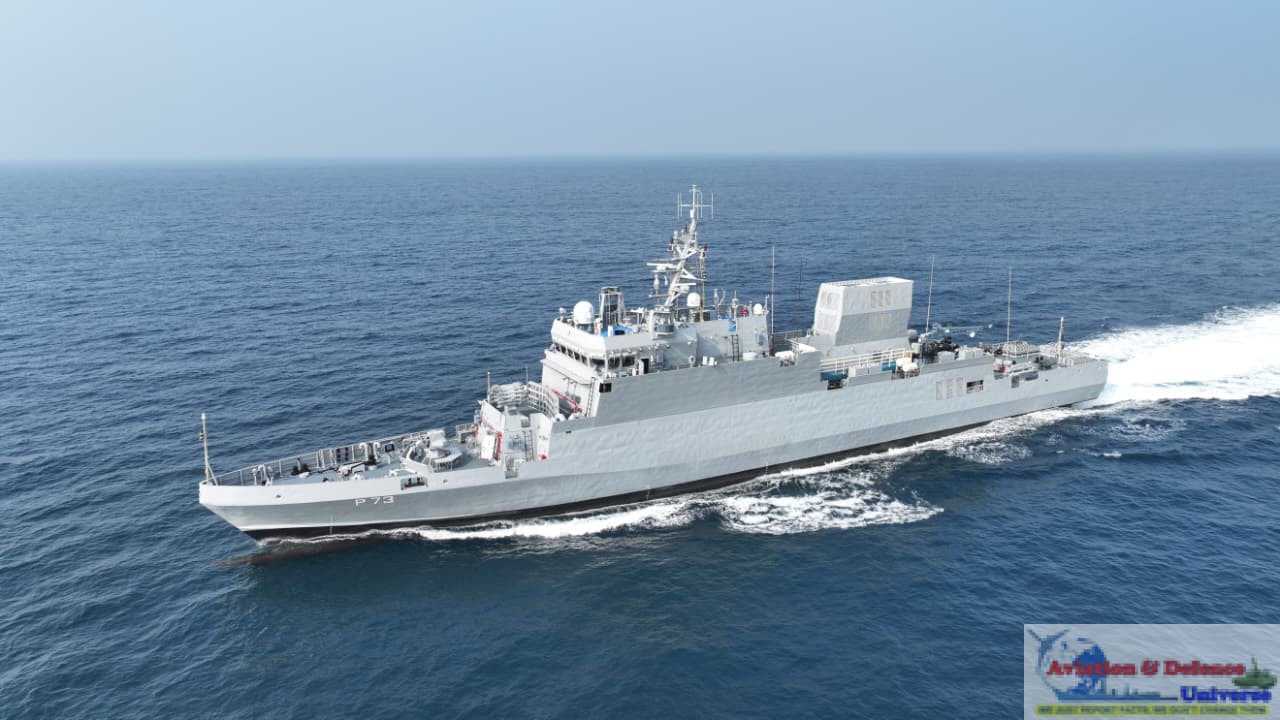


- Unveils Year’s Operational Milestones and Maritime Achievements Ahead of Navy Day 2025
- Highlights Strategic Role in a Turbulent Maritime Landscape
- From Piracy Battles to Humanitarian Missions
- Signals Strength, Readiness and Innovation
- Women Break Barriers, Ships Multiply and Operations Intensify
By Sangeeta Saxena
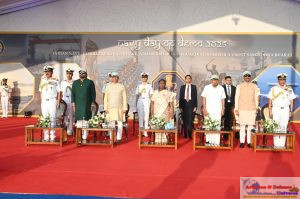
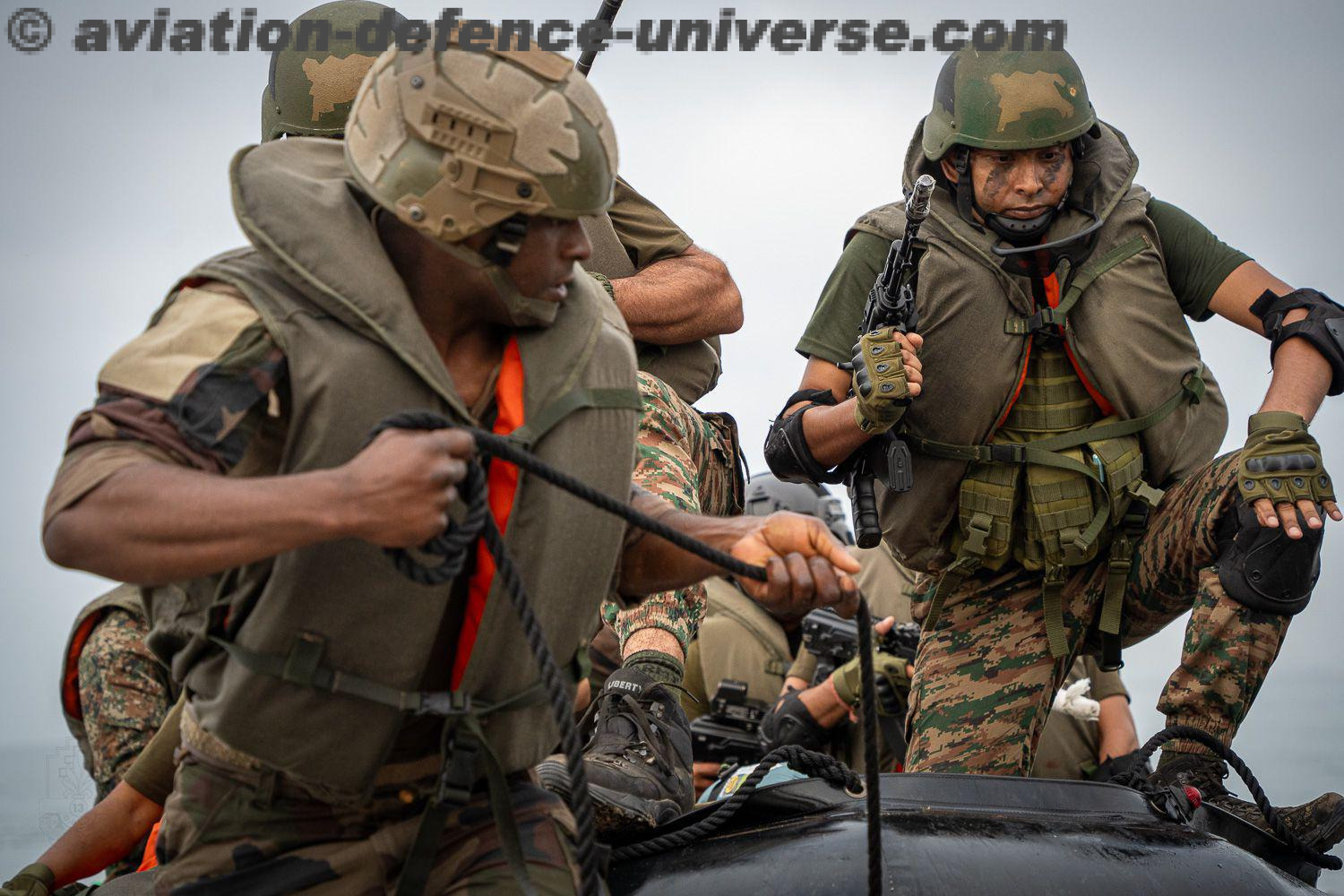
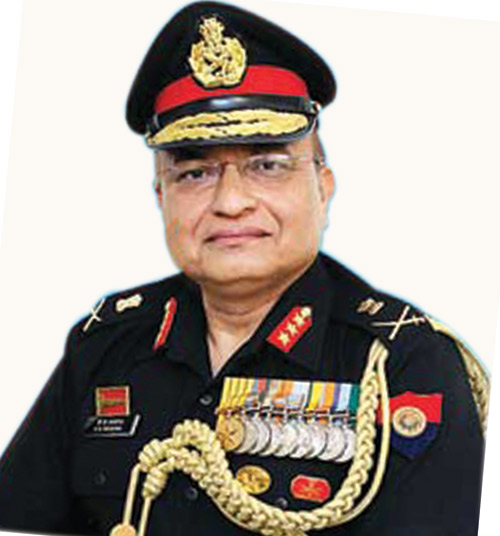
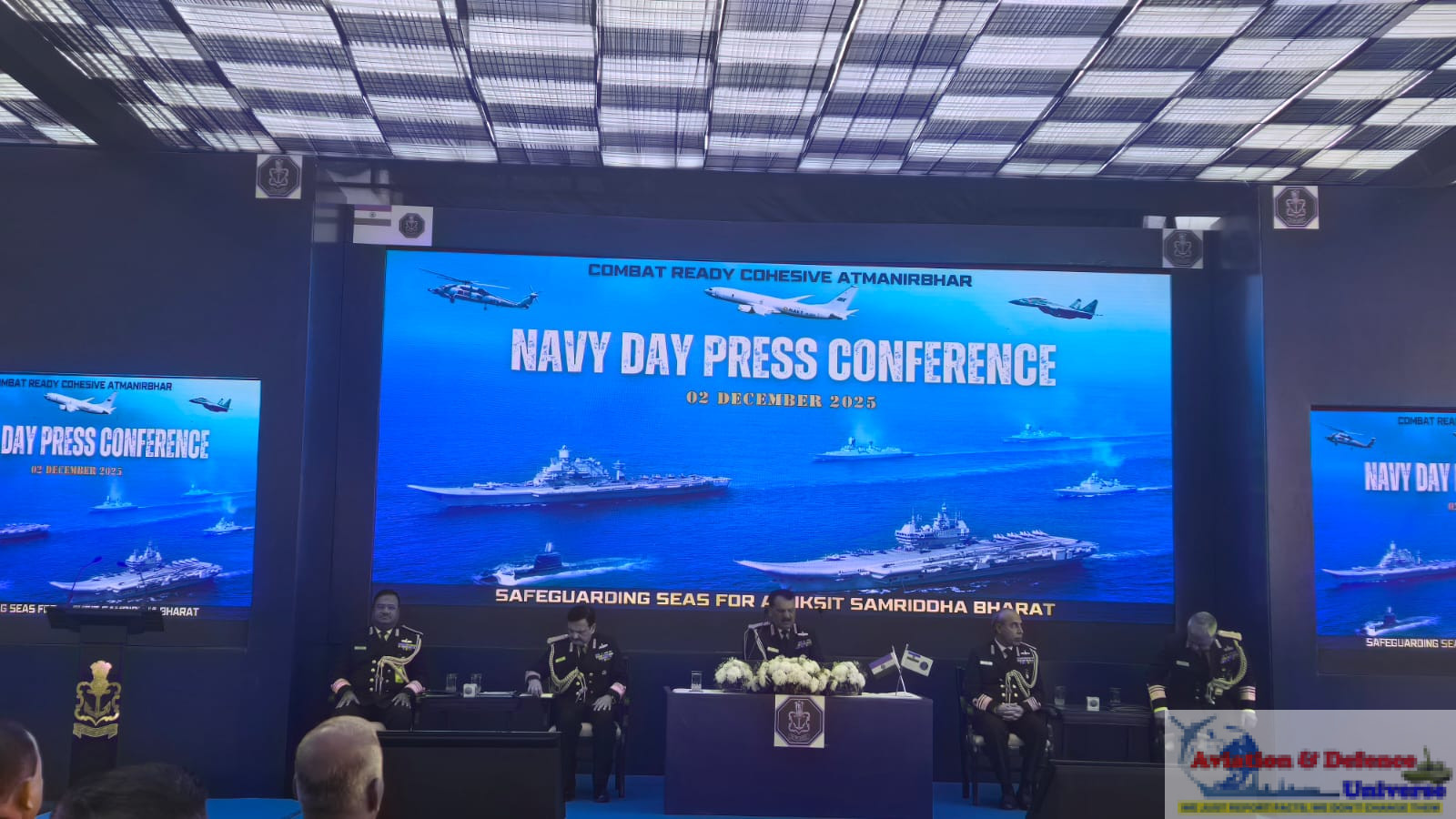
New Delhi. 02 December 2025. The Indian Navy presented a comprehensive overview of its operational achievements, strategic engagements, humanitarian missions and indigenisation efforts during the annual Navy Day Media Interaction held in New Delhi. Addressing the press alongside senior Naval Principal Staff Officers, the Chief of the Naval Staff, Admiral Dinesh Kumar Tripathi reflected on the Navy’s role as a combat-ready, credible and future-focused maritime force. Against the backdrop of preparations for Navy Day celebrations in Thiruvananthapuram, the Navy highlighted its expanding global presence, sustained operational tempo, pioneering technological initiatives and growing emphasis on jointness, innovation and human capital.
 The Navy Chief opened the briefing by recalling the significance of 4 December, commemorated as Navy Day, marking the decisive 1971 attacks on Karachi that altered the course of the Indo-Pakistan War. He paid homage to naval heroes, acknowledged veterans for shaping the modern force, and expressed gratitude to the media for enhancing maritime awareness across the country. This year’s Navy Day celebrations will take place tomorrow, 3 December, at Sanghumugham Beach in Thiruvananthapuram, Kerala, in the presence of the Hon’ble President, who will witness an operational demonstration by the Navy. The Chief appreciated the support extended by the Kerala government and local authorities and noted the palpable excitement among the public.
He emphasised that it has maintained an exceptionally high operational tempo across the Indo-Pacific, covering vast maritime spaces ranging from the Atlantic to the Pacific. Since the last Navy Day, naval platforms have logged 11,000 ship days and 50,000 flying hours. A warship has remained deployed continuously in the Gulf of Aden since 2008, escorting more than 3,700 merchant vessels to safety. Following heightened instability since November 2023 due to the Red Sea crisis and increased threats from non-state actors, the Navy deployed 40 capital ships with airborne and unmanned assets to ensure secure marine transit. These deployments facilitated the safe passage of 152 lakh metric tonnes of cargo valued at USD 6.5 billion across 376 merchant vessels, and the Navy responded to over 30 maritime incidents, saving more than 520 lives. Indian naval units also apprehended 62 pirates. INS Teg received commendation from the International Maritime Organisation for rescuing nine crew members from MT Prestige Falcon, while the Chief of Oman Navy conveyed appreciation for the mission.
Humanitarian Assistance and Disaster Relief (HADR) remained a core Navy capability. In March 2025, following a devastating earthquake in Myanmar, the Navy swiftly executed Operation Brahma, dispatching five ships that delivered over 500 tonnes of relief material within 48 hours. Throughout the year, naval aircraft and ships undertook rescues of crew members from distressed vessels, including MSC Elsa 3 and MV Van Hai 3, and inserted salvage teams during harsh monsoon conditions to prevent coastal pollution. The Indian Navy continues to support Sri Lanka under Operation Sagar Bandhu, providing relief following Cyclone Mithwa, delivering tonnes of humanitarian supplies and rescuing stranded civilians.
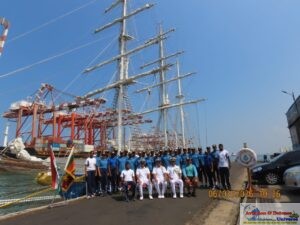
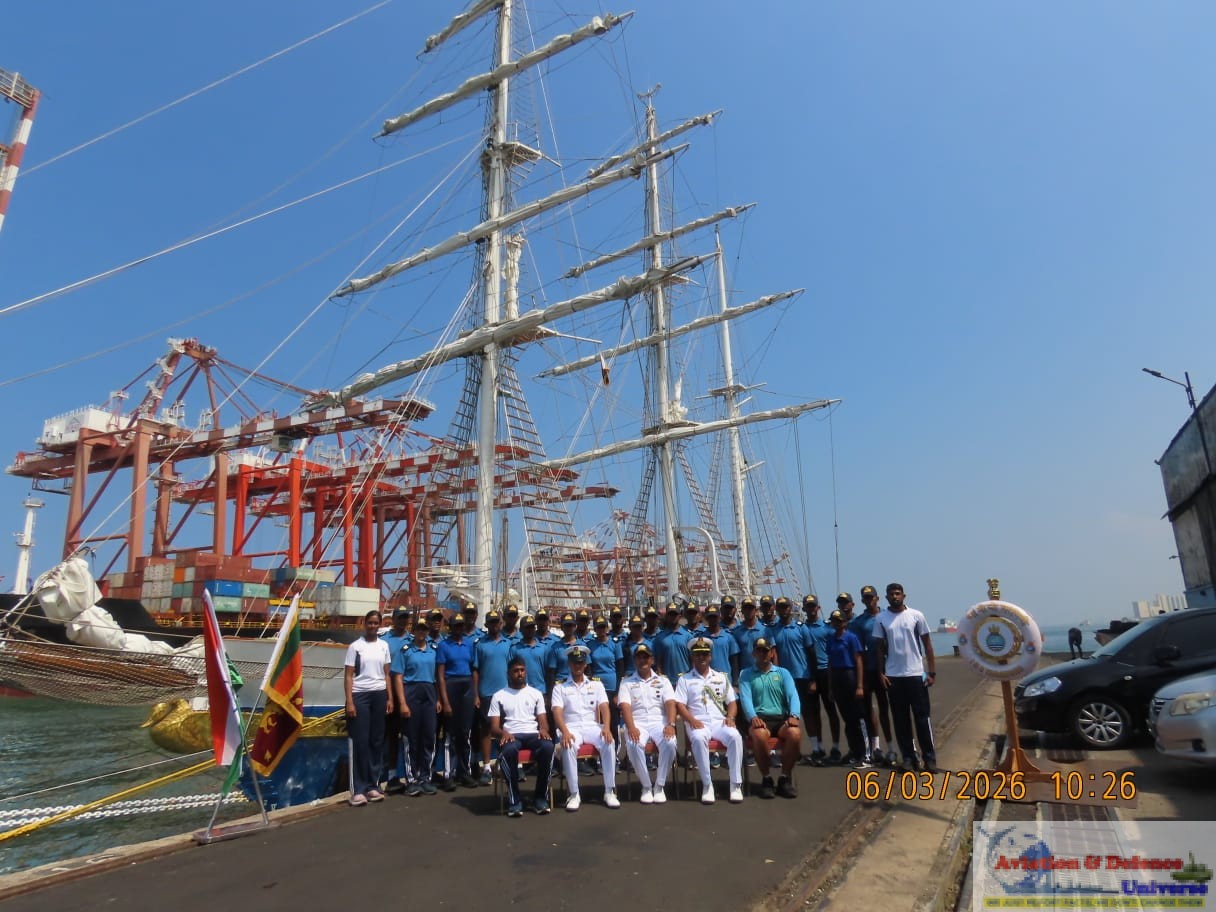
 The Navy deepened its global maritime partnerships, stating that no single navy can shoulder the burden of maritime security alone. Over the past year, the Navy conducted 21 bilateral, 9 multilateral and 34 maritime partnership exercises, as well as 13 joint EEZ patrols. Three major initiatives showcased India’s growing maritime influence. The Indian Ocean Ship Sagar deployment involved INS Sunayana sailing with 44 personnel from nine Indian Ocean countries for over 30 days, earning widespread appreciation. The Africa–India Maritime Engagement (AIMED/ÆCIM) brought together nine African nations in Tanzania to exchange best practices and Tanzania has volunteered to host the next edition in 2027. The Indian Navy’s Deep Submergence Rescue Vessel (DSRV) also made its maiden participation in Exercise Pacific Reach in Singapore, successfully mating with submarines from South Korea, Singapore and Japan.
The Chief celebrated the exceptional maritime adventure undertaken by Lieutenant Commanders Dilna K and Roopa Alagirisamy, who completed the Navika Sagar Parikrama 2, circumnavigating the globe over 240 days across more than 23,400 nautical miles. Their achievement, involving the crossing of the treacherous three capes—Cape Leeuwin, Cape Horn and the Cape of Good Hope—was lauded as an extraordinary feat of endurance and skill, and was acknowledged personally by the Prime Minister.
On the modernisation front, the Navy inducted a new submarine and 12 warships over the past year. INS Udayagiri became the 100th indigenously designed warship, marking a major milestone in India’s shipbuilding capability, while INS Mahind became the first warship designed by a private Indian entity. Currently, 51 platforms are under construction across shipyards in India. Since December 2024, the Navy secured Acceptance of Necessity (AoN) approvals for 94 capital acquisition cases worth over ₹1.27 lakh crore and signed contracts for 83 cases valued at ₹84,762 crore, including the contract for 26 Rafale-M fighters. The Navy also commissioned the National Maritime Domain Awareness (NMDA) project and the base depot ship Aravali, enabling seamless integration of data from 7 ministries and 15 national agencies.
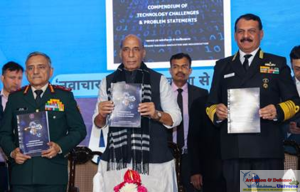
 The Chief outlined significant progress in self-reliance and innovation. The Navy remains the leading participant in iDEX, owning 198 of 565 challenges, representing 35 percent of all defence innovation problem statements. The Defence Innovation Organisation has committed ₹1,100 crore for prototype development, with more than ₹400 crore already infused into the defence startup ecosystem. The Navy secured 28 AoNs worth ₹2,700 crore and 16 procurement orders worth over ₹1,400 crore under the iDEX framework. It also established the Indian Navy Incubation Centre for Artificial Intelligence (INICAI) in Bengaluru, which is already developing 45 use cases across operations, logistics and administration.
Highlighting progress toward greater jointness, the Navy reported high levels of synergy during Operation Sindoor, which involved coordinated actions across the Army, Air Force and national agencies. The Navy led the Tri-Services Exercise Trishul in November off the Gujarat coast, demonstrating effect-based operations across multiple domains. The Chief reiterated the Navy’s commitment to unified planning, integrated operations and joint doctrines as India moves toward theaterisation.
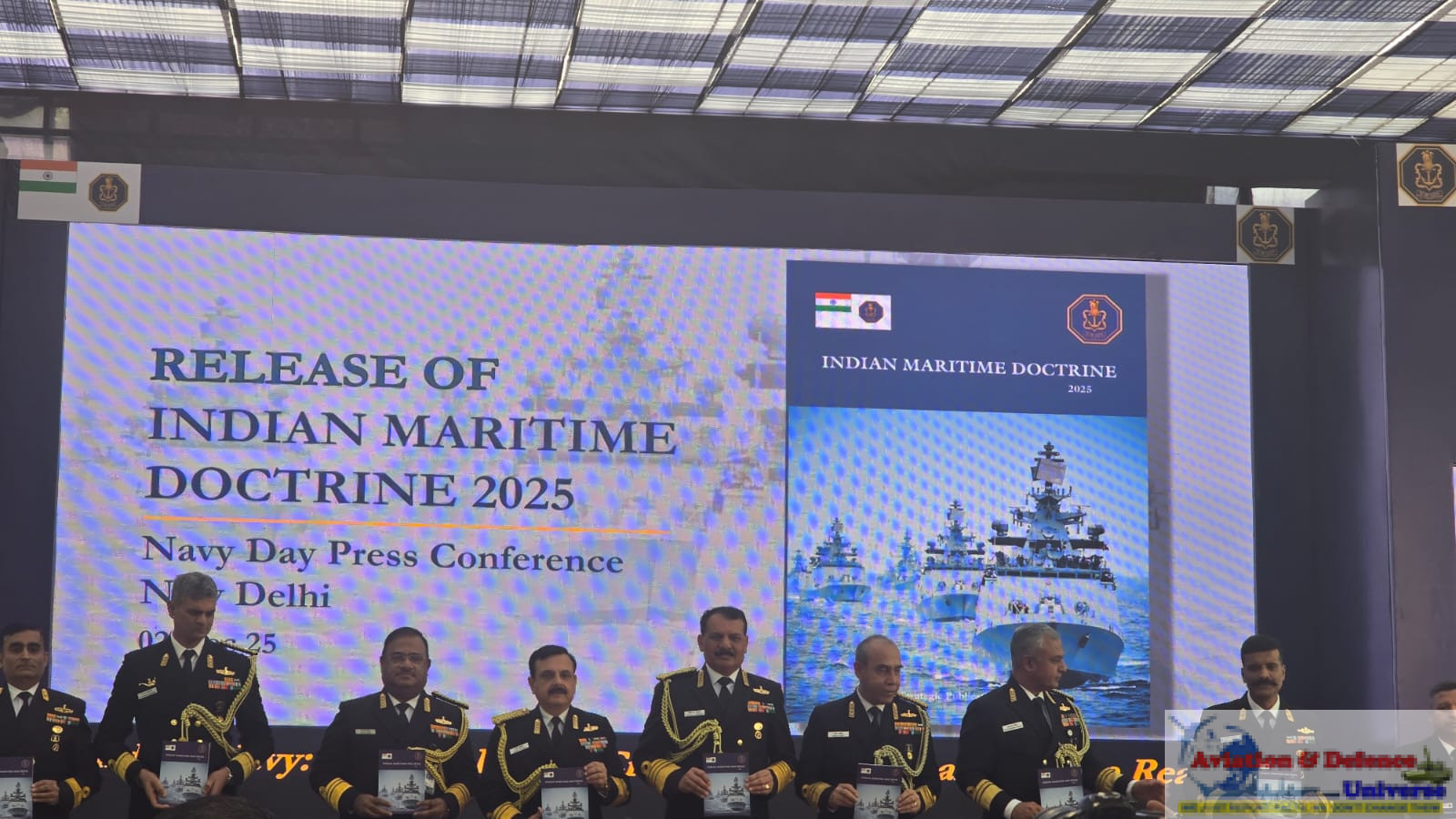
On the human resource front, the Chief emphasised that personnel remain central to the Navy’s strategic objectives. The force is focused on building resilient individuals capable of operating in a rapidly evolving technological and operational environment. Under the Agniveer scheme, the Navy has inducted recruits from 673 districts, representing the diversity of India. The Navy continues to advance gender neutrality, inducting women pilots into fighter and helicopter streams and adopting gender-neutral terminology. The Indian Maritime Doctrine will be updated and released later today, followed by a new maritime strategy early next year.
 Concluding the briefing, the Chief underlined India’s emergence as a consequential maritime power. He noted that the oceans, as the arteries of global trade and energy, will shape India’s economic trajectory. The Indian Navy, he said, remains unwavering in safeguarding national maritime interests, ensuring that sea lanes vital to India’s prosperity remain secure. “Your Navy, every Indian’s Navy, protects our maritime interests anytime, anywhere, anyhow,” he affirmed.
The Indian Maritime Doctrine is a set of principles and concepts that govern the employment of India’s naval power for national security, encompassing war, less-than-war situations, and peace. It is periodically updated, with the latest 2025 version adding the concept of “no-war, no-peace” to its conflict spectrum. The doctrine emphasizes sea control as a central concept to ensure freedom of navigation and protect sea lanes, and it has been further elaborated through related documents like the Indian Maritime Security Strategy and the SAGAR vision.