






















By Sreoshi Sinha
 Prologue of the Book
The book presents a strong and troubling introduction, which right at the start places the topic of terrorism not as an occurrence or event, but as a phenomenon that is deeply rooted in the world of international politics. The author starts by citing the Pulwama attack and the Pehlagam attack and puts them in the greater context of the world, and not as isolated cases. This framing is important as it defies the issue of localising terror and instead forces the reader to see it as a transnational issue that is influenced by historical, political, and ideological processes.
Then she shifts to a more current event, nearer to home, the explosion at the Red Fort in Delhi. This is a turning point of reflection in the story as it challenges readers to a disturbing reality, which terrorism does not necessarily come from beyond the boundaries. It may be driven internally within the society itself. This argument of the author is particularly vivid, since she focuses on the idea that extremism may develop in a small circle of people, and still can dissolve whole societies. What she shows is that terrorism does not just ruin lives or infrastructural structures, but it decays the very concept of humanity.
One of the key questions raised at the very beginning of the book is the following: Do laws suffice to address the issue of terrorism? The author does not negate legal frameworks but questions their sufficiency. Is it within the ability of laws to be able to capture the extent of such violence? How does a country assure itself of national security and then destroy the liberties it was established to save? This tension is the intellectual basis of the book. The author deliberates on the question of how democratic societies can deal with terrorism and counterterrorism without setting back their own freedoms and values they are supposed to protect.
India is at the heart of this question. The book, therefore, aims at finding out whether the changing attitude of India towards terrorism can be used to inform the other international community and how to combat terror without compromising justice and freedom.
The author presents two prevailing perspectives on defining terrorism. The effects of neglecting this grey zone can be easily traced in history. The author cites the Soviet intervention in Afghanistan in the 1980s, the Balkan wars of the 1990s, how Iran has funded Hezbollah and the Shia militant groups in Iraq, and Sri Lanka and the long war against the LTTE. The cases highlight the fact that contemporary proxy warfare is flourishing in semantic and legal ambiguity.
The history of India alone is a case study of terrorism, not as a theoretical issue but as a survival issue. Kashmiri Pandits’ exodus in the 1990s, the hijacking of the IC-814 in 1999, the attack on the Indian Parliament in 2001, the Mumbai siege of 2008 and the Pulwama bombing all highlight a recurring fact: terrorism has never been defined as abstract in India, as the world defines it.
Among the most thought-provoking statements of the book is when the author refers to the words of the philosopher, Richard Popkin, “definitions in social sciences are never neutral but are embedded with value judgments.” This observation had a profound effect on my understanding of the book, and it has given a fresh angle on why the definition of terrorism has been so controversial. It is laudable that the author could incorporate this philosophical thought into her analysis.
With the definition of terrorism, the author proceeds with resoluteness to the association between terrorism and international law. She clearly states international law does not apply to every individual personally, but rather it is the law of the states, for the sovereign entity.
The author underlines the fact that human rights protection should be a key point. The employment of force against non-combatants, be it an ordinary citizen or a combatant, should be completely banned. In her arguments, she suggests that counterterrorism treaties re-establish a moral and legal obligation, i.e., in the circumstances of death, civilian life is not negotiable.
Among the most interesting parts of the book is the fact that the author combines the international humanitarian law with the Indian philosophical and civilizational traditions. Based on the notion of Dharma and Yudh, she associates the concept of humanitarianism in modern times with the Mahabharata, Manusmriti, Bhagavad Gita, and Rigveda. This misuse in justification of militancy, extremism, and terrorism has given way to the emergence of other groups like the ISIS, the Taliban and the Al Qaeda groups in the world, and these groups have been involved in perpetual violation of the international humanitarian law in the name of religion.
Then the emphasis is drawn to the main paradox of the security versus the humanitarian law. Counterterrorism law aims to prevent the existence of violence, whereas humanitarian law does not disapprove of violence in armed warfare but demands that it be controlled and kept within bounds. The author takes time to compare humanitarian law with human rights law. The human rights law would like to protect humans universally at all times, whereas humanitarian law works on the contextual conditions of armed conflict.
PART 3: INDIAS RESPONSE AND LEGAL COMPLIANCE
In the concluding part, the author takes the entire focus directly on the counterterrorism architecture of India in the context of the international law of humanitarianism and human rights laws. However, the main question is how India be able to counter terror without undermining democratic principles in its Constitution?
The author shares that the Indian experience of counterterrorism is not a new experience; rather, it has been adapting since the 1980s, with notable developments in Punjab and the 1990s in Kashmir, as well as the recalibration of laws and institutions that took place after 2008. The Indian form of terrorism has taken ethno-nationalist, religious, and left-wing types, which demand the ability to respond flexibly.
The book ends with the critical legal argument: Should glorification of terrorism be criminalized? The response by India should be such that it ensures the safety of the people without compromising the democratic principles and acknowledges the fact that terrorism prospers in the environment where there is poor governance, and divided people and communities are sidelined. The effectiveness of the counterterrorism policy used by India, she concludes, will be gauged by the ability of such a policy to maintain a free, just, and strong society that is a society in which terrorism will not have a fertile ground.
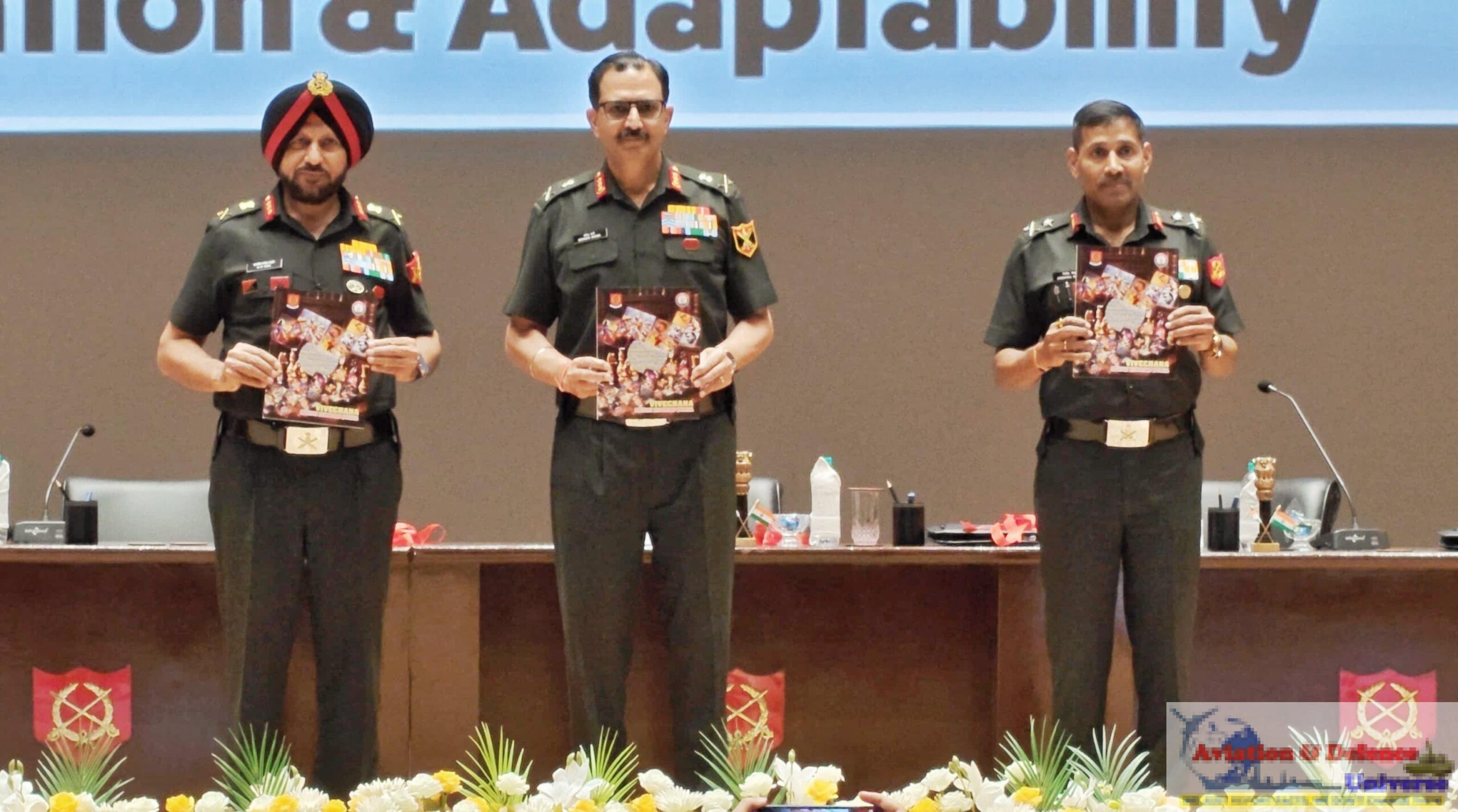
Despite having excellent subject coverage in 278 pages, the book has been priced only at Rs 1495/- with the aim to reachout to all the stakeholders. The book has been published by Pentagon Press (rajan@pentagonpress.in) as a CENJOWS publication (cenjows@cenjows.in).
Reviewed by: Ms Neha Singh
Research Assistant,
CENJOWS