











- Training Together, Thinking Together: Indian Armed Forces’ Educational Integration Underway
- Purple Synergy & Joint by Design: Paves Path for Theaterisation
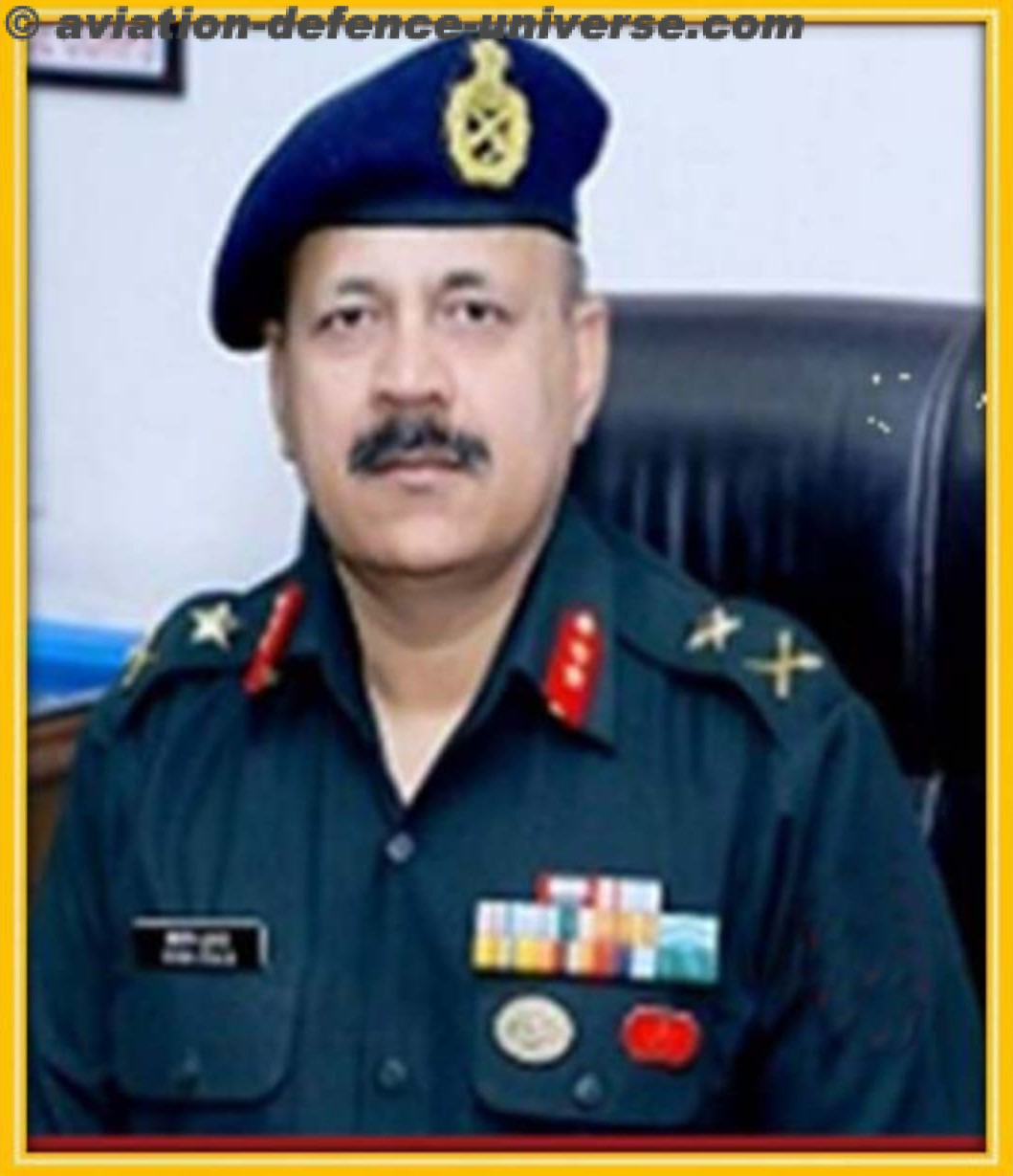
 By Maj Gen (Dr.) Ashok Kumar, VSM (Retired)
New Delhi. 15 October 2025. The integration of services is not just a structural reform but a strategic necessity in modern warfare. In an age of hybrid threats and multi-domain operations (land, sea, air, cyber, space), no single service can act in isolation. Integration streamlines command and control structures, enhances resource optimisation, and fosters interoperability — ultimately resulting in enhanced combat efficiency and reduced duplication. The merger of education corps is emblematic of this wider trend, setting a precedent for future joint structures.
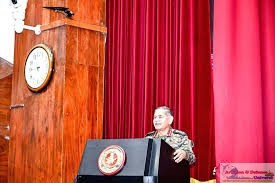
At the recently held Combined Commanders Conference (CCC) at Eastern Command, Kolkata in September 2025, the theme of integration and jointness emerged as a clear national security priority, underscored by the presence of Prime Minister Narendra Modi and top defence leadership. Among the executable steps towards Theaterisation announced was the integration of the Education Corps across the Indian Army, Navy, and Air Force — a move hailed as both symbolic and strategic in India’s quest for tri-services synergy.
A large canvas was covered during these deliberations but the central theme remained jointness and Integration all along probably strengthening the areas before the adoption of Theaterisation. The deliberations also resulted in some executable actions in run up to the preparation for the eventual Theaterisation. One of these executable action was the amalgamation of Education Corps of all the three services.
One thing is obvious. Integrated approach results in better optimization of resources as the administrative heads shrink and more can be done from less. This is one of the very many reasons to move towards Theaterisation wherein large No of current Army, IAF and Naval commands will ultimately shrink in reduced No of operationally needed commands for prosecuting the operations though enhanced operational effectiveness remains the main cause. The announced integration of Education Corps of all the three services though a small but is a significant step towards jointness and integration of all the three services.
All the three services came into existence at different timelines. Not only that, they got their first Indian chiefs at different years after the independence. The Education Corps/ Departments of all the three services also came into being at different timelines. Since these were tailored to meet the requirement of individual services, they had different structures and profiles. Despite these individual variations, they were largely created for enhancing the educational threshold of all ranks in varying degrees. The primary focus was on soldiers, sailors and airmen but they were also addressing the needs of officer corps as well predominantly in the training academies. With passage of time, their roles were also diversified as the basic intake level of education of recruits improved reducing the commitment of Education corps. These organizations have under gone under various thought processes of closing them down altogether to diversifying their roles to include music training, language training and some roles in media handling.
While the exact contours of this announcement are not yet known but the likely profile and advantages accruing from this decision could be as under:
- Command & Control. Once the Tri-services Education Corps comes into being, it will be essential that its relative positioning is structured in a manner that it is able to execute its intended tasks. HQ Integrated Defense Staff (IDS) is the only tri-services apex level organization which can be considered most suited to have the responsibility of nurturing this newly conceived and announced organization. This set up could be placed under Dy Chief of integrated Defence Staff (Doctrine and Training) viz DCIDS (DOT) who is a three star officer. The Education corps is most suited to be under Training vertical of HQ IDS.
- The Spread. While the apex organization of Tri services Education Corps should be under HQ IDS but each service will also need some dedicated constituents of this organization to fulfil certain roles peculiar to concerned Services. In fact, this issue needs a brainstorming when most of the entities will be Tri-services in nature in the future. While the operational responsibility should rest with Chief of Defence Staff (CDS) through Theatre commanders and Raise, Sustain & Train (RST) responsibility should be with Service Chiefs, HQ IDS has to substantially enlarge itself as it will be most suited set up under a Vice Chief of Defence Staff (VCDS) carved by redesignating current CISC to execute the orders of CDS. The execution of Tri services integration of Education Corps is an apt opportunity to develop and adopt future joint structures including re-orienting newly created infrastructures for all the three Service HQs and HQ IDS in line with expected changes which may be necessitated to accommodate the future changes related to Theaterisation.
- Preservation of Human Resources. Once the Tri-Service HQ of Education Corps is set up, a single apex organization will be adequate replacing the current profile having three apex organizations of the three services thus saving the critical HR. The manpower so released could be reoriented for the evolving character of warfare in the Education domain. This can be also deployed in the newer domains like cyber & space which need immediate expansion.
- Optimizing the Infrastructure. Each Service HQ has multiple entities placed at different locations occupying infrastructure which will be optimally utilized once this integrated organization comes into play. Certain infrastructure will get released resulting in saving of capital & revenue budgets as these can be re-appropriated for other organizational purposes.
- Purple Manifestation. This integration will result in personnel of all the three services to be part of this organization at all levels enhancing the jointness and integration. They will be able to imbibe the purple values and culture in all recruits as well officers of the three services right from their induction.
Jointness goes beyond organisational changes—it is about mindset. The creation of a Tri-Services Education Corps fosters a “purple culture” where personnel from all three branches train, learn, and evolve together. This unified structure will instil shared values, promote mutual respect, and align doctrines, laying the foundation for effective joint operations. Joint training builds mutual trust and operational familiarity, critical during integrated deployments under theater commands.
As highlighted, the Tri-services Education Corps will herald a new era and set a precedent for other such organizations to evolve. While some of the advantages have been highlighted but there are many more which will emerge once the shape of this set up is known in the open domain. This notwithstanding, this step will bring out the attendant challenges which will surface with its implementation. This will be a practical training and testing ground to evolve operational models for future integration of other constituents for their smooth transition towards Theaterisation.
The proposed integration of the Education Corps is more than a personnel reshuffle—it’s a litmus test for future Theaterisation. From optimising human resources and infrastructure to enhancing interoperability and “purple” thinking, this step could serve as a model for the gradual unification of other services and departments. As India’s military reforms march toward integrated theatre commands, such educational amalgamations may well prove to be the crucible in which a truly joint force is forged.
(Maj Gen Ashok Kumar, VSM (Retd) is Director General Centre for Joint Warfare Studies (CENJOWS), a Kargil war veteran and a defence analyst. He specialises on neighbouring countries with special focus on China. The views in the article are solely the author’s. He can be contacted at editor.adu@gmail.com).