


















- From Promise to Orbit: GalaxEye Prepares for Drishti Satellite Launch
- All-Weather, All-Time Imaging: GalaxEye Signals India’s Space-Tech Maturity
By Sangeeta Saxena
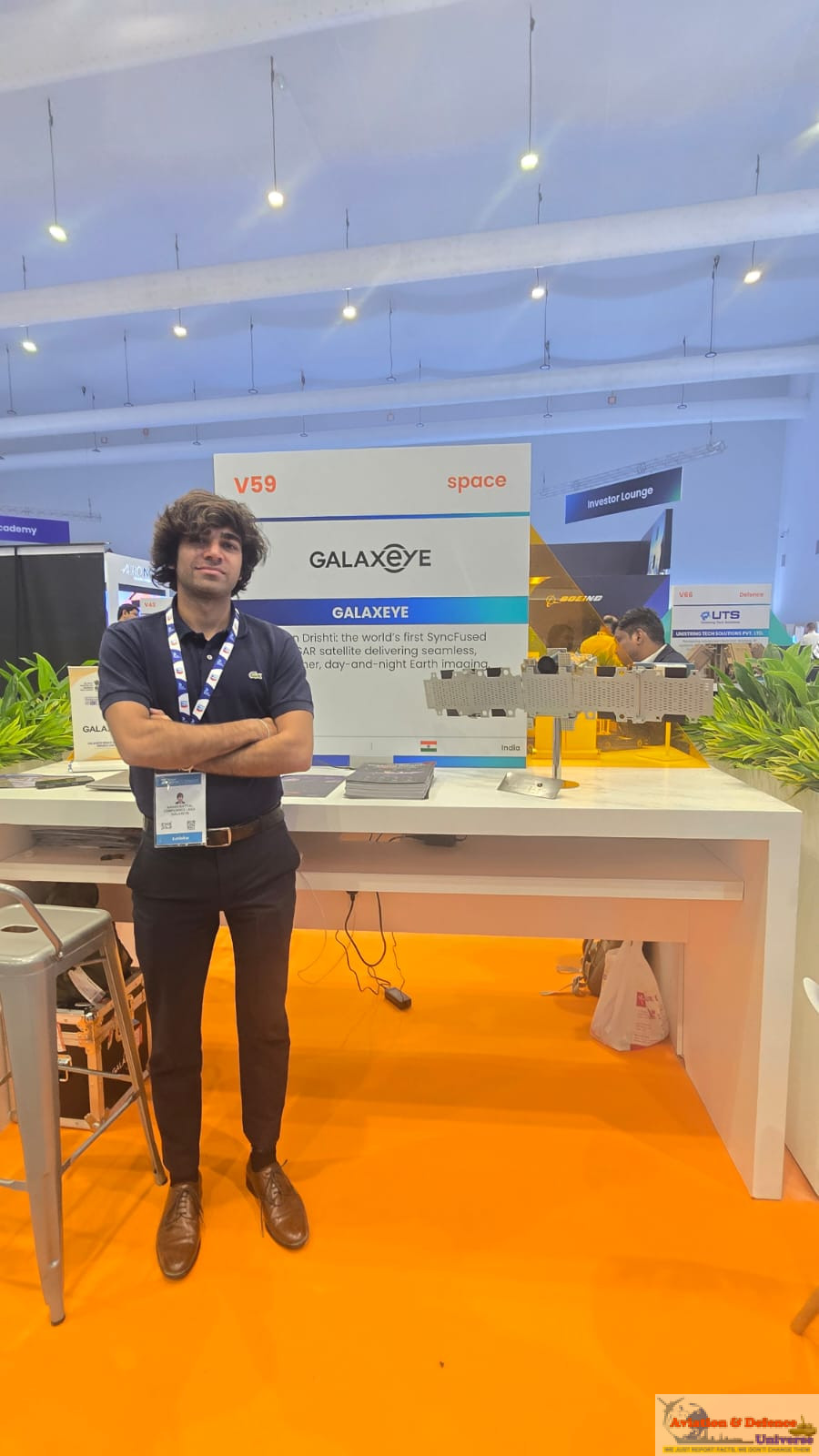
New Delhi. 02 December 2025. At the Dubai Airshow’s Inspiration Zone—now firmly established as a global showcase for cutting-edge innovation—Indian startups are drawing significant attention for their rapidly maturing capabilities. Among them is GalaxEye, an iDEX-winning space-tech company that has consistently stood out for pushing the boundaries of Earth observation. GalaxEye was founded in 2021 by a team of engineers at IIT Madras to challenge a compromise Earth Observation has long accepted. In this conversation with ADU, Kanav Katyal, Lead – Compliance (Technologies) at GalaxEye, speaks about the company’s presence at the show, the growing global recognition of its work, and the imminent launch of a satellite that promises to redefine all-weather, all-time imaging from space.
ADU. Kanav, we are here at the Inspiration Zone at the Dubai Airshow, with Indian startups showcasing their innovations. GalaxEye is here as an iDEX winner and a very active player in the space domain. What brings you to this show?
Kanav Katyal. What we are doing here is essentially reinforcing a message that GalaxEye has been sharing across various platforms over the last few years—that everything we have promised is now actually materialising. At this event, we want to clearly communicate that our vision is turning into reality.
ADU. When you say it is materialising, what exactly are you referring to?
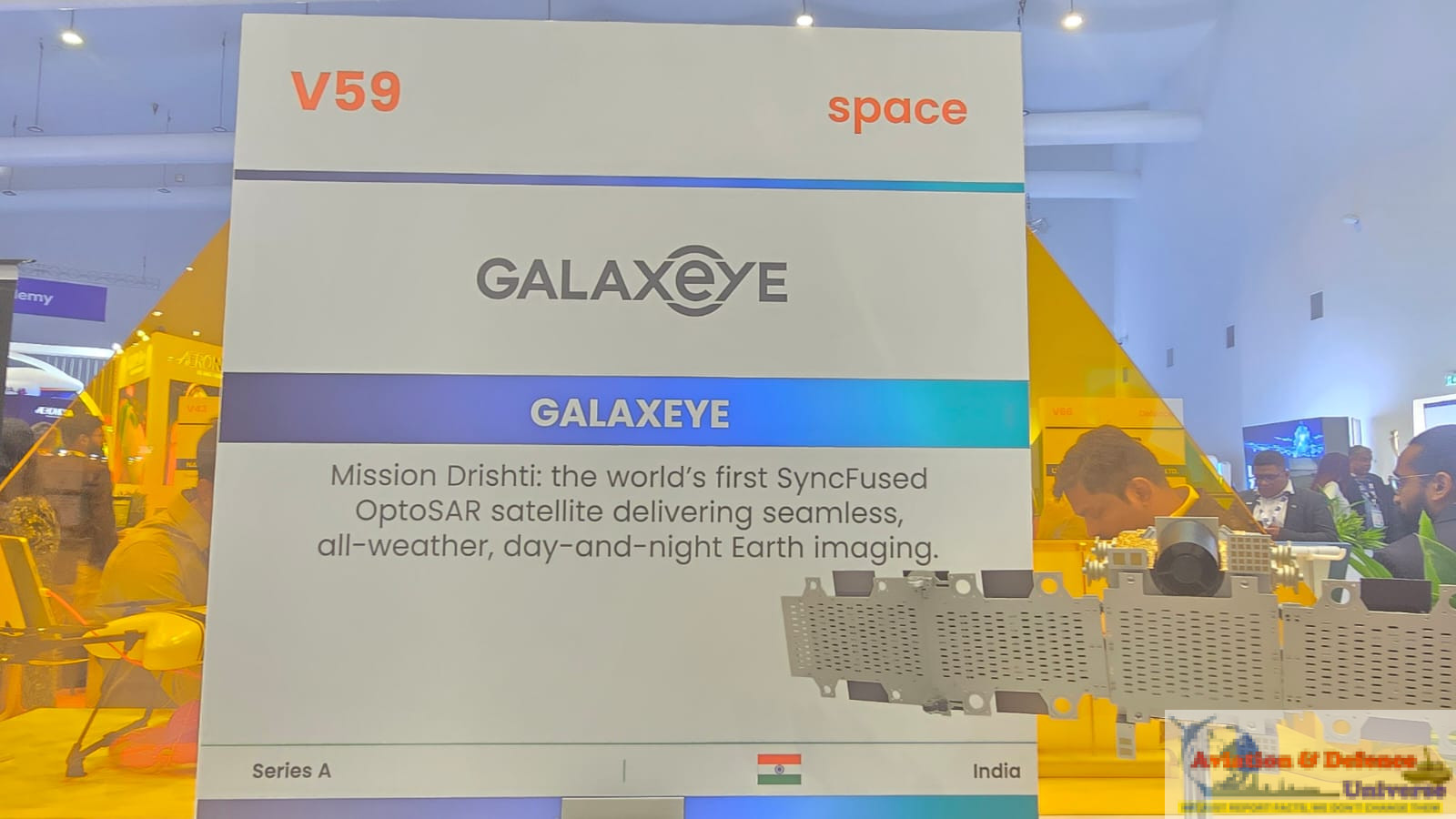
Kanav Katyal. We are referring to the launch of our Drishti satellite, which will be the world’s first Syncfused Octosar imaging satellite. It is scheduled for launch in the first quarter of 2026. We will be launching with SpaceX, out of California. This is a significant milestone for us and for Indian space technology as a whole. We want the world to know that this capability—patented, indigenous, and truly disruptive—is happening now.
ADU. For those who may not be fully familiar, what makes Drishti and this technology so unique?
Kanav Katyal. Drishti represents a completely new approach to Earth observation. Our Syncfused Octosar technology allows us to provide all-weather, all-time imagery, overcoming limitations that traditional optical or standalone SAR systems face. This capability enables consistent, reliable imaging regardless of cloud cover, weather conditions, or time of day. It’s something that the global market has been seeking for a long time, and we are proud that it is coming out of India.
 ADU. This is the third day of the show. What kind of response have you received so far?
Kanav Katyal. The response has been very positive. What’s encouraging is that people are not just stopping by out of curiosity after seeing the stall—they are actively looking for us. Many already know that GalaxEye is here, so they come specifically to our stall. In most conversations, I don’t even have to explain who we are or what we do. It’s more about discussing progress, timelines, and what’s coming next, because they already understand our work.
ADU. What exactly is GalaxEye building, and how does it change the way satellite imagery is used?
Kanav Katyal. We are indigenously building the world’s first multi-sensor imaging satellites that fuse all-time SAR with high-resolution optical data on a single platform. This unique integration delivers uninterrupted, all-weather visibility—anytime, anywhere. By combining the strengths of both sensors, we enable users to make faster, smarter decisions with unprecedented clarity, ensuring they get the data the day they need it, exactly the way they need it.
ADU. GalaxEye’s journey to space has been closely watched. How did you validate your technology before qualifying it for orbit?
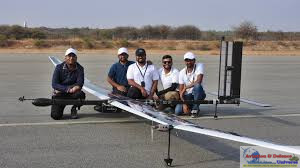
Kanav Katyal. The team began by testing the payloads extensively on drones and aerial platforms. This was followed by qualification for space under ISRO’s POEM-4 mission in 2023, which allows scientific and technological payloads to be tested aboard ISRO’s launch vehicles. While several companies struggled to meet the demanding conditions of the mission, GalaxEye’s payloads successfully cleared every test, demonstrating both robustness and readiness for space deployment.
ADU. Why is GalaxEye’s technology particularly relevant in today’s global context of climate uncertainty?
 Kanav Katyal. As erratic and extreme weather events become more frequent worldwide, traditional ground-based systems often fail during floods, storms, or landslides. GalaxEye’s hybrid satellite architecture is designed to overcome these limitations by seeing through clouds and darkness, enabling real-time insights. This capability is especially valuable for governments, insurers, disaster response agencies, and climate researchers who require reliable data under all conditions.
ADU. What has been the driving force behind GalaxEye’s technological success?
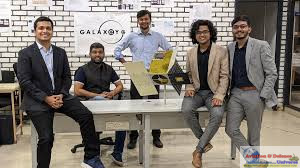
Kanav Katyal. A major factor has been the strength of the team. GalaxEye has built a 100-member engineering workforce comprising talent from IITs, ISRO, and professionals who were brought back from overseas through strong academic and professional networks. This diverse and highly skilled team has been central to translating complex ideas into space-ready systems.
ADU. How is GalaxEye protecting its intellectual property in such a competitive domain?
Kanav Katyal .The company has filed six patents to safeguard its innovations. These include patents related to novel image and signal processing methods as well as hardware systems. Among these, the most significant is the patent covering the fusion concept itself, which forms the foundation of GalaxEye’s multi-sensor imaging capability.
ADU. What kind of investor support has GalaxEye received so far?
 Kanav Katyal. We have raised funding from a strong group of investors, including Speciale Invest, Rainmatter, Mela Ventures, and Infosys. This backing has enabled us to scale its technology, strengthen its team, and move closer to operational deployment.
ADU. Absolutely. It certainly looks like GalaxEye has arrived on the global stage. Thank you, Kanav, for sharing these insights.
GalaxEye’s presence at the Dubai Airshow reflects a larger shift in India’s space ecosystem—from promise to performance. With the Drishti satellite slated for launch in 2026 and a patented Syncfused SAR capability poised to deliver all-weather, all-time intelligence, the company is moving decisively from innovation to execution. As global interest grows and recognition deepens, GalaxEye stands as a compelling example of how Indian startups are shaping the future of space-based sensing and strategic awareness.
As told to Sangeeta Saxena / Interview was taken at Dubai Airshow 2025