

















- Indian Navy Engaged with 120+ Startups to Drive Atmanirbharta, says CNS
- Combat Power, Partnerships, and Personnel: Admiral Tripathi’s Vision for a Future-Ready Navy
- Every Sailor Must Be a Technologist: Naval Chief’s Call for Innovation at Ran Samvad
- Technology and Human Potential Will Define India’s Future Navy
By Sangeeta Saxena
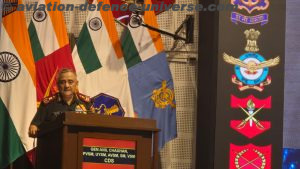
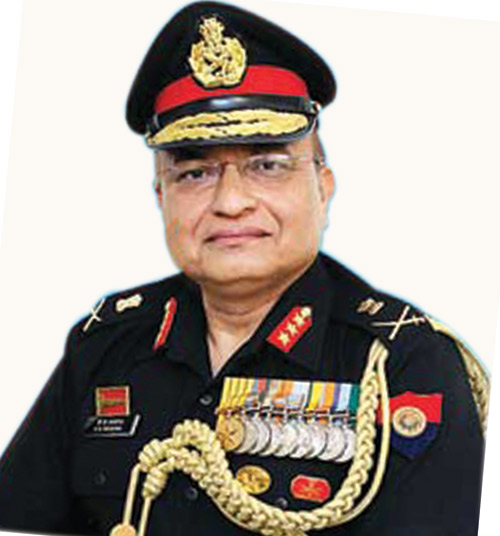
New Delhi. 28 August 2025. “In our civilisation, conversations on warfare and statecraft are as old as our sacred epics. From the Shanti Parv of the Mahabharata to Kautilya’s Arthashastra, war has never been restricted to the battlefield alone—it has always been debated and reflected upon so that we can be prepared, ” recapitulated Indian Navy Chief at the Ran Samvad dialogue in MHOW.
Chief of Naval Staff Admiral Dinesh Kumar Tripathi delivered a comprehensive address on how emerging technologies are reshaping maritime warfare and the Indian Navy’s roadmap for the future. Drawing on India’s civilisational tradition of strategic debates—from the Mahabharata to Kautilya—he emphasised how conversations like Ran Samvad carry forward this legacy into the 21st century. The Admiral structured his remarks around the impact of technology on naval warfare and the Navy’s approach to integrating innovation, partnerships, and human resource development to remain “ready, resilient, and relevant.”
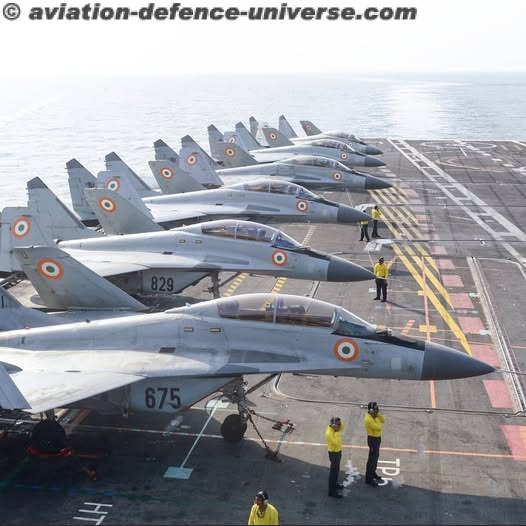
 The Admiral referring to ancient Indian military strategies said, “For the Navy, the timeless wisdom of Kautilya’s Arthashastra—Bal, Mantra, Mirth, and Kosh—translates into four imperatives: combat power, policy and processes, partnerships, and personnel. Our aim is to turn every opportunity into combat advantage. We are enhancing preparedness through realistic weapon firings, GPS-denied engagements, supersonic target drills, and carrier-borne strikes. India today is the only non-P5 country that can design, build, and operate both an aircraft carrier and an SSBN. Our guiding mantra is Atmanirbharta—the true source of strategic accountability. We are working not just at the platform level, but down to components and sub-systems, engaging MSMEs and startups. We are adopting agile software development, digital twins, robotic underwater scanning, and AI-based logistics to optimise fleet readiness and reduce downtime.”
The Indian Navy has been a trailblazer in self-reliance and indigenisation, setting benchmarks for the armed forces through its long-standing collaboration with Defence Public Sector Undertakings (DPSUs) and naval shipyards. From designing and building complex warships such as destroyers, frigates, and corvettes to constructing advanced aircraft carriers and nuclear submarines, the Navy has consistently championed the Atmanirbhar Bharat vision in the maritime domain. Its partnership with shipyards like Mazagon Dock Shipbuilders Limited, Garden Reach Shipbuilders, Goa Shipyard, and Cochin Shipyard, along with Hindustan Shipyard and other DPSUs, has enabled India to master technologies in hull design, propulsion, stealth features, and weapons integration.
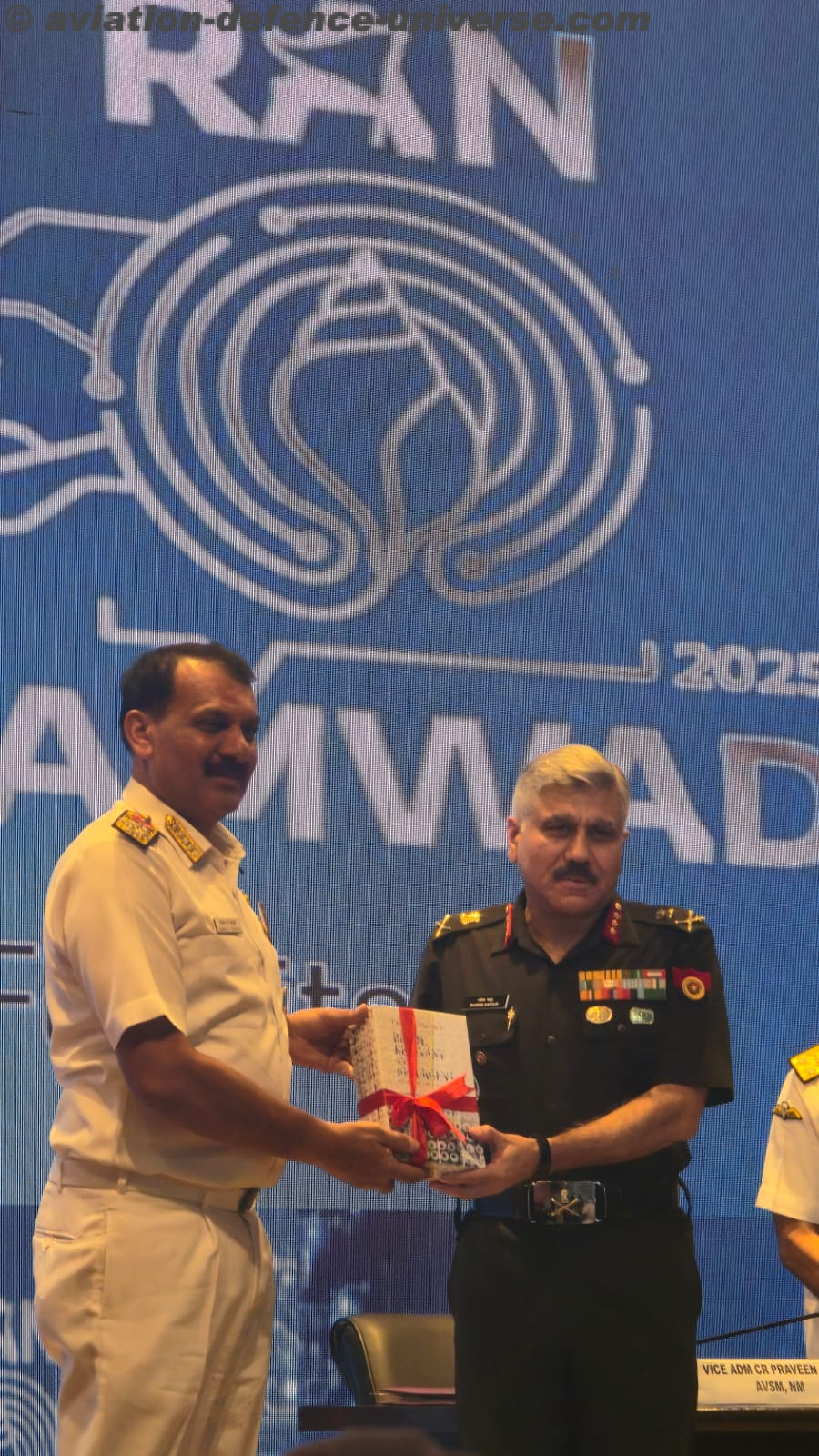 “Modern conflict is no longer a military enterprise alone. National security begins in our R&D frontiers, our factories, and our firewalls. We have reimagined engagement with industry from being customers and overseers to collaborators and co-developers. Our NIIO, TDAC, and INCAI are working with over 120 startups and MSMEs. In the past two years, 118 indigenisation projects worth over ₹6,000 crores have been contracted through this model, ” he said.
The Chief continued, “In today’s complex battle space, sailors must be more than warfighters—they must also be technologists, innovators, and thinkers. We are reskilling our personnel in AI, quantum, and space technologies, creating a pool of domain experts and using AR, VR, and advanced simulators to train as we will fight. Integration begins at the human level. We are fostering cross-pollination with the Army and Air Force, with theatreisation as the ultimate goal. The future readiness of the Indian Navy will not be defined by technology alone, but by our ability to harness technology and human potential concurrently. We are committed to being a combat-ready, credible, cohesive, and future-ready force.”
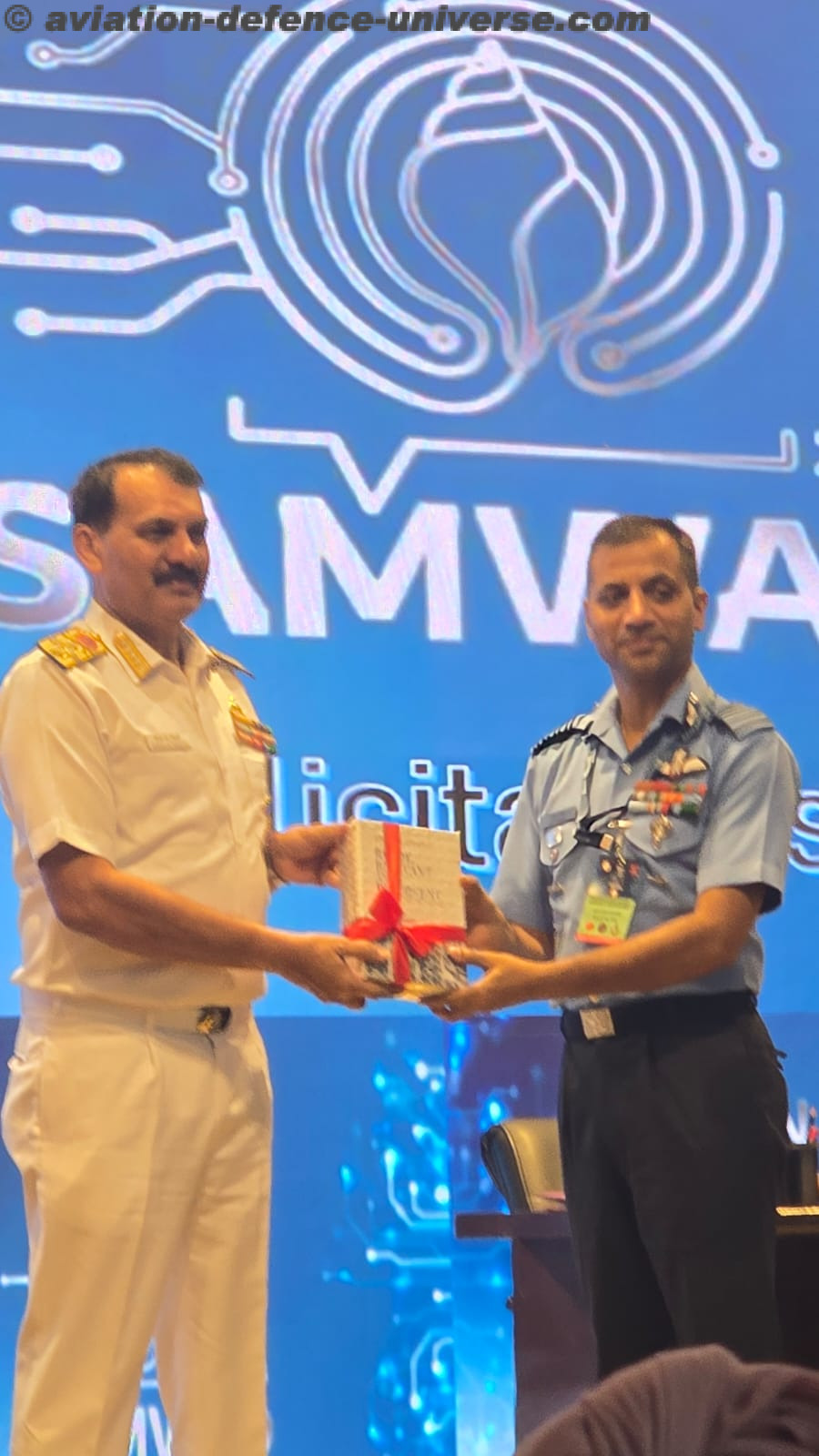
The Indian Navy views integration and jointness as essential to enhancing the nation’s combat effectiveness, but emphasises that this must be achieved through careful planning and respect for each service’s core competencies. The Navy supports the vision of unified planning, shared situational awareness, and integrated operations with the Army and Air Force, recognising that modern conflicts demand seamless coordination across all domains. Its focus is on centralised strategic planning with decentralised execution, ensuring faster decision-making without adding unnecessary layers of command. The Navy also highlights that integration must begin at the human level—through cross-training, joint exercises, and leadership development—so that personnel can work cohesively in complex, multi-domain environments. While committed to the long-term goal of theatreisation, the Navy advocates a measured, step-by-step approach that strengthens operational synergy without undermining flexibility or diluting maritime expertise, keeping national security as the ultimate guiding principle.
 “Emerging technologies are altering the traditional asymmetries in warfare at sea. Today, even non-state actors and proxies possess precision-strike capabilities once reserved for major naval powers. The Red Sea crisis has shown how low-cost commercial systems can force powerful navies to commit disproportionate resources—a cost imposition dilemma that compels us to rethink doctrines of affordability and lethality, ” Admiral Tripathi stated.
The Indian Navy’s blue water capability reflects its ability to operate across the deep oceans, far beyond the country’s immediate coastline, to protect national interests and project power on a global scale. Anchored by aircraft carriers, nuclear-powered submarines (SSBNs and SSNs), long-range maritime patrol aircraft, and advanced surface combatants, this capability allows India to secure sea lines of communication, deter adversaries, and provide a credible presence in distant waters from the Gulf of Aden to the South China Sea. Blue water operations also underpin India’s role as a net security provider in the Indian Ocean Region, enabling sustained deployments, joint exercises with global navies, and humanitarian assistance and disaster relief missions. By integrating cutting-edge technologies, enhancing jointness, and expanding indigenous shipbuilding, the Indian Navy is steadily strengthening its blue water credentials, ensuring that it remains combat-ready, resilient, and capable of safeguarding India’s strategic and economic interests well into the future.
 He reiterated, “Technology has blurred the lines between peace and conflict. Civilian platforms like fishing fleets or research vessels can double up as military instruments, embodying ambiguity of intent. Conflict at sea now extends from the seabed to outer space, encompassing cyberspace, undersea cables, energy pipelines, and rare earth elements—the strategic oil of this century.”
The Indian Navy plays a pivotal role in both the Arabian Sea and the Bay of Bengal, two critical maritime theatres that directly impact India’s security and strategic influence. In the Arabian Sea, the Navy safeguards vital energy lifelines, as a majority of India’s crude oil and trade from West Asia and Africa passes through this region. It also counters piracy, monitors hostile naval activity, and provides rapid response in crisis situations near the western seaboard. In the Bay of Bengal, the Navy ensures the security of India’s eastern seaboard, protects strategic assets like the Andaman & Nicobar Islands, and secures approaches to the Malacca Strait, a key chokepoint for global trade and energy flows. Both seas serve as gateways for India’s maritime diplomacy, enabling exercises, humanitarian assistance, and disaster relief operations with littoral nations, while also providing operational depth to counter challenges from Pakistan in the west and China’s growing presence in the east. Together, these two maritime fronts anchor India’s ability to project power, safeguard trade routes, and uphold security in the wider Indian Ocean Region.
“Distributed operations will define the future of naval power—networked platforms spread across distances, operating as a single intelligent entity, where the whole is greater than the sum of its parts, ” the Navy Chief reinforced.
 Even in regions like the northern and north-eastern borders, where India has no coastline or direct maritime interests, the Indian Navy plays a critical supporting role in times of war. As a key component of joint operations, the Navy provides strategic depth by safeguarding sea lines of communication, ensuring the uninterrupted flow of military supplies, fuel, and essential goods through maritime routes. Its long-range precision strike capabilities, carrier-borne aircraft, and missile systems can be leveraged to exert pressure on adversaries far from the battlefield, thereby creating deterrence and diverting enemy attention. The Navy also contributes through space, cyber, and electronic warfare domains, which transcend geography and support operations on land. By maintaining dominance in the Indian Ocean, the Navy indirectly shapes outcomes in land conflicts, ensuring that India’s adversaries face multi-front pressure and that the Army and Air Force are logistically and strategically supported in border theatres.
Admiral Tripathi’s address at Ran Samvad highlighted the transformative impact of technology on maritime warfare and the Indian Navy’s comprehensive response—from enhancing combat power and embracing indigenisation to fostering partnerships and empowering personnel. He underscored that the Navy’s future readiness depends on combining cutting-edge technology with human adaptability and resilience. His message was clear: India’s Navy will navigate the complexities of tomorrow’s battle space by embedding innovation, jointness, and Atmanirbharta into its very DNA.