




















- Herne, Dive-XL and SSN-AUKUS Take Centre Stage: Undersea Innovation at DSEI 2025
- Autonomous Submarines and Hybrid Undersea Systems Dominate DSEI London
- From Herne to REMUS: DSEI 2025 Maps the Future of Undersea Warfare
By Sangeeta Saxena
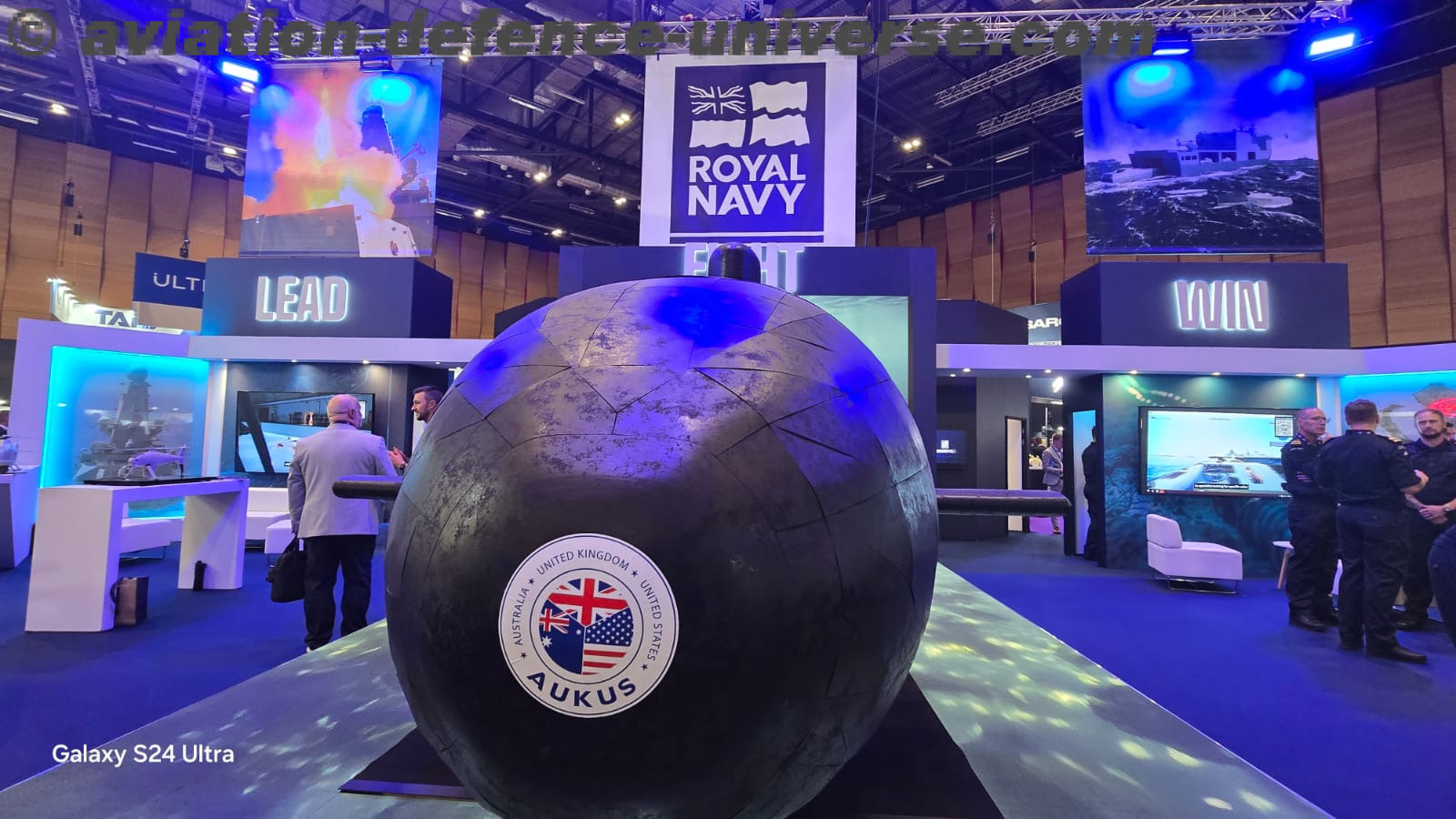
Excel Centre, London. 11 September 2025. At DSEI 2025, submarines showcased the powerful contrast between tradition and autonomy in the undersea domain. On the traditional side, the SSN-AUKUS programme—a collaboration between the UK, USA, and Australia—was highlighted as the next generation of nuclear-powered, crewed attack submarines. Designed to replace the Astute-class from the late 2030s, SSN-AUKUS will focus on endurance, firepower, and alliance interoperability, serving as a central pillar of NATO’s undersea deterrence posture.
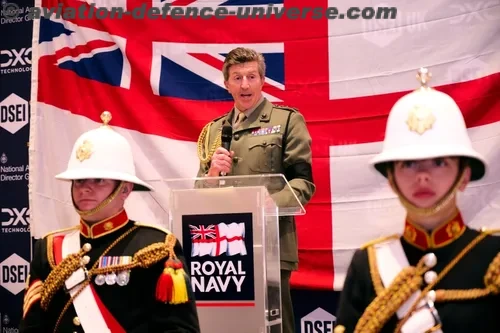 In his address at DSEI UK 2025, introduced Atlantic Bastion as a groundbreaking concept to revolutionise how the UK protects itself and its allies beneath the surface. This initiative will provide a formidable underwater defence posture spanning from the Mid-Atlantic Ridge to the Norwegian Sea. It will integrate a blend of crewed submarines, uncrewed host platforms, and networked systems capable of independent operations. Together, they will form a “system of systems” designed to find, track, and, if necessary, act against adversaries, thereby adding both mass and lethality to the UK’s already capable submarines, ships, and aircraft in the North Atlantic. The first Bastion sensors are expected to enter the water next year.
The speech placed heavy emphasis on submarines as the enduring backbone of undersea deterrence, while also stressing that their roles would be fundamentally enhanced by autonomous systems. The First Sea Lord illustrated this by describing a future deployment of a Type 26 frigate operating in the North Atlantic alongside two uncrewed escort ships. These AI-enabled escorts would extend the parent vessel’s sensor, weapons, and decoy capacity, creating a three-ship task group in effect. This hybrid model underlines a strategic shift: moving beyond the paradigm of ever-larger, more complex, and costly crewed warships, and instead embracing scalable and flexible autonomous companions to augment existing submarines and surface vessels.
The First Sea Lord was clear that this transformation is not a distant aspiration but an immediate necessity. He affirmed that the Royal Navy’s guiding principle will be: “uncrewed wherever possible; crewed only where necessary.” In practice, this means a transition towards a dispersed, digitally connected fleet of submarines, ships, and autonomous underwater systems that together redefine maritime power. The integration of hybrid and autonomous underwater systems will ensure greater mass, survivability, and adaptability while preserving the lethality and endurance of traditional submarines.
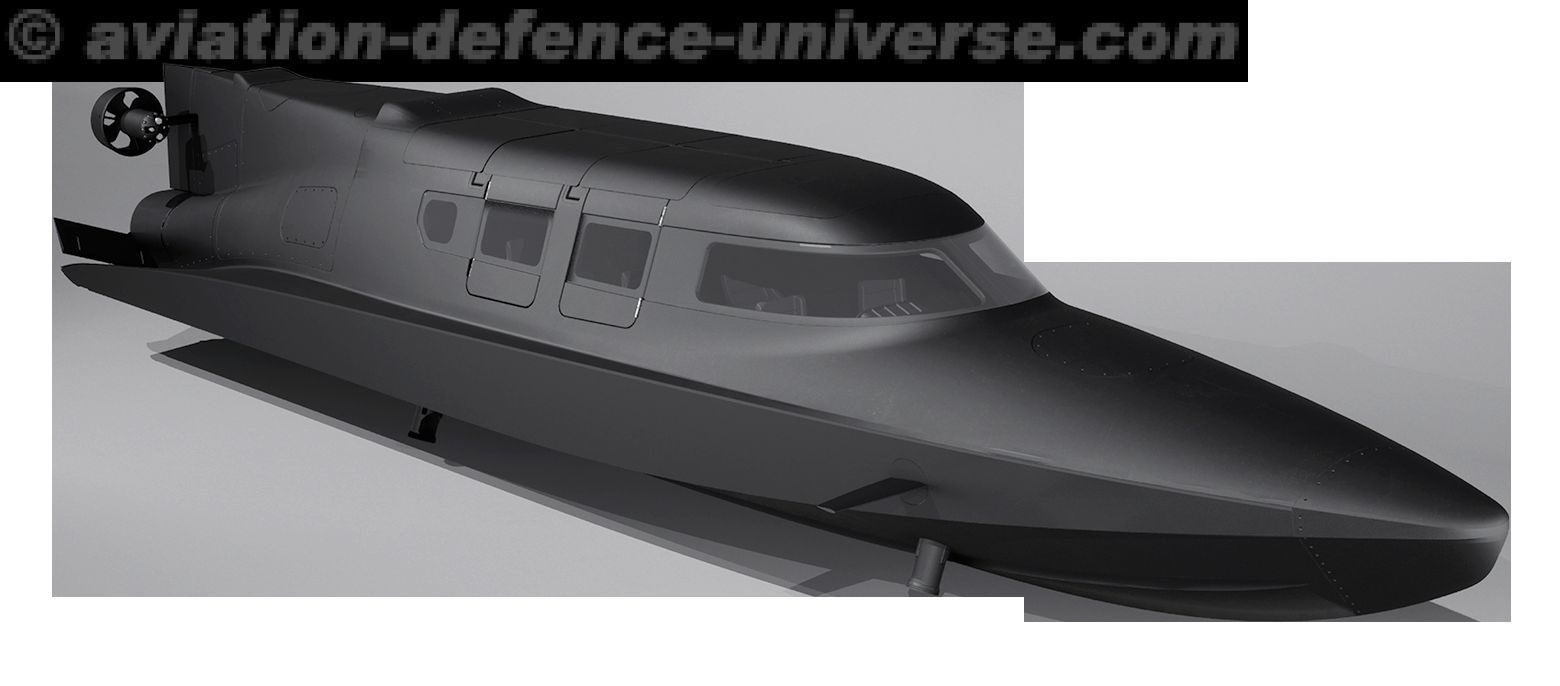
At the show alongside manned submarines, exhibitors emphasised the rapid advances in autonomous and hybrid systems. Herne, developed by BAE Systems in partnership with Cellula Robotics, is an extra-large autonomous submarine with a range of 2,000 to 5,000 kilometres, expected to be market-ready by 2026. The U.S. company Anduril presented Dive XL, a long-endurance unmanned submarine built for seabed security, intelligence, surveillance, reconnaissance, and mine warfare missions. The UK’s SubSea Craft displayed Victa, a hybrid craft capable of transforming from a fast surface vessel into a submersible, designed for stealthy Special Forces insertion. Meanwhile, HII and Thales demonstrated the integration of the REMUS 620 UUV with SAMDIS sonar, providing advanced mine countermeasure capability to protect vital seabed infrastructure.
Submarines & Undersea Systems at DSEI 2025
| System / Platform | Company / Nation | Type | Key Features | Status (2025) |
| Herne | BAE Systems + Cellula Robotics (UK/Canada) | Extra-large autonomous submarine (XLAUV) | 12m length, modular payloads, lithium-ion / hydrogen propulsion, range 2,000–5,000 km, ISR & strike capable | Successful trials (2024); Market-ready expected 2026 |
| Dive XL | Anduril (USA) | Unmanned submarine (XLUUV) | Long-endurance, payload flexibility, seabed security, ISR, mine warfare, special ops | Exhibited at DSEI 2025; in development |
| Victa | SubSea Craft (UK) | Transforming surface/submarine craft | Transitions from fast surface vessel to submersible; designed for Special Forces insertion | Demonstrated at DSEI; pre-production |
| REMUS 620 + SAMDIS 600 | HII (USA) + Thales (France/UK) | Autonomous UUV + sonar integration | Mine countermeasures, seabed security; advanced synthetic aperture sonar integrated on UUV | MoU signed; field trials complete |
| SSN-AUKUS | UK, USA, Australia | Nuclear-powered attack submarine | Replacement for Astute-class; collaborative design under AUKUS; advanced sensors & autonomy integration | Concept & design phase; spotlight at RN stand |
| Ultra Maritime ASW portfolio | Ultra Maritime (UK/USA) | ASW systems for unmanned/hybrid fleets | Air, surface & undersea ASW solutions; integrated for hybrid fleet concepts | Exhibited at DSEI; portfolio showcase |
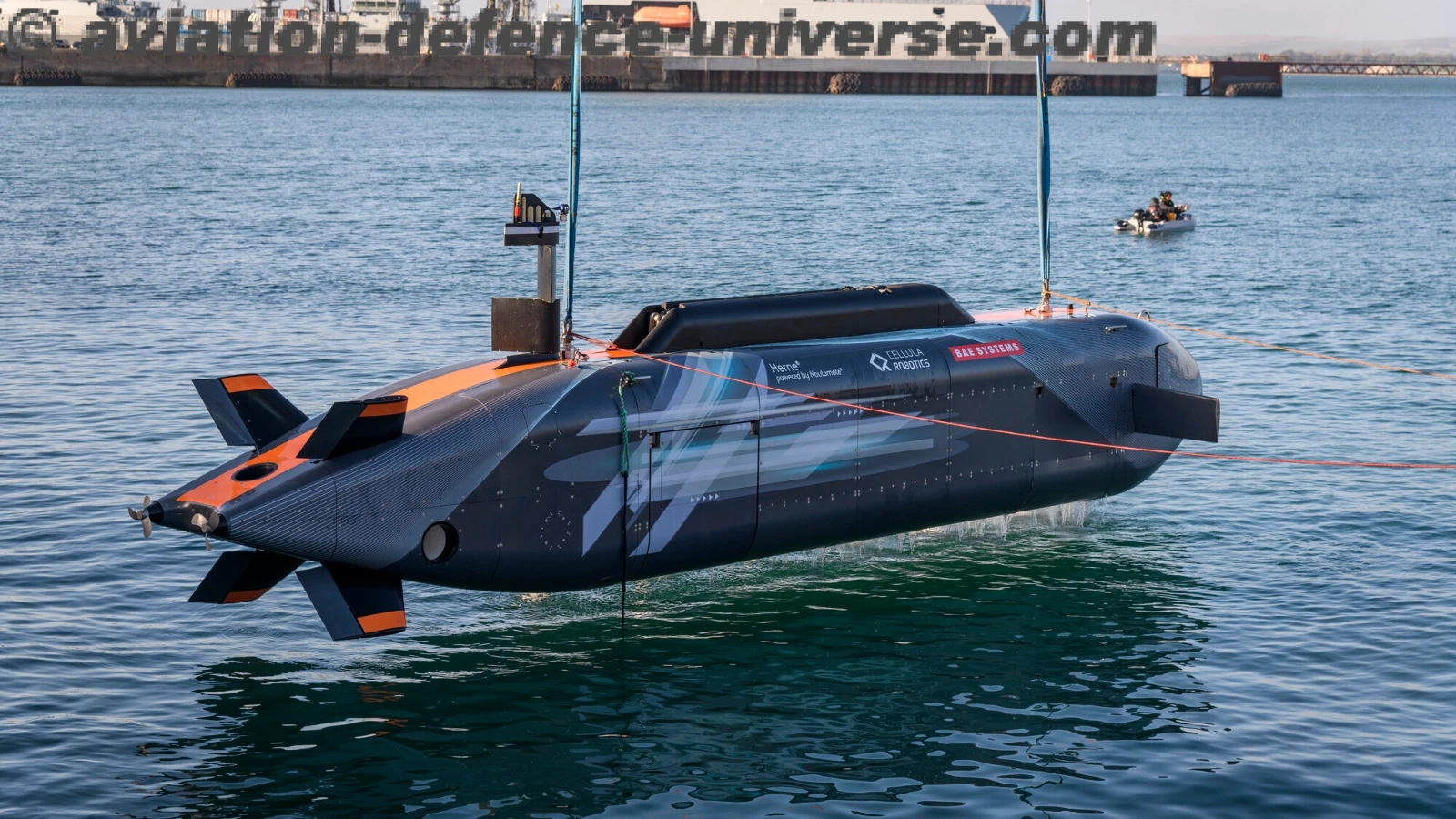
One of the headline submarine-related announcements at DSEI 2025 was indeed BAE Systems’ autonomous submarine project, Herne. BAE, in partnership with Canadian firm Cellula Robotics via a 10-year exclusive agreement, confirmed that Herne is expected to be market-ready by the end of 2026. The craft, fully autonomous, is designed for military use including anti-submarine warfare, covert surveillance, and protection of underwater infrastructure. Herne builds on successful tests in 2024 and has drawn widespread international interest.
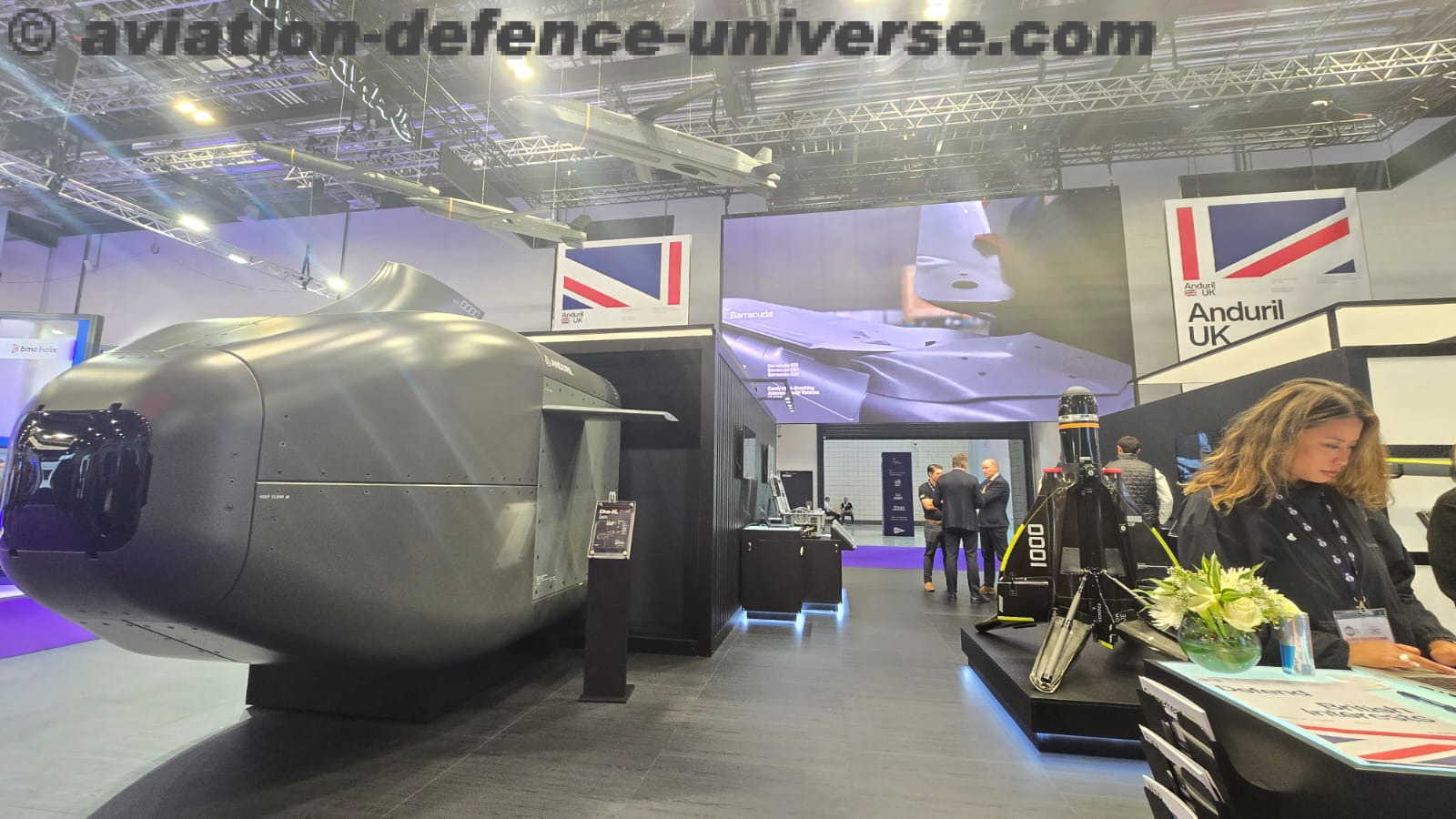
Another key exhibit is the Dive XL from U.S. company Anduril, an unmanned submarine intended for long missions and large payloads. It is designed for seabed security duties, intelligence gathering, mine countermeasures, and other special operations, offering substantial persistence underwater rather than being simply a sensor platform. Also present at DSEI is Subsea Craft Victa, a UK-based vehicle designed to transform from a fast surface vessel into a submarine for special forces deployment. The Victa is intended to provide special operations capability with stealth, flexibility and speed.
Undersea systems also featured in partnership deals. Babcock International and HII signed a Memorandum of Understanding at DSEI to combine HII’s REMUS Unmanned Underwater Vehicles (UUVs) with Babcock’s submarine weapon handling and launch systems (WHLS). This agreement aims to integrate UUVs more closely into the undersea and submarine support ecosystem.
Another featured subject at DSEI was the SSN-AUKUS programme, which came under the spotlight at the Royal Navy stand. This future class of nuclear-powered attack submarines is intended to replace the current Astute class starting from the late 2030s. The program also represents the trilateral cooperation between the UK, Australia, and the United States.
Ultra Maritime also used the exhibition to display its full Anti-Submarine Warfare (ASW) portfolio for unmanned and hybrid fleets including air, surface, and undersea systems. This underscores how the naval undersea domain is not simply about traditional manned submarines any more, but about how unmanned and hybrid platforms change the calculus of undersea threat, surveillance, and deterrence.
DSEI 2025 reinforced the fact that submarines and undersea systems are rapidly evolving. Traditional manned submarines remain a critical part of naval power, but the rise of autonomous undersea vehicles, unmanned submarine platforms, and hybrid systems was immensely visible at the show. Contracts and MoUs such as those for Herne, REMUS + WHLS, and the future SSN-AUKUS class signal that navies and industry are prioritising endurance, stealth, flexibility, and modularity in undersea operations. As threats in the maritime domain grow—both overt and via infrastructure vulnerability—these innovations will likely become ever more central in naval procurement and strategy.
The overarching message at the exhibition was clear: traditional submarines remain the strategic backbone, ensuring deterrence and dominance in deep-water operations, while autonomous and hybrid platforms serve as critical force multipliers, enhancing ISR, mine warfare, special operations, and infrastructure protection. Together, they redefine the future of undersea warfare for an era of contested seas and rapid technological disruption.