












- Fuelled by Ambition: Pieter Elbers on IndiGo’s Long-Haul Leap, MRO Drive, and India’s Aviation Moment
- From Domestic Dominance to Global Reach: IndiGo CEO Shares Blueprint for India’s Aviation Future
- IndiGo’s Global March Projects Scale, Sustainability and the Soul of Indian Aviation
- From Startup Spirit to Sky Sovereignty
By Sangeeta Saxena
New Delhi. 30 October 2025. The fireside chat at Aviation India & South Asia 2025 between Pieter Elbers, CEO of IndiGo, and Mark Pilling, Event Director, was more than a conversation — it was a high-powered, candid insight into the strategy, scale, and spirit of India’s largest airline, and its role in propelling a nation poised to become the world’s third-largest economy.
 Elbers, introduced by Pilling as “India’s adopted Dutchman” and one of the fittest CEOs in global aviation, opened by reflecting on India’s growth story, “India is the right place to be at this point in time for aviation. Indigo doesn’t just carry people, it carries the ambitions of a nation forward.” From Domestic Dominance to Global Reach this is a story which needs to be told and retold. With 118 million passengers flown last year, 2,200 daily flights, and a network spanning 130+ destinations, IndiGo has become the seventh-largest airline in the world by daily departures. “By 11 a.m., we’ve often already operated over 700 flights,” said Elbers, underscoring the sheer scale of operations.
What began as a modest operation under the InterGlobe General Aviation (IGGA) umbrella has evolved into one of the most compelling success stories in modern aviation. IndiGo, once a small start-up with a vision to make India fly, has grown into a commanding force in the skies — redefining low-cost air travel with unmatched punctuality, consistency, and scale. Its extensive domestic footprint connects metros to the remotest corners of Bharat, while its reliability and service have won not just market share but the trust and loyalty of millions. And now has just put its right foot forward into skies beyond the borders.
Marking its bold entry into long-haul, the airline recently launched flights to London and resumed services to Guangzhou, China, the same day it kicked off the winter schedule with 610 routes, including 60 new ones. “That’s 18 more destinations compared to last year—12 international and 6 domestic,” Elbers noted. The international push is no longer tentative. “When I joined, IndiGo had 23 international destinations. This winter season, we’re at 43,” he shared, pointing to routes like Manchester, Copenhagen, and Amsterdam. “The response has been very, very positive. Indian travellers are now shifting their mindset — they can fly non-stop from Indian cities to many of these destinations.”
 IndiGo as a global connector and Elbers spoke passionately about India’s potential as a global aviation hub, driven by geography and scale, “65% of the world’s population lives within five to six hours of India. There’s no reason why we can’t develop proper hubs here. With 90% of India’s population living within 100 km of an IndiGo-served airport, the domestic network gives it massive leverage in partnerships. Foreign carriers see value in connecting to our network. With KLM, for example, we connect beyond Amsterdam into smaller cities like Leeds and Bradford.”
Strategic patience and market liberalisation is the airlines and its leader’s mantra. On the pace of bilateral air services liberalisation, Elbers was pragmatic. While advocating for balanced traffic rights, he emphasized that Indian operators now have scale and long-term commitment. “We’ve made massive investments in fleet and infrastructure. The government has been selectively opening markets — Kuwait, Indonesia, Thailand — and I think the pace is appropriate.” He stressed the importance of “filling the current available capacity” before pushing for further liberalisation, calling it a “balanced approach” aligned with India’s economic and aviation growth goals.
Fleet growth, MRO, and sustainability are focus areas for the airline and the march forward towards achieving excellence in all three is visible. IndiGo has placed orders for 500 aircraft, 30 A350s, and is now operating three widebody Boeing 787s with three more to come — a stepping stone to the A350 induction in 2027. “India is in a hurry, and so is IndiGo,” Elbers quipped, pointing out the need for interim solutions like the wet-leased 787s. The XLRs, expected from December 2025, will unlock new opportunities: “Athens, Nairobi, Bali, and deeper China connections become possible.” IndiGo expects over 100 new aircraft by end-2027, powering its push to serve 200 million customers annually by the decade’s end.
 On maintenance, Elbers revealed ambitious MRO plans, “We’re building a massive facility in Bengaluru to reduce reliance on external vendors. India produces thousands of engineers every year. Let’s use that strength to bring MRO home.” IndiGo’s steady expansion in the Maintenance, Repair and Overhaul (MRO) segment marks a crucial stride toward operational independence and long-term sustainability. With one of the largest and youngest fleets in Asia, IndiGo has invested heavily in developing world-class MRO infrastructure to reduce turnaround times, cut dependency on foreign facilities, and optimise lifecycle costs. The airline’s growing MRO capabilities—spanning line maintenance, heavy checks, and component overhaul—reflect its strategic intent to integrate engineering excellence into its business model. By partnering with global OEMs, enhancing training programmes for Indian engineers, and aligning with the government’s Atmanirbhar Bharat vision, IndiGo is not only maintaining its fleet efficiently but also helping position India as a future regional hub for aircraft maintenance and aviation engineering.
 While becoming a $10 billion airline with top financial ratings, IndiGo hasn’t lost sight of cost leadership. “In a value-conscious market like India, you cannot afford to lose focus on costs,” said Elbers, adding that technology, AI tools, and customer digital experience (like Indigo BlueJet) will be key enablers. He highlighted the use of automation and AI agents to support customer service — vital as daily passengers are set to double from 3.5 lakh to over 7 lakh.
Reflecting on the challenge of GTF engine groundings, Elbers was candid, “Of course, I’m frustrated. But spending half an hour complaining doesn’t bring planes back into the air.” Instead, IndiGo has mitigated capacity loss with leased aircraft, short-term arrangements, and consistent deliveries — 58 new aircraft last year alone.
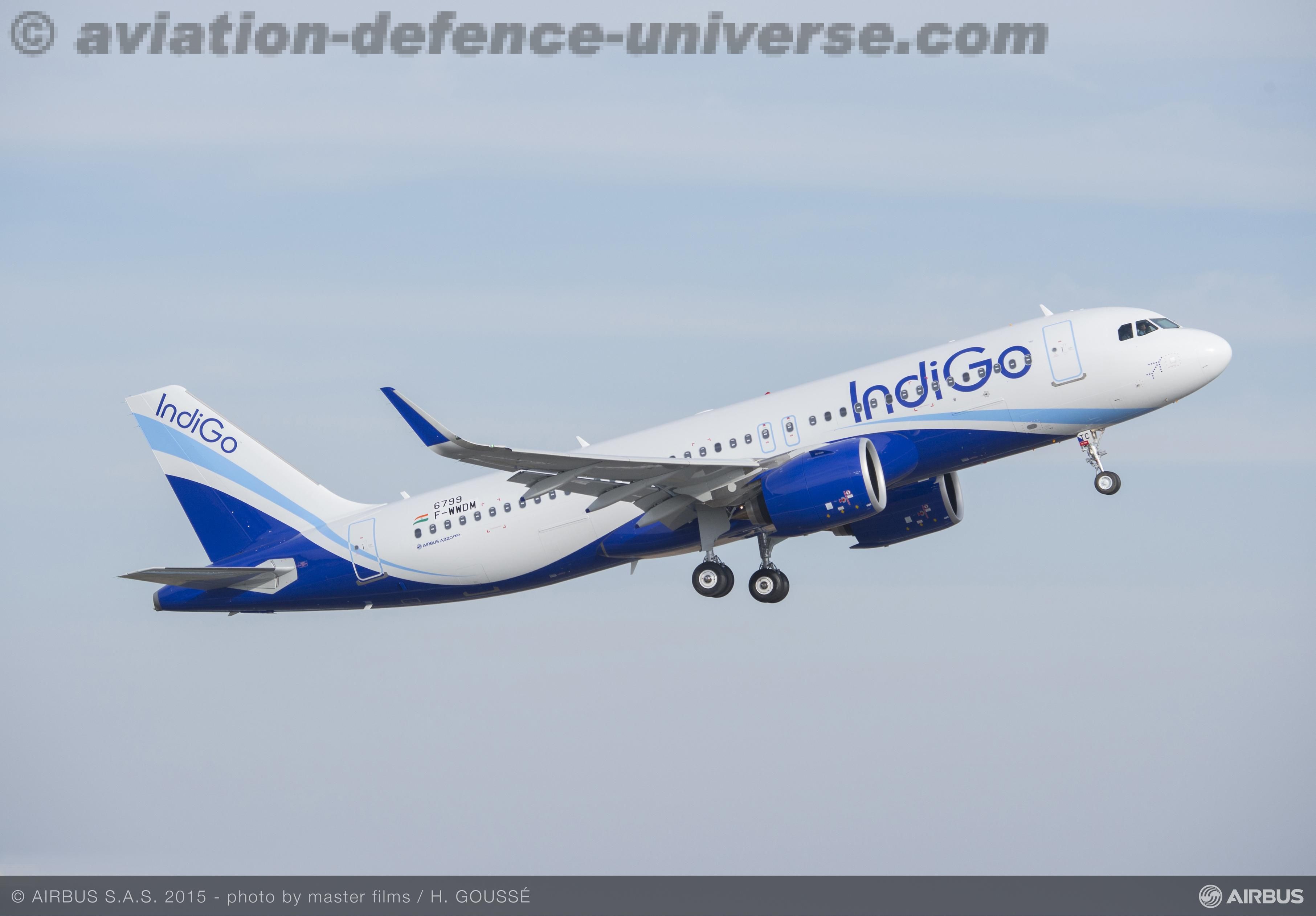 “An India where ancient heritage and diversity meet cutting-edge technology. Where every Indian dares to dream — and dream big. As the nation takes off, it is IndiGo that gives wings to those aspirations. Connecting people and possibilities, IndiGo today stands as the seventh-largest airline in the world by daily flights, flying over 118 million customers last year and operating more than 2,200 flights every day — welcoming a million delighted passengers every three days. And yet, IndiGo continues to exceed expectations with operational excellence and digital innovation, from 6E Sky to seamless booking via its website and app. With a network spanning over 130 destinations — including 90+ domestic and 40+ international routes, and through 50+ global destinations via codeshare partnerships — IndiGo has redefined accessibility in Indian aviation. The airline’s record-breaking order of 500 aircraft, complemented by 30 Airbus A350s for its bold entry into the widebody era, signals a new chapter — one that will reshape the future of Indian aviation,” the CEO informs with pride.
 IndiGo has transformed air travel with innovations like IndiGo Stretch, its tailored business product, and IndiGo BlueJet, which has already crossed three million members. Beyond business, it flies with purpose — through CSR initiatives, a young and fuel-efficient fleet, E-buses, and carbon-neutral operations. Every flight fuels economic growth, every journey strengthens the nation’s fabric. IndiGo has sustainably democratised air travel, powered by girl power and diversity, with over 220 Persons With Abilities (PWAs) shaping its success. From taking pride in being Indian to taking pride in being Made in India, the airline stands uplifted by the collective spirit of its 6E Stars — passionate, consistent and committed to service from the heart. Profitable, purposeful, and proudly Indian, IndiGo doesn’t just move people — it carries an ambitious nation forward. As CEO Pieter Elbers aptly said, “We’re not just flying planes — we’re connecting aspirations. The past was about making India fly; the future is about making India connect.” This is India by IndiGo — soaring toward new heights, across new frontiers.

Speaking on the presence and dominance of foreign carriers in Indian skies Pieter reiterated, “India for a long time had a situation whereby the capacity share for non-Indian operators was significantly larger than the capacity share from Indian operators, whereas the market is pretty much here. And there’s a number of countries where the market is, let’s say, 90% in India or 95% in India, and the terms of seat capacity is exactly the opposite. And if a country doesn’t have operators to operate it, it could be justified. But I think in today’s India, with a set of operators who are committed to build it into a long-term venture, it’s not a short-term thing. So I think this is a long-term venture. You just take the fleet orders of the Indian operator, you know, Indigo being one of them, but look at the entire landscape, for a minute talk on behalf of Indian operators, the size of fleet orders is enormous. So the commitments we collectively made to invest billions and billions and billions of dollars into building that infrastructure in the air, and the government and private operators are building that infrastructure in the ground, we must make sure that we can operate that. And I think as long as the traffic rights still have room to operate, we’ll fill that room, actually.”
He reinforced, ” Quite a few countries over the last few years have updated their service agreement, the Thailand agreement has been done with Kuwait, Indonesia. So I think the image which some might portray that India is not giving any traffic rights is just wrong. India is giving selective traffic rights wherever it makes sense to allocate those traffic rights. So I would say the opportunity is out there, the traffic rights are being given, but in a way where it’s taking into consideration whether they’re consumed on both sides, and what is the sort of the overall equation of doing that. And in that landscape, new views, and again I’ve mentioned Indonesia, Kuwait, Thailand, so they’ve all moved in that direction. So I get the feeling you’re pretty comfortable with the pace at which that market or that government move is going.”
India’s most popular airline took centre stage at the Aviation India & South Asia Summit 2025. It is one airline which stood out not just for its scale, but for its strategic vision. The airline that once began as a small venture under InterGlobe General Aviation has transformed into India’s largest and most preferred carrier and now eyes becoming a global connector of the new India. From regional linkages to widebody dreams, Elbers’ vision reflects how far IndiGo has come — and where it plans to go next.

As the fireside chat wrapped up, Elbers struck an optimistic tone, “We’re ready for the next round of international competition. What we’ve done over the past three years is learn to walk before we run.” And with that, India’s largest airline continues to sprint towards the skies, fuelled by ambition, resilience, and the confidence of a nation on the rise. We’re not just flying planes — we’re connecting aspirations. IndiGo is proud to represent the new India that’s confident, capable, and connected. From 10 international destinations a few years ago to 33 today and counting, our journey reflects India’s growing global ambition. The past was about making India fly — the future is about making India connect. We’re building an airline that not only links metros but touches the heart of Bharat and connects it to the world. It’s not just about fleet numbers; it’s about connectivity, accessibility, and becoming a bridge between India and the world. When we fly to Nairobi, Jakarta, Istanbul, or Tashkent, we carry not just passengers but stories, economies, and possibilities. We may not be a national carrier by designation, but in many ways, IndiGo is India’s de facto flag-bearer. We’re humbled that one in two domestic passengers in India chooses IndiGo — a responsibility we carry with pride. Our future isn’t written merely in charts or graphs, but in how we represent India to the world.”
Under Pieter Elbers’ leadership, IndiGo is scripting its next chapter — a bold push toward international dominance that mirrors India’s own geopolitical and economic ascent. With widebody aircraft in its fleet, expanding codeshare partnerships, and a strategy centered on global connectivity and engineering self-reliance, IndiGo is no longer just an airline — it’s a movement. It represents a confident, capable, and connected India taking its rightful place on the world stage. From its InterGlobe origins to becoming the de facto flag-bearer of Indian aviation, IndiGo’s story is one that must indeed be told and retold — as the story of India taking flight.