













- India–Nigeria MRO Pact Steals the Spotlight
- Axiascades, Emirates, Ethiopian and Royal Jordanian Seal Engineering and Leasing Deals
- Less Orders, More Upgrades: Day 4 Marks Critical Wins for Global MRO Sector
 Dubai. 20 November 2025. As the fourth day of the Dubai Airshow 2025 comes to an end, the narrative shifted away from blockbuster aircraft orders and instead turned toward the long-term backbone of aviation: maintenance, repair and overhaul (MRO), aircraft leasing, and cabin upgrade strategy. Middle Eastern carriers once again set the tone, while a breakthrough India–Africa collaboration drew attention from global defence and commercial aviation stakeholders.
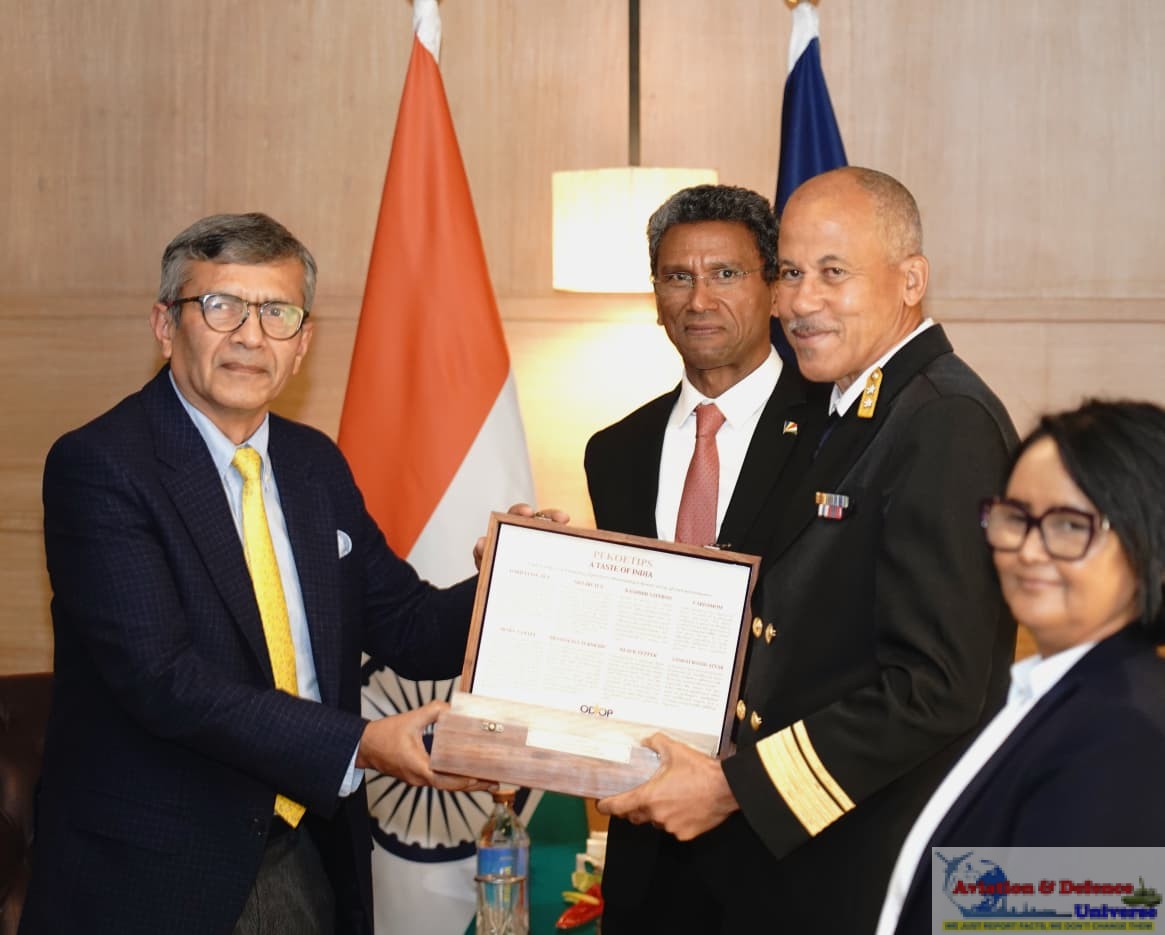
Unlike earlier days dominated by jet purchases, Day 4 reiterated the importance of essential infrastructure that keeps fleets flying. The standout highlight came from India, as Axiscades and Nigeria’s Nigus International Ltd. signed an MoU to jointly develop MRO capabilities for Nigeria’s commercial and military aircraft. The two companies will work together to establish infrastructure, tooling, and skilled resources to support the needs of the Government of Nigeria, marking a major step toward African aviation self-reliance.
The partnership not only strengthens India’s engineering footprint abroad but also positions Nigeria to reduce foreign dependency for military and commercial fleet maintenance—symbolizing the rise of regional MRO ecosystems.
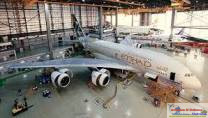
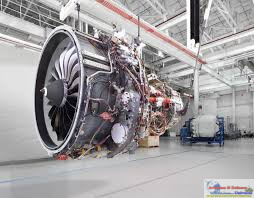 The UAE has rapidly emerged as one of the world’s most attractive hubs for the Maintenance, Repair and Overhaul (MRO) industry, supported by strong government policy, a booming airline ecosystem, and strategic geographic advantage. With Emirates Engineering, Etihad Engineering, Sanad, and the expanding capabilities of Dubai South and Al Ain Aerospace Park, the UAE offers end-to-end solutions ranging from heavy maintenance and cabin modifications to complex engine overhauls. For OEMs, the Emirates and Etihad fleets alone create a steady, high-value demand for lifecycle support across Airbus, Boeing, GE, Rolls-Royce, and Safran propulsion systems—making the country a lucrative market for service partnerships and aftermarket programmes. Additionally, its role as a regional gateway for Africa, South Asia, and the Middle East drives thriving spares procurement activity, with Dubai’s logistics infrastructure providing world-leading turnaround time and inventory movement. As airlines increasingly seek cost-efficient, localized maintenance options, the UAE’s MRO market stands out as both a business magnet for OEM collaboration and a global powerhouse for components and spares distribution.
 Ethiopian Airlines Africa’s largest carrier, Ethiopian Airlines, continued its strong presence at the airshow by signing a leasing agreement with Novus Aviation Capital for two Airbus A350-900s. The deal adds to the six A350-900s ordered earlier this week. To enhance onboard comfort, Ethiopian sealed a premium seating agreement with Collins Aerospace, selecting Collins Elevation seats for the A350 and Collins Parallel Diamond seats for the Boeing 737 MAX fleet. Ethiopian Airlines Group COO Retta Melaku remarked, “As a customer-centric airline, we are thrilled to collaborate with Collins Aerospace and invest in products that would take our customers’ comfort and overall flight experience to the next level.”
Emirates boosted power to modify and maintain its own fleet. It reinforced its technical autonomy with two major engineering developments. The UAE General Civil Aviation Authority granted Emirates approval to conduct major in-house aircraft modifications, including cabin reconfigurations and complex design changes. The approval will allow Emirates Engineering to take charge of supplementary type certifications, gaining greater control over cost, time and innovation.
In a parallel move, Emirates signed an MoU with Rolls-Royce to internalize maintenance of Trent 900 engines that power its A380 fleet starting in 2027, backed by an extended TotalCare agreement into the 2040s. Emirates plans to build a new specialist facility to execute this in-house engine work, further strengthening its MRO independence.
The UAE hosts several world-class MRO operators that are today making significant global impact. Sanad (Abu Dhabi) is widely recognised as the largest independent engine MRO in the Middle East; it states that “90%+ revenues” are derived from outside the UAE and serves 30+ customers across six continents. Another major player is Etihad Engineering, based in Abu Dhabi, which provides air-frame, component and engineering services and maintains a global client set via partnerships.
In Dubai, Emirates Engineering consists of multiple hangars supporting the Emirates fleet and increasingly handles complex modifications and cabin reconfigurations, signalling a shift toward globally competitive heavy-MRO work. Together these operators demonstrate how the UAE is evolving from airline support into a global MRO hub, leveraging geography, logistics, and scale to attract OEMs, airlines and aftermarket supply-chains from across Africa, Asia and beyond.
Royal Jordanian Airlines deepens its narrowbody growth via leasing today. It added two more Airbus A321neos to its future fleet by signing a leasing agreement with Avolon, with deliveries scheduled for 2027 and 2028. This follows a previous lease of eight A321neos, seven of which have already joined the fleet. With the new narrowbody additions, Royal Jordanian is preparing for stronger expansion across Europe, Africa, and the Middle East.
Day 4 at Dubai Airshow 2025 proved that aviation progress doesn’t only take flight through new aircraft purchases—it is sustained by the engineering, maintenance, and leasing ecosystems that keep airlines profitable and fleets mission-ready. With Emirates boosting in-house capability, Ethiopian Airlines modernizing its cabins, Royal Jordanian expanding via leasing, and India partnering with Nigeria to build critical MRO capacity, the spotlight shifted from the skies to the workshops and hangars powering global aviation growth.
The message of the day was clear: future aviation leadership belongs to those who can maintain, not just acquire.