



























About Varjo
 Defence technology company Varjo is the leading provider of military-grade, high-fidelity, and immersive extended reality (XR) solutions that are modernising the training of armed forces across land, sea, and air.
Founded in Finland in 2016, Varjo’s founders come from backgrounds at Nokia, Microsoft, and NVIDIA. For almost a decade, Varjo has worked to deliver the world’s most advanced VR / XR technology to the most demanding industries, including automotive, design, and engineering, as well as developing the first deployed mixed reality headsets for the aerospace and defence industries.
Varjo’s XR headsets bring a level of realism to the end-user that has transformed the training of modern militaries. The XR-4 Series, launched in 2023, is Varjo’s most advanced and highest-fidelity XR series headset, integrating with the world’s largest ecosystem of professional 3D software – such as those offered by defence leaders BAE Systems and Lockheed Martin – image generators, and advanced simulator hardware, to provide greater interoperability of infrastructure and resources, standards, and procedures.
The product range is currently deployed on over 100 global defence and aviation programmes, including with the US and Finnish Air Forces. Varjo is looking to strengthen its leadership in driving the transformation of defence training, advancing the readiness and operational effectiveness of the modern soldier, sailor, and pilot.
About Extended Reality (XR) Training
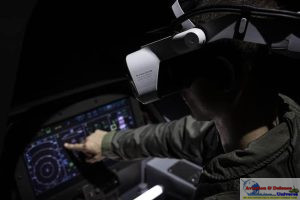 In a time of heightened geopolitical tensions and global unpredictability, militaries across Europe, the US, and its allies are looking to increase recruitment, rearm, and achieve a state of warfighting readiness at pace. The war in Ukraine has taught us many lessons, particularly however, that our personnel need to be better equipped and trained for modern conflict.
The drive to recruit and train greater numbers of military personnel poses three major challenges across all domains: costs, portability, and scalability. These challenges also come as Western militaries face strained resources and are forced to ‘do more with less’.
Synthetic training helps address these challenges, and many Armed Forces are actively looking at ways to increase their simulated training offers to replace expensive and higher risk live training. While traditional ‘live’ training methods remain essential, XR technologies – combining virtual, augmented, and mixed reality – work to accelerate military preparedness at a fraction of the cost. This was recognised in the UK’s Strategic Defence Review, which called for greater use of synthetic training to reduce the reliance on live training.
Many real-world training scenarios are high risk, costly, and logistically challenging to rehearse at scale. For example, land that is suitable for live-fire training is scarce, and flying fighter jet training missions is expensive and comes with a high maintenance burden. Through synthetic training, these environments can be replicated, allowing soldiers to train in virtual battlefields that mirror the terrain they may one day be deployed to.
XR training can therefore reduce costs by up to 90% while minimising the need for large-scale physical infrastructure. Unlike traditional synthetic training simulators, XR systems are also highly scalable and portable – often up to 80% smaller than traditional systems. By requiring less maintenance and experiencing less wear, the kit is more durable, reliable, and easier to deploy across diverse training environments.
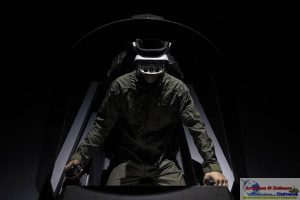 XR training also reduces the time it takes for personnel to reach a state of operational readiness. In the aerospace domain for example, the US Air Force’s Defense Innovation Unit has recorded that XR-based systems reduce the time required for pilots to reach solo flight readiness by up to 70%.
By utilising XR training systems, serving personnel are better equipped and prepared for real-life training scenarios, from large-scale NATO exercises to deployments to combat zones.
Varjo driving the future of defence training
XR training will play a key role in bridging Europe’s gap for military preparedness.
Varjo’s XR solutions are already deployed in over 100 defence and aerospace programmes, supporting defence champions such as Leonardo, BAE Systems, Dassault Aviation, Lockheed Martin, Saab, Aechelon, and COLE Engineering. Varjo also delivers its training solutions to the Finnish Air Force and Army, Dutch Air Force, Swedish Defences Research Agency FOI, and the US Air Force, Navy, and Army. See the link below to find out more about how the US Army trains with Varjo’s technology:
As XR establishes itself as a critical solution for preparing militaries to meet the challenges of modern warfare, Varjo is at the vanguard of ensuring the soldier, sailor, and pilot is able to train faster, better, and more cost-effectively.