















- Rubbishes Pakistani Counterclaim : Calls it ‘Manohar Kahania’
- Enemy radars, runways, and fighters were destroyed with precision and joint planning
- IAF Chief Reassures on preparedness Two-Front Threat
By Sangeeta Saxena
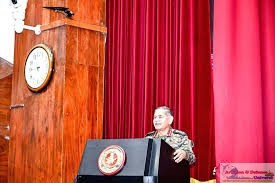
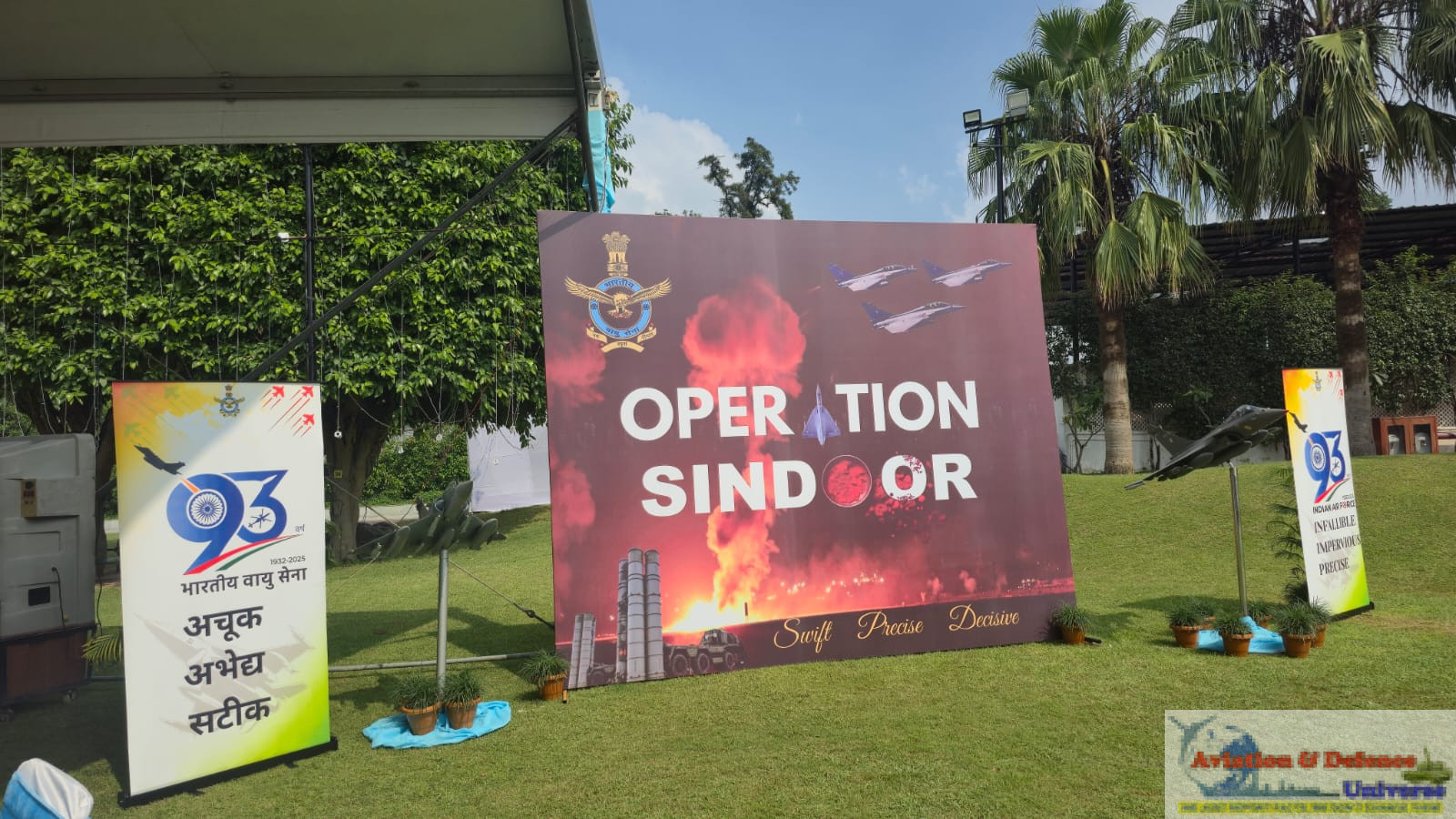
New Delhi. 03 October 2025. Chief of Air Staff, Indian Air Force, Air Chief Marshal A.P. Singh lays out the blueprint for India’s skies — precision strikes, jointness and self reliance at the core. It is the mantra of Air Power Redefined – from the success of Operation Sindoor to a future driven by LCA Mk-1A, AMCA, and indigenous weapons — IAF is charting its course as a multi-domain aerospace power.
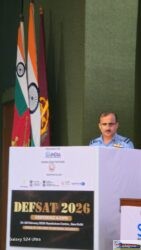
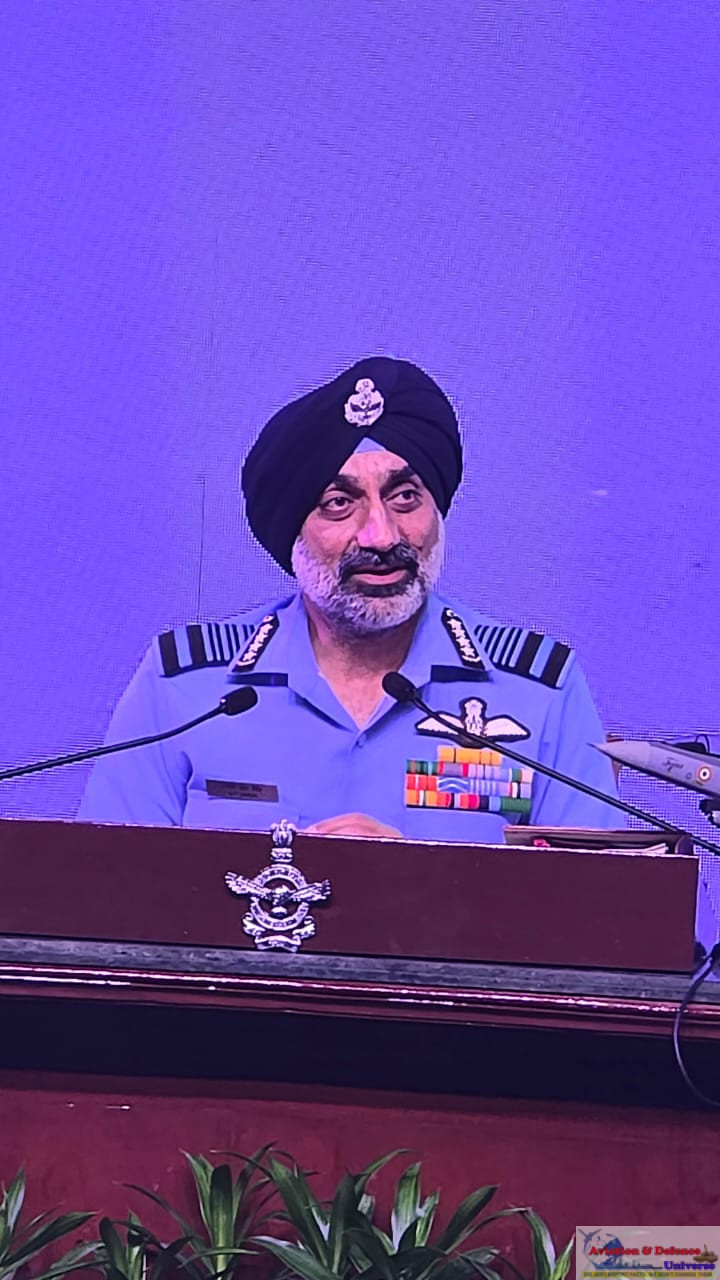
 “As far as Pakistan losses are concerned, I think it was very clear, it was clearly spelled out in the initial debriefs also that we have struck a large number of their airfields and we struck a large number of their installations. And what we have gathered from whatever in reports we have got is that on ground because of these strikes, they have been radars at least four places, command and control centre two places, runway was damaged at two places. Then three of their hangars at three different stations have been damaged. And in that hangar as well as on tarmac, we have signs of one C-130 class of aircraft, one AEWC class of aircraft and at least four to five fighter aircraft, most likely F-16 because that base happened to be an F-16 one. Along with that one SAM (Surface to Air Missile) system which has been destroyed. So, these are the strikes that, you know, destruction that has taken place on ground by our strikes. And as far as air defence part is concerned, we have clear evidence of one long range strike which I talked about more than 300 kilometres which happened to be either an AEWC or a SIGINT aircraft. Along with that, five fighters, high tech fighters between F-16 and JF-17 class is what our system tells us,” reiterated IAF Chief at the annual press conference commemorating the 93rd IAF Day.
He stressed that Operation Sindoor had emphasised on the potency of joint planning and execution between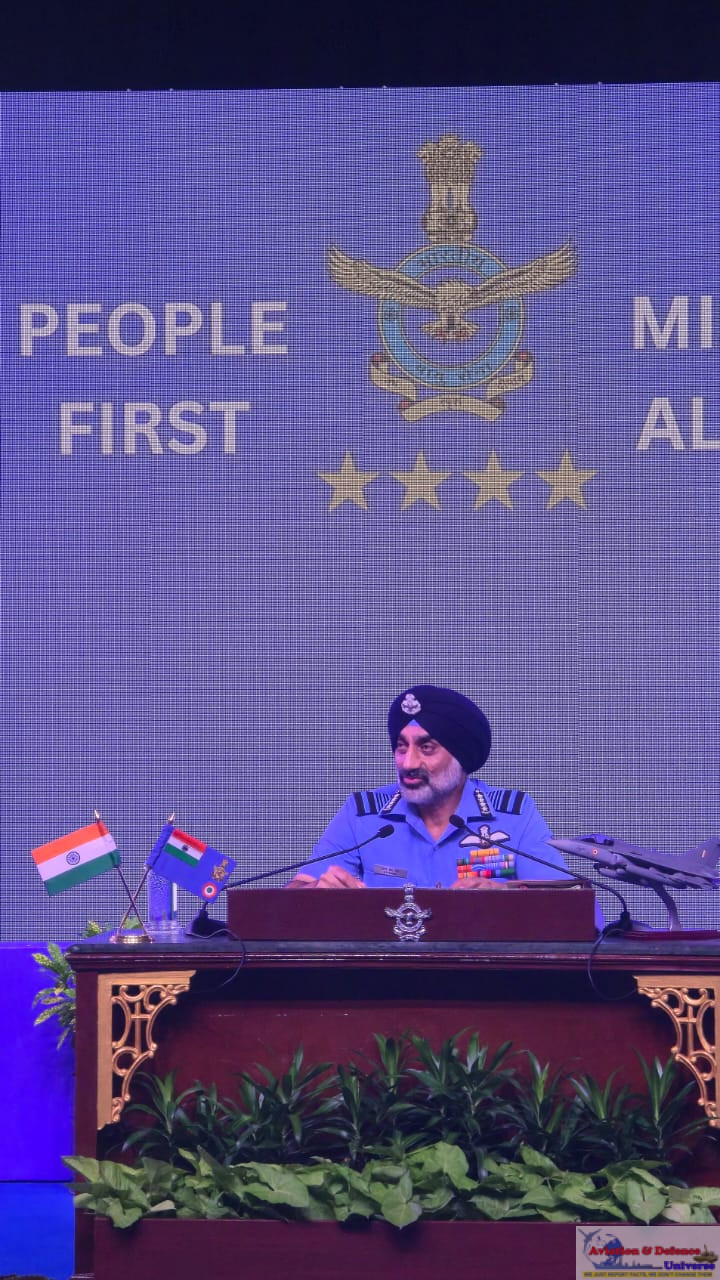 the three services, where integrated air defence and long-range precision strikes brought the adversary to its knees within days. He noted that the IAF’s ability to project “catastrophic firepower” had been demonstrated for the first time since 1971, with evidence of enemy radars, command centres, runways, aircraft, and surface-to-air systems destroyed. At the same time, he underlined the importance of information and narrative management, stressing that silence and ambiguity can sometimes be as effective as outright claims.
On being questioned on hadn’t India lost the narrative war to Pakistan, the Chief responded, “ Even now, I will say nothing. Absolutely nothing. But let me add this — if they believe they have shot down 15 of my jets, let them believe it. I hope they are convinced about it and they will account for 15 fewer aircraft in my inventory when they come to fight again. So why should I correct them? Even today I will not say anything about what happened, how much loss occurred, whether it did or did not, or how it happened. Nothing should be revealed, because let them also dig around and find out, just as we too probe to figure out what they did. But let this be very clear to you — have you seen even a single picture where something has fallen on any of our airbases, any hangar damaged, or any such image that has emerged from our side? Perhaps they too needed to show their public something, to keep their people reassured. Maybe that’s why they said what they did. So their narrative is ‘Manohar Kahaniyan’. ”
The CAS also responded to concerns about China’s military build-up, the two-front threat, and Pakistan’s use of drones and terrorism. He reassured that infrastructure development, tactics, and weapon systems are being optimised for both western and northern adversaries, including high-altitude challenges. Addressing queries on theatre commands, he struck a balanced note, recognising the inevitability of joint structures while cautioning against blindly copying foreign models. “Let us devise our own structures based on Indian experiences,” he emphasised, reiterating that jointness must deliver better results than current arrangements to be meaningful.
 “Jointmanship, we all know, is progressing very well. There is no doubt in my mind that we need joint structures to make it formal and clear to everybody how we will fight. But which structure is what we have to really think about and discussions are on for that. That plan is quite comprehensive. It just doesn’t talk about platforms or weapons. It talks about kind of technology. It talks about even HR requirements. It talks about training requirements,” stated the Chief.
The Chief added, “ As far as the holistic, you know, system for defence of India which Honourable Prime Minister also talked about, the Sudarshan Chakra. So, we have already put our heads together in this, all the three services. And along with DRDO and we have started working towards developing a system which will of course have the IACC as our own integrated air command and control system as the heart of this. And it will have all the elements so that it becomes and it is, you know, it falls under that three criteria of testing. Future warfare, like I said, again, will, like we did it in Sindoor, it will always require integrated approach. Integrated approach with not just the three services but also all other agencies coming together of the DRDO and EPSUs.”
He continued, “ And we have to make sure that whatever lessons we have learnt from Sindoor, wherever we were good, wherever we think we could have done better in terms of integration, we should progress towards that. And lot of work is going on towards this, you know, developing some integrated structures so that these become more formalised structures rather than ad-hoc. So that we can, you know, have collective strength.”
 He reiterated, “ How fast, how deep, how offensively can air power strike and achieve your conflict termination strategy. So that has come to fore and this is something which may have been, you know, I won’t say forgotten but may have lost sight of in routine, day to day things. And now we have to make sure that this part is not forgotten. And this part is understood by everybody and this air power continues to get its relevance. When I say air power doesn’t mean only Indian air force. Air power includes everything. Everything that flies, everything that uses the medium of air — whether it belongs to the Army, Navy, Civil Aviation or anyone else.”
“Operation Sindoor also carries great significance because all three services planned together, executed together, and carried this mission through to completion. This was the first time that right from the planning stage itself, the three services worked jointly. One more point I definitely want to highlight is that in this mission, you and your colleagues in the media also played a very big role. Earlier, what we used to call the fog of war — the lack of information about what is happening and where it is happening — that meaning has changed somewhat today. Today there is so much of information and all carried constantly by the media. India media supported us all through and post the operation,” he gratefully said.
Concluding on a patriotic note the IAF Chief said, “In the end, I just want to assure the people of India — I give this pledge to all Indians — that whenever the need arises, in whatever manner it arises, the Indian Air Force will fulfil its duties with utmost dedication. We are fully committed to this and we will remain committed. This is the same message I convey to all my air warriors wherever I go: we have to be a citizen first, a nationalist first, and thereafter an air warrior. And we will continue to live by that.”