

















- Himalayan Nation Votes for Change
- Kathmandu’s New Mandate: Reform, Risk and Regional Recalibration
By Jai Kumar Verma
New Delhi. 19 March 2026. Nepal’s recent parliamentary elections have produced a dramatic political shift, signalling a broader transformation in the country’s domestic politics and its regional strategic outlook. The emergence of a new political force and the electoral setback suffered by long-dominant communist parties have reshaped the political landscape in Kathmandu. At the centre of this change is the remarkable rise of the Rastriya Swatantra Party (RSP) led by Balendra Shah, whose anti-corruption platform and youth-driven mobilisation resonated strongly with voters seeking political renewal.
 The election results have not only disrupted Nepal’s traditional party system but also carry significant geopolitical implications. Situated between two major powers—India and China—Nepal has long navigated a delicate diplomatic balance. The decisive setback suffered by the country’s two principal communist parties carries wider regional implications, particularly for China. For much of the past decade, Beijing had encouraged cooperation and unity among Nepal’s leftist forces in the hope of fostering a stable political alignment favourable to its strategic interests. Their sudden electoral decline has weakened these established channels of influence and introduced new uncertainty into China’s neighbourhood diplomacy. At the same time, the shifting political landscape may open a window of opportunity for India to rebuild trust and engagement with Kathmandu. Whether New Delhi can translate this moment into renewed influence will depend largely on how thoughtfully and constructively it responds to Nepal’s evolving political mandate.
In recent years, youth-led demonstrations, often driven by Gen Z activists, have swept across parts of Asia and even spread to regions as distant as Togo, Madagascar and the Caribbean. Yet these movements have rarely translated into major electoral gains. In several Asian countries, established political forces have largely retained their dominance. In Thailand, voters backed a conservative, pro-military coalition despite earlier street protests led by young activists. In Japan, the long-ruling Liberal Democratic Party secured another decisive victory, reinforcing the strength of the political establishment. The contrast is particularly striking in Bangladesh. Although student-led protests in mid-2024 forced out Sheikh Hasina and her Awami League government from power, youth-oriented political groups gained little traction in subsequent elections, winning only a handful of parliamentary seats. Instead, the traditional opposition, the Bangladesh Nationalist Party (BNP), emerged dominant. Against this backdrop, the recent electoral developments in Nepal appear unusual, where youth-driven political momentum was translated into tangible electoral victory.
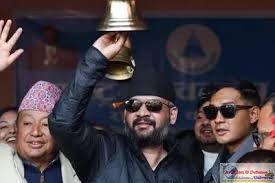 A newly emerging political force RSP, achieved an impressive electoral breakthrough, signalling a shift away from the traditional parties that have dominated Nepalese politics for decades. The party is led by Balendra Shah, widely known as Balen, a former rapper and former mayor of Kathmandu who gained national recognition during anti-corruption protests. Its rise reflects widespread public frustration over persistent corruption, economic stagnation and the failure of established political elites to deliver stable governance. The election results also point to a generational shift, as many young voters rallied behind the new leadership. Beyond domestic politics, the outcome carries wider geopolitical implications.
The RSP’s rapid rise highlights the growing influence of youth-driven political mobilisation in Nepal. Although the party is relatively new, it effectively channelled the energy of large-scale protests and anti-corruption movements that gathered momentum in recent years. In the final tally of the 165 directly elected seats in the House of Representatives, the RSP secured about 124 seats, giving it a commanding mandate to form the next government. In contrast, traditional parties suffered heavy losses. The Nepali Congress managed to win 17 seats, while the communist parties were reduced to minor players: the Communist Party of Nepal (Unified Marxist–Leninist) led by K. P. Sharma Oli won 8 seats, and the Communist Party of Nepal (Maoist Centre) led by Pushpa Kamal Dahal (Prachanda) secured 7 seats.
The election also symbolised a generational transition in leadership when Balendra Shah defeated veteran leader K. P. Sharma Oli in a high-profile constituency. With Nepal’s median age around 25, the party attracted strong backing from Gen-Z and millennial voters.
The Himalayan Kingdom is situated between two major Asian powers, it occupies a strategically significant position in South Asia. Bordered by India to the south and China, particularly the Tibet region, to the north, Nepal has traditionally functioned as a geopolitical buffer between them. Historically, Nepal has maintained close cultural, economic and social ties with India, while in recent years China has expanded its influence through investments and initiatives such as the Belt and Road Initiative (BRI), increasing its strategic engagement in the country.
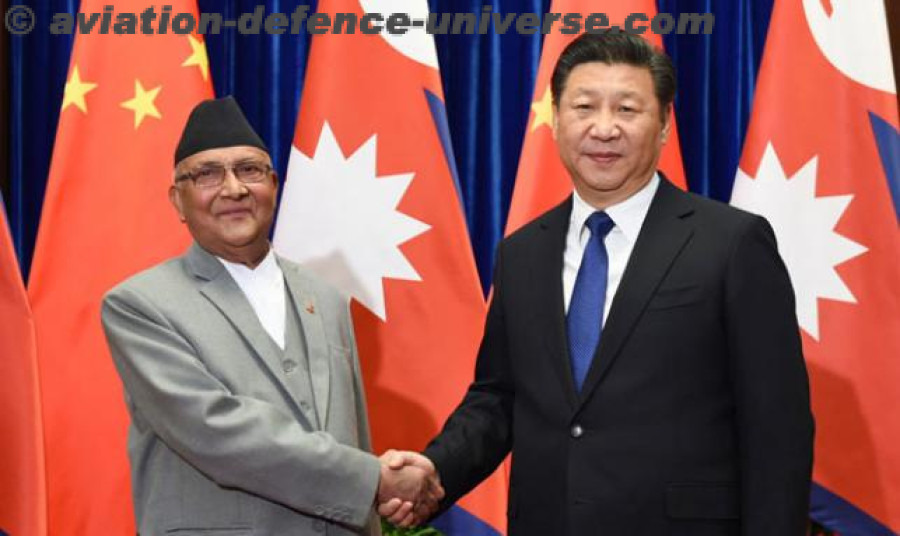
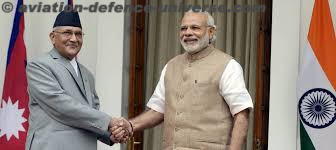 The political significance of Nepal’s recent shift becomes clearer when viewed against the period of leadership under Oli. A senior figure in the CPN(UML), Oli served multiple terms as prime minister and was among the country’s most influential leaders. During his tenure, his government was widely seen as adopting a more favourable approach toward China. Breaking long-standing diplomatic convention, he chose Beijing for an early official visit rather than India. During Oli’s tenure, relations between Nepal and India became increasingly strained. Political disagreements over regional policies, longstanding border disputes, and Kathmandu’s growing economic and diplomatic engagement with China fuelled tensions between the two neighbours. These developments reinforced perceptions that Oli’s administration was leaning toward Beijing, unsettling traditional bilateral ties with India and raising concerns in New Delhi about Nepal’s strategic orientation and balance in the region. His administration also deepened economic cooperation with China and supported Nepal’s participation in the BRI, which promised major infrastructure and connectivity projects. These dynamics unsettled Nepal’s traditional bilateral balance, raising regional concerns while highlighting the strategic significance of Kathmandu’s political decisions.
 Oli’s government gradually lost public support due to corruption allegations, slow economic progress and rising unemployment. Governance failures and repeated political instability, marked by frequent leadership changes in Nepal, further eroded trust in traditional parties, creating space for new political forces promising reform, transparency and more effective governance.
Nepal’s newly formed government signals a phase of political rejuvenation, marked by the rise of younger leaders stepping into prominent roles in national politics and advocating for institutional transformation. Within the country, the administration has placed priority on reinforcing democratic institutions, enhancing the quality of public services, and tackling persistent economic issues such as unemployment and disparities between regions. It has also highlighted the importance of greater transparency, decentralization of governance, and the expansion of infrastructure, especially in the remote Himalayan areas.
The leadership is seeking to restore citizens’ confidence in state institutions while advancing economic modernization through sectors such as tourism, hydropower, and improved connectivity. If these initiatives are carried out successfully, they have the potential to strengthen political stability in Nepal and create a stronger basis for long-term, inclusive economic development throughout the Himalayan nation.
 In foreign policy, the new government of Nepal is expected to pursue a carefully balanced approach toward its two major neighbours, India and China. Relations with India remain particularly significant due to deep cultural, economic, and historical connections. The current leadership’s familiarity with India is also shaped by personal experience, including education in Bangalore, which has contributed to a nuanced understanding of bilateral ties. At the same time, the government may raise sensitive issues such as the long-standing territorial dispute in the Kalapani–Lipulekh region, emphasizing Nepal’s commitment to safeguarding its sovereignty while maintaining constructive dialogue with New Delhi. Earlier, Balendra Shah drew controversy after placing a “Greater Nepal” map in his office depicting Indian territories in the map.
Alongside its engagement with India, Nepal is also strengthening economic and infrastructural cooperation with China. The government views closer collaboration with Beijing as an opportunity to expand trade, investment, and connectivity across the Himalayan region. However, Kathmandu’s broader diplomatic strategy seeks to avoid excessive dependence on any single partner. Instead, policymakers aim to position Nepal as a strategic bridge between India and China, encouraging cross-border trade, transit networks, and regional economic integration. By maintaining balanced relations with both powers while asserting its national interests, Nepal hopes to enhance its geopolitical relevance and support long-term development within the Himalayan kingdom.
In conclusion, the electoral success of the RSP represents a turning point in Nepal’s contemporary political landscape, signalling a growing demand among citizens, especially the youth for cleaner governance, transparency, and meaningful economic development. Under the leadership of Balendra Shah, the new administration carries both the promise of political renewal and the burden of heightened public expectations. Delivering tangible improvements in employment, infrastructure, and public services will be essential for sustaining public confidence in this new political direction. At the same time, the government must carefully navigate Nepal’s sensitive geopolitical position between India and China. The diplomatic legacy of Oli marked by closer engagement with Beijing and tensions with New Delhi, adds further complexity to the task. Ultimately, the ability of Nepal’s new leadership to balance domestic reform with prudent foreign policy will be decisive in shaping the country’s political stability and long-term development trajectory.
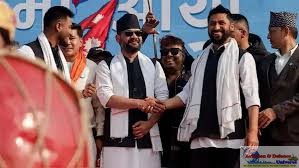 Nepal’s latest electoral outcome marks more than a routine political transition—it reflects a generational shift and a powerful demand for cleaner governance, economic reform, and institutional accountability. The rise of the Rastriya Swatantra Party under Balendra Shah demonstrates how youth-driven political mobilisation can translate into meaningful electoral change, challenging long-established political elites and redefining national priorities.
Yet the road ahead will test the new leadership’s ability to convert public enthusiasm into effective governance. Addressing unemployment, improving public services, and strengthening institutions will be critical to sustaining the momentum of political renewal. Equally important will be Nepal’s diplomatic balancing act between India and China. By pursuing a pragmatic foreign policy that safeguards national sovereignty while encouraging regional cooperation, Kathmandu has the opportunity to reposition itself not merely as a geopolitical buffer but as a strategic bridge in the evolving Asian order. The success or failure of this political experiment will shape Nepal’s stability, regional relationships, and development trajectory in the years ahead.
(Jai Kumar Verma is a Delhi-based strategic analyst and Life Member of United Services Institute of India and Member of The Manohar Parrikar Institute for Defence Studies and Analyses. The views in the article are solely the author’s. He can be contacted at editor.adu@gmail.com)