



























By Sangeeta Saxena
Bolton, UK/ New Delhi. 28 November 2023. With the global commons becoming volatile and oceans the new one-upmanship zones, times are not far when the navies will be the major combat forces and keeping them state-of-the art will be not only a necessity but also reasons for winning wars. Indian Navy with it’s mandate in Indian Ocean, Indo-Pacific and all friendly waters is on a drive to get the best assets for it’s fleet to ensure it’s combat readiness and stealth prowess. Missile major MBDA’s Sea Ceptor , a home grown UK product, provides a powerful shield against airborne threats, including anti-ship cruise missiles, hostile combat jets, and helicopters thereby being just the choice for Indian Navy’s need.

The most recent naval air defence missile system, Sea Ceptor, protects the host platform and escorts ships out to a distance of more than 25 kilometres. Sea Ceptor delivers total protection against all known and prospective air targets by utilising cutting-edge technologies. Although it is smaller and has a lesser range than Sea Viper, Sea Ceptor can engage numerous targets at once and cover an area the size of Greater Manchester (500 square miles/1,300 square kilometres) while intercepting at speeds of up to three times the speed of sound.
The 3.2 metre long, 99 kilogramme weight Sea Ceptor missile is supersonic. It is 160 centimetres in diameter. The missile has a 360° coverage area and a range of around 25 km. It has a maximum speed of Mach 3. A basic integration mechanism is present in the Sea Ceptor. Because of its small launch mechanism, it may be set up at several deck places. The system weighs less because of the “soft launch” technique, which also offers flexible installation.
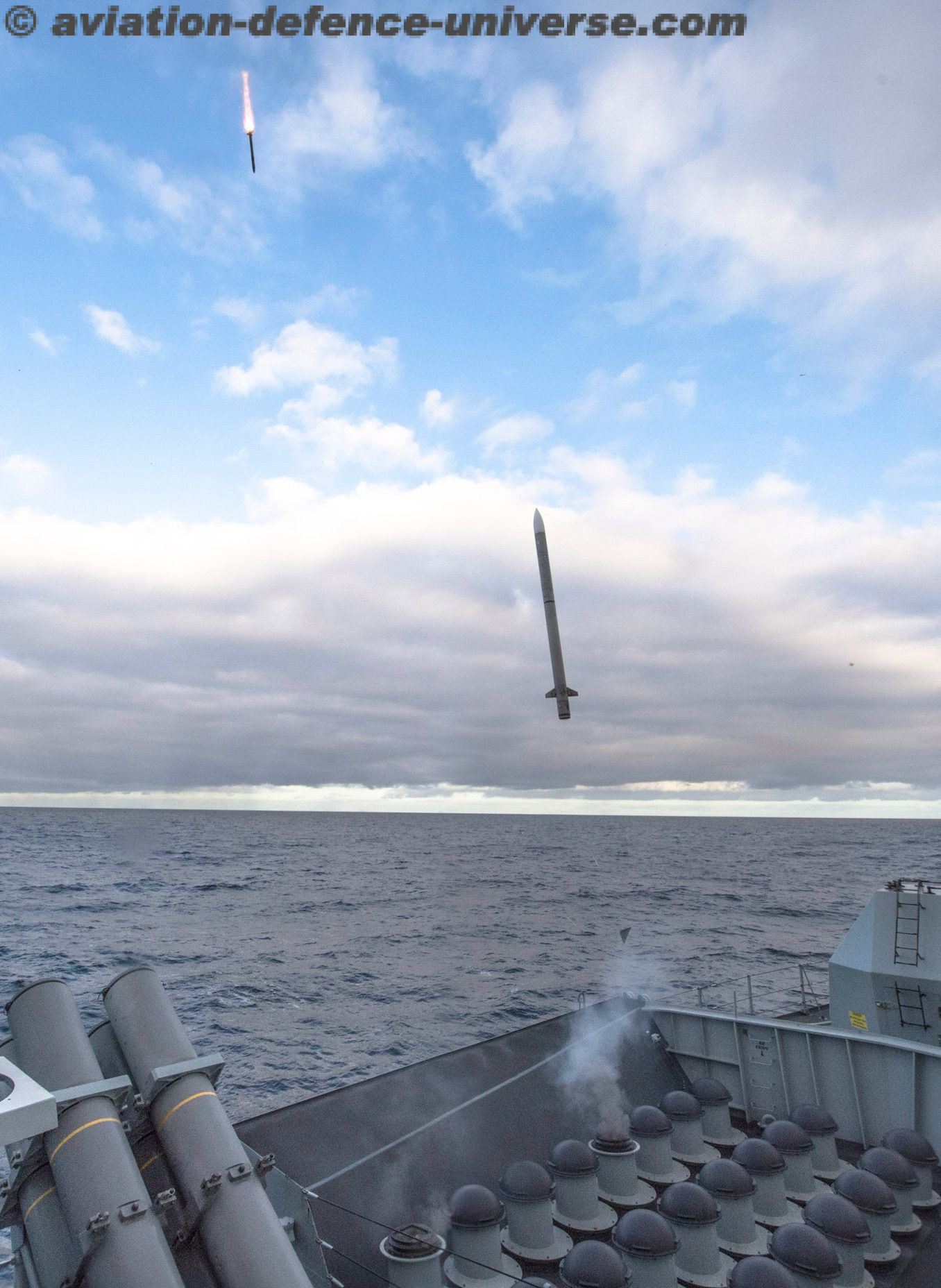 Since the missile system may use the data interpreted by the vessel’s surveillance radars, it does not require dedicated radars. Combat systems, both old and new, can be connected with the command and control system. For use with smaller launchers like as the LM 3 cell ExLS, the Sea Ceptor is an active radar seeker weapon that is lighter and has a lower range. It has a large user base and offers flexibility in deployment, as it can drop 12 missiles without the need for a director. On the other hand, the medium-range Missile Engagement Zones are the target of the larger, heavier, and longer-range ESSM. Sea Ceptor and ESSM are both included in the Canadian Type 26 design.
The Common Anti-Air Module (CAMM) from MBDA serves as the foundation for the Sea Ceptor. Three versions of CAMM are being developed: CAMM (A) for air defence, CAMM (L) for land, and CAMM (M) for maritime. The first to be developed is CAMM (M), which takes the shape of the Sea Ceptor.
 “We are proud that L&T MBDA Missile Systems Ltd is offering Sea Ceptor, an Indian-led SRSAM to protect the sailors of the Indian Navy, as part of our commitment to Atmanirbhar Bharat and Make in India, ” reiterated Ludovic Dumont, MBDA India General Delegate. Sale of Sea Ceptor has been a success story as the missile major has sold it to Brazil, New Zealand, Canada and Chile internationally, not forgetting the latest orders for Poland and Sweden. And ofcourse Royal Navy has been its first customer.
The missile is able to neutralise and intercept combat aircraft and missiles travelling at supersonic speeds. Both the host ship and the nearby installations are safeguarded by it. Sea Ceptor’s numerous firing channels allow it to counter saturating attacks. It is capable of defending 1,300 km2 of land and sea. Future sophisticated missile attacks are intended for this system.
The weapon system is readily adaptable to many different platforms, including destroyers, frigates, and 50-meter OPVs. This flexibility is provided by two key features. First, the highly scalable and compact launch system that can be installed in multiple locations with ease is made possible by the use of “soft-launch” weapon technology. Second, there is no need for specialised fire control radars because Sea Ceptor can be targeted using the ship’s current surveillance radar sensors.
Using a quad-pack configuration, Sea Ceptor will be launched from the SYLVER and Mk41 launchers; multiple reconfigurable canister configurations are also offered. Soft Vertical Launch technology makes installation simpler and lowers system mass.
 High-value local units as well as the host ship are both protected by Sea Ceptor. Combat aircraft and the latest generation of supersonic anti-ship missiles are just two of the threats that the weapon system can intercept and consequently neutralise. With the ability to fire through multiple channels, the system can fend off saturation attacks.
In 2018, Sea Ceptor was deployed by the Royal Navy. It represented a step up in the ability of frigates and corvettes with cutting-edge technology to counter emerging and present threats in air defence. Its USP is that it is small, light, inexpensive, and simple to integrate into both new and old platforms. Purchased by Chile and New Zealand, chosen by Brazil for Tamandaré, Lockheed Martin Canada for CSC, and under consideration by other parties.
Sea Ceptor has its own platform protection which provides all round simultaneous protection against multiple threat types. It also provides single tier air defence system, local area air defence, protection of military or civilian consort vehicles, task groups including those with aircraft carriers and local area air defence for ports, airports, critical national infrastructure.
Naval forces face a wide range of threats like supersonic and subsonic anti-ship missiles, precision guided munitions, wide range of aircraft, including Fighter/Bombers, UAVs, Maritime Patrol/ASW Aircraft and Helicopters and small fast vessels. Countering these threats is increasingly more difficult due to high speed, simultaneous attacks across wide sector, multiple guidance systems both small and agile. Sea Ceptor provides robust protection to defeat these threats
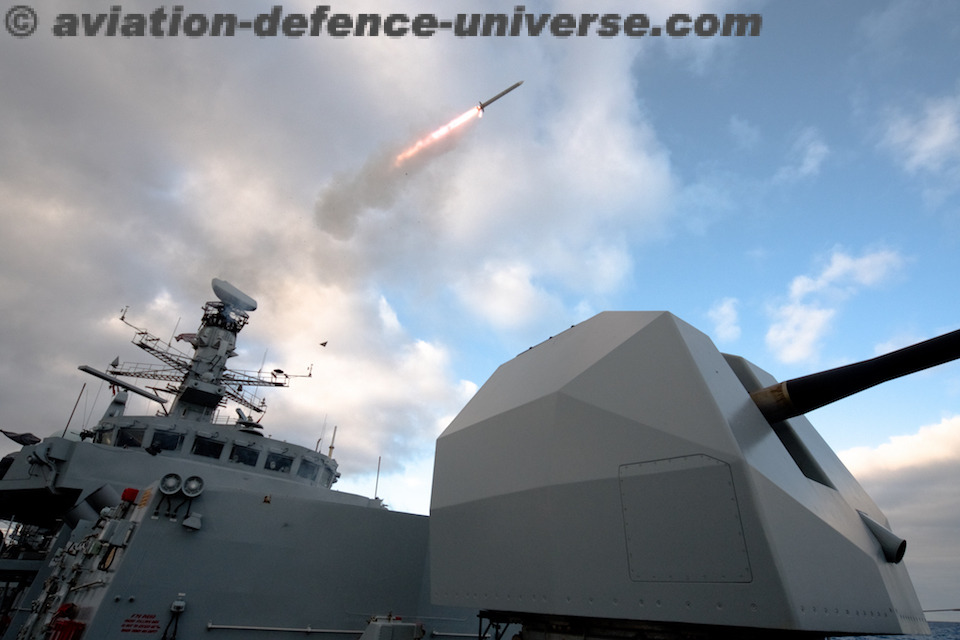 Sea Ceptor’s technical heritage is from ASRAAM for it’s basic missile structure. In addition for maritime command and control the legacy is from PAAMS or Principal Anti-Air Missile System which is a joint programme developed by France, Italy, and the United Kingdom for an integrated anti-aircraft warfare system. The prime contractor is EUROPAAMS, a joint venture between Eurosam (66%) and UKAMS (33%). In the United Kingdom, PAAMS has been given the designation Sea Viper. It has a Soft Vertical Launch (SVL) with a Seeker and Datalink. Sea Ceptor is fully qualified, in-service with low upfront and through-life support costs. It has straightforward integration with several launcher options available.
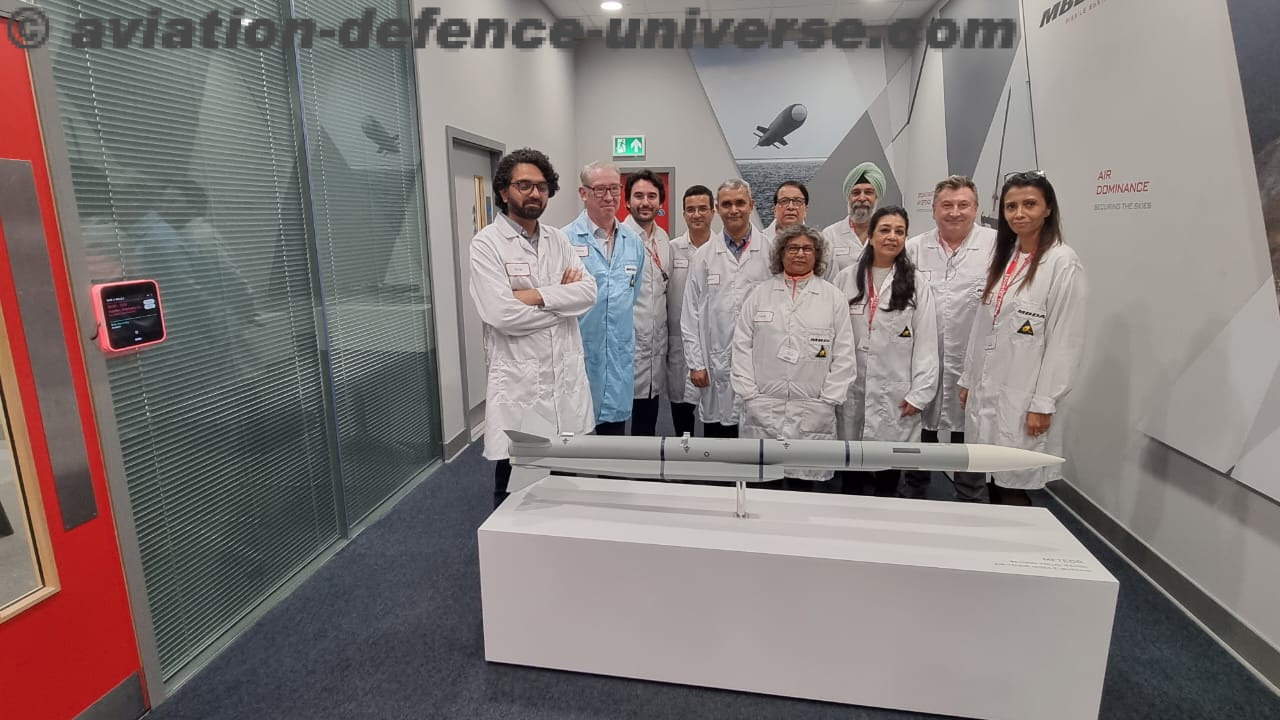 The author recently visited the MBDA Bolton facilities on an invitation of the missile major. About 700 highly skilled design, engineering, and manufacturing personnel are employed by MBDA at its prime inert (non-live) missile manufacturing site in Bolton. They are in charge of weapons systems like Brimstone, ASRAAM, CAMM (Sea Ceptor and Land Ceptor), SPEAR, and Meteor. Along with developing industrial electronics, microwave technologies, and missile launch platform equipment, MBDA also has an impressive integrated logistics centre next to its main weapons building facility.
Equipped with cutting-edge new technologies that have been tested and are currently in use, Sea Ceptor would offer Indian Navy ships total defence against all known and projected air targets, including simultaneous 360-degree saturation attacks. Sea Ceptor employs the CAMM missile, which offers a significant improvement in performance over earlier generation systems thanks to its next generation all-weather fully active radio frequency-seeker, two-way datalink, and soft-vertical launch system. It could be Indian Navy’s choice for strength and stealth.
ADU shall keep getting you the reports from it’s recent press tour of MBDA facilities of UK & France. Happy reading!