

























- Unveils Next-Gen Collaborative Defence Technologies
By Sangeeta Saxena
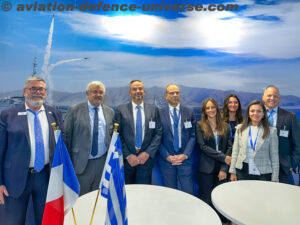
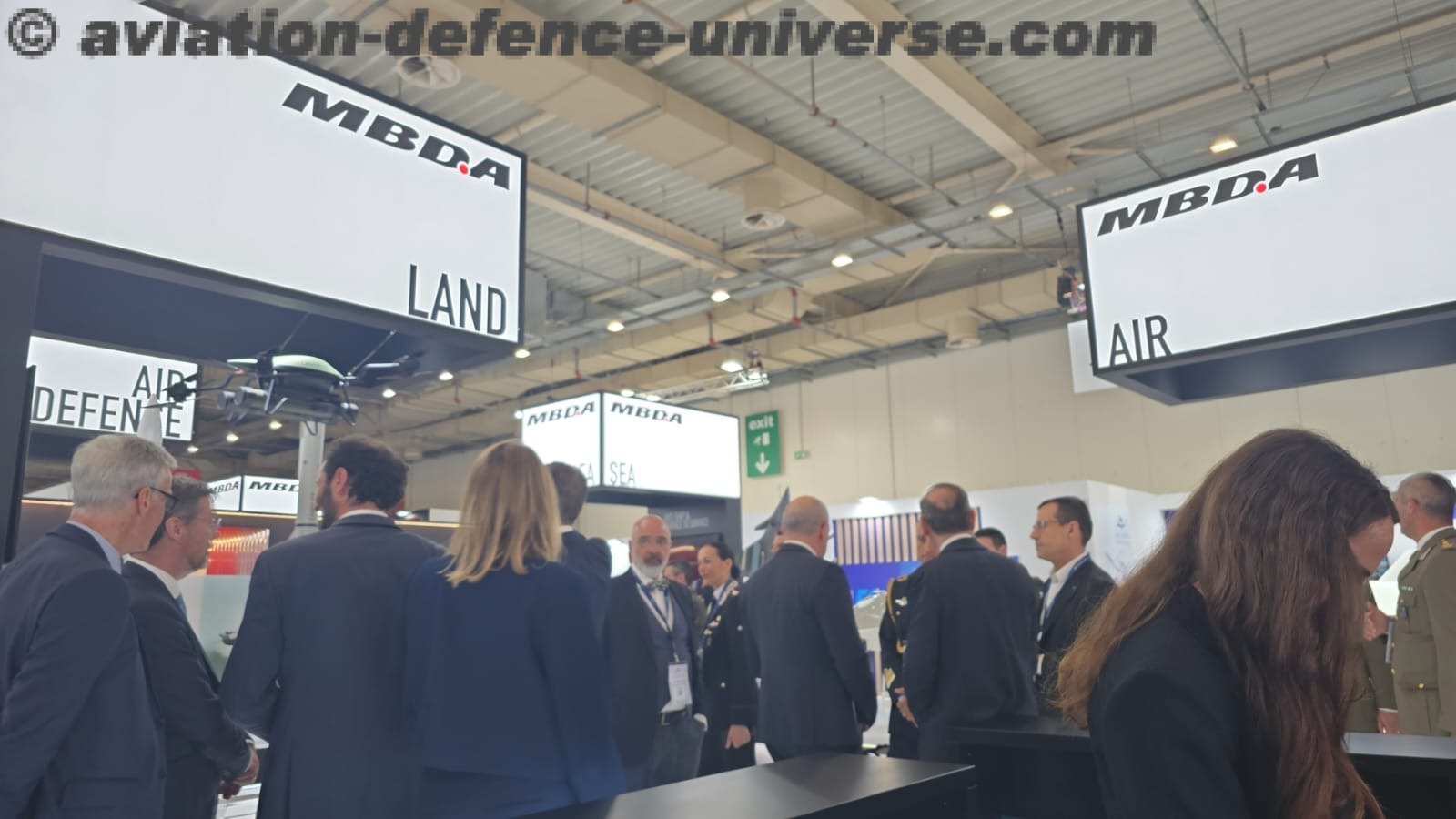
Athens. 07 May 2025. At DEFEA 2025, one of Europe’s premier defence exhibitions, MBDA has made a significant impact with a robust and forward-looking showcase. Positioned at the intersection of innovation and strategic partnership, the European missile systems giant is not only presenting its core portfolio but also signalling a paradigm shift in how it engages with partners—particularly in the Mediterranean.
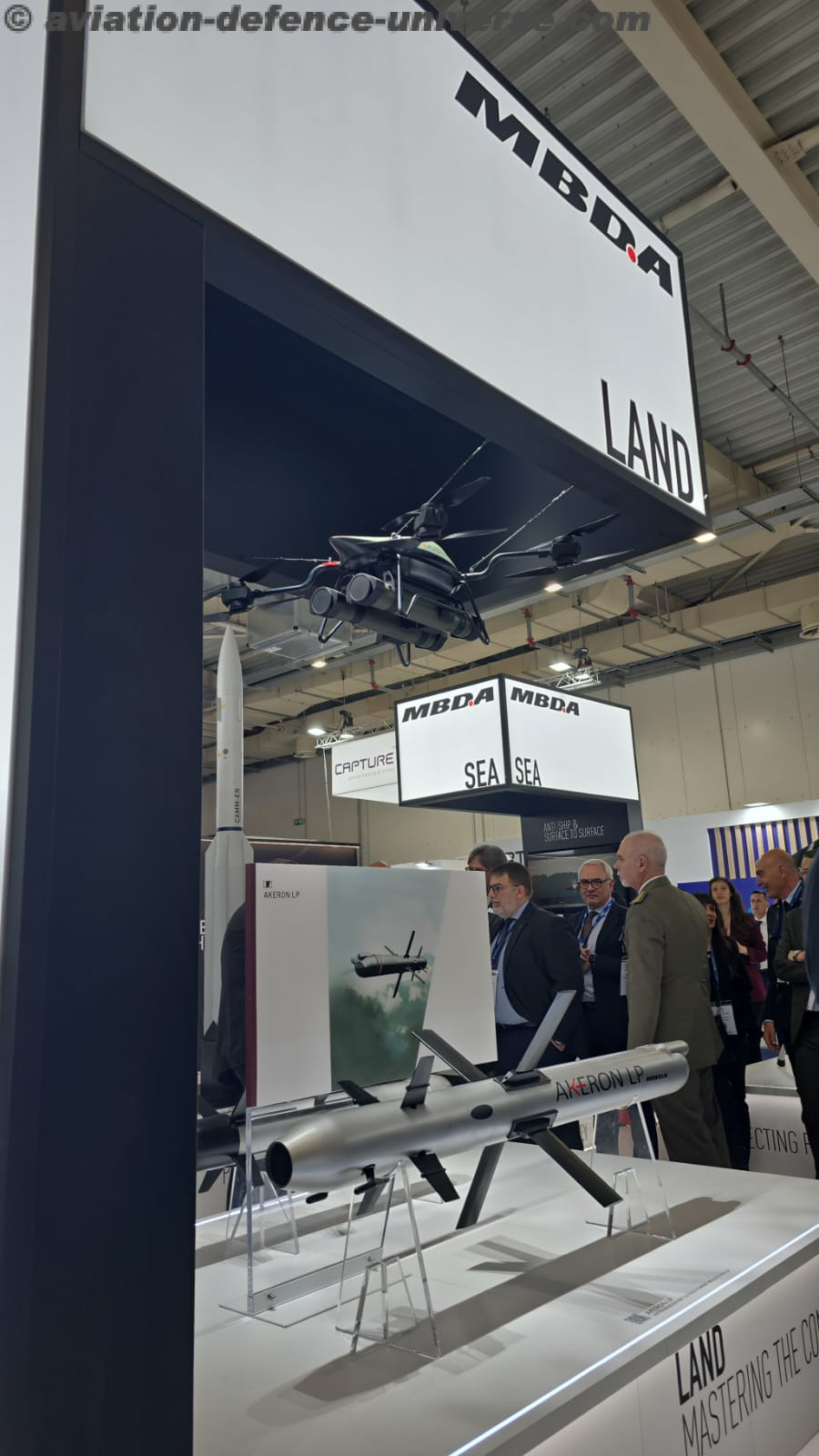 MBDA’s presence in Athens is tailored specifically for the region, with a strong focus on its longstanding and evolving relationship with Greece. According to MBDA representatives, the selection of showcased systems reflects not only Greece’s current operational requirements but also a maturing defence industrial partnership.
“We have a long history with Greece in both commercial and strategic cooperation. What makes this edition of DEFEA special is that we’re transitioning from traditional models of technology transfer to true co-development and innovation partnerships,” MBDA spokesperson highlighted.
Recognising the growth and potential of Greek SMEs and start-ups, MBDA is placing strong emphasis on collaborative innovation rather than conventional subcontracting relationships. This new approach is reflected in initiatives such as the MBDA R&D Booster, which aims to fast-track high-impact solutions developed jointly with local industry players.
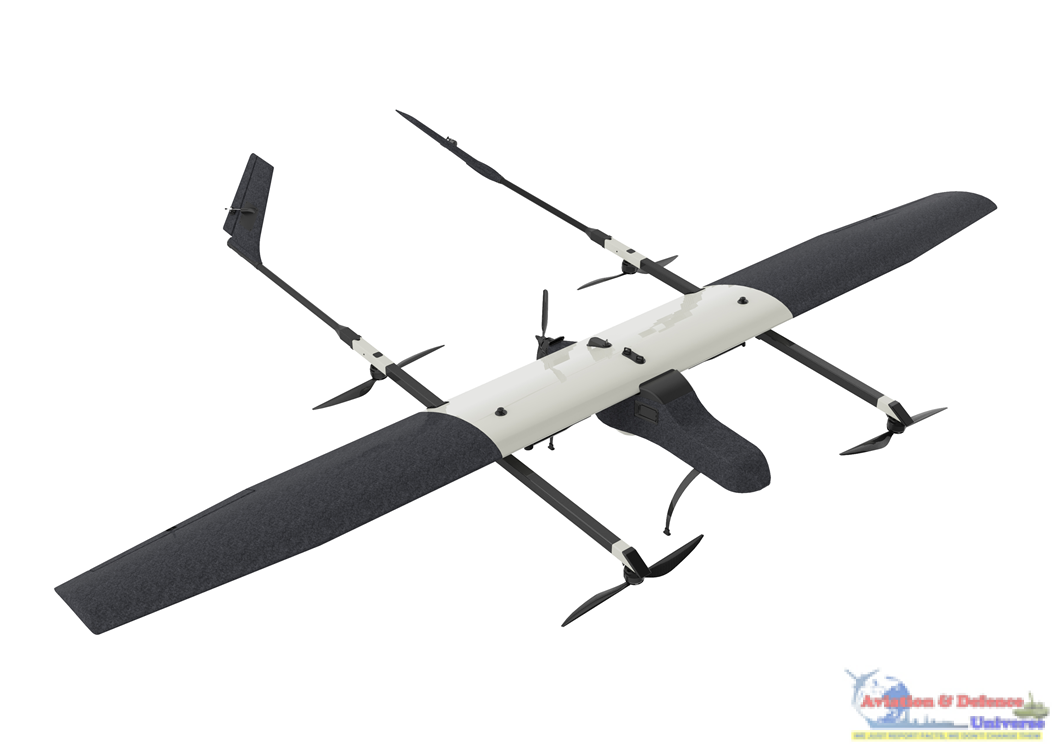
A standout example at the MBDA pavilion is its partnership with Altus, a Greek UAV manufacturer. What began as a dialogue two years ago is now culminating in the upcoming flight tests of Akeron MP missiles integrated on the Altus VIII UAV, known locally as Kerveros. The armed drone platform is designed to carry a 100 kg payload, fly for 3–4 hours, and operate up to 100 km—offering near-attack helicopter capabilities at a fraction of the cost. This development marks a major milestone. The system supports long-range lock-on, agile attack profiles, and high survivability by leveraging the Akeron MP’s advanced targeting and datalink capabilities. The upcoming flight test is scheduled for summer 2025, showcasing an agile strike platform that can be launched from land or sea.
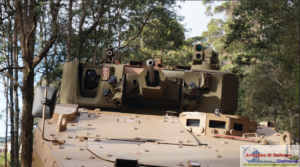
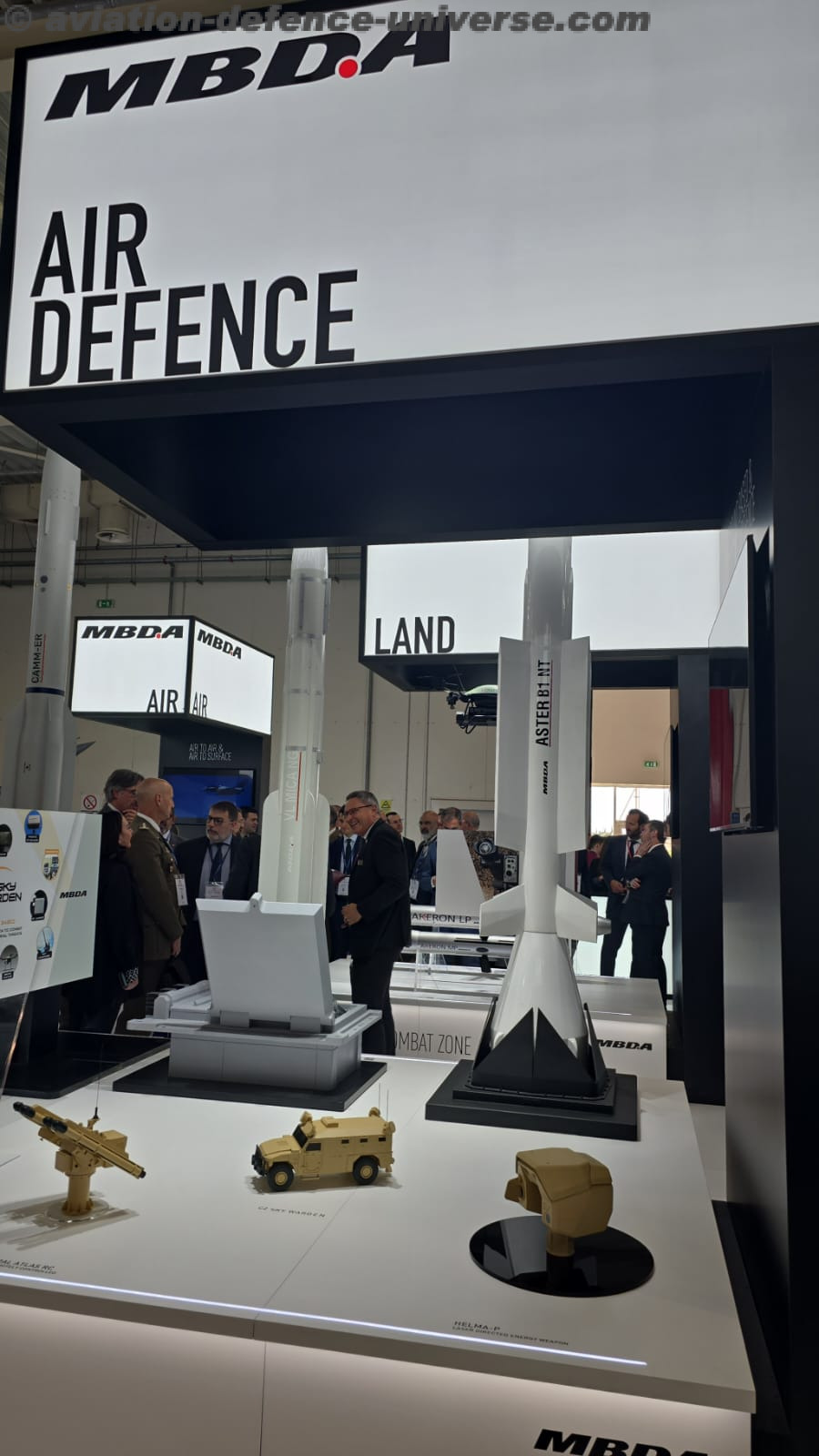 MBDA sees such solutions as part of a broader evolution towards swarm-capable systems and new operational doctrines for the modern battlefield—combining autonomy, AI, and modularity to reshape light combat capabilities. MBDA is also deepening its cooperation with Miltech, a well-regarded Greek player in optronics and turret systems. The two companies are working on the integration of Akeron MP with manned and unmanned turrets—targeting both legacy vehicle upgrades and future-ready platforms like USVs and UGVs.
This partnership is built on a modular retrofit approach, allowing armed forces to quickly upgrade existing vehicles with modern weapon systems without significant structural modifications. The goal: enable high-volume deployment and rapid force multiplication to meet emerging resilience and readiness challenges across Europe and beyond.
While much of MBDA’s showcase is aligned with Greece’s defence needs, the company stresses that these innovations are not limited to a single market. As interest in armed UAVs, unmanned naval systems, and modular missile integrations grows, MBDA is adopting a market-driven model—positioning its Greek partnerships as launchpads for broader regional solutions across the Mediterranean and NATO-aligned forces.
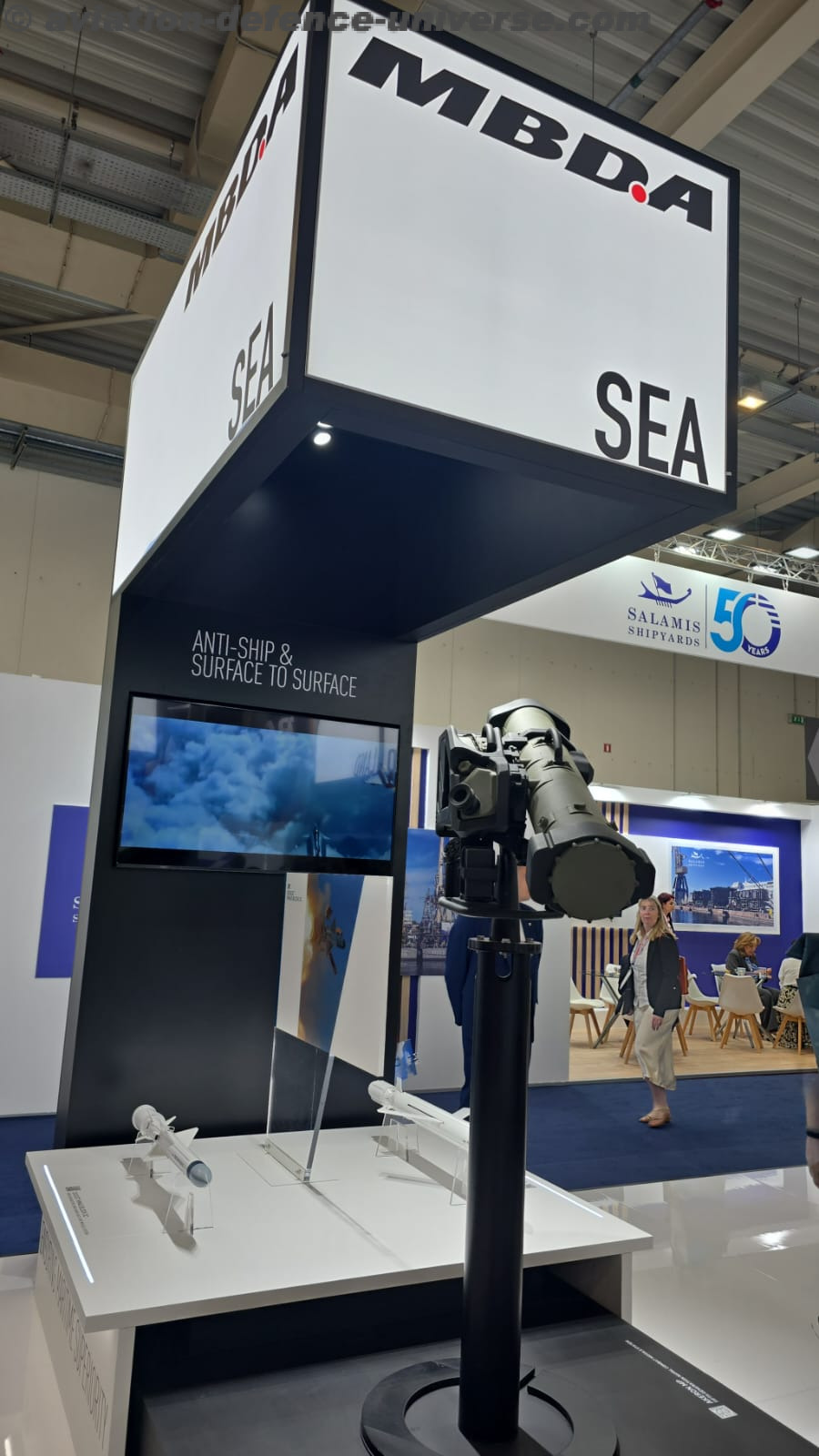 MBDA’s ambition is to develop a naval turret suitable for deployment on Unmanned Surface Vehicles (USVs), with potential future applications for Unmanned Ground Vehicles (UGVs) as well. In collaboration with Greek defence company Miltech, the focus is on retrofitting existing platforms—both land and naval—with advanced weapon systems. This approach responds directly to two key challenges faced by modern armed forces: the urgent need to rapidly increase the number of deployable units on the battlefield, and the parallel need to enhance resilience and survivability.
Recognising that many nations possess large fleets of legacy vehicles whose weapon systems are no longer state-of-the-art, MBDA and Miltech are working on a modular integration kit. This kit enables the seamless installation of MBDA’s latest weapons onto existing platforms without requiring major structural modifications—or in many cases, without any impact on the vehicle’s core systems. This retrofit philosophy allows for faster deployment, cost-effective upgrades, and significantly enhanced battlefield capability across both manned and unmanned systems.
When asked about quantities in official orders, MBDA maintained a cautious but optimistic tone saying discussions are ongoing and updates are expected later in the year, potentially during Paris Air Show or follow-up engagements.
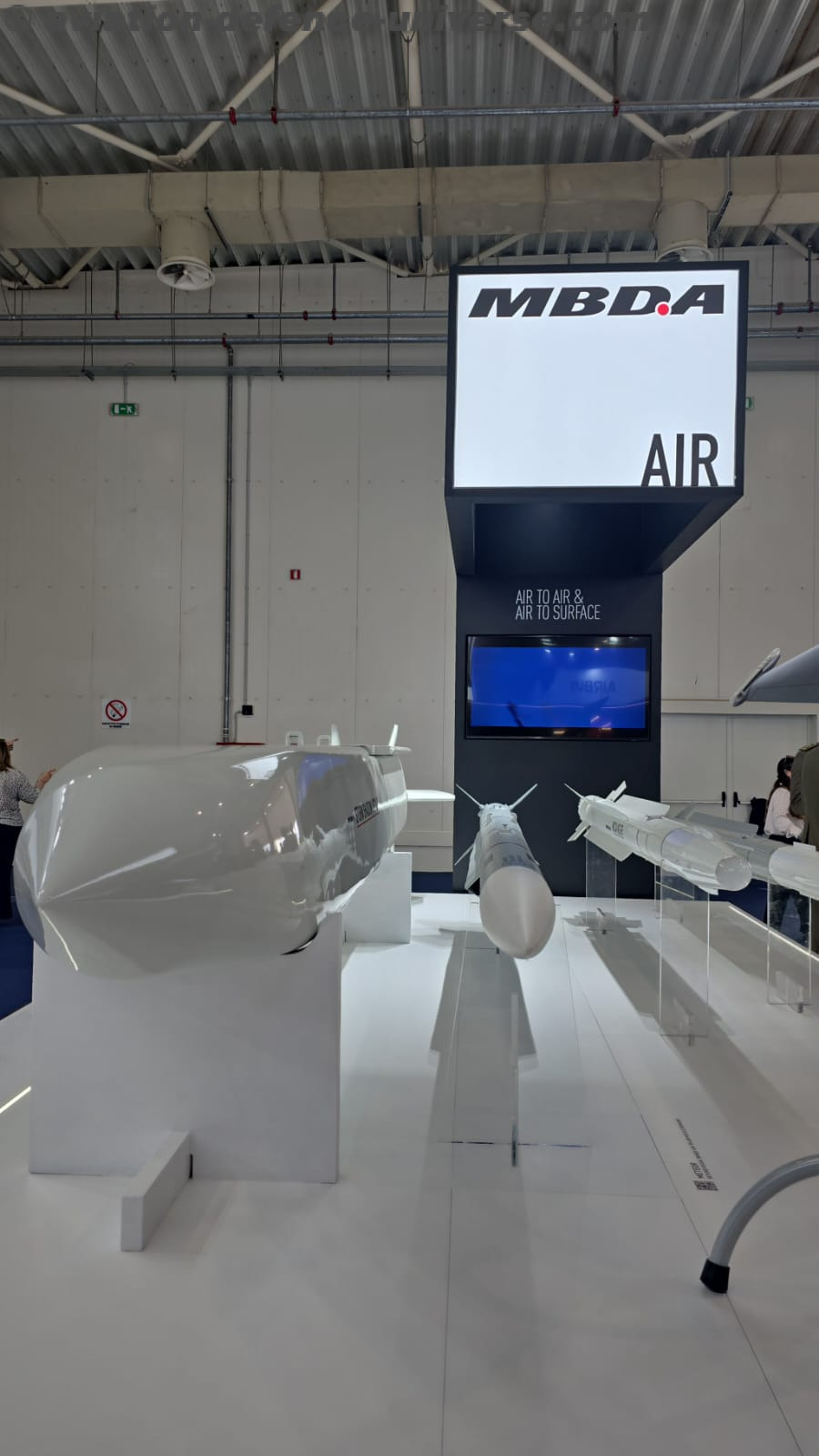 It may be recalled that MBDA officially inaugurated a new permanent office in Athens, in May 2023, further strengthening its presence in Greece and underscoring its long-term commitment to supporting the Hellenic Armed Forces. MBDA’s relationship with Greece dated back to 1968, when Greece became the first customer for the company’s Exocet missile. Over the years, this relationship evolved into a robust defence cooperation, most recently reaffirmed through contracts for advanced weapon packages for the Rafale fighter jets and the Hellenic Navy’s Defence and Intervention Frigates (FDI HN). In 2021, MBDA signed its first contract for the supply of a Rafale weapon systems package for 18 aircraft. This was followed in 2022 by a second package for an additional six Rafale aircraft. On the same day, a third contract was concluded for a state-of-the-art weapons suite to equip three new FDI HN frigates—highlighting the strategic nature of the France-Greece defence partnership and MBDA’s pivotal role within it.
“This is not just about delivering systems—it’s about delivering the right solution, with the right partner, at the right time,” the MBDA official noted. “We believe in the operational value of these systems and the strength of our partnerships in Greece. We’re moving fast, but carefully—and always with commitment.”
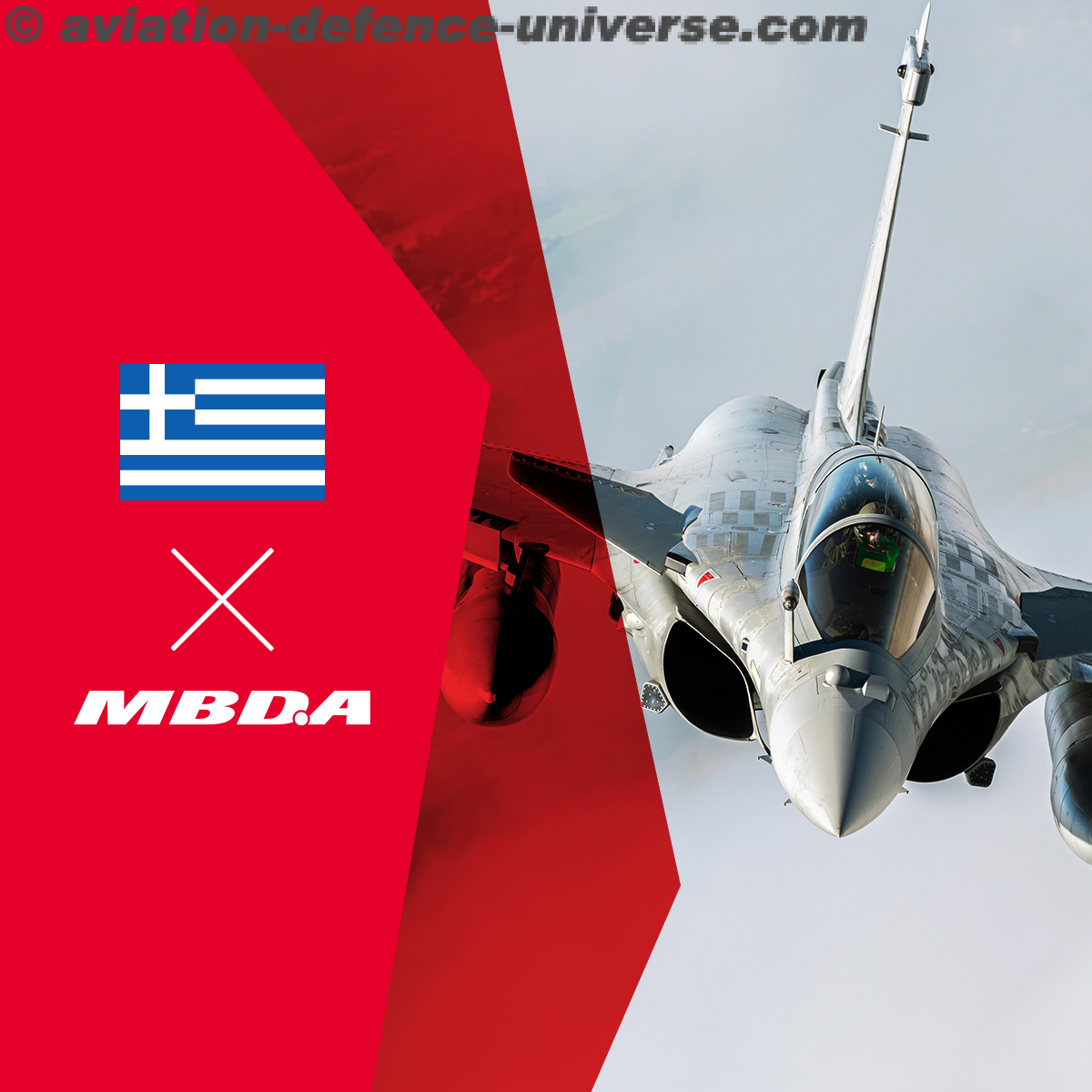 It may be recalled that MBDA officially inaugurated a new permanent office in Athens, in May 2023, further strengthening its presence in Greece and underscoring its long-term commitment to supporting the Hellenic Armed Forces. MBDA’s relationship with Greece dated back to 1968, when Greece became the first customer for the company’s Exocet missile. Over the years, this relationship evolved into a robust defence cooperation, most recently reaffirmed through contracts for advanced weapon packages for the Rafale fighter jets and the Hellenic Navy’s Defence and Intervention Frigates (FDI HN). In 2021, MBDA signed its first contract for the supply of a Rafale weapon systems package for 18 aircraft. This was followed in 2022 by a second package for an additional six Rafale aircraft. On the same day, a third contract was concluded for a state-of-the-art weapons suite to equip three new FDI HN frigates—highlighting the strategic nature of the France-Greece defence partnership and MBDA’s pivotal role within it.
As DEFEA 2025 continues to highlight European defence innovation and cooperation, MBDA’s showcase serves as a model for next-generation industrial strategy—where technology, trust, and tactical foresight intersect to shape the future of European defence.