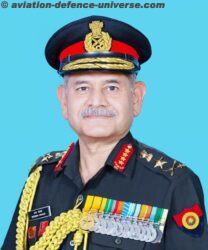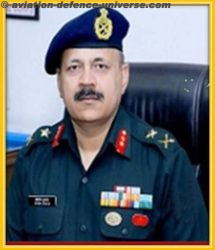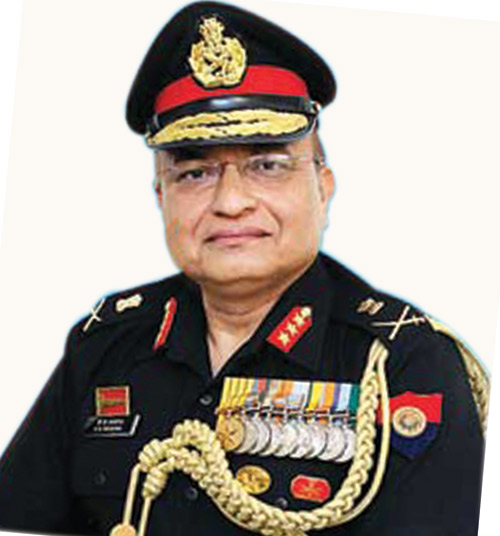

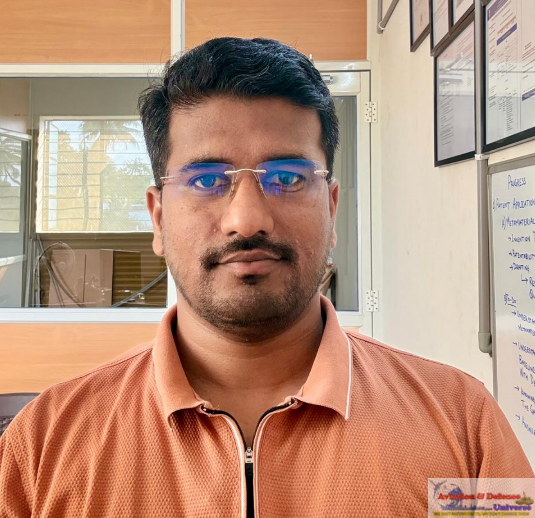







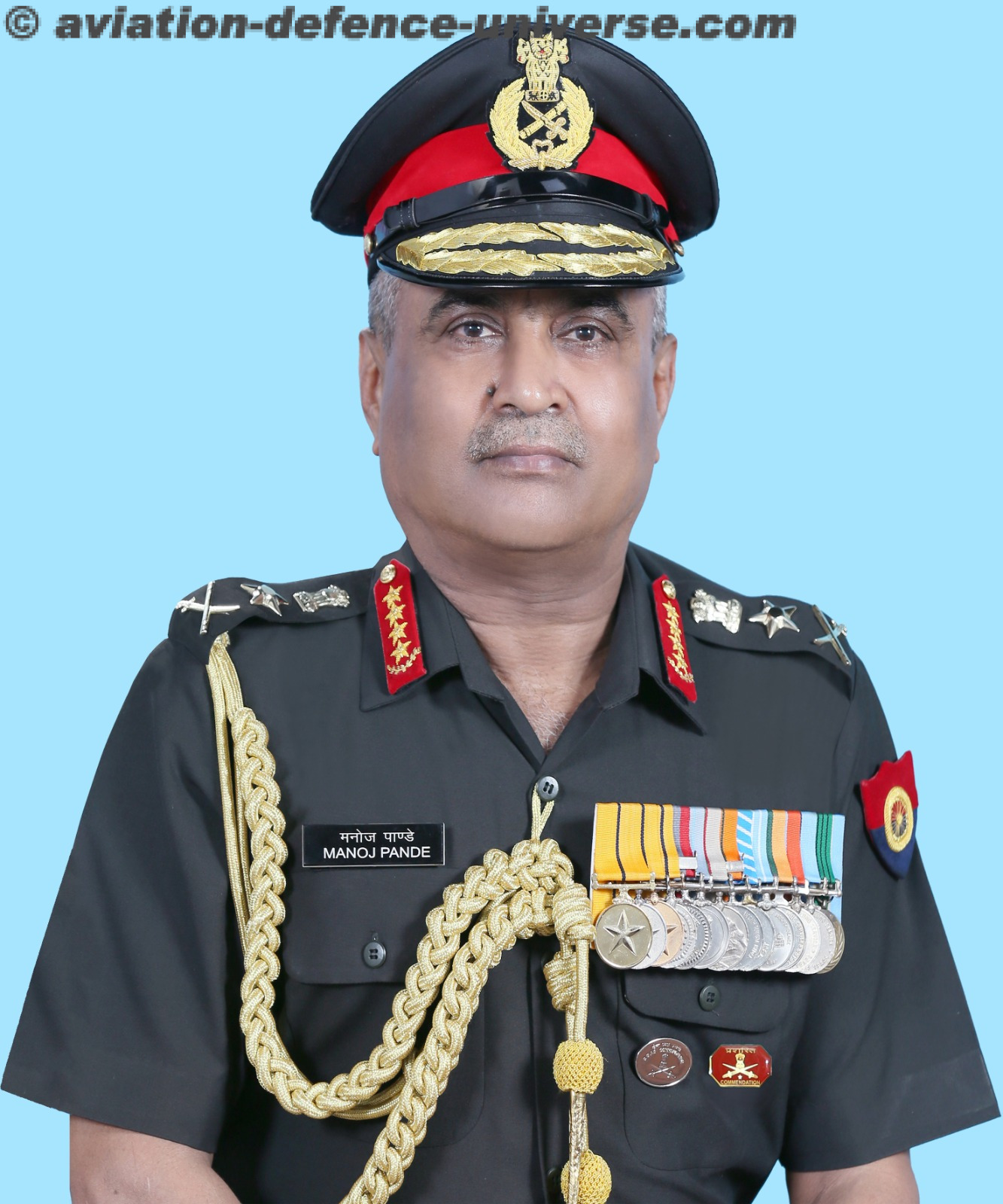
New Delhi. 24 January 2024. “Modernisation and technological infusion are central to ongoing capability development plans of the Indian Army and a roadmap has been put in place towards the same. Our approach firmly stands on the edifice of Atmanirbharta. Some of the key areas that we are focussing on are Artificial Intelligence, 5G, Robotics, Cyber and Quantum Communication. We are pursuing projects like Robotic Surveillance Platform, Autonomous Combat Vehicle, Unmanned Combat Vehicle and Manned Unmanned Teaming Solutions.37 projects under these domains are being pursued. These include AI systems for ISR, Threat Modelling, Swarm Drones, Satellite Imagery Analysis, Natural Language Processing, Facial Recognition, Video Analytics, Vehicle Tracking, Logistics and Healthcare,” said Indian Army Chief General Manoj Pande PVSM, AVSM, VSM, ADC in an exclusive interview to Aviation & Defence Universe (ADU), on the occasion of Army Day 2024.
ADU. We have seen large number of modernization initiatives being undertaken by the Indian Army in recent past. Can you throw some light on these initiatives?
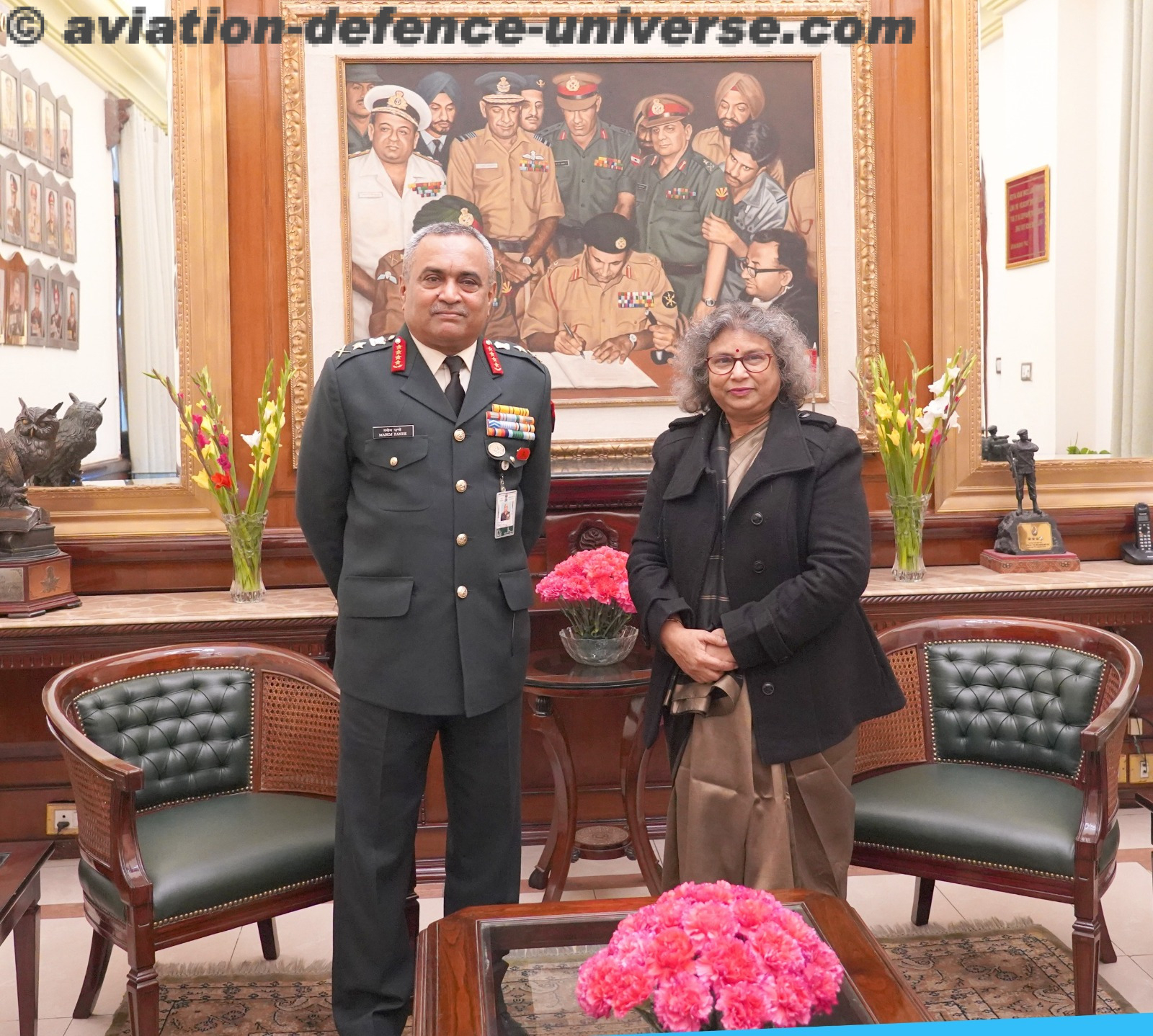
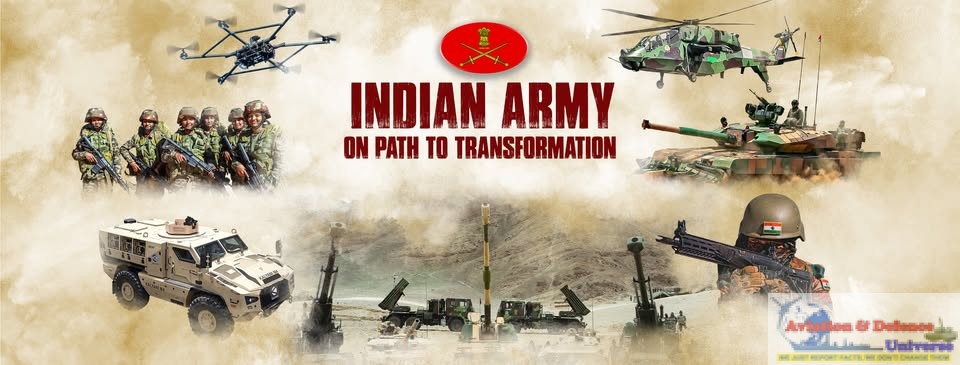
COAS. Modernisation and technological infusion are central to ongoing capability development plans of the Indian Army and a roadmap has been put in place towards the same. Our approach firmly stands on the edifice of Atmanirbharta. We have designated the year 2024 as “Year of Technology Absorption”.
Major efforts are being made towards Upgrades, new Acquisitions and infusion of niche technology. In doing so, we are ensuring the right balance between ‘Conventional’ and ‘New’ capabilities. Besides Emergency Procurements, in the current financial year, 20 Acceptance of Necessities have been granted for an amount of approx Rs 20,000 crores and 15 contracts have been signed. 73 indigenous contracts for an amount of about Rs 11,000 crores have also been signed as part of fourth tranche of Emergency Procurement provisions.
In addition, revenue procurements of Rs 21,000 crores have been finalised in various domains like enhancing lethality (ammunition, missiles, armaments), communication infrastructure, surveillance, modernising aviation assets and enhancement of protection and mobility of troops. Four contracts have been signed out of 51 projects being pursued through IDEX this year, thereby paving the way for the induction of Niche Tech in communication, ISR & stealth Technology.
Having designated the year 2024 as “Year of Technology Absorption”. I am confident that the modernization initiatives, that have been put into motion will shape the Indian Army into a modern, agile, adaptive and technology enabled, future ready force.
ADU. Adoption of Niche and Disruptive Technology, is a top priority for the Indian Army. What are the areas that you are focussing on for military application in the ongoing process of transformation?
COAS. We have identified 45 niche technologies in various domains for adoption in military applications. Some of the key areas that we are focussing on are Artificial Intelligence, 5G, Robotics, Cyber and Quantum Communication. To take these projects forward, we have established Centres of Excellence at selected locations in collaboration with premier institutions like IITs. Indian Army has defined its policy guideline, named ‘Leveraging AI in Indian Army’, which spells out the guidelines for establishing institutional structure for adoption of AI. Nodal agencies, their charter, delineated responsibilities and linkages between various stakeholders have been articulated.
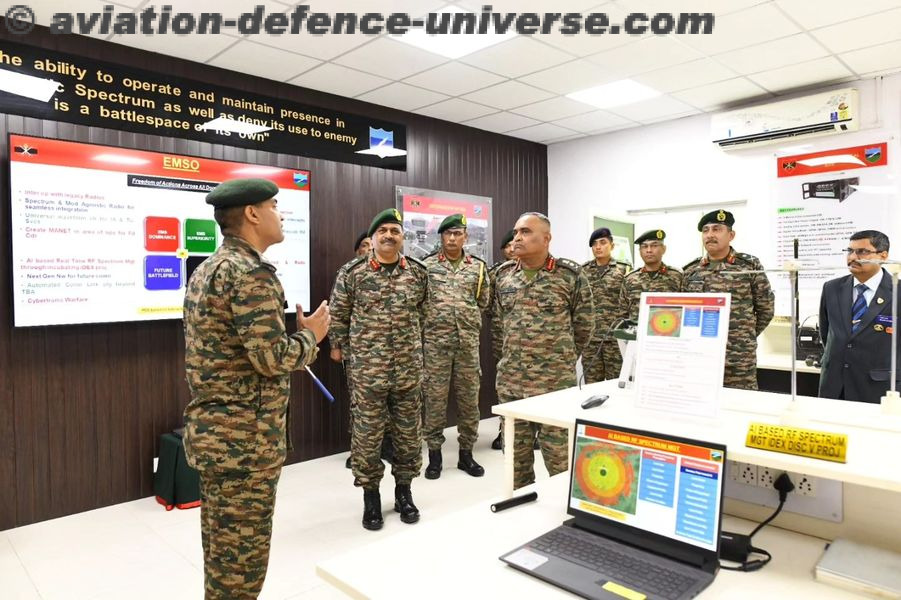 The first AI laboratory was established at the Military College of Telecommunications, Mhow, in 2018. It functions as Indian Army’s Centre of Excellence with a vision to create an AI enabling environment through developing AI based solutions for battle space dominance, promote R&D culture and developing skill set enhancement to handle AI tools. It also functions as a single point of collaboration with researchers and industry, towards finding solutions to field army’s requirements. An AI Compendium with 31 Problem Statements has been shared with the industry and academia.
Incubation and development of projects are going on under four domains of Machine Learning, Computer Vision, Natural Language Processing and System Integration. 37 projects under these domains are being pursued. These include AI systems for ISR, Threat Modelling, Swarm Drones, Satellite Imagery Analysis, Natural Language Processing, Facial Recognition, Video Analytics, Vehicle Tracking, Logistics and Healthcare. As part of Autonomous Systems and Robotics, we are pursuing projects like Robotic Surveillance Platform, Autonomous Combat Vehicle, Unmanned Combat Vehicle and Manned Unmanned Teaming Solutions.
We are reaching out to Academic Centres of Excellence like IITs for incubation and fostering of innovations, customized training and accreditation, and establishing patents of defence research products. The integration of Internet of Military Things with 5G is being carried out in the fields of Smart Surveillance, Telemedicine, Drone Control and Real-Time Augmented and Virtual Reality. In the Cyber domain, we are pursuing IP Encryptors for Satellite Communication, Mobile Secure Satellite Terminals and development of in-house Applications. Apart from above, we are also progressing well towards leveraging modern RPA systems, Loiter Munitions, Adaptive manufacturing and futuristic communication systems.
ADU. The Indian Army is collaborating with MeitY. Can you elaborate upon the contours of this tie-up, especially in the fields of 5G domain?
COAS. The Indian Army has collaborated with the Ministry of Electronics and Information Technology (MeitY) to infuse cutting-edge technology and digital infrastructure into the very core of the Indian Army’s operational framework. Collaboration with MeitY encompasses exchange of Best Practices on Hardware & Data Security, Assistance during procurement or identification of embedded malware, capability building in Cyber Forensics, Software development, Audit of India Army Data Centres, Standardisation Testing & Quality Certification and training of Indian Army personnel at NIC. Additionally, MeitY is also assisting Indian Army in reaching out to Academic Centres of Excellence, like IIT, for incubation and fostering of innovations, customised training and accreditation and establish patents of defence research products. Towards collaboration on Integration of 5G, an MoU has been signed between Military College of Telecommunication Engineering (MCTE) & DG SAMEER (Society for Applied Microwave Electronics, Engineering and Research) for creation of three 5G labs.
 One Laboratory is being established at MCTE to act as Research Centre for Indigenous tech adaptation for military needs as well as, for indigenous Design and Development of security protocols. Two more Laboratories are being established at Signal Training Centres for functional training of personnel in handling 5G and migration from 2G/3G. This collaboration will also assist in building end to end 5G military stack and set up 5G secure, intelligent & advance communication solutions at military band to power digital era decisions. The association will further tap emerging 5G communication solutions and customize next generation technology for military applications, to provide fail-safe communication backbone with next generation communication platform as force multiplier. This will facilitate seamless flow of colossal amount of data. In addition, MeitY would also implement AI / Machine Learning in niche tech labs for cross-pollination for military solution.
ADU. How is Indigenisation or Atmanirbharta advancing in the Indian Army?
COAS. Our endeavours towards achieving Atmanirbharta are progressing well. A positive ecosystem is available in the country to catalyse the process. The Military – Industry – Technology ecosystem is flourishing in India because of the availability of four favourable building blocks. These building blocks are; Resource Allocation, Enabling Government Policies, Viable Markets and Competition. The Government of India has undertaken enabling actions such as Positive Indigenisation lists, earmarking the R&D budget, corporatisation of Ordnance factories, emphasis on defence exports and establishment of defence corridors. Indian Army has undertaken a number of initiatives to promote indigenous Military-Industry. Army Design Bureau has reached out and found traction with MSMEs, Start Ups, R&D organizations & Academia. Regional Technology Nodes have been established at Pune & Bengaluru for better connect.
Indian Army Cells have been co-opted in IIT Delhi, IIT Kanpur & IISc Bengaluru to foster and progress research in niche domains. Till date, Indian Army has incubated 30 Start Ups. Problem Definition Statements as seen by Indian Army have been shared with the industry to align with own requirements. Visits to forward areas have been organized to expose the industry first hand with operational conditions and requirements. Indian Army has been ‘Handholding’ the Indigenous Military Industry. Assistance is being provided for trials, testing & certifications, provisioning of service equipment for R&D, NOC for exports, besides promoting products through military diplomacy. Parallel Modes of Development through MAKE, iDEX, Tech Development Fund & ATB routes are also being channelised.
 Indian Army was the first to mentor Start Ups like ‘114AI’ and ‘New Space’. We are looking to scale up such Start Ups to compete in the global market. Their creativity & talent have been adequately showcased during various events like Def Expo. In House Ideas & Innovations have been shared with industry. Two projects, AI enabled IoT and Bio Medical Device are under transfer to Start Ups for mass production. Overall, I would say that the Indian Defence Industry is rising up to the challenge and it has invested significantly into research processes & modern production techniques and today can meet our requirements. We are looking for fructification of 230 contracts by 2025, with an outlay of Rs 2.5 lac crores involving 340 indigenous defence industries.
ADU. Advent of drones has emerged as a game-changer in the current scenario. How is Indian Army progressing towards increasing the Drone inventory?
COAS. Drones offer a range of operational benefits achieving surveillance and strike capabilities without endangering the lives of soldiers while achieving precision targeting. Indian Army has been closely monitoring conflicts around the world and is mindful of the dynamic evolvement of drones in the battle field.
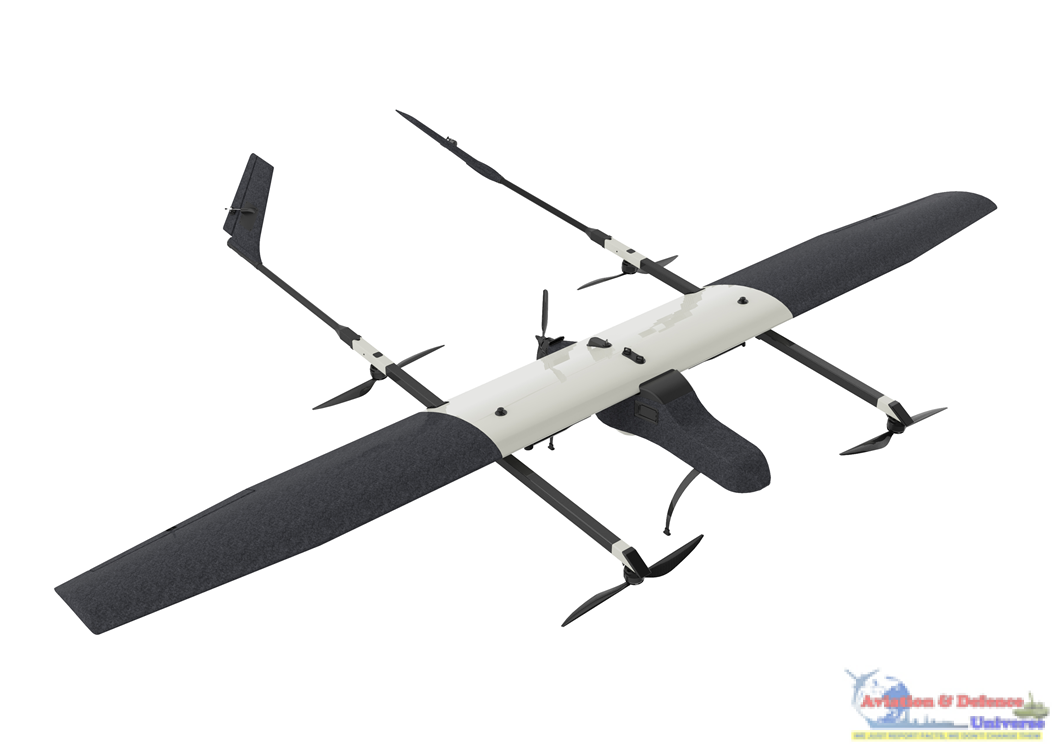
We have formulated multi-pronged strategy as part of force modernisation to achieve drone capabilities. Indian Army has procured varied state of the art drones. The entire range of drones are being inducted into the inventory starting from micro and mini drones to MALE/ HALE category drones. Drone systems are being designed and developed by indigenous defence industries including MSMEs. Aggressive R&D by DRDO and DPSUs are also progressing well to ensure sustained capability.
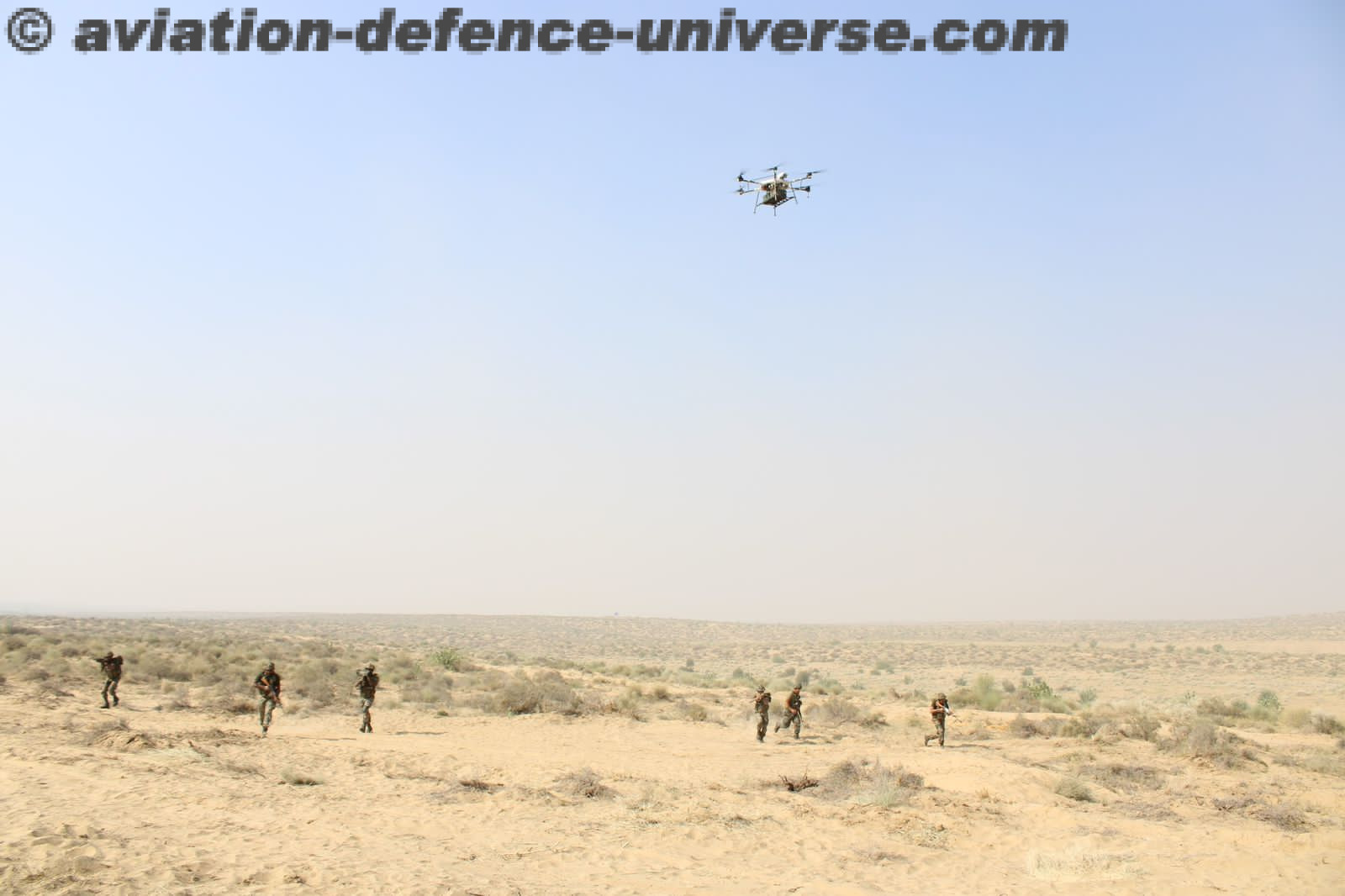 Acquisition of drones by joint venture with global entities to remain relevant till own industry becomes robust in this field has also been undertaken. IA has procured large quantities of long-range drones, Loiter Munitions, RPAs, Tethered Drones and Swarm Drones to equip frontline soldiers with surveillance, targeting and logistics capability. The acquisition has been planned to enhance the capability at all levels, starting from nano/ micro and hand-held drones for a battalion to High Altitude Long Endurance (HALE) drones.
ADU. What are the major initiatives undertaken by the Indian Army in terms of ‘Human Resource Management’ of the large workforce in the recent past?
COAS. Human Resource Management, an important pillar of the ongoing process of transformation, has been a major focus area for the Indian Army. Several initiatives were undertaken in the recent past to further strengthen the Human Resource management process.
As part of the Agnipath Scheme, 40,000 Agniveers from the first two batches have joined the units after completing their training. The feedback about Agniveers received from the units and field formations is positive. Training for 20,000 Agniveers of 3rd Batch commenced with effect from 1st November 23 and for 4th Batch will commence soon.
For the Officer cadre, a Comprehensive Promotion Policy has been enunciated that will address promotional aspirations across all Arms and Services. We are also attempting to make Short Service Commission (SSC) more attractive. Draft Cabinet Note based on Tri-Services proposal to make SSC attractive has been prepared.
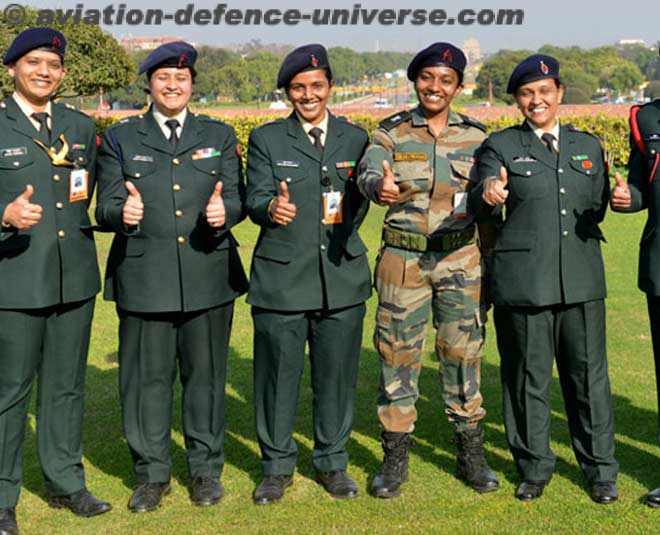 We are also committed towards enhancing the role of women in the Armed Forces. Ten Women officers (WO) were commissioned in the Regiment of Artillery during 2023. The process for induction of WOs in Remount and Veterinary Corps (RVC) also commenced in March 2023 with induction of Four WOs. First Woman Officer was operationally deployed in January 2023 in Siachen. Currently, two more women medical officers are deployed in Siachen. The Women Officers are now being given command of units. Till now 120 women officers have been approved for the select rank of Colonel. These officers have been assigned command of units in various areas including field locations. I would also like to highlight that almost 22 percent of our officers deployed in UN Assignments abroad are Women Officers.
The participation of JCOs/ NCOs in foreign courses has been enhanced from erstwhile 2-3 vacancies to 13-14 vacancies now. Majority of these course vacancies are in the UK, Malaysia, Sri Lanka, Bangladesh, Nepal & Philippines. The focus has been on enhancing expertise and skills in the Military Domain (Sniper, Jungle Warfare, Commando and Combat Training).
We have launched Project Kaushal Veer to empower the soldiers by awarding them educational upgradation and skill certification as per the provisions of National Credit Frame Work and National Education Policy. The project will empower young and disciplined work force of the Indian Army towards smooth transition to the civil streets.
As told to Sangeeta Saxena, Editor, ADU