


















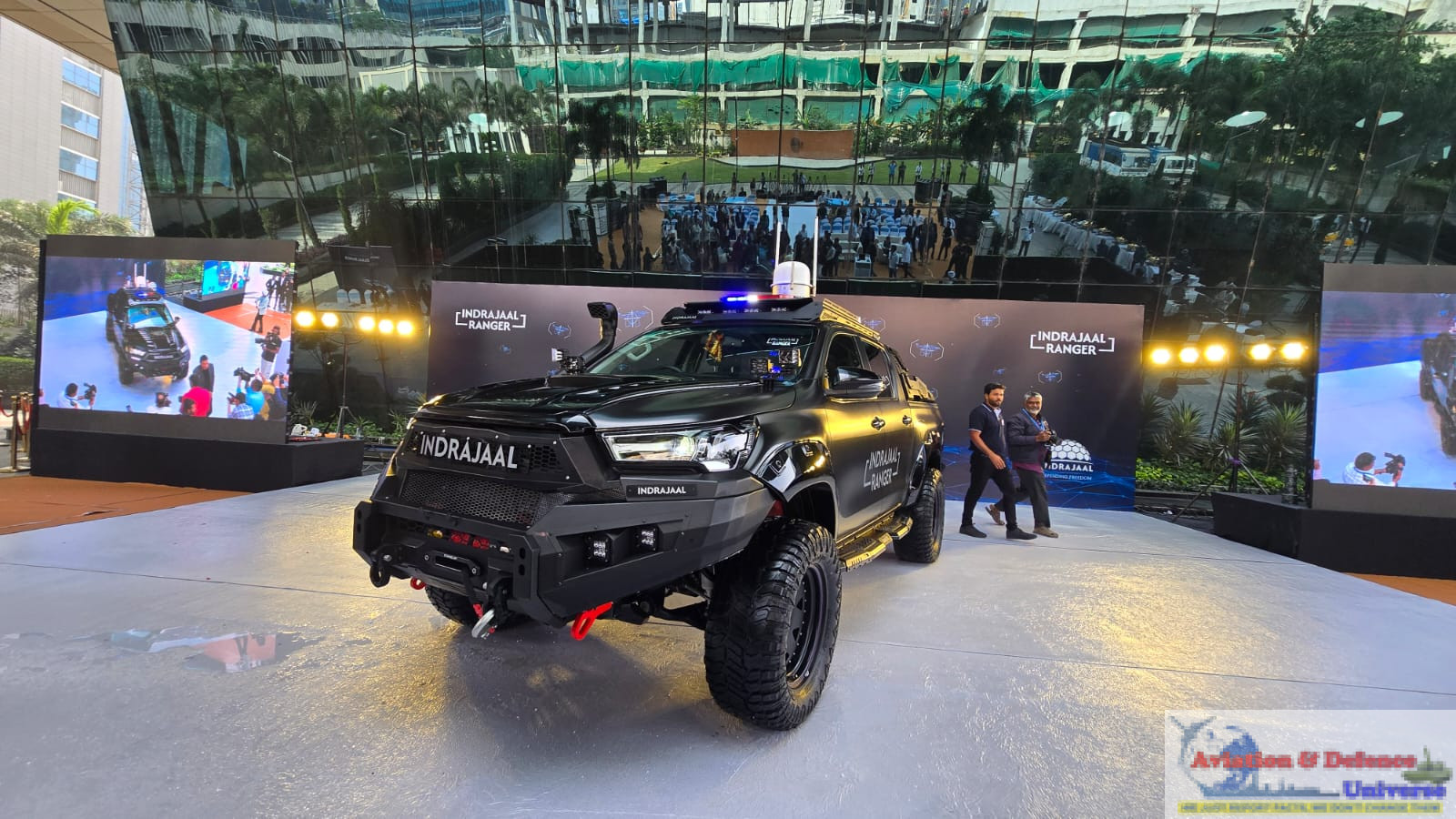
- On the frontlines of the future: A first-hand report of the launch of Indrajaal Ranger at T-Hub Hyderabad
- Indrajaal Launches Ranger- an Anti-Drone Patrol Vehicle to Combat Drone Threats
By Sangeeta Saxena
Hyderabad. 26 November 2025. It isn’t every day that you witness the birth of a defence innovation that feels like it belongs to a new era of warfare. But that is precisely what unfolded in Hyderabad at the launch of the Indrajaal Ranger—India’s first Anti-Drone Patrol Vehicle (ADPV)—a breakthrough system engineered to secure India’s borders, cities, and critical infrastructure from the fast-evolving drone threat.
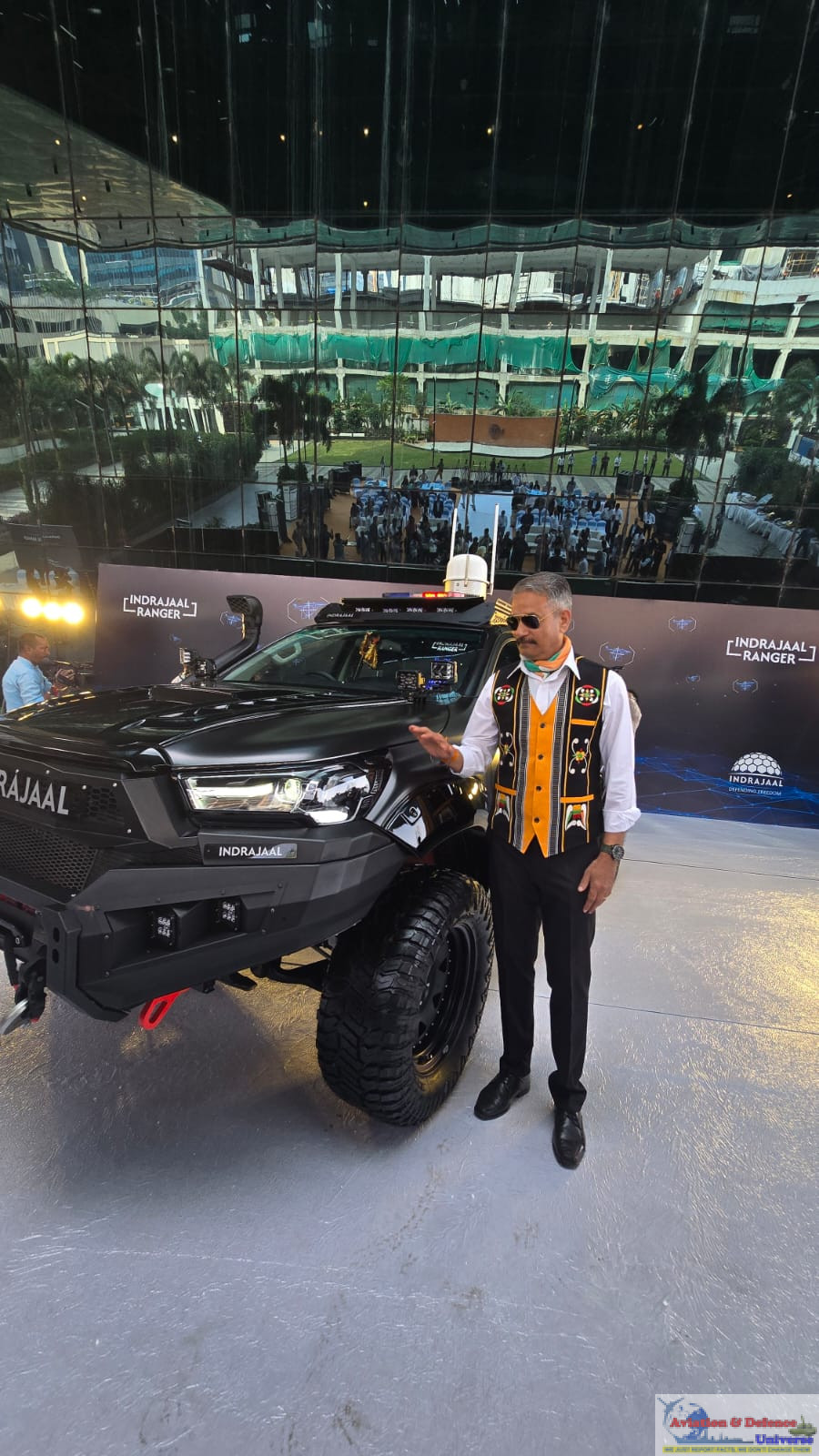
The atmosphere at the venue was a blend of anticipation and urgency. Security forces, defence technologists, veterans, and industry leaders gathered around the imposing 4×4 vehicle—painted in rugged operational colours and fitted with a suite of sensors that seemed more at home in a sci-fi film than on an Indian road. As the covers lifted, Indrajaal’s flagship creation stood revealed: a mobile air-defence shield, engineered from the ground to stop hostile drones while on the move.
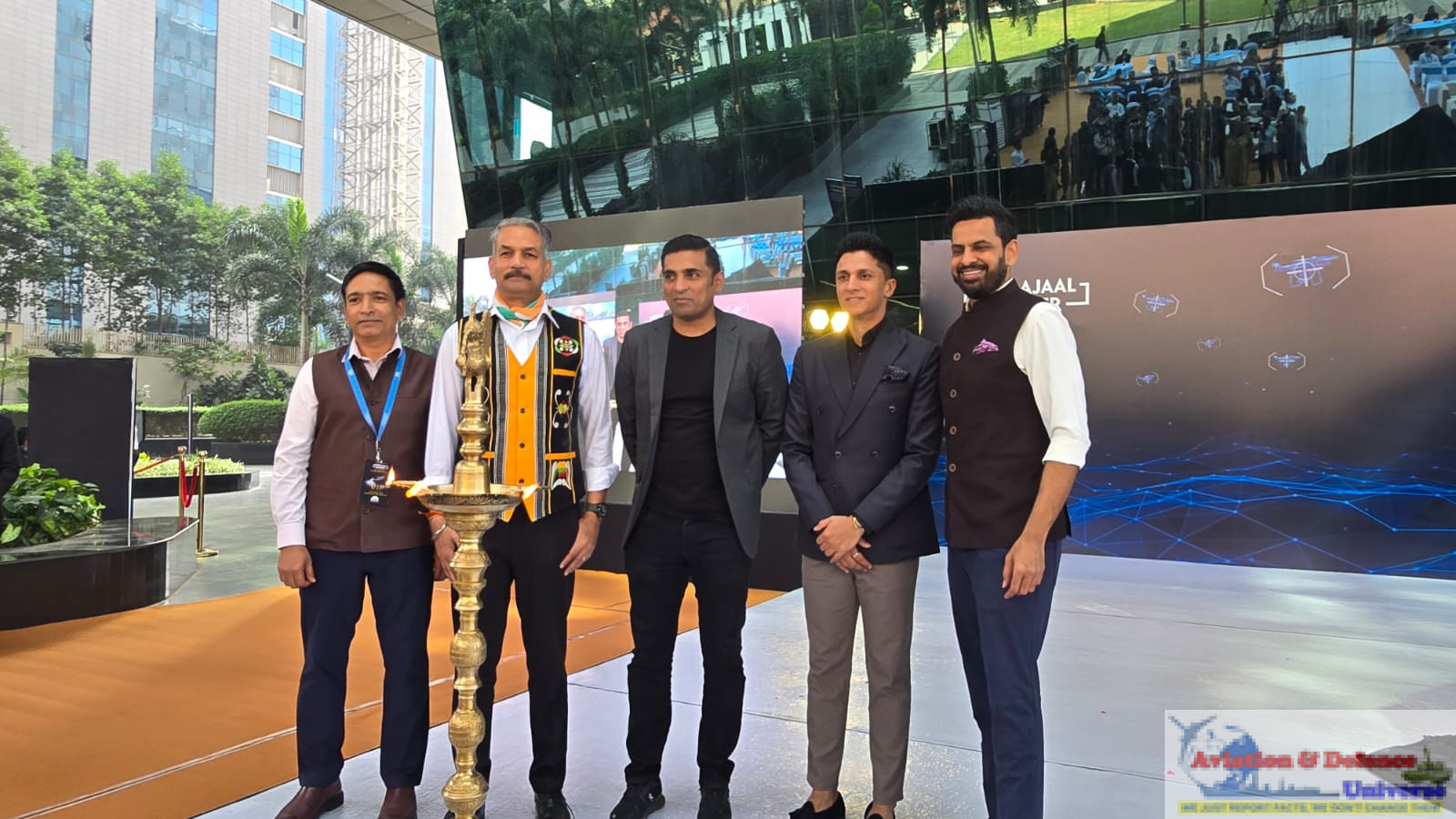 Presiding over the launch was Lieutenant General Devendra Pratap Pandey (Retd)—former GOC of the Chinar Corps, a man whose experience on the frontlines of counter-terrorism lent immense gravitas to the moment. His words cut through the ceremony with clarity and conviction, “India’s youth deserve a safer nation, free from the shadow of international crime networks. Technologies like the Anti-Drone Patrol Vehicle are shields protecting our children, our farmers, and our future.”
It was a statement rooted in hard reality. The General referenced recent episodes that have shaken India’s internal security architecture. ISI-linked cross-border drone trafficking syndicate, which dropped weapons miles inside Indian territory. BSF’s interception of 255 Pakistani drones this year alone, many carrying narcotics, arms, or explosives. These incidents, together worth thousands of crores in illegal trade, reiterate a chilling truth – the battlefield has shifted from footpaths to air corridors—small, silent, and unmanned. And this is the battlefield Indrajaal Ranger has been engineered to dominate.
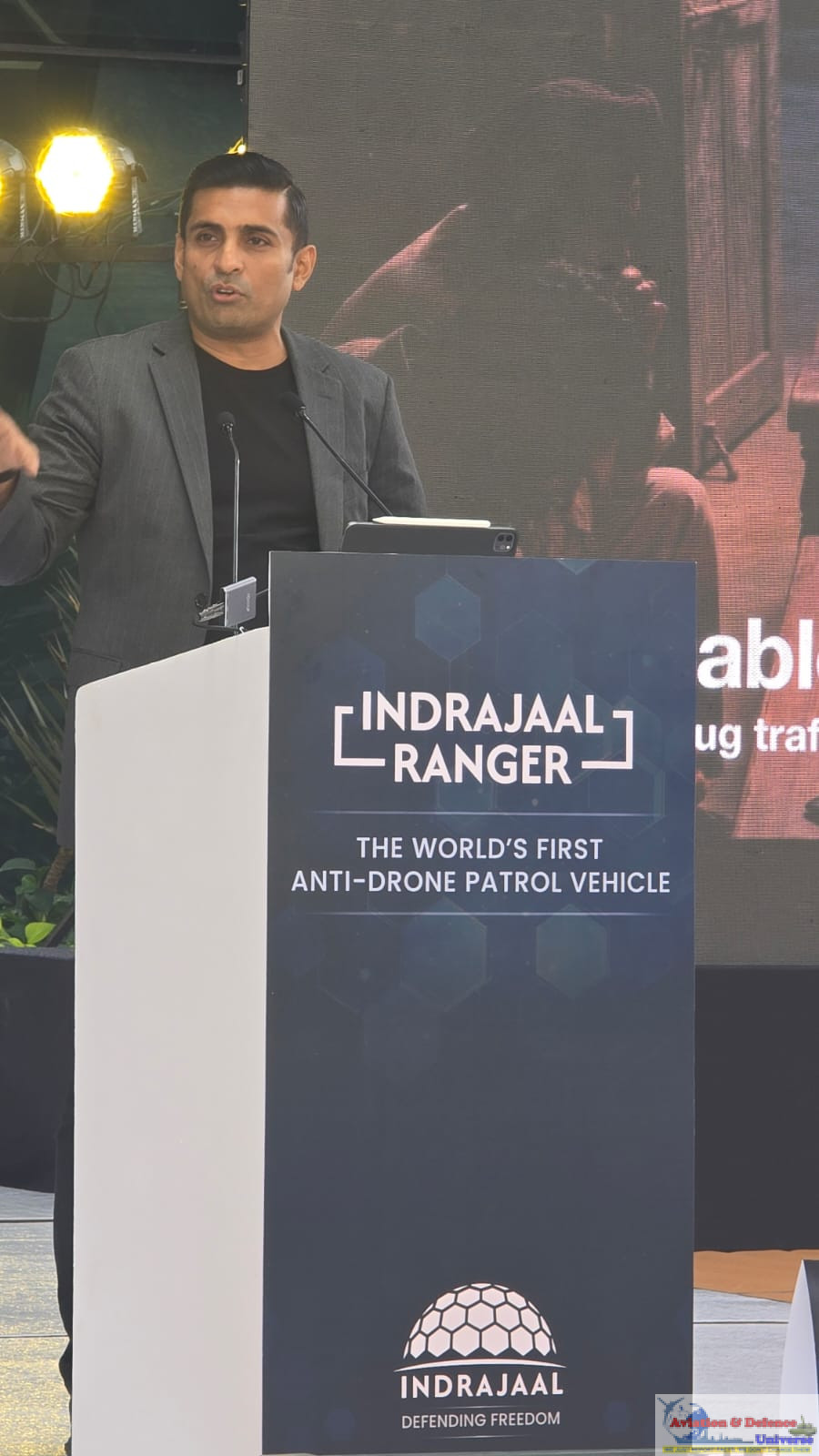 Standing before the expectant audience, Kiran Raju, Founder & CEO of Indrajaal, described the Ranger not as a product, but as a mission. “Each drone neutralised translates to lives protected. This is our purpose—to defend freedom,” he stated.
The key highlights showed why this vehicle is unlike anything India has fielded before. 10 km detection radius using RF, EO/IR, protocol and spectrum intelligence, 4 km neutralization envelope with cyber takeover, GNSS spoofing, RF jamming, AI-driven autonomous operations powered by Indrajaal’s proprietary SkyOS™, Zombee™ interceptor drones for hard-kill engagements, Retractor™ cyber-capture mechanism for safe drone landing and Repulsor™ soft-kill suite for non-destructive neutralization, makes Ranger a full mobility war zone and urban security solution which detects, tracks, and neutralizes targets while moving.
The team explained that the Ranger’s mast-mounted sensors could lock onto a rogue drone in seconds. The system uses AI to issue warnings, deploy countermeasures and neutralize the target—all without manual intervention. It was chillingly efficient. This wasn’t a turret mounted on a jeep.This was an autonomous command centre on wheels. The developers didn’t mince words during their briefing. They built the Ranger because India faces a drone emergency and the treats it faces today are grave. ₹3 lakh crore drug ecosystem uses drones as primary transport, explosives & weapons are being dropped near farmers’ fields by drones entering Punjab & Rajasthan every night dropping sophisticated payloads like pistols, heroin, ammunition and IED components. Youth are being targeted by narco-terror networks. As one BSF officer present at the event remarked, “The border no longer ends at the fence. The sky above it has become the new highway.” The Ranger is India’s answer to that sky.
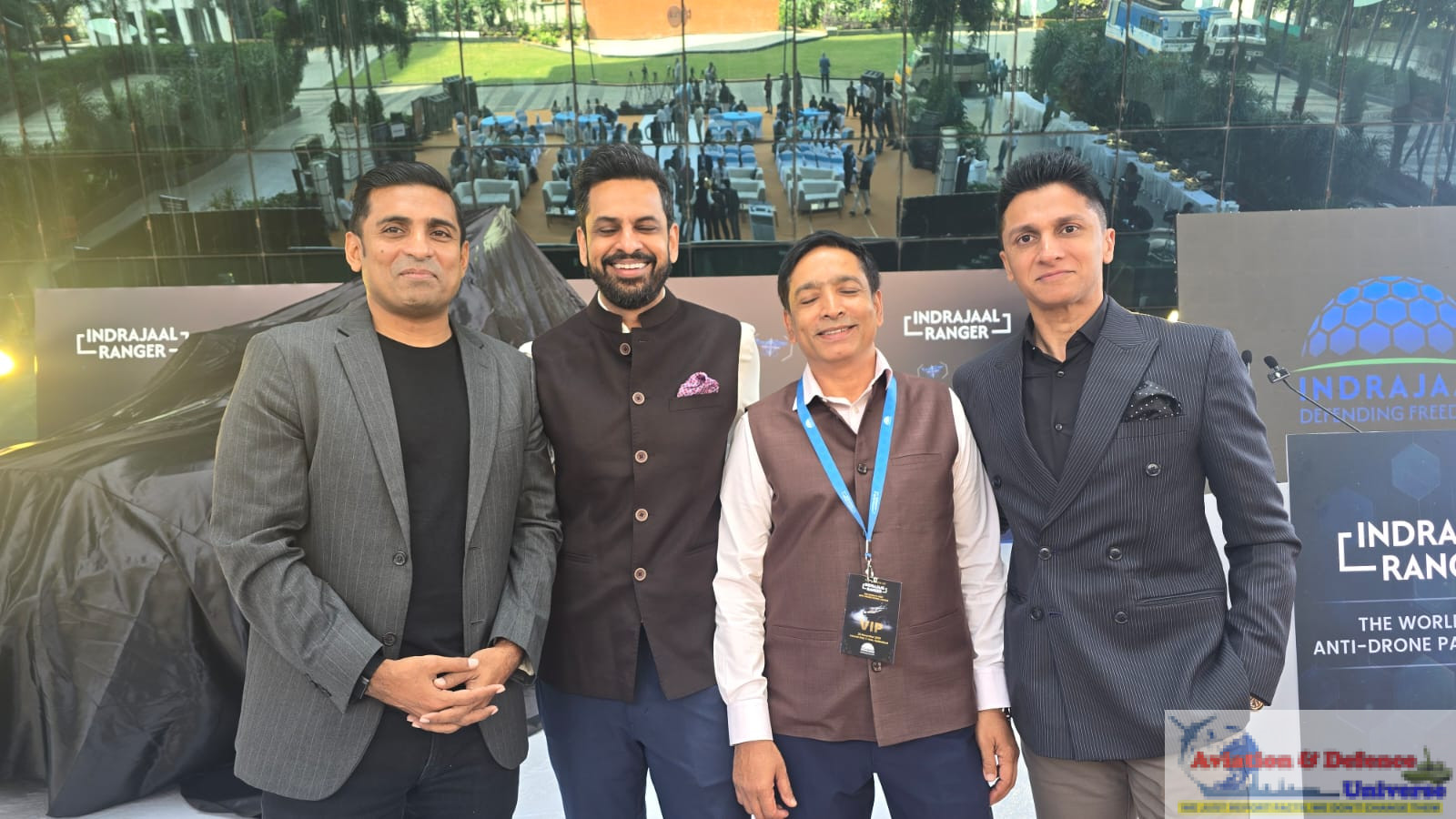 And here it is important to know the team which is at the core of Indrajaal’s rapid ascent in autonomous counter-drone and air-defence innovation. The four strategic pillars were not only present to launch but also to tell us the story of the Indrajaal Ranger from conception to creation. The team was of a foursome which took the centrestage together. It comprised of Kiran Penumacha, Founder & CEO, whose vision and drive have shaped Indrajaal into India’s pioneering full-stack autonomous defence platform, Sunil Kalidindi, Co-founder, who anchors the company’s technological depth and product architecture, ensuring every system is built for scale, interoperability and future conflict environments, Wing Commander MVN Sai (Retd.), whose operational experience and deep understanding of air warfare bring frontline realism into Indrajaal’s designs, bridging the gap between battlefield needs and engineering excellence and Vamssy Vellankii, Promoter & Executive Director, who strengthens Indrajaal’s strategic expansion with his business acumen, partnerships focus and commitment to building a globally competitive defence technology ecosystem. Together, these four leaders form the backbone of Indrajaal—combining vision, engineering, operational insight, and enterprise strategy to build India’s next-generation autonomous air-defence capability.
The most striking revelation during the launch was the Ranger’s multi-domain versatility. This single vehicle is capable of handling Border Security where it can detect cross-border drones flying low and fast, can neutralize weapons and narcotics-carrying drones and can assist BSF in sealing smuggling corridors. It will be very appropriate for Urban Policing where it will protect stadia, rallies, diplomatic events and will also create temporary security areas in high-risk zones. It will also be helpful in critical infrastructure protection and will secure airports, oil refineries, power plants, data centres, ports, religious and government complexes. It will provide an anti-drone bubble that will move with convoys, a capability traditionally available only to advanced militaries. What is evident is that the Ranger is not a single-purpose machine—it is the beginning of a new category of defence asset.
 The launch also spotlighted Indrajaal’s collaborators – Grene Robotics for AI & autonomous systems, Sigma Advanced Systems for mission-grade electronics & defence engineering, India Accelerator for startup scaling ecosystem and Finvolve for supporting investment and growth of frontier-tech companies. Indrajaal’s fusion of defence engineering, AI and robotics is no accident—it is the outcome of a decade-long technological foundation designed for mission-critical use.
When the Ranger was inveiled, the audience was in quiet awe. No dramatic applause—just the unmistakable silence that follows the realization that you have watched the future unfold. General Pandey stepped toward the vehicle, placed a hand on its frame and said, “This will save lives. And that is the highest purpose any machine can serve.”It was a moment that captured not just the technology, but the emotion behind it.
The launch of the Indrajaal Ranger in Hyderabad wasn’t just the unveiling of a new defence product—it felt like the unveiling of a new doctrine. A doctrine where autonomy enhances human decision-making, technology closes gaps faster than adversaries can exploit them and security becomes dynamic, mobile and intelligent, as India faces rising drone threats across borders and cities, the Ranger marks a turning point , a future where every kilometre patrolled is a kilometre protected, and every drone neutralized is a life saved. Standing in front of this vehicle, it is difficult not to feel that India has taken a decisive step into the future of national security—one where innovation is not just an advantage, but a necessity.
This is first in the series of reports ADU will file after watching the launch live at Hyderabad.