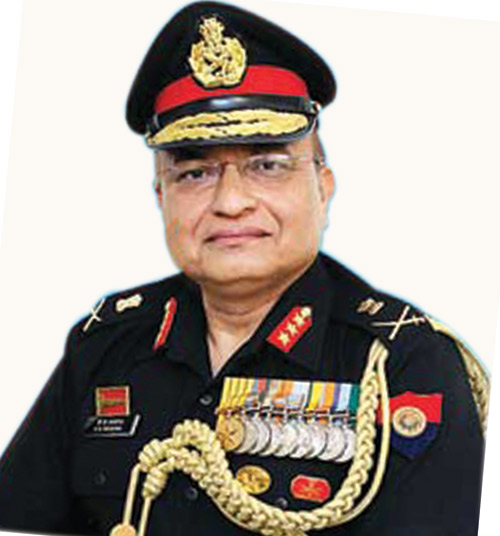



















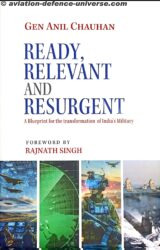
 New Delhi. 30 July 2025. In today’s world, where global security is becoming more complex and the nature of war is constantly changing, Ready, Relevant and Resurgent: A Blueprint for the Transformation of India’s Military by General Anil Chauhan is a very timely and important book. Written by India’s Chief of Defence Staff (CDS), this book is much more than a guide for the armed forces. It presents a complete and modern vision for India’s national defence. It speaks to military professionals, policy experts, students of strategic studies, and ordinary citizens who care about India’s future. What makes this book unique is how it combines military experience, history, and forward-thinking ideas in a way that is simple, deep, and inspiring. With a foreword by Defence Minister Rajnath Singh, the book highlights why India’s military must urgently change not just in terms of weapons and technology, but also in mindset, structure, and leadership.
The author writes with confidence and clarity, but what makes this writing special is how honest and heartfelt it feels. The book begins with topics that are often overlooked but are extremely important like geography and history. In the first few chapters, especially “Military Geography” and “Geography as an Element in Strategy, Politics and Economics,” it explains how India’s land and borders from the Himalayas to the coastal regions directly shape the country’s military strategy and national policy. Geography here is not just about maps; it plays an active role in India’s security and growth.
What makes the book more enriching is the way it includes ideas from ancient Indian wisdom. Teachings from the Ramayana, Mahabharata, Rigveda, Thirukkural, and Arthashastra are used to show how India’s past can guide its military future. By connecting Lord Rama’s moral warfare and Lord Krishna’s strategic thinking with today’s defence strategies, the work proves that India has a deep and rich tradition of leadership and planning. The book also highlights how Indian warfare was not just
about brute force but also about deep psychological understanding, deception, and tactical brilliance. A striking example is the use of emotional manipulation in the Mahabharata, where the Pandavas tactically announced the false death of Ashwatthama to demoralize Guru Dronacharya, leading to his downfall. These references are not just added for style but they give meaning and values to modern defence. This blend of tradition with innovation adds a powerful message: India must look forward while respecting its roots.
As the book moves ahead, it focuses on the changing face of war. In the section called Warfare, it explains that the old ideas of war like battlefield fights and long troop movements no longer fit today’s world. War today involves cyber-attacks, grey-zone operations, drones, space warfare, and artificial intelligence. These threats are faster, harder to detect, and more complex. It talks about how we are entering the “Third Revolution in Military Affairs,” where the combination of technology and human skill will decide victory. This part of the book feels that it is urgent to push the readers and the military leadership to ask tough questions: Are we ready for the wars of tomorrow? Are we prepared mentally, not just physically?
What stands out here is that the book doesn’t just focus on weapons or gear. It talks more about developing a mindset that is flexible, creative, and open to change. True preparedness, it argues, is about how we think and how quickly we can adapt to new challenges. The words give hope but also challenge the reader to stop thinking the old way and start imagining a new, modern, and confident Indian military.
The book highlights the urgent need for greater jointness within India’s defence forces through the establishment of Integrated Theatre Commands, where the Army, Navy, and Air Force would operate together under a single commander. This structure, already adopted by countries like the United States and China, is presented as essential for improving operational coordination and response time. The call for “Integration 2.0” is described not merely as improved teamwork, but as a major step
towards transforming India’s overall defence framework. Important reforms such as the creation of the Department of Military Affairs and the appointment of the Chief of Defence Staff are also examined as part of this integration process. Furthermore, the book advocates for a whole-of-nation approach, promoting stronger cooperation between civil and military sectors all contributing to the larger national vision of building a Sashakt, Surakshit, Samridh, and Viksit Bharat by 2047.
The text also strongly supports Atmanirbharta, or self-reliance. It passionately argues that India must produce its own defence equipment, weapons, and systems. Relying on foreign countries for defence is risky, expensive, and does not support long-term strength. It encourages partnerships between the armed forces, private companies, research institutions, and startups to build a strong defence industry. In the chapters on indigenisation and innovation, the book explains how India can build not just military equipment, but a proud Indian defence identity. The message is full of energy and inspiration, calling on everyone not just the military to contribute.
In the last few chapters, the book turns to the future. In Global Futures 2035 and AI Transforming Warfare, it imagines what the world and wars will look like in the coming years. It talks about artificial intelligence being used in planning, surveillance, and even combat. But it also reminds us that technology alone is not enough as human values like courage, leadership, and ethics will always matter more. There is special attention on India’s youth, stating that the future of the military depends on them. They must be trained not only to fight but to lead, to think smartly, and to act responsibly. True national security, the book reminds us, is not just about machines it’s about people with the right values.
One of the best parts of the book is its honesty. It does not hide the weaknesses in India’s current defence system. Problems like slow decision-making, lack of cooperation between departments, and outdated training models are pointed out. But the book doesn’t stop there but it offers real, doable solutions. There are suggestions on how to fix these issues and move forward. The tone is bold but also practical. Change, it admits, will take time, but it is both possible and necessary.
The final message of the book is powerful and emotional. It ends by saying that wearing the uniform is not just a job but it’s a great honour. Serving the country is not only about defending borders; it’s about protecting values, traditions, and dreams. Young cadets and officers are encouraged to carry forward this responsibility with integrity, discipline, and pride. The message is clear: be the change you want to see not just on the battlefield, but in the system, in your thinking, and in your leadership.
‘Ready, Relevant and Resurgent’ is more than just a book on defence strategy. It is a complete vision for India’s military transformation. It is deeply rooted in Indian culture, yet boldly focused on the future. It is written with knowledge, emotion, and purpose. This is a gift to India as it is a book that educates, inspires, and challenges all at once. It does not just explain military terms; it invites the reader to become part of the nation’s defence story.
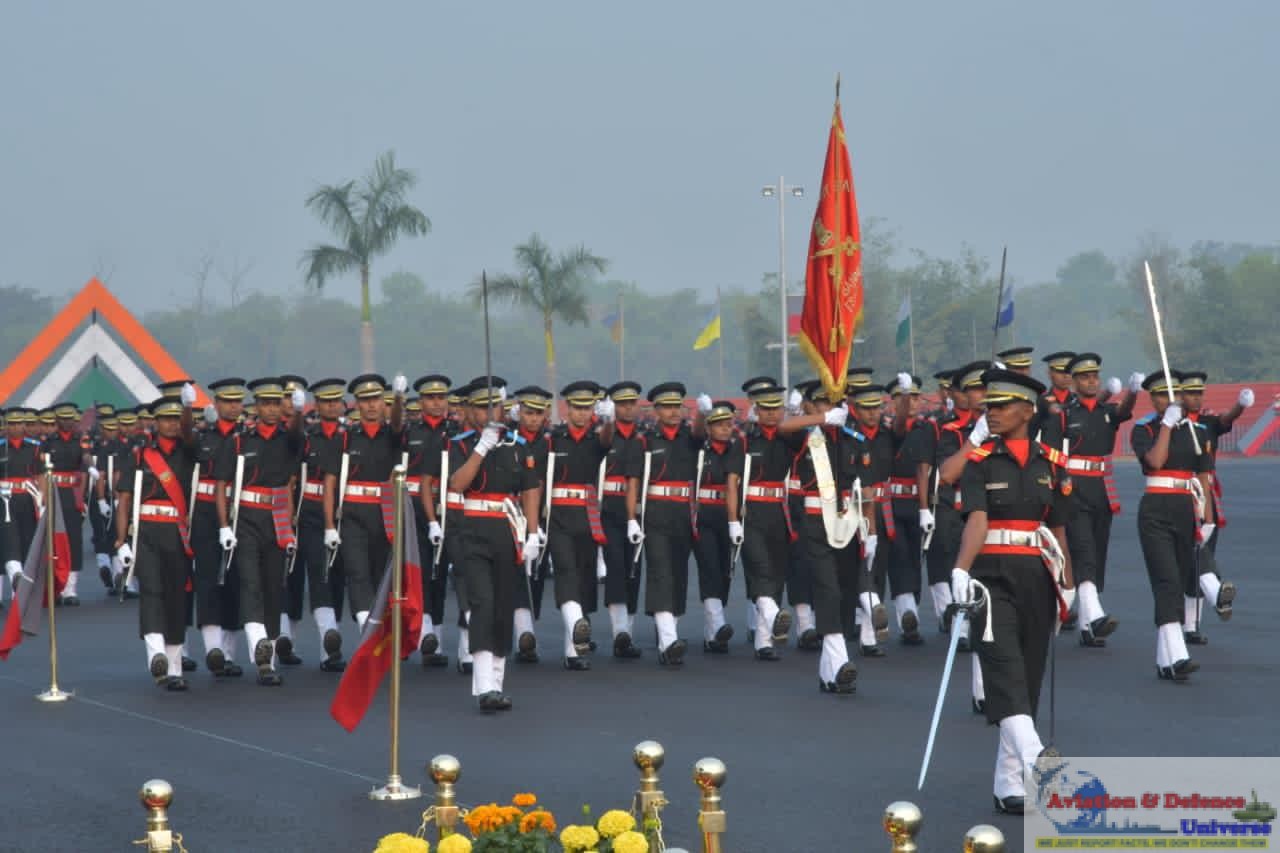
General Chauhan highlighted in the NDA passing out Parade address, the emerging generation of officers both men and women must carry forward the ideals of humility, simplicity, and services before self. The presence of women cadets breaking into what was once a male bastion is a powerful symbol of progress, equality, and shared responsibility.
As India enters a new and uncertain era in global politics, this book reminds us that real strength lies not just in missiles or machines, but in unity, values, and clear thinking. With the right mix of tradition, innovation, and leadership, India’s military can truly become what the title promises ready for anything, relevant in every situation, and rising stronger with every challenge.
It is a must have book for every Indian. Priced merely at Rs 895/- despite being a hard bound book so that it can be with all Indian’s, this book can be ordered at Amazon, Flipkart or Pentagon Publishers.
Reviewed by: Ms. Monika Kumari
Research Intern: CENJOWS